 Pin it
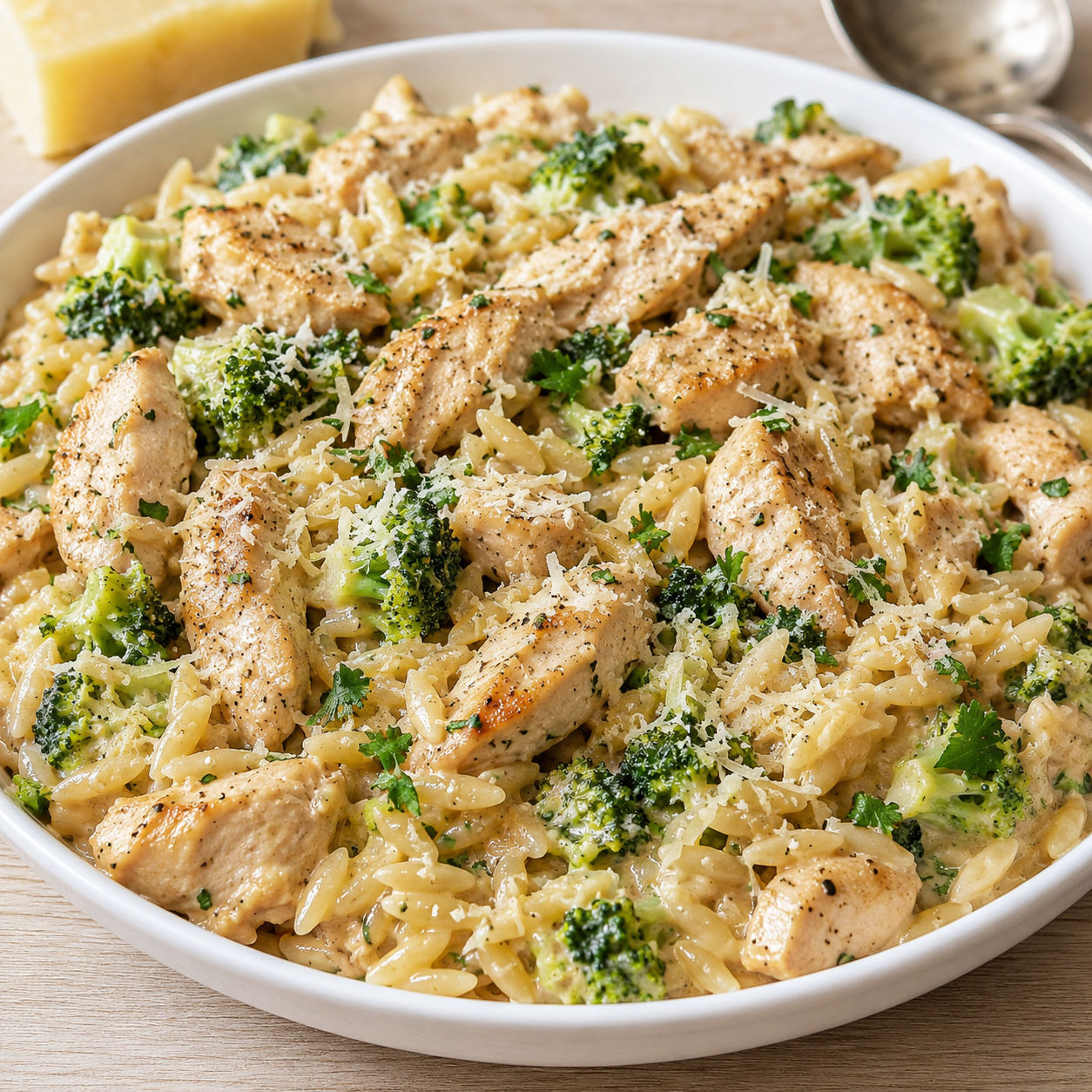
Creamy Chicken Orzo with Parmesan Finish is the kind of skillet dinner that feels calm even when the evening is not. The orzo cooks right in the broth, so it turns creamy without a separate sauce pot.
I like this version with bite-size chicken and broccoli because every spoonful has something tender, something green, and plenty of salty Parmesan. The important part is adding the cheese at the end, away from hard heat, so it melts smooth instead of clumping.
What Builds The Creamy Skillet
Use low-sodium broth if you can, because Parmesan brings its own salt. Freshly grated cheese melts better than pre-shredded and gives the sauce that soft, glossy finish.
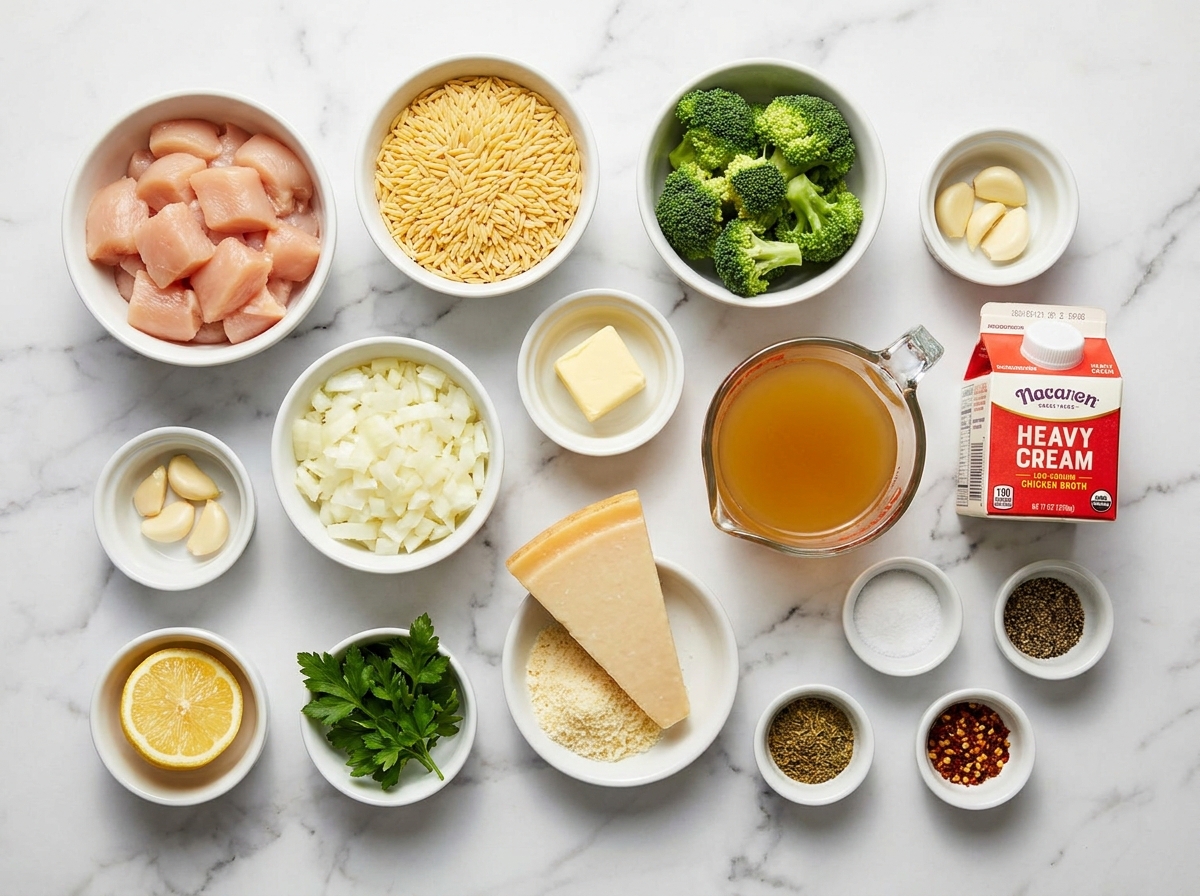
- Chicken breast. Gives the skillet lean, tender pieces that cook quickly and make the dish a full meal.
- Orzo. Tiny pasta that releases starch as it simmers, making the broth creamy before the cream even goes in.
- Broccoli. Adds color and a little bite so the skillet does not feel too heavy.
- Onion and garlic. Build the savory base after the chicken browns.
- Chicken broth. Cooks the orzo and picks up the browned bits from the pan.
- Heavy cream. Rounds out the sauce and keeps it silky.
- Parmesan. The salty finish that thickens the sauce and gives the dish its nutty edge.
- Lemon and parsley. Brighten the last bite so the cream does not taste flat.
How The Pan Comes Together
- Brown the chicken. Season the chicken well and cook it in olive oil until golden on the outside. It does not need to be cooked through yet because it will warm again later.
- Soften the aromatics. Add butter, onion, and garlic to the same pan. Stir often and scrape up the browned bits.
- Toast the orzo. Stir the dry orzo into the buttery base for about 1 minute. This gives it a nuttier flavor and helps it hold its shape.
- Simmer until tender. Add broth and return the chicken. Cook uncovered, stirring often, until the orzo is tender and most of the liquid is absorbed.
- Add broccoli and cream. Stir in the steamed broccoli and cream over low heat. Let everything settle into a loose sauce.
- Finish with Parmesan. Take the pan off the heat, stir in the Parmesan, lemon, and parsley, then rest for 2 minutes before serving.
Why Parmesan Goes Last
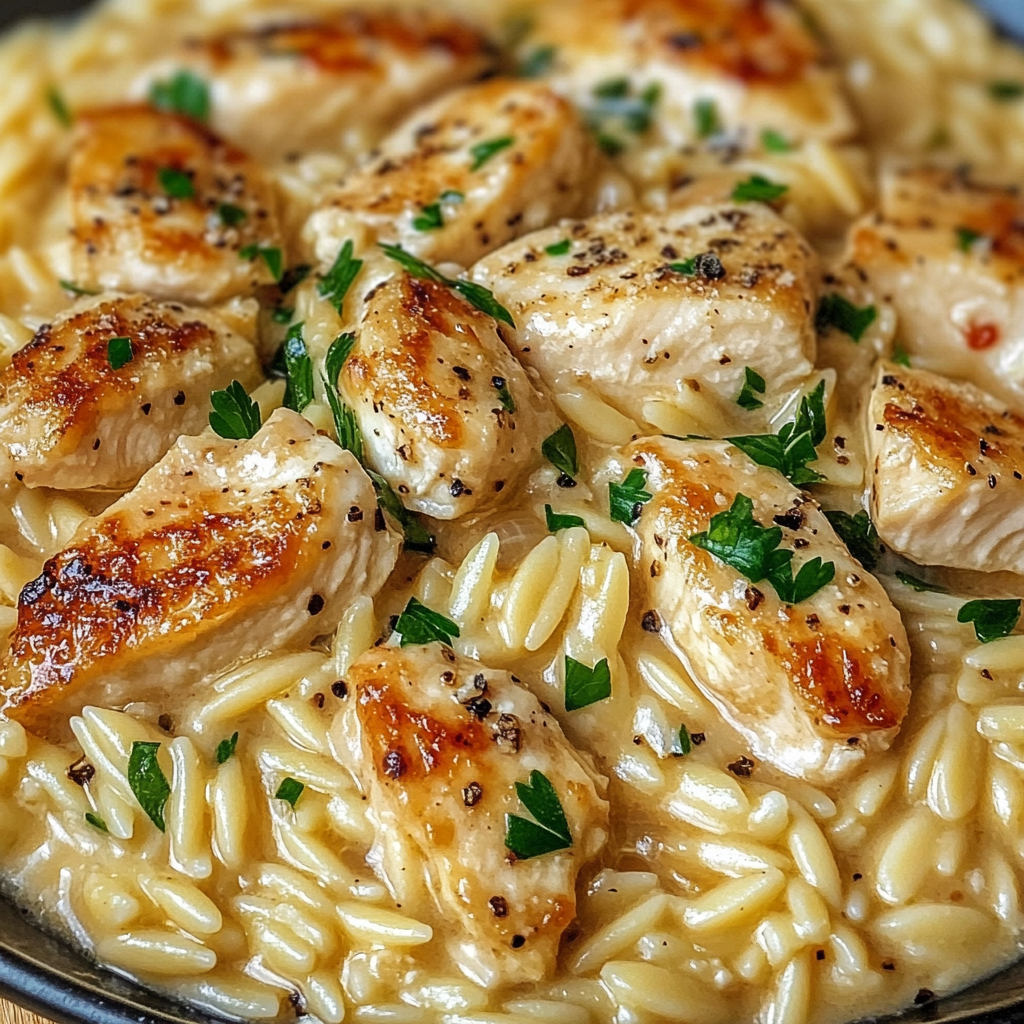
Parmesan is happiest with gentle heat. If you boil it hard, the proteins can tighten and leave the sauce grainy. Pulling the pan off the burner first gives you a smoother finish and better flavor.
Grate the cheese finely and add it in small handfuls. Stir between additions until the sauce looks glossy. This same habit helps in creamy chicken dinners like Marry Me Chicken Creamy Parmesan and Parmesan Crusted Chicken with Creamy Garlic Sauce.
The Orzo Needs Stirring
Orzo behaves more like risotto than regular pasta in this skillet. It sits close to the pan and releases starch fast, so it needs regular stirring. You do not have to hover every second, but do scrape the bottom every minute or two.
If the pan looks dry before the orzo is tender, add another splash of broth. If it looks soupy near the end, give it a few more minutes uncovered. The finished texture should be creamy and spoonable, not stiff.
Chicken Doneness Matters
Bite-size chicken can go from juicy to dry quickly. Brown it first for flavor, then let it finish gently as the orzo simmers. Check the thickest piece if you are unsure. The USDA safe minimum for chicken is 165°F, shown in the USDA temperature chart.
For a softer texture, use chicken thighs. For a faster version, stir in chopped cooked rotisserie chicken during the last few minutes. That trick also works in cozy pasta-style dinners like Creamy Garlic Herb Chicken Pasta.
Smart Swaps For Busy Nights
Frozen broccoli is fine. Thaw it and pat it dry, then add it near the end so it does not water down the sauce. Peas can go straight in from frozen during the last 2 minutes of simmering.
You can skip the cream and use half-and-half for a lighter pan, but keep the heat low once it goes in. A pinch of red pepper flakes is good if you like a little warmth. For another orzo dinner with a different angle, try Mediterranean Creamy Chicken with Broccoli and Orzo Skillet.
Storing The Creamy Leftovers
Store leftovers in an airtight container in the fridge for up to 3 days. The orzo will keep absorbing sauce as it sits, so expect it to thicken.
Reheat it gently in a skillet with a splash of broth, milk, or water. Stir often and stop once the chicken is hot. The microwave works too, but use reduced power and pause to stir so the sauce warms evenly.
Summary
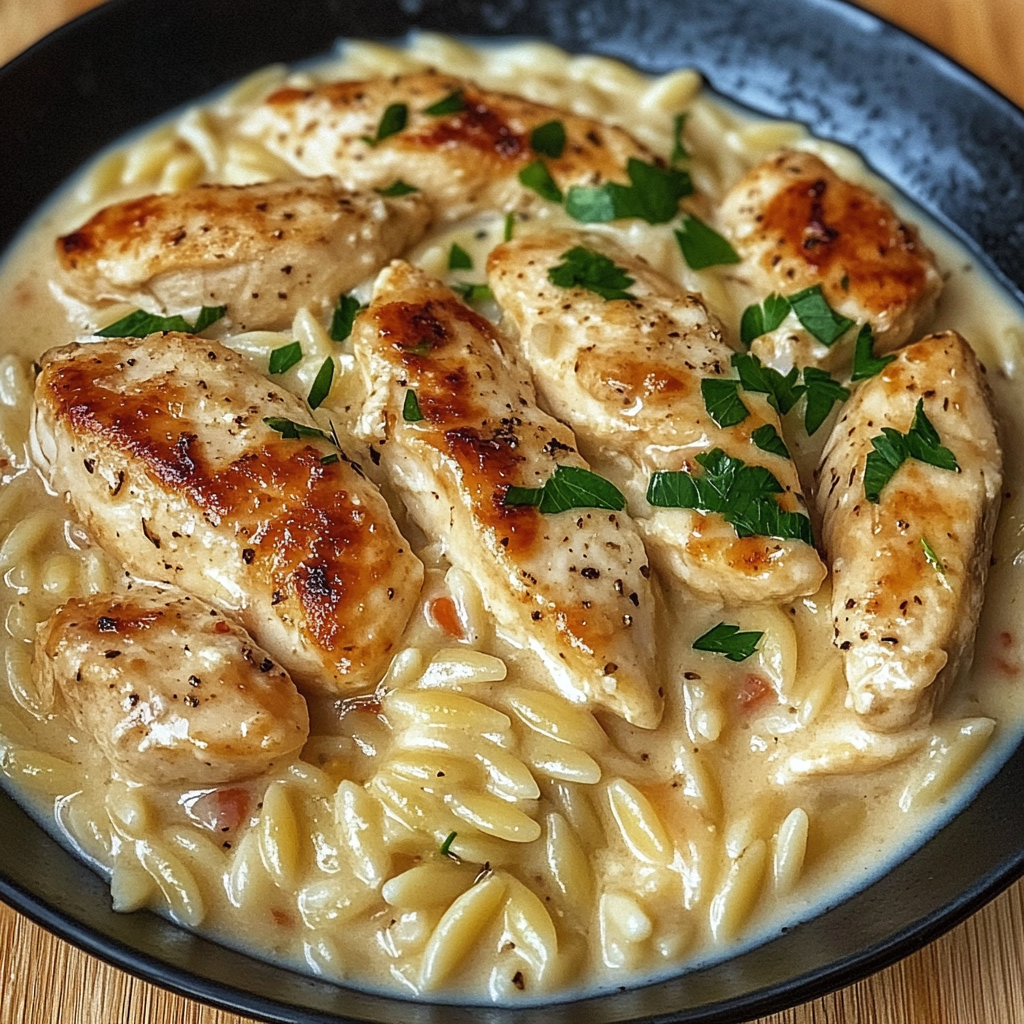
This creamy chicken orzo is best served right away while the sauce is loose and glossy. A splash of warm broth brings leftovers back nicely the next day.
FAQs
- Can I use chicken thighs instead of chicken breast?
Yes. Boneless skinless thighs work very well here and stay juicy. Cut them into bite-size pieces and cook them until browned and 165°F in the center.
- What can I use instead of broccoli?
Spinach, peas, asparagus, or chopped zucchini all fit the creamy Parmesan base. Spinach only needs a minute or two at the end, while firmer vegetables should be steamed or simmered until just tender.
- How do I keep the orzo from sticking?
Stir it often once the broth goes in, especially near the end of cooking. Orzo releases starch quickly, so scraping the bottom of the skillet keeps the sauce smooth and prevents scorching.
- Can I make creamy chicken orzo ahead?
It tastes best freshly made, but you can prep the chicken and vegetables earlier in the day. Leftovers keep well for up to 3 days and reheat with a splash of broth or milk.
- Can I make this without heavy cream?
Half-and-half works, but the sauce will be lighter and a little thinner. Avoid boiling it hard after adding dairy because lower-fat dairy can separate more easily.
- What should I serve with chicken orzo?
A crisp green salad or roasted vegetables are enough because the skillet already has pasta, chicken, and broccoli. Garlic bread is nice if you want a fuller comfort meal.
