 Pin it
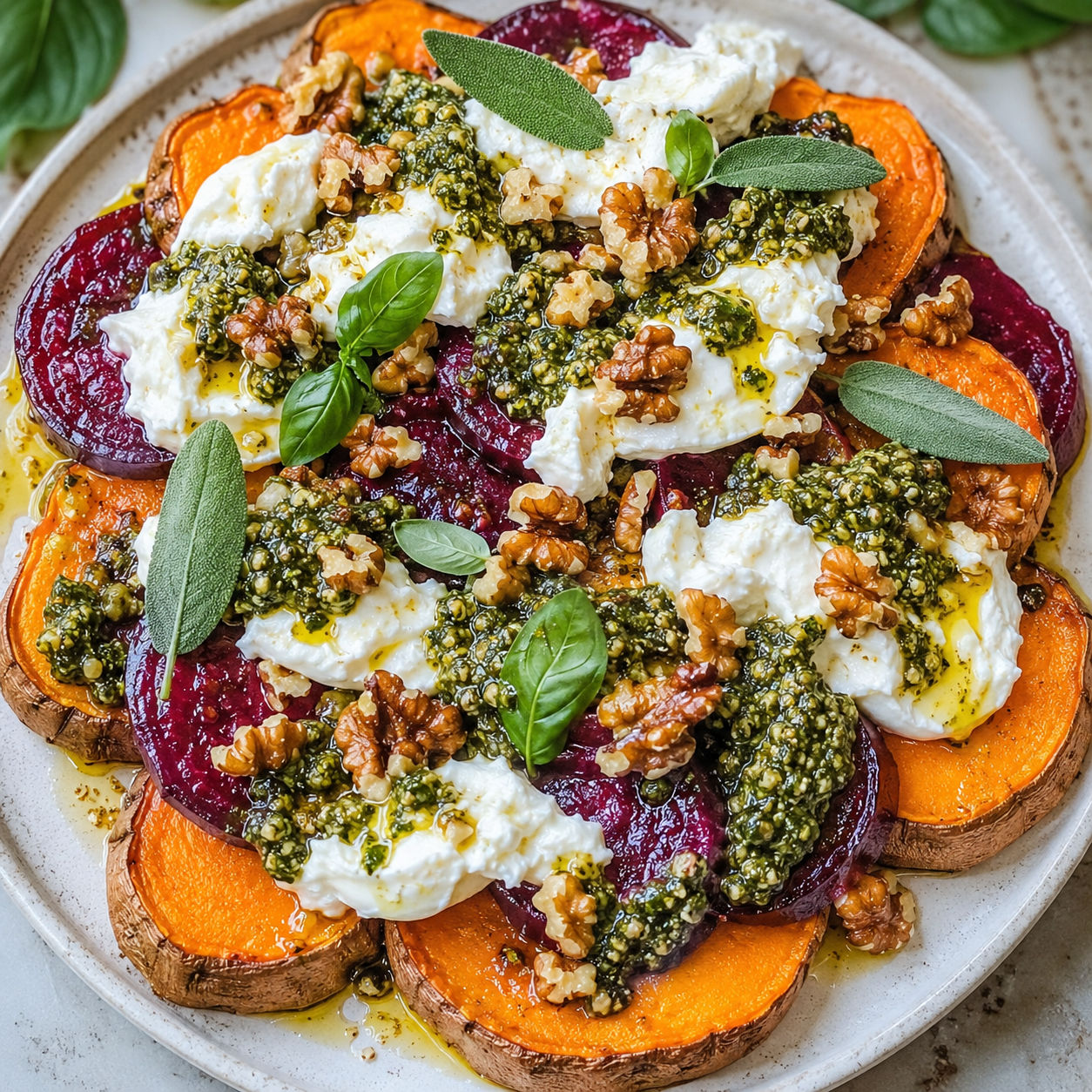
Sweet Potatoes with Burrata and Pesto is the kind of side dish that looks dressed up without asking much from you. The sweet potatoes get caramelized at the edges, the beets bring color and earthiness, and the burrata softens just enough over the warm vegetables.
The pesto is thicker and nuttier than a classic basil pesto. Sage and walnuts make it feel cozy, while a little lemon keeps the whole plate from tasting heavy. I like it as a starter, but it also holds its own beside roasted chicken, salmon, or a simple green salad.
The colorful stack
Choose firm sweet potatoes with smooth skins and beets that feel heavy for their size. Burrata is best when it is fresh and cold from the fridge, but let it sit out for about 15 minutes before serving so the center turns soft.
- Sweet potatoes. They roast into tender rounds with caramelized edges and a sturdy base for the toppings.
- Fresh beets. They bring earthy sweetness and a deep red color that makes the plate pop.
- Burrata. The creamy center melts slightly against the warm vegetables and balances the pesto.
- Walnuts. Toasted walnuts add crunch and give the pesto its warm, nutty body.
- Fresh sage. Sage gives the pesto a savory fall flavor that works beautifully with sweet potatoes.
- Garlic and lemon. Garlic adds bite, and lemon keeps the pesto bright instead of heavy.
- Olive oil. It helps the vegetables brown and turns the pesto silky.
Roast, blend, layer
- Roast the beets. Wrap trimmed beets in foil and roast until a knife slides through easily. Let them cool just enough to handle, then rub off the skins and slice them thin.
- Brown the sweet potatoes. Slice the sweet potatoes into even rounds, coat lightly with oil, and roast until tender with golden edges.
- Toast the walnuts. Warm them in a dry skillet until fragrant. Pull them off the heat before they get dark because they keep toasting for a minute.
- Blend the pesto. Pulse walnuts, sage, basil, garlic, lemon, olive oil, salt, and pepper until spoonable but still a little textured.
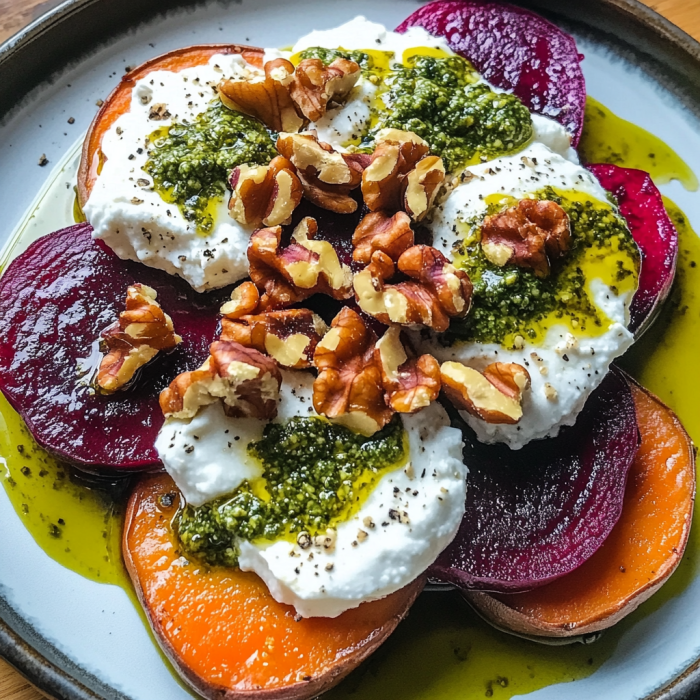
- Assemble the plate. Layer sweet potato rounds with beet slices, torn burrata, pesto, extra walnuts, and a final drizzle of olive oil.
Getting clean roasted edges
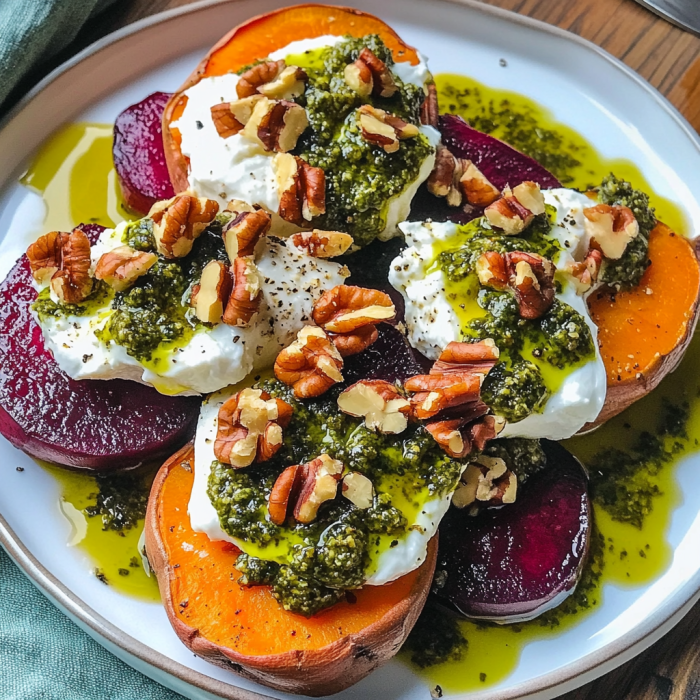
The sweet potatoes need room. If they touch or overlap, they steam and soften instead of picking up those browned spots that make this dish taste deeper. Use two pans if your rounds are crowded. Flip them once when the bottoms look golden, then give the second side enough time to color.
If you like sweet potato sides with a more classic roasted profile, the same spacing rule helps with Best Roasted Sweet Potatoes with Maple & Spices and Honey Cinnamon Roasted Sweet Potatoes.
Pesto that stays spoonable
This walnut sage pesto should not be perfectly smooth. A little texture gives each bite crunch and helps the pesto sit on top of the burrata instead of running off the plate. Pulse first, then stream in olive oil until it looks loose enough to spoon. If it tastes flat, add a squeeze of lemon or a pinch of salt.
For basic ingredient comparisons and nutrition data, the USDA FoodData Central database is a reliable place to check sweet potatoes, walnuts, and fresh herbs.
Burrata without the mess
Tear burrata gently over the platter right before serving. If you cut it too early, the creamy center can spill out and soak the sweet potatoes. That still tastes good, but the plate looks less clean. Pat the outside dry with a paper towel if it feels wet from the container.
If burrata is the reason you came here, try the same creamy contrast in Vibrant Roasted Beets and Carrots with Burrata Salad or the tomato-rich Quick Creamy Tomato Gnocchi with Burrata.
Make-ahead serving plan
Roast the beets and sweet potatoes the day before if you want a calmer serving window. Keep them chilled in separate containers. Warm the sweet potatoes gently in a 325°F oven, then bring the beets closer to room temperature before layering. The pesto can thicken in the fridge, so loosen it with olive oil before spooning.
Leftovers keep for up to two days, but the texture is best on day one. For general leftover timing and chilled storage guidance, the USDA leftovers guide is a useful reference.
Easy ways to change it
For a holiday plate, scatter pomegranate seeds over the top. For a spring version, swap the beets for asparagus and use more basil than sage in the pesto. Pecans can replace walnuts, and pumpkin seeds are a good choice if you want a nut-free pesto. If you want a heartier vegetarian meal, serve the rounds over dressed greens or next to a bean salad.
Summary
Sweet potatoes, beets, burrata, and walnut sage pesto make a colorful side that feels special but stays practical. Roast the vegetables ahead, then assemble just before serving for the best texture.
FAQs
- Can I make Sweet Potatoes with Burrata and Pesto ahead?
Yes. Roast the sweet potatoes and beets up to two days ahead and keep them in separate airtight containers. Make the pesto ahead too, then assemble close to serving so the burrata stays creamy and fresh.
- Can I use store-bought pesto?
You can, especially when you need a shortcut. Choose a thicker pesto and stir in a handful of chopped toasted walnuts and a little chopped sage so it fits the flavor of the dish.
- What can I use instead of burrata?
Fresh mozzarella works well, though it will be less creamy in the center. For a richer swap, spoon a little whole-milk ricotta over the warm rounds and finish with olive oil.
- Do I have to use beets?
No. Beets add color and an earthy note, but roasted carrots, blistered cherry tomatoes, or grilled peach slices can work. Keep the pieces thin enough so they sit neatly on the sweet potato rounds.
- How do I keep the sweet potatoes from getting soggy?
Slice them evenly, coat lightly with oil, and spread them in one layer with space between the rounds. Crowding the pan traps steam, which keeps the edges from browning.
- What should I serve with this dish?
Serve it with a crisp salad, grilled chicken, roast turkey, salmon, or crusty bread. It also makes a strong vegetarian plate with lentils or chickpeas on the side.
