 Pin it
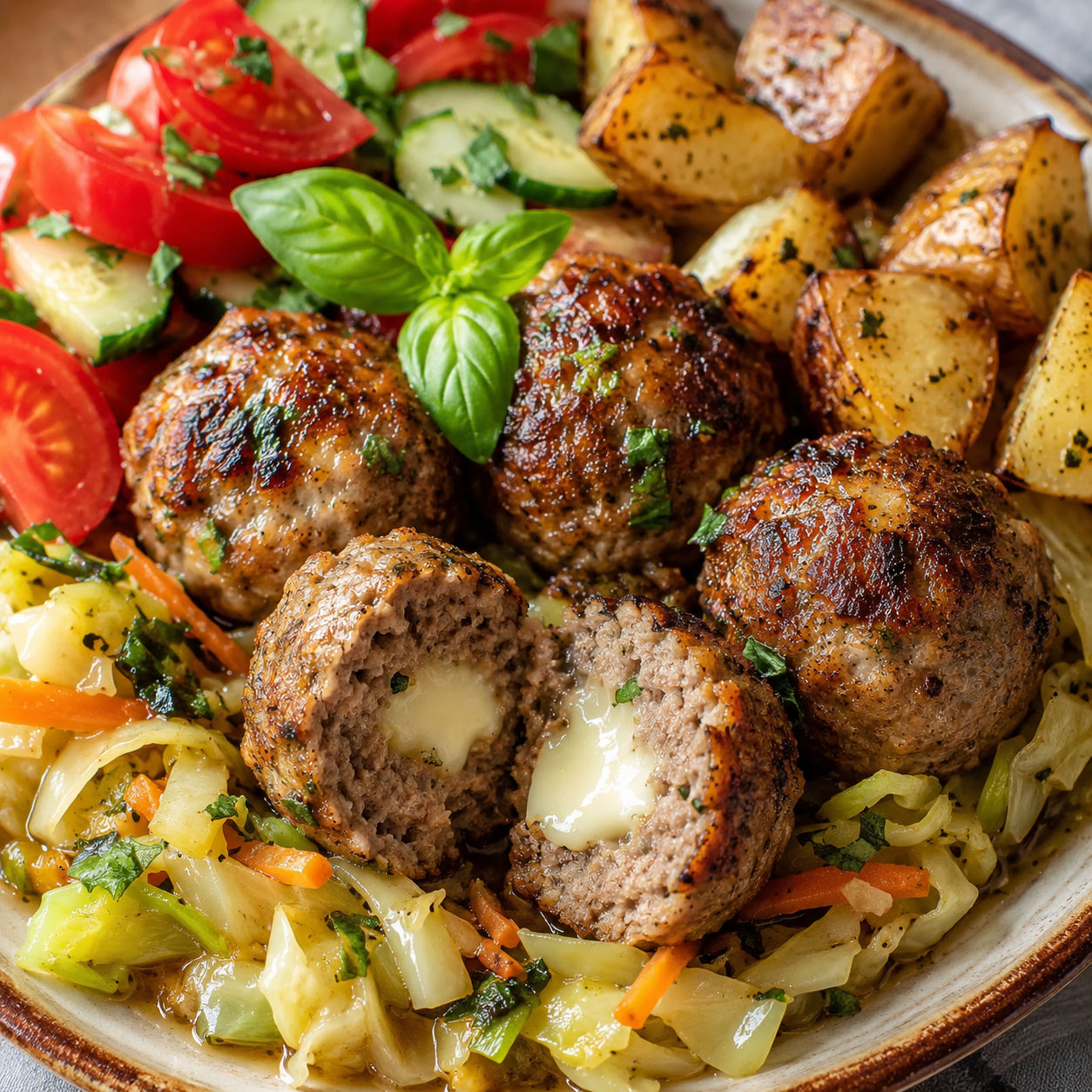
Savory Stuffed Meatballs with Vegetables and Cheese is the kind of dinner that makes a plain weeknight feel planned. The meatballs are tender and well seasoned, but the real payoff is the soft cheese tucked in the center.
I like this version because it does not rely on sauce alone for comfort. You get golden meatballs, sweet sauteed vegetables, crisp-edged potatoes, and a quick lemon-garlic drizzle that cuts through the richness.
Cheese-Centered Meatball Lineup
Use a blend of meats if you can. Chicken keeps the mixture lighter, beef adds depth, and pork brings moisture. The vegetables should look fresh and crisp, since they are not just garnish here.
Cut the cheese into small cubes before you start shaping. Cold cheese is easier to seal inside the meatballs and gives you a better chance of keeping that melty middle where it belongs.
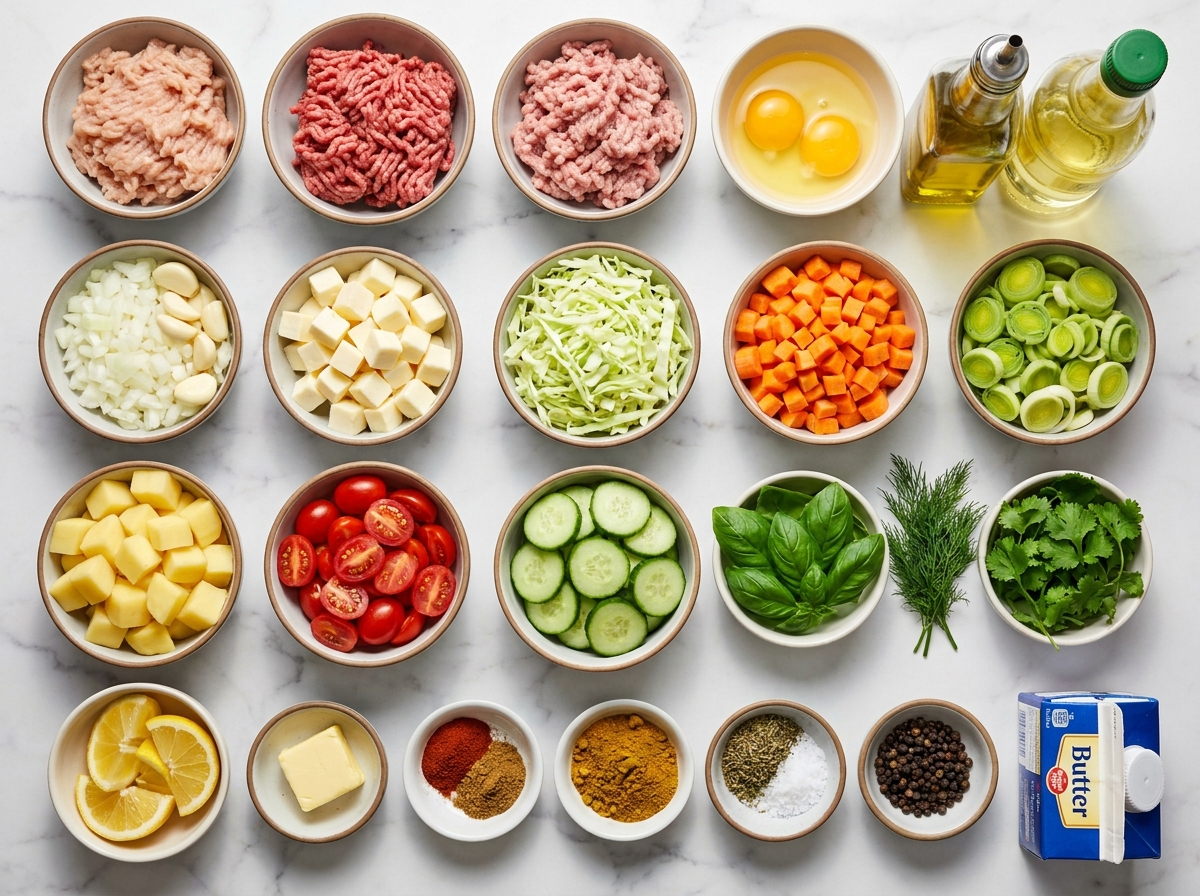
- Ground chicken, beef, and pork. The blend gives juicy meatballs with enough structure to hold a cheese center.
- Eggs. Help bind the mixture without adding breadcrumbs, which keeps the recipe gluten-free.
- Onion and garlic. Add moisture and a savory base that seasons the meat from the inside.
- Paprika, cumin, curry powder, and Italian herbs. Build warmth and color without making the meatballs taste heavy.
- Mozzarella or cheddar. Melts into the hidden center. Mozzarella is mild and stretchy, while cheddar tastes sharper.
- Cabbage, carrot, and leek. Cook down into a sweet, buttery vegetable bed for the meatballs.
- Potatoes. Roast into crisp, golden pieces that make the plate feel complete.
- Lemon juice, milk, and butter. Turn into a quick sauce that is bright, creamy, and good over everything.
- Dill, cilantro, and basil. Fresh herbs lift the rich meat and cheese.
Shape, Seal, Sear, Serve
- Mix the meat gently. Combine the three meats with eggs, onion, garlic, spices, herbs, salt, and pepper until the mixture just turns sticky. Stop there so the meatballs stay tender.
- Fill each center. Flatten a small portion in your palm, add one cheese cube, and wrap the meat around it. Pinch the seams closed and roll until smooth.
- Cook the vegetables. Melt butter in a wide skillet and saute cabbage, carrot, and leek for 5-7 minutes until softened and lightly golden. Stir in dill and cilantro at the end.
- Roast the potatoes. Toss potato chunks with olive oil, paprika, salt, and pepper. Roast at 400 F until crisp at the edges and tender inside.
- Brown the meatballs. Pan-sear in a thin layer of oil, turning carefully, until golden all over and cooked through to 160 F.
- Make the sauce. Simmer butter, garlic, lemon juice, and milk for a few minutes until slightly creamy.
- Plate while hot. Arrange vegetables, potatoes, and meatballs together. Spoon the sauce over the top and finish with tomato, cucumber, basil, and extra herbs.
Seal the Cheese Well
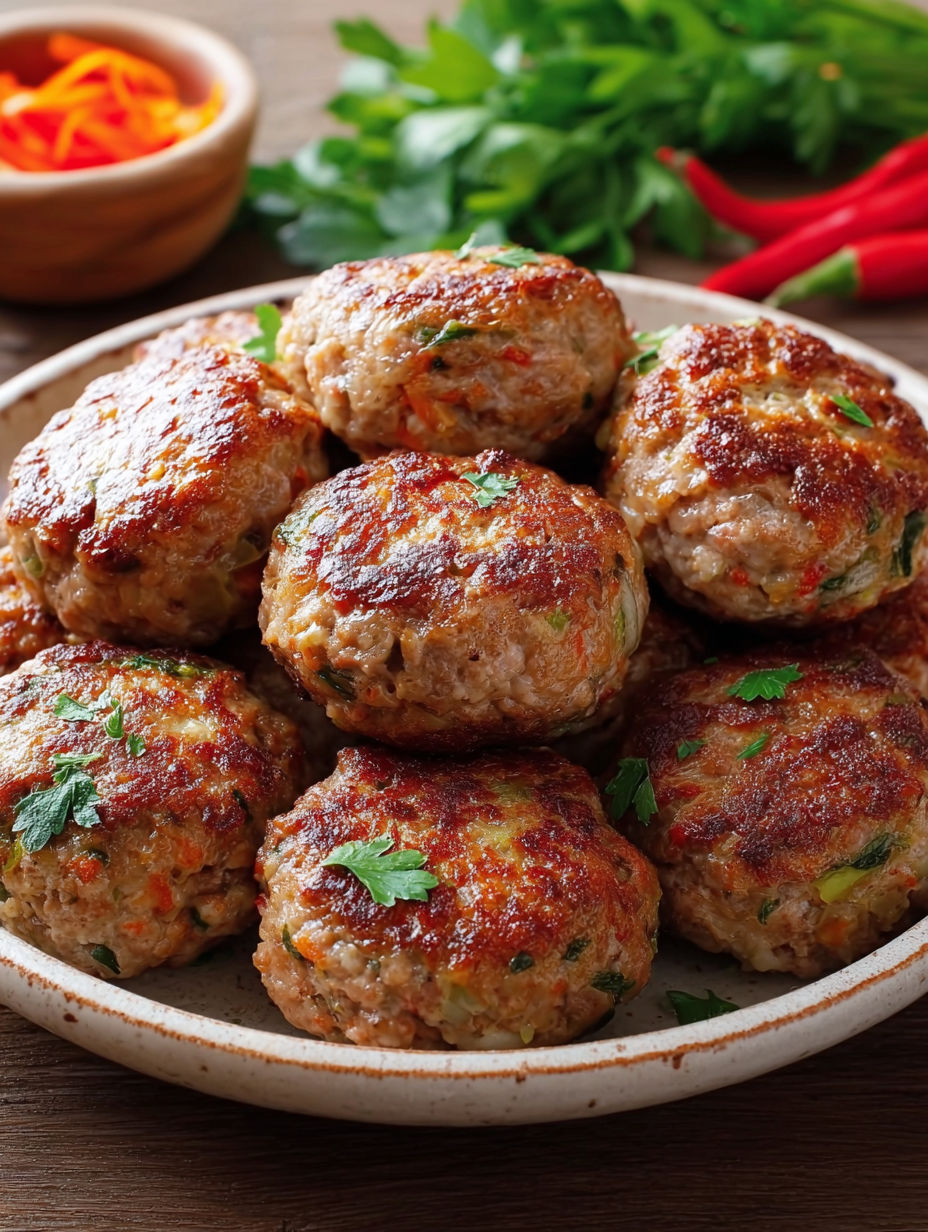
The most important step is sealing. A cheese cube should sit fully inside the meat, not close to the surface. If you can see pale cheese through a thin spot, patch it with a little more meat mixture before it hits the pan. Small cubes work better than long strips because they melt more evenly and are easier to wrap.
Do not rush the shaping. Wet your palms lightly, press the meat flat, tuck in the cheese, then pinch from all sides. Roll the ball gently until it feels smooth. If the mixture feels too soft, cover it and chill it for 15 minutes. That short rest makes the meat easier to handle and helps the outside firm up before frying.
The USDA food-safety guidance is simple for ground meats. Cook them through and check doneness with a thermometer when you can. I aim for 160 F in the center, using the USDA food safety guidance as the baseline.
Let the Vegetables Work
The vegetables are not an afterthought. Cabbage softens into sweet ribbons, carrot adds color and a little sugar, and leek gives a gentler onion flavor. Cook them in a wide pan so moisture can evaporate. If they steam in a crowded skillet, they taste flat and watery.
Season the vegetables after they start to soften. Salt too early can pull out water before the edges get any color. I like to finish them with dill and cilantro off the heat so the herbs stay fresh. If you want another hearty stuffed dinner with a similar comfort-food mood, try broccoli and cheese stuffed chicken next.
You can adjust the vegetable mix without breaking the dish. Thin zucchini half-moons, chopped mushrooms, or shredded kale can join the pan. Just cook watery vegetables long enough to lose their raw edge before plating.
The Lemon Sauce Matters
Rich meatballs need something bright. The quick sauce does that job with butter, lemon juice, garlic, and a small splash of warm milk. Keep the heat moderate. If the pan is too hot, the milk can look grainy and the garlic can turn sharp.
Stir the sauce until it lightly coats a spoon, then stop. It should drizzle, not sit like gravy. Spoon it over the meatballs and vegetables right before serving so the potatoes keep their crisp edges. For another cozy meatball dinner with a creamier finish, the meatballs baked with potatoes, cheese and bechamel are a good match.
If you want a stronger lemon flavor, add a little zest instead of more juice. Extra juice can thin the sauce and make it taste sour. Zest keeps the flavor clean and fragrant.
Smart Swaps That Fit
You have room to bend this recipe. Use all beef, all turkey, or a beef-and-pork blend if that is what you have. Ground turkey needs extra care because it can be lean. Add a tablespoon of olive oil to the mixture if it feels dry.
Mozzarella is the safest cheese for a gooey center. Cheddar, provolone, gouda, or havarti also work. Avoid very oily cheeses or crumbly cheeses for the filling because they can split or leak. If you like cheese-stuffed meatballs, the mozzarella stuffed meatballs with herbs lean harder into that classic Italian-style flavor.
For a lighter plate, skip the roasted potatoes and add more vegetables. MyPlate's vegetable guidance is a useful reminder that variety matters, and you can read more at MyPlate vegetables.
Storing Without Drying Out
Store leftovers in separate containers if you can. Meatballs keep best with a spoonful of sauce, vegetables keep their flavor well, and potatoes reheat better when they are not sitting under moisture. Everything can stay refrigerated for up to 3 days.
For reheating, use a covered skillet over low heat with a splash of water or milk. Turn the meatballs gently and stop as soon as they are hot in the center. The microwave works when you are in a hurry, but use short bursts so the cheese does not overheat and the meat does not toughen.
You can shape the meatballs earlier in the day and keep them covered in the fridge. That makes dinner much easier. Roast the potatoes while the meatballs chill, then cook the vegetables and meatballs closer to serving time.
Serve It Like Dinner
This plate already has protein, vegetables, and potatoes, so it does not need much else. A small salad with lemon vinaigrette works if you want something fresh at the table. Warm bread is useful for catching the sauce, especially if you serve the meatballs on a platter.
For a family-style dinner, spread the sauteed vegetables on a large serving dish, add the meatballs, then tuck the potatoes around the sides. Drizzle sauce over only part of the platter and pass the rest at the table. That keeps the potatoes from softening too quickly.
If you want a brighter meatball option for another night, sweet and sour meatballs with pineapple and bell pepper give you a different sauce profile with the same easy serving style.
Summary
Serve these cheese-stuffed meatballs hot, while the centers are still melty and the vegetables are glossy from the pan.
FAQs
- What cheese works best inside stuffed meatballs?
Low-moisture mozzarella gives the stretchiest center and stays mild. Cheddar melts well too, but use small cubes and seal the meat tightly because cheddar can leak faster in a hot pan.
- Can I make these meatballs with only beef?
Yes. Use 2 1/2 pounds of ground beef in place of the mixed meats. Choose 85 percent lean if you can, since very lean beef can turn firm without the chicken and pork in the mix.
- How do I keep the cheese from leaking out?
Use cold cheese cubes and wrap the meat mixture around them with no cracks. Damp hands help smooth the outside. If you have time, chill the shaped meatballs for 15 minutes before cooking.
- Can I bake the stuffed meatballs instead of frying?
Yes. Place them on a lightly oiled baking sheet and bake at 400 F for 18-22 minutes, turning once. Check that the center of the meat reaches 160 F before serving.
- How should I store leftovers?
Refrigerate the meatballs, vegetables, potatoes, and sauce in airtight containers for up to 3 days. Reheat gently in a covered skillet or a 325 F oven so the meatballs warm through without drying out.
- What can I serve with this dish?
The roasted potatoes make it a full meal, but crusty bread, rice, or a crisp green salad also work. If you want pasta night instead, serve the meatballs over buttered noodles or tomato sauce.
