 Pin it
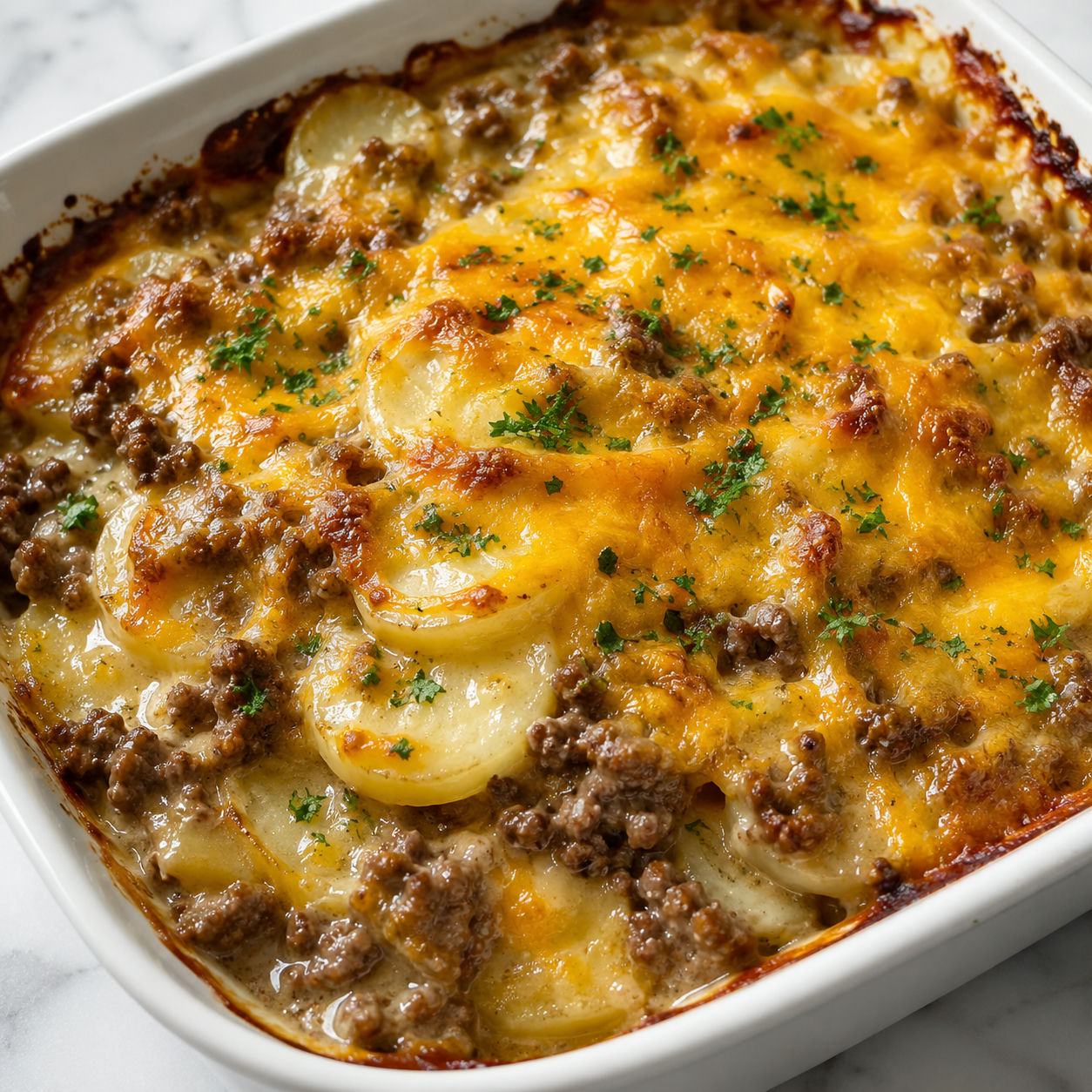
This is the kind of stick-to-your-ribs comfort food that makes people go quiet at the table for a minute. It is warm, creamy, beefy, and built for the nights when a salad is not going to cut it.
The key is not fancy technique. Brown the beef well, slice the potatoes thin, and give the casserole enough covered oven time so the potatoes soften before the cheese browns.
The Cozy Casserole Lineup
Use ground beef with a little fat so the filling stays juicy. Choose russet potatoes and slice them thin enough to cook through in the creamy sauce.
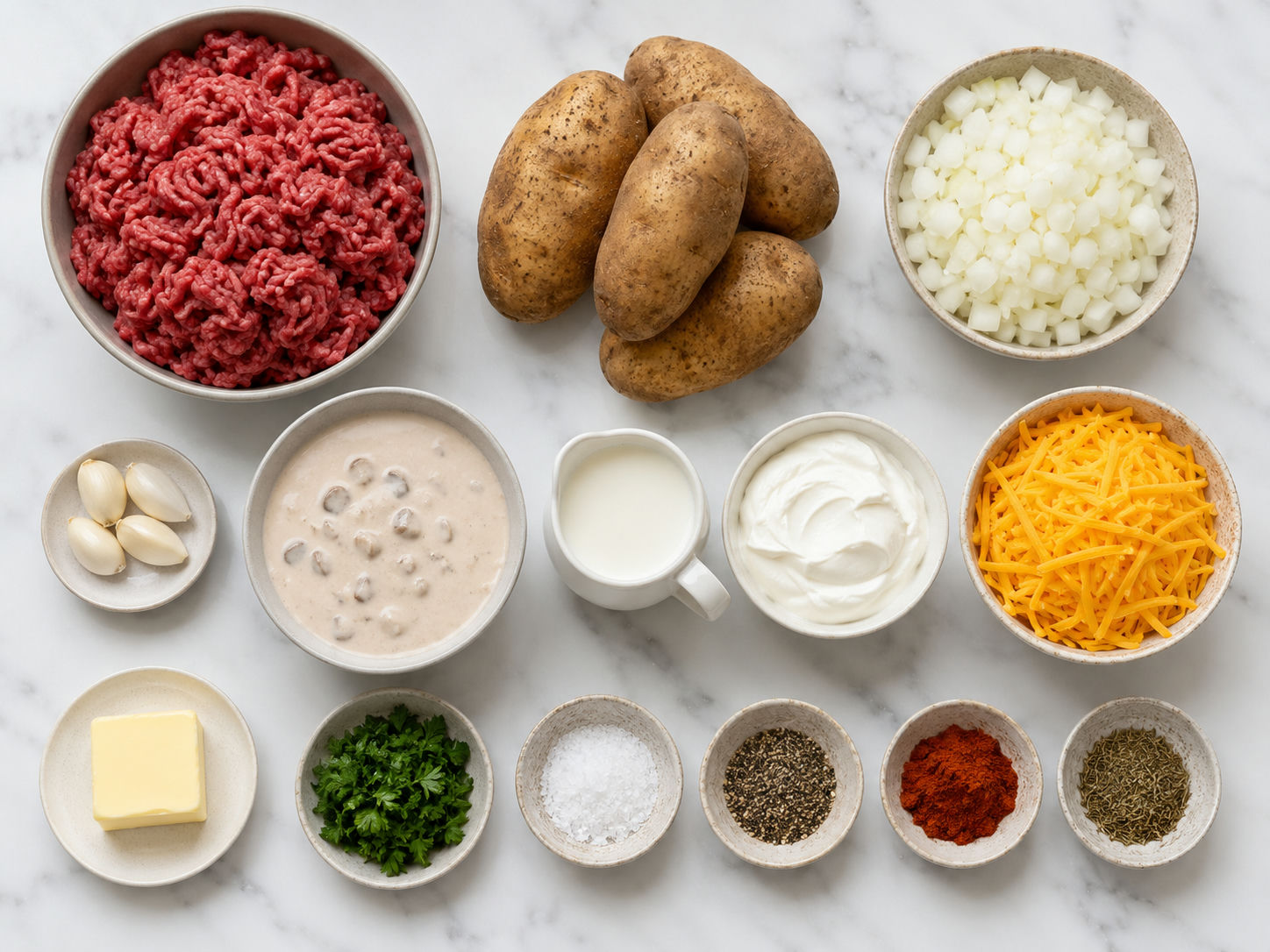
- Ground beef. Gives the casserole its hearty base and savory browned flavor.
- Russet potatoes. Bake up tender and soak in the sauce without falling apart too much.
- Yellow onion. Adds sweetness and depth once it softens with the beef.
- Garlic. Brings a warm savory edge to the filling.
- Cream of mushroom soup. Creates the quick creamy sauce and adds earthy flavor.
- Milk and sour cream. Loosen the sauce and make it smooth instead of heavy.
- Cheddar cheese. Melts into the layers and browns on top.
- Paprika and thyme. Add color and a gentle homestyle flavor.
Bake It Until Bubbling
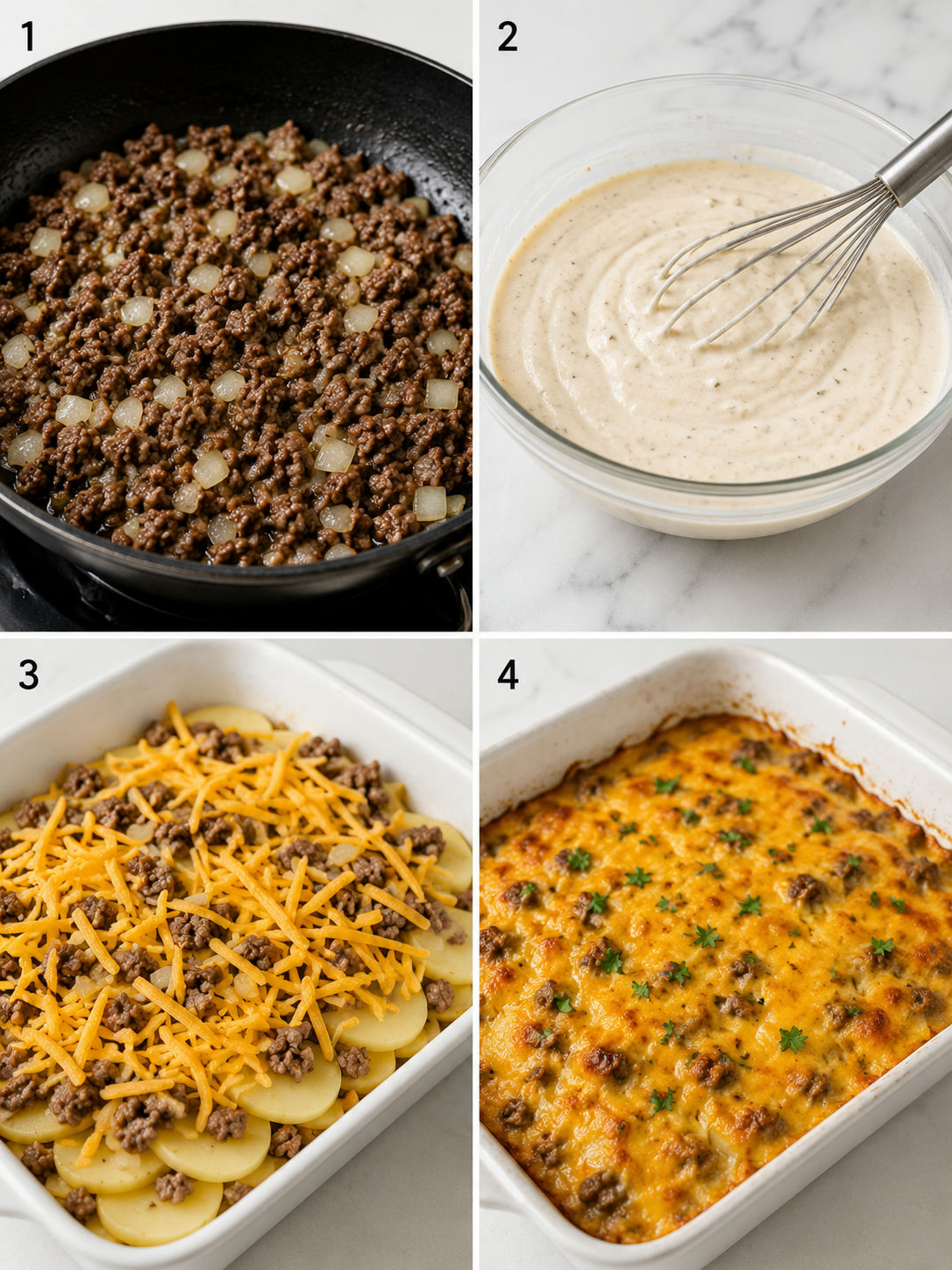
- Brown the beef. Cook the beef with onion until the meat is no longer pink and the onion has softened. Drain extra grease so the casserole does not turn oily.
- Season the filling. Stir in garlic, salt, pepper, paprika, and thyme. Let the garlic cook just until fragrant.
- Mix the sauce. Whisk the soup, milk, and sour cream until smooth. This helps it spread evenly between the potato layers.
- Layer the dish. Arrange half the potatoes in a greased baking dish, add half the beef, half the sauce, and some cheddar. Repeat the layers.
- Bake covered first. Cover tightly with foil and bake until the potatoes are nearly tender. This traps steam and keeps the top from browning too soon.
- Finish uncovered. Remove the foil, add the last handful of cheddar, and bake until bubbling and golden. Rest 10 minutes before scooping.
Thin Potatoes Matter Most
The most common problem with this casserole is undercooked potatoes. Thick slices look sturdy, but they need more time than the beef and sauce. Aim for slices about 1/8 inch thick. A mandoline makes this fast, but a sharp knife works if you take your time.
Keep the covered bake tight. Foil is not just there to stop browning. It traps steam so the potatoes soften all the way through. If you like cozy baked dinners like this, the same covered-then-uncovered rhythm helps with creamy chicken and rice casserole too.
Brown Beef Builds Flavor
Take a few extra minutes with the ground beef. Let it sit in the hot skillet long enough to pick up browned bits before you stir. That gives the casserole a deeper flavor than pale, steamed meat ever will.
Drain off excess grease, but do not rinse the beef. You want the browned flavor left behind. For food safety, ground beef should reach 160°F, and the USDA safe temperature chart is a useful reference for casseroles and meat fillings.
Swaps That Stay Cozy
You can trade the ground beef for ground turkey or sausage. Turkey tastes lighter, so add an extra pinch of thyme and paprika. Sausage is richer and saltier, so season the sauce after the meat is cooked.
For a little heat, stir chopped pickled jalapeños into the beef or use pepper jack for part of the cheddar. If you want another big, hearty dinner with the same family-table energy, try Southern style cheeseburger pie or Mississippi pot roast casserole.
Make It Less Heavy
This is comfort food, but it does not have to feel flat. A spoonful of sour cream sharpens the sauce, and a little smoked paprika keeps the cheese from tasting one-note. I like sharp cheddar because you need less of it to taste the cheese.
Serve something crisp or green on the side. A vinegar-dressed salad, steamed green beans, or roasted broccoli cuts through the creamy layers. If you want a side that leans fully cozy, easy stick of butter rice fits the same kind of meal.
Storage And Reheating
Cool leftovers within 2 hours, then refrigerate them in a covered container for up to 4 days. The USDA food safety guidance is a good place to check basic storage rules when you are saving casseroles and cooked meat dishes.
Reheat single portions covered in the microwave at medium power. For a larger amount, cover the dish with foil and warm it in a 325°F oven until hot in the center. Add a spoonful of milk around the edges if the sauce looks tight.
Summary
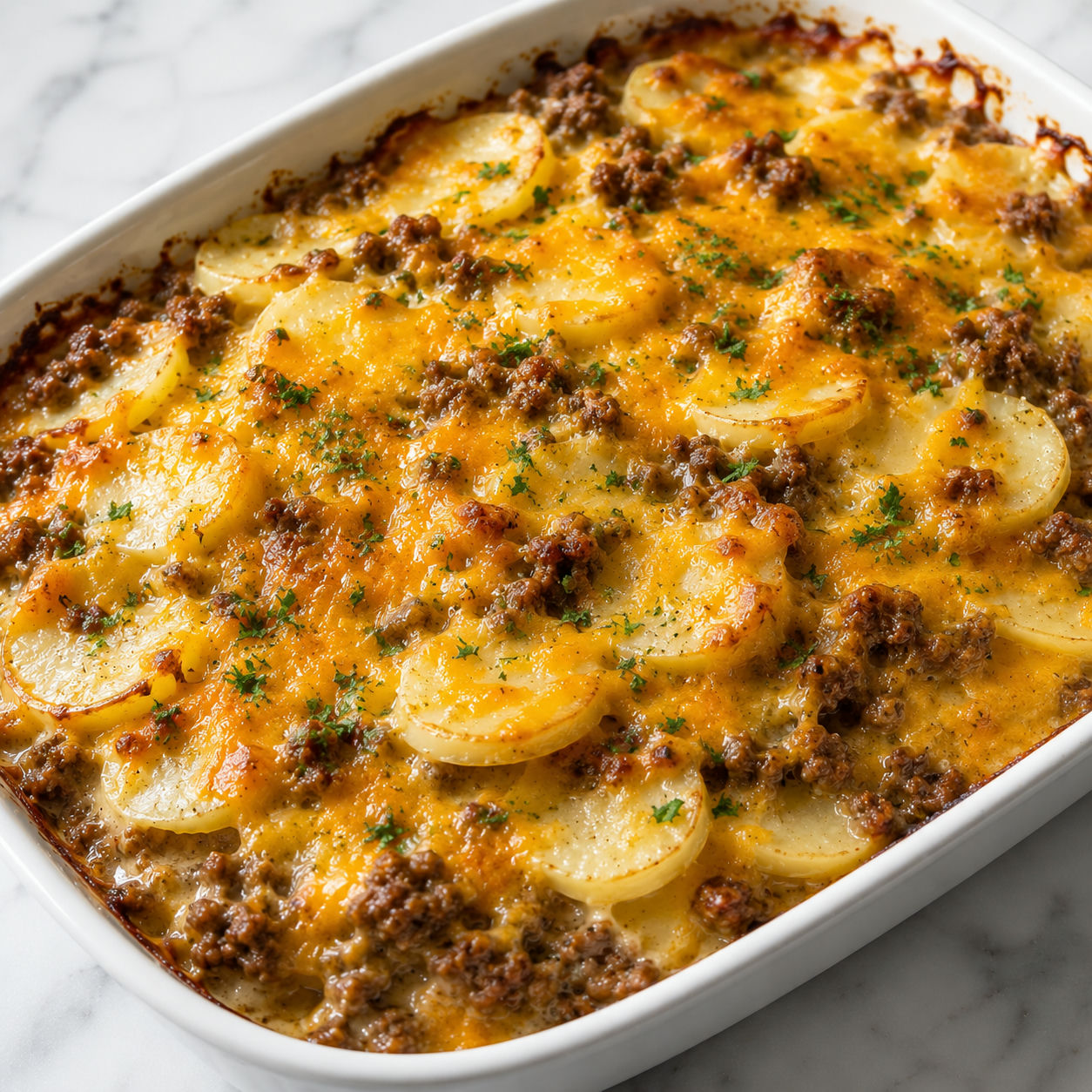
Serve this casserole hot from the oven with a sharp green salad, steamed peas, or roasted broccoli. It reheats well and makes sturdy leftovers for lunch.
FAQs
- Can I use frozen hash browns instead of sliced potatoes?
Yes. Use about 24 ounces of thawed shredded or diced hash browns. Pat them dry first so the casserole sets up instead of turning watery.
- Can I make this beef and potato casserole ahead?
You can assemble it up to one day ahead. Cover and refrigerate it, then add 10-15 minutes to the covered bake time because it will go into the oven cold.
- How do I know the potatoes are cooked?
Slide a small knife into the center of the casserole. The potatoes should feel tender with no firm crunch. If they resist, cover the dish again and bake another 10 minutes.
- Can I swap the cream of mushroom soup?
Cream of chicken, cream of celery, or a homemade white sauce all work. Mushroom gives the deepest savory flavor, but the casserole is forgiving.
- What should I serve with it?
Keep the sides simple. A crisp salad, green beans, peas, or roasted broccoli balance the richness without adding much work.
- Can I freeze leftovers?
Yes, but the potatoes soften a little after freezing. Freeze cooled portions in airtight containers for up to 2 months, then thaw overnight and reheat covered.
