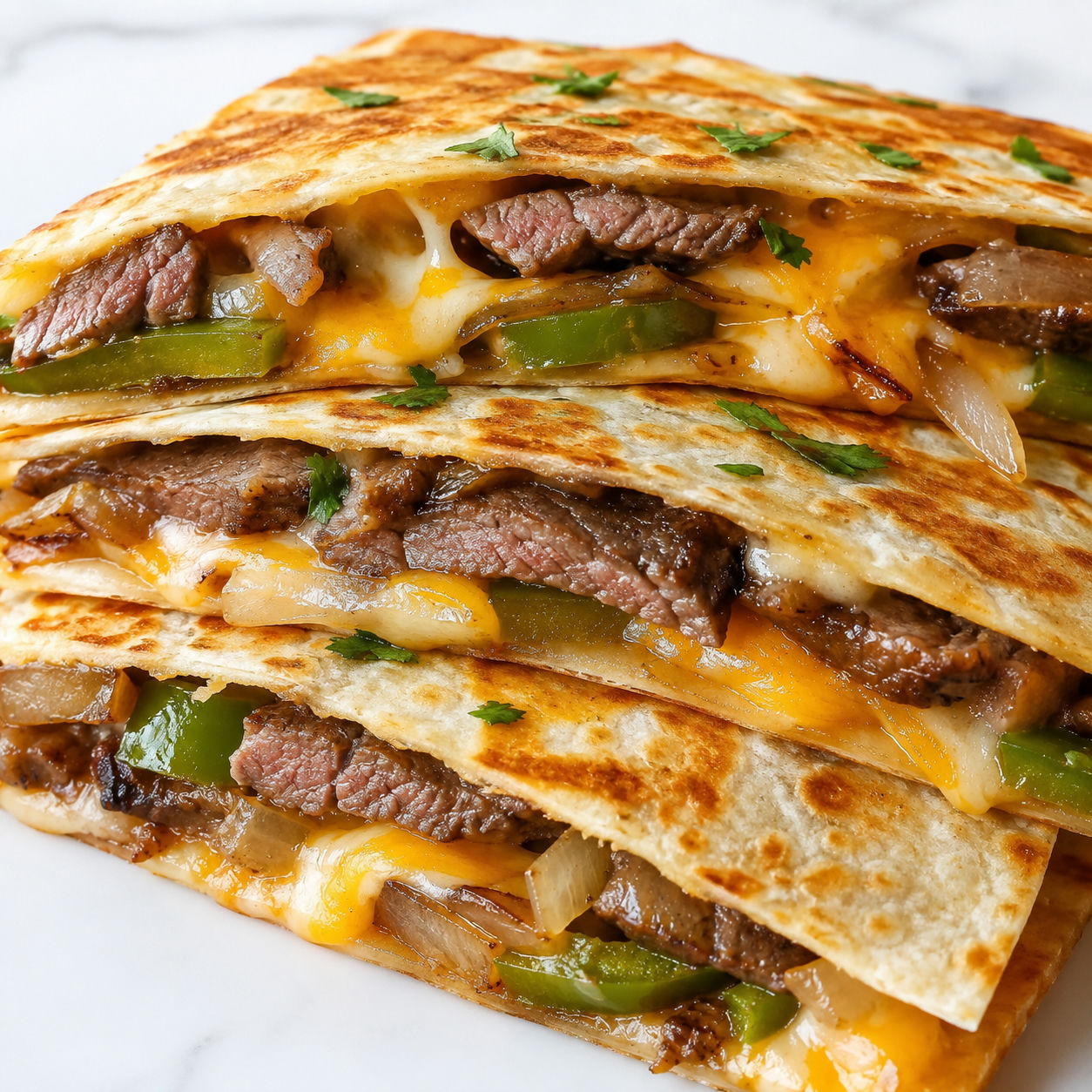
 Pin it
Steak & Cheese Quesadillas are what I make when I want steakhouse flavor without setting the table like it is Saturday night. The tortillas turn crisp in the skillet, the cheese melts into the steak, and the peppers add just enough sweetness.
The trick is simple. Cook the steak hot and fast, let it rest, then slice it thin across the grain before it goes inside the tortillas. That keeps the filling juicy instead of chewy.
Steak & Cheese Quesadilla Basics
Use a steak cut that cooks quickly and has enough flavor to stand up to the cheese. The filling should be juicy but not wet, because extra moisture softens the tortilla.
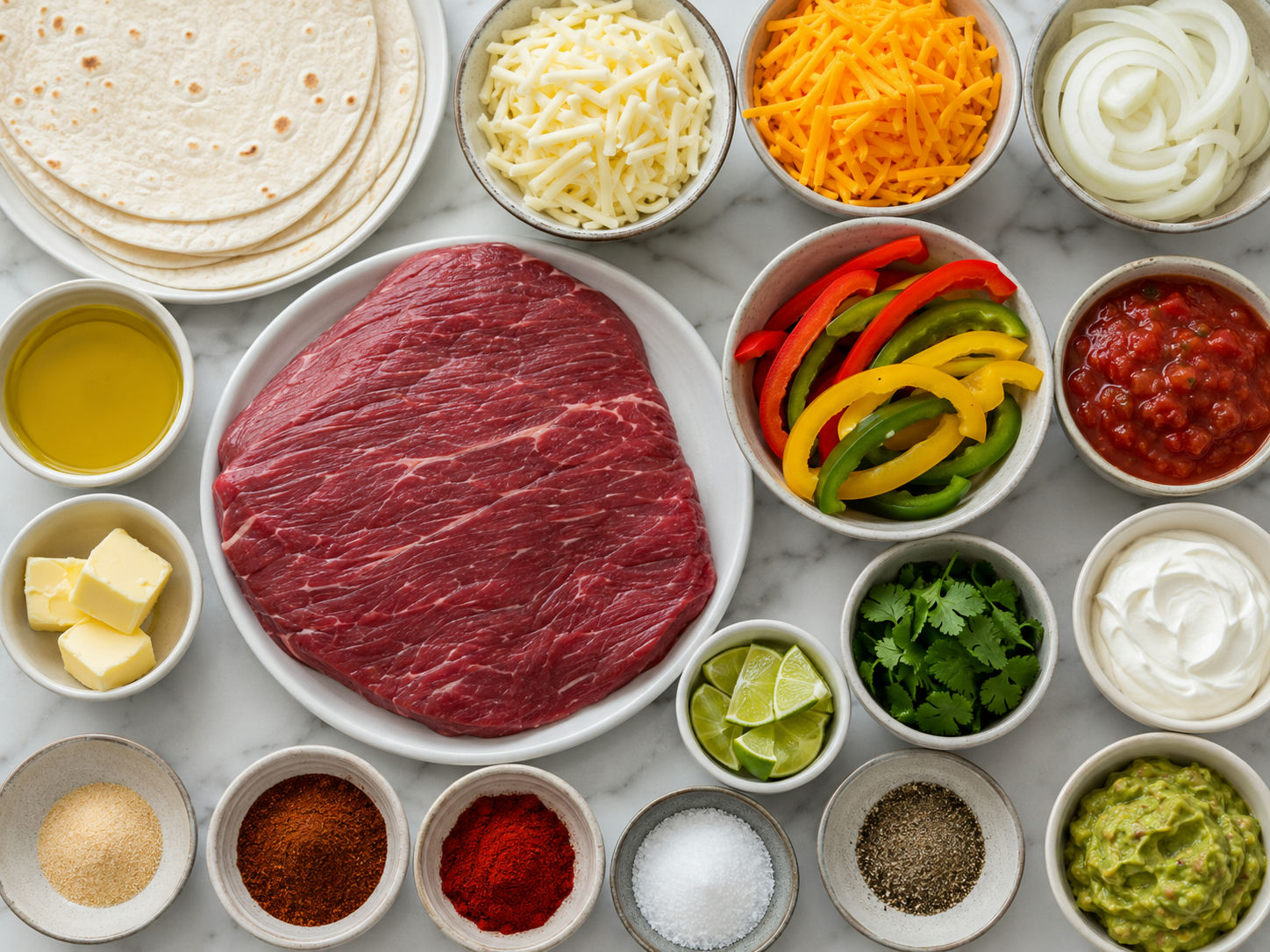
- Flank steak or sirloin. Gives the quesadillas a beefy center that slices thin and cooks fast.
- Flour tortillas. Brown evenly in the skillet and hold the filling without breaking.
- Monterey Jack cheese. Melts smooth and helps bind the steak to the tortilla.
- Sharp cheddar. Adds deeper flavor and that golden cheesy edge where it touches the pan.
- Bell pepper. Brings sweetness and color without overpowering the steak.
- Yellow onion. Softens in the skillet and makes the filling taste closer to a cheesesteak.
- Garlic powder, chili powder, and smoked paprika. Season the steak quickly without a long marinade.
- Lime and cilantro. Brighten the rich filling right before serving.
Get Them Crisp and Melty
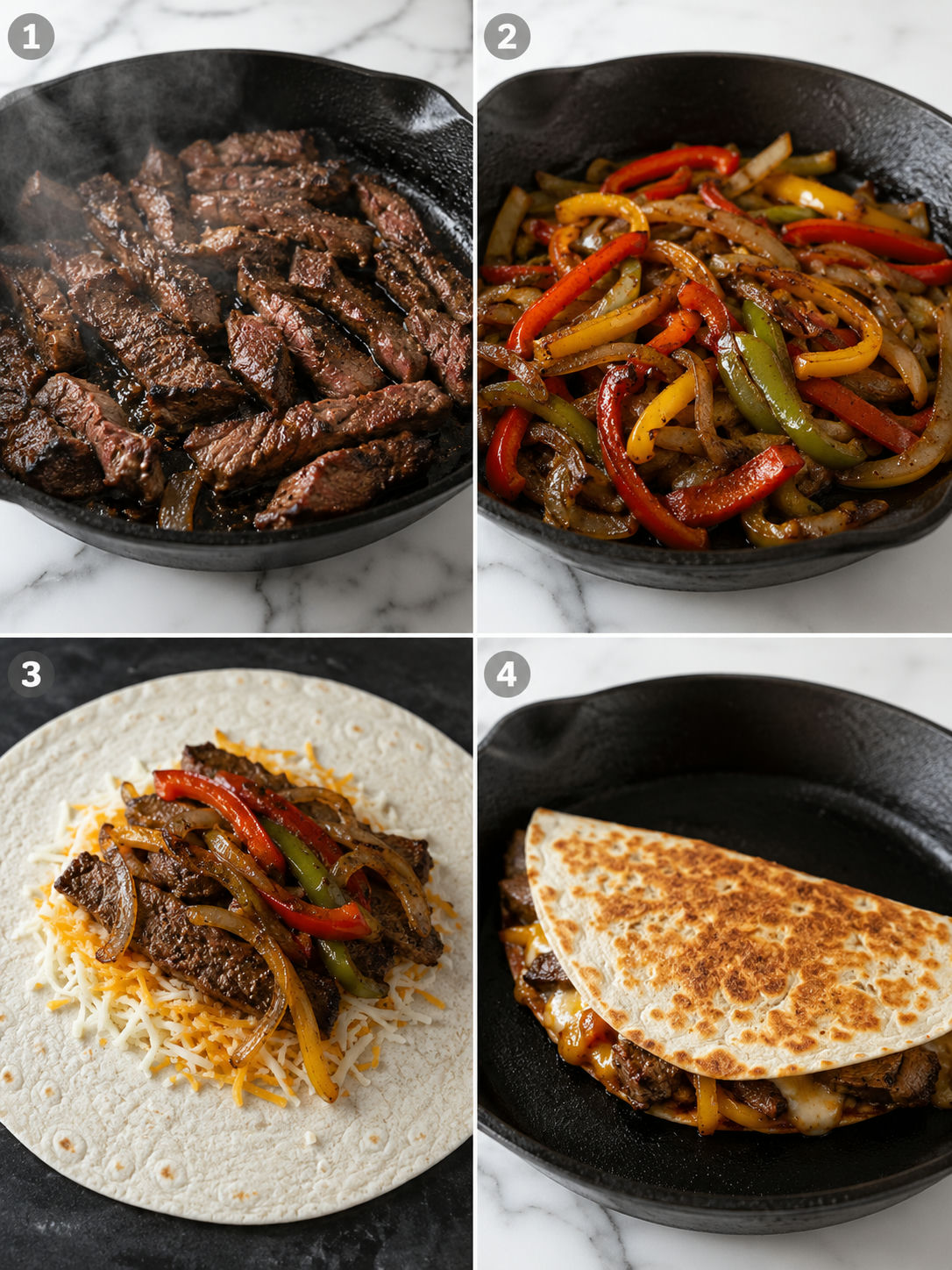
- Season the steak. Pat the steak dry, then coat it with oil, salt, pepper, garlic powder, chili powder, and smoked paprika. A dry surface browns faster.
- Sear it hot. Cook the steak in a hot skillet for 3-5 minutes per side, depending on thickness. Use an instant-read thermometer if you want a precise doneness.
- Rest and slice. Let the steak rest for 5 minutes, then slice it thin across the grain. This matters more than almost anything else in the recipe.
- Cook the vegetables. Saute the onion and bell pepper until softened and lightly browned. Keep them tender, not watery.
- Build the quesadillas. Layer cheese, steak, vegetables, and more cheese on one half of each tortilla, then fold closed. Cheese on both sides helps glue the filling together.
- Toast in the skillet. Cook each quesadilla in a lightly buttered skillet until golden and crisp, 2-3 minutes per side. Rest for a minute before cutting so the cheese does not run out.
Thin Steak Cooks Better
Quesadillas are not the place for thick slabs of steak. You want steak that can be sliced into tender strips and spread evenly through the tortilla. Flank and skirt steak have visible grain, so watch the lines in the meat and cut across them after resting. Sirloin is a little more forgiving and still tastes beefy.
For food safety, the USDA notes that whole cuts of beef should reach 145°F with a rest time. You can read the guidance in the USDA beef safety guide. If you prefer your steak pinker, use your own judgment and a clean thermometer. Either way, rest the meat before slicing so the juices settle instead of running across the cutting board.
Cheese Choice Matters
A quesadilla needs cheese that melts before the tortilla gets too dark. Monterey Jack is my first pick because it melts evenly and stretches nicely. Sharp cheddar brings flavor but can get a little oily by itself, so I like it mixed with Jack. Provolone is a good swap if you want a Philly-style filling, especially if you already like Philly Cheese Steak Sloppy Joes or Philly steak cheese fries.
Shred cheese from a block when you can. Pre-shredded cheese is convenient, but it is coated to keep it from clumping. That coating can make the melt less silky.
Skillet Heat and Timing
Medium heat is the sweet spot once the quesadillas hit the pan. High heat gives you dark spots before the cheese has time to melt. Low heat dries the tortilla out and makes the steak cook again for too long. A cast-iron skillet is great, but any heavy skillet works.
Use just enough butter or oil to gloss the pan. The tortilla should sizzle gently when it lands. Press lightly with a spatula, then leave it alone until the underside turns golden. Flip once. If cheese leaks out, let it crisp at the edge for a few seconds before sliding the quesadilla to a board.
Smart Filling Swaps
You can keep the base method and change the mood. Add sliced jalapenos for heat, swap cheddar for pepper Jack, or use mushrooms in place of bell pepper. If you like a loaded version, borrow the bigger filling idea from Loaded Steak Quesadillas. For a griddle night, the same filling style works well in Blackstone steak cheese quesadillas.
Leftover fajita vegetables are also welcome here. Just cook off any extra liquid before assembling. Wet filling is the fastest way to lose that crisp shell.
Storage and Reheating
Quesadillas are best right away, but leftovers still hold up. Cool the wedges, then refrigerate them in an airtight container for up to 3 days. FoodSafety.gov has a helpful cold storage chart if you want broader timing for cooked leftovers.
Reheat wedges in a dry skillet over medium-low heat. The cheese will soften again and the tortilla will crisp back up. The microwave works in a pinch, but the tortilla turns soft.
What to Serve Alongside
Serve these with salsa, sour cream, guacamole, lime wedges, or a crunchy green salad. If you are feeding a group, cut each quesadilla into thirds and set out a few dips. Philly cheese steak dip makes a fun extra for a game-day table, but these are filling enough to stand alone for dinner.
Summary
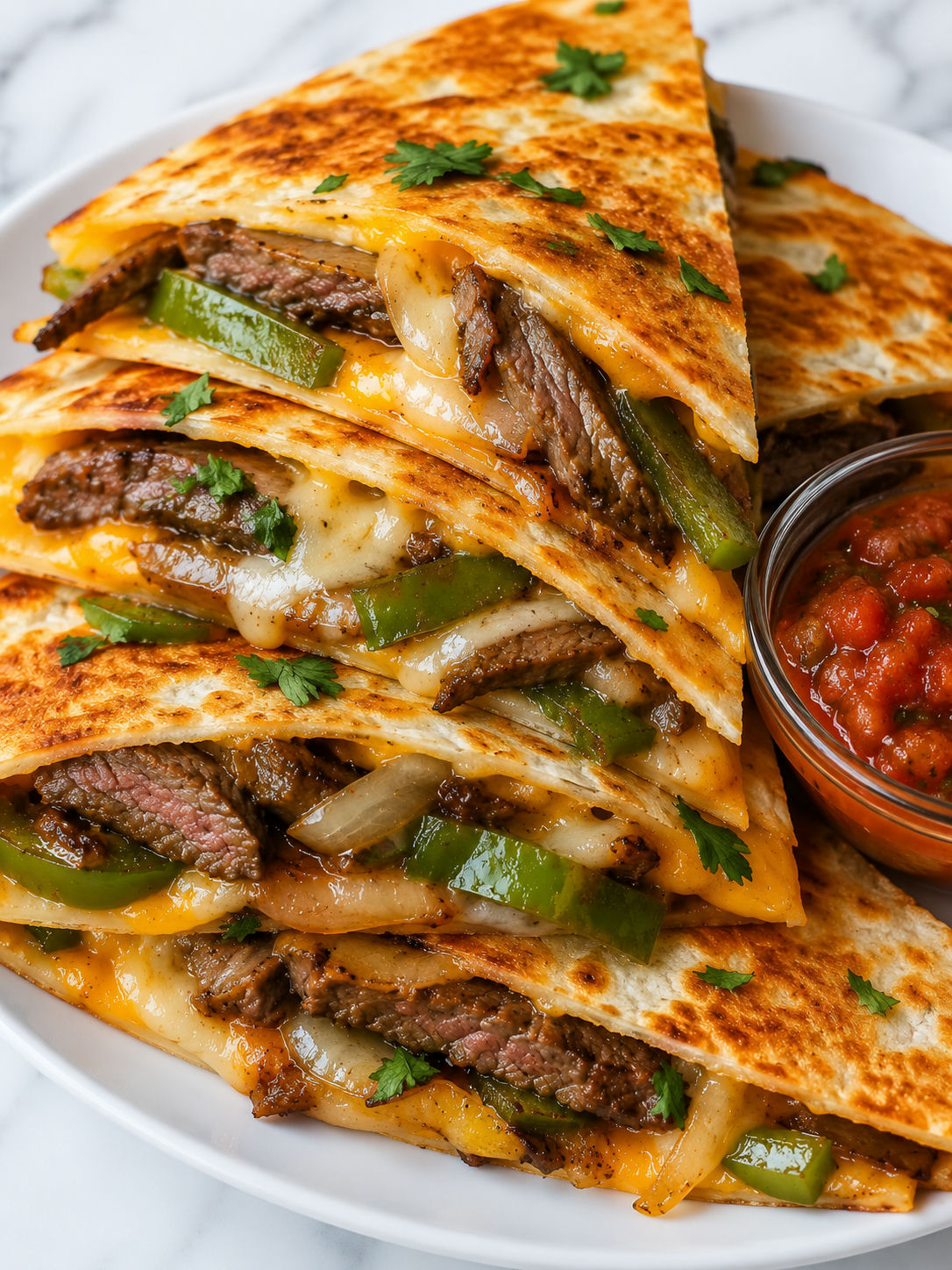
Serve these quesadillas hot from the skillet with salsa, sour cream, guacamole, or a quick squeeze of lime.
FAQs
- What steak is best for Steak & Cheese Quesadillas?
Flank steak, skirt steak, sirloin, or New York strip all work. The most important part is slicing the cooked steak thin across the grain so it stays tender inside the tortilla.
- Can I use leftover steak?
Yes. Slice leftover steak thin and warm it gently with the peppers for a minute before assembling. Do not cook it hard again or it can dry out.
- What cheese melts best in quesadillas?
Monterey Jack melts smoothly and cheddar adds sharper flavor. Provolone also works well if you want a cheesesteak-style filling.
- How do I keep the quesadillas crisp?
Use moderate heat and just a thin film of butter or oil. Too much fat makes the tortillas greasy, while heat that is too high browns the outside before the cheese melts.
- Can I make these gluten-free?
Yes. Use sturdy gluten-free tortillas and check that your seasonings are gluten-free. Warm the tortillas briefly before filling so they fold without cracking.
- How should I store leftovers?
Let the quesadilla wedges cool, then store them in an airtight container in the fridge for up to 3 days. Reheat in a dry skillet or air fryer so the tortilla gets crisp again.
