 Pin it
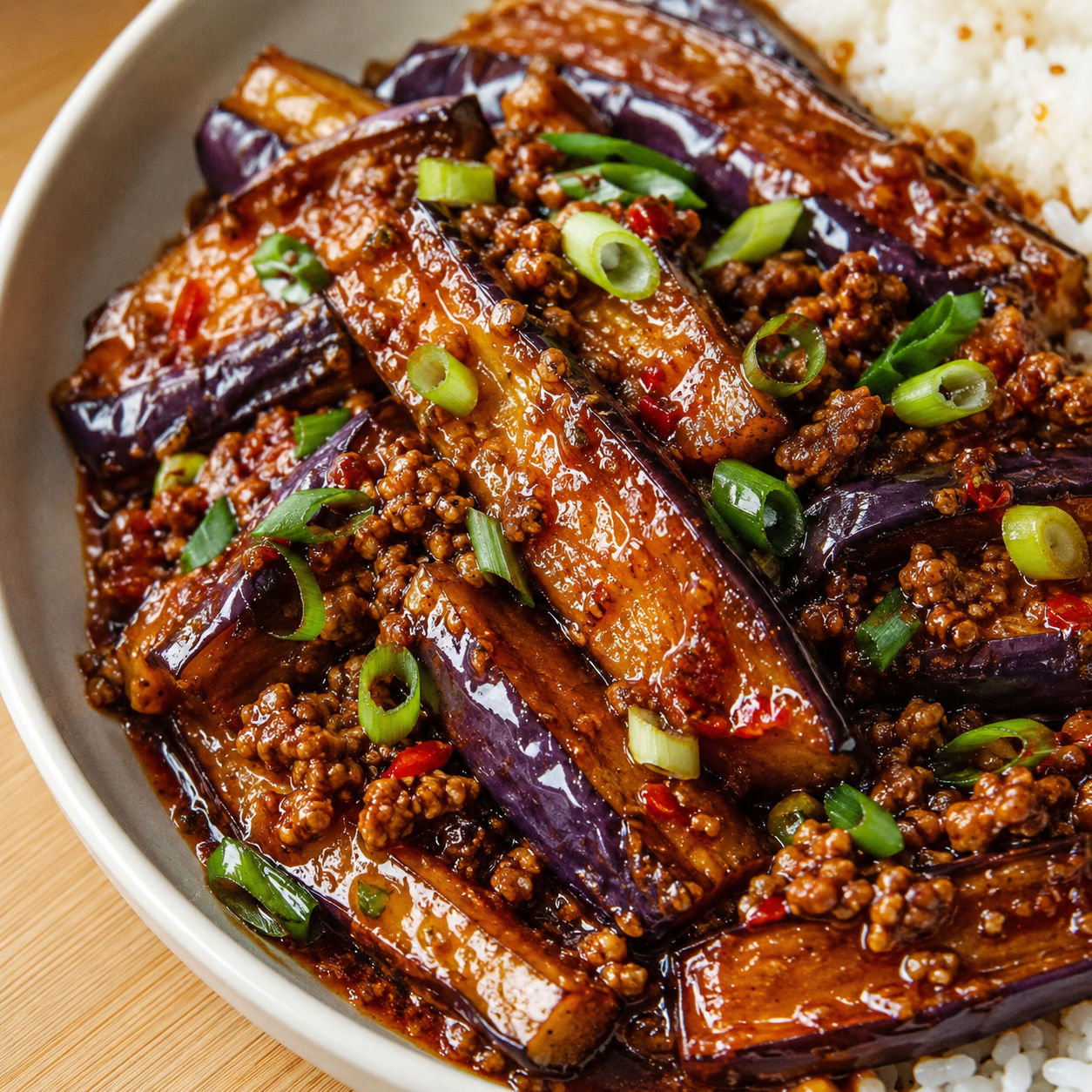
Spicy Sichuan Eggplant with Mince, Garlic, and Ginger is the kind of dish that makes a small amount of meat taste generous. The eggplant turns soft and silky, the pork catches the chili bean paste, and the garlic-ginger sauce clings to every piece.
I like this version because it keeps the restaurant feel without asking you to deep-fry a full pot of oil. You brown and steam the eggplant first, then finish everything fast in one pan.
The Bold Pantry Lineup
Choose firm eggplant with shiny skin and no soft spots. The sauce is salty, tangy, lightly sweet, and built around fermented chili bean paste, so measure before the pan gets hot.
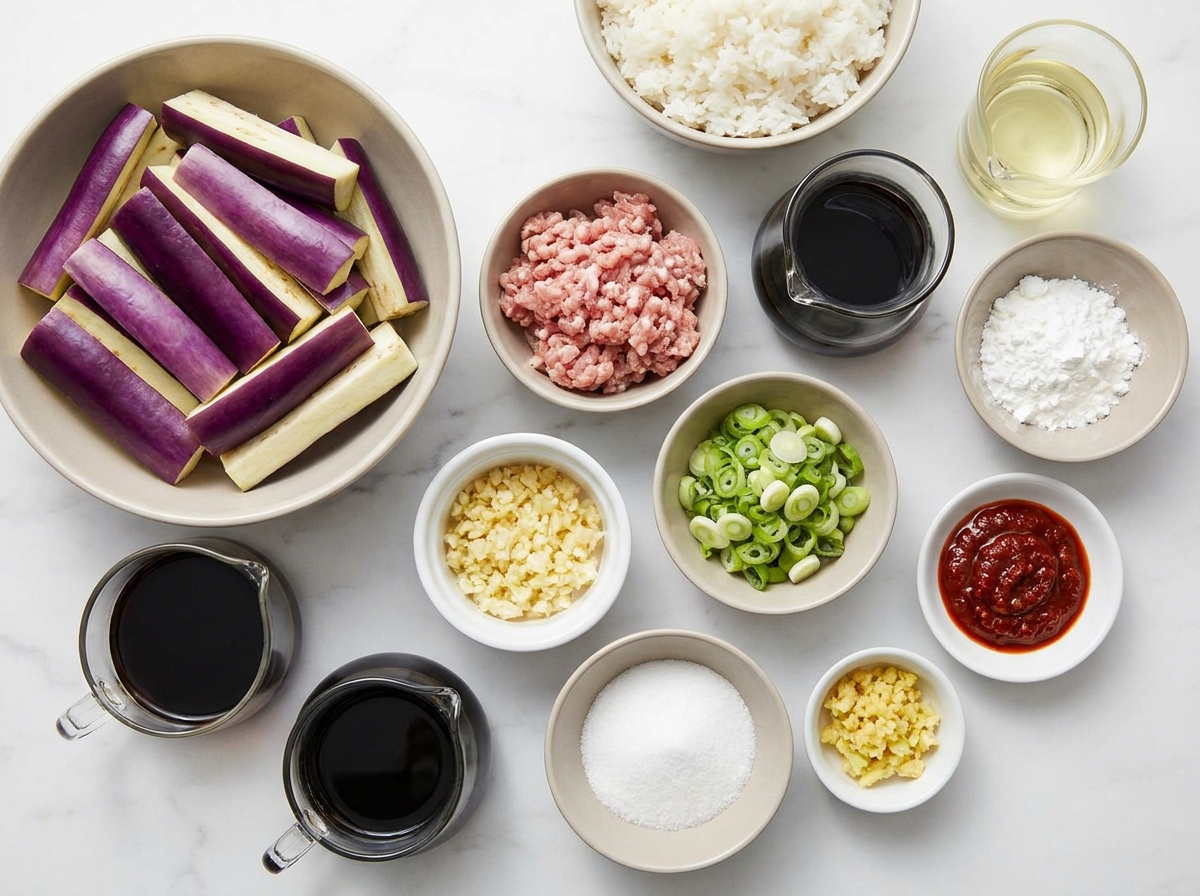
- Eggplant. Turns plush and silky once browned and steamed, then soaks up the sauce.
- Pork mince. Adds savory richness without making the dish heavy.
- Garlic. Gives the sauce its sharp, fragrant base.
- Fresh ginger. Adds warmth and keeps the pork from tasting flat.
- Doubanjiang. Brings fermented chile depth, salt, and a deep red color.
- Soy sauce. Rounds out the savory side of the sauce.
- Chinese black vinegar. Adds the tang that keeps the dish lively.
- Cornstarch. Thickens the sauce so it glazes instead of pooling thinly.
- Scallions. Go in at the end for a fresh bite and color.
Cook It In Stages
- Mix the sauce. Stir soy sauce, black vinegar, sugar, cornstarch, and water in a small bowl until smooth. This keeps the cornstarch from clumping later.
- Brown the eggplant. Cook the eggplant batons in oil until the cut sides pick up color. Add a splash of water, cover, and steam until a knife slides in easily.
- Cook the mince. Stir-fry the pork until no pink remains. Break it into small bits so it spreads through the sauce.
- Bloom the aromatics. Add garlic, ginger, scallion whites, and doubanjiang. Cook briefly until the oil turns red and the pan smells spicy.
- Glaze the eggplant. Return the eggplant, pour in the sauce, and toss gently until glossy and thick.
- Finish hot. Add scallion greens and a small spoon of chili oil if you want more heat. Serve right away with rice.
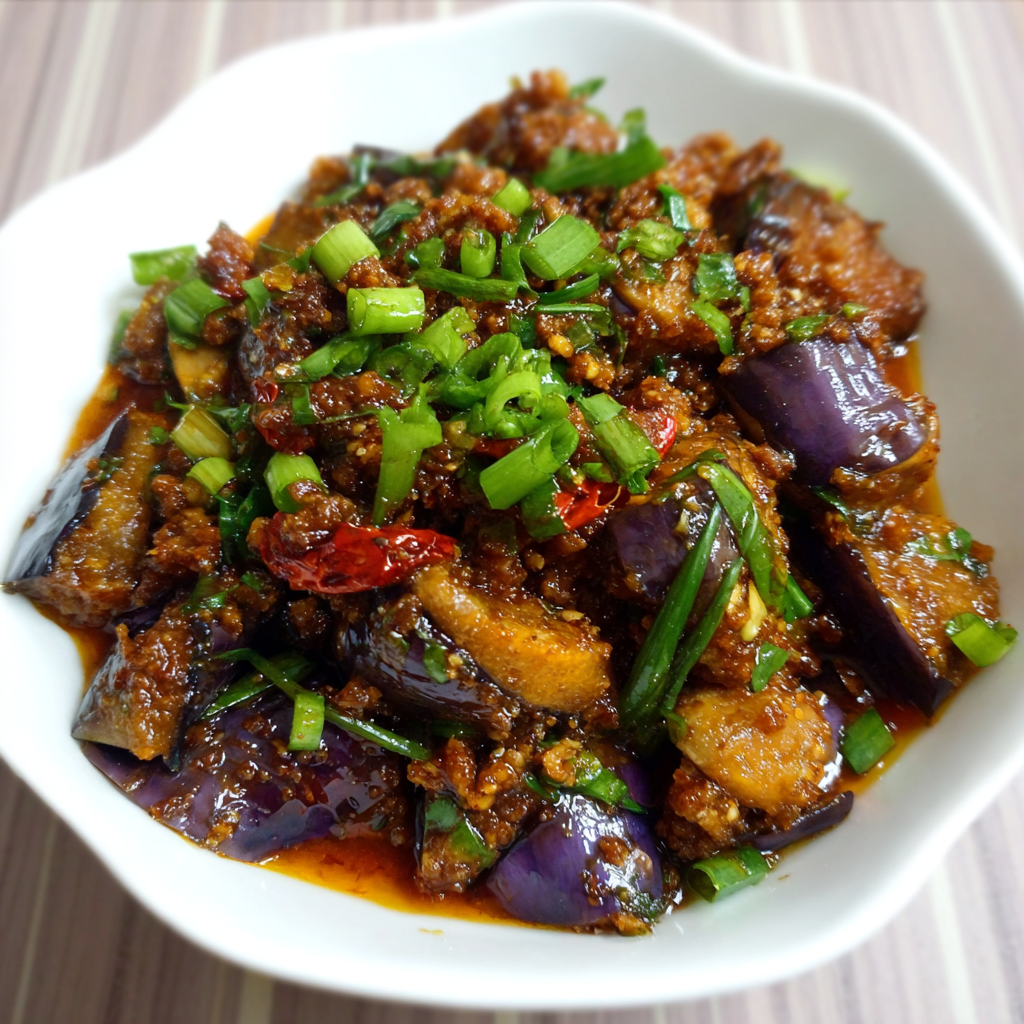
Spicy Sichuan Eggplant With Mince
The make-or-break step is cooking the eggplant before the sauce goes in. Raw eggplant drinks oil and stays spongy. Properly cooked eggplant collapses a little and turns creamy inside. I use a brown-and-steam method because it gives you that soft texture with far less oil than deep-frying.
If you already love this flavor family, the site also has Spicy Sichuan Eggplant Mince, which leans into the same eggplant and chile-bean comfort. For a sauce base you can keep around, try this all-purpose stir fry sauce with soy, garlic, and ginger.
Why The Sauce Shines
Sichuan-style eggplant often uses the yu xiang flavor profile, which tastes savory, sweet, tangy, garlicky, and spicy. There is no fish in it. The name points to a seasoning style that was also used with fish. Doubanjiang gives the sauce its backbone, while black vinegar sharpens the edges. A small amount of sugar matters because it balances the salty fermented paste.
For more background on a classic version, RecipeTin Eats has a helpful discussion of Chinese eggplant with minced pork. China Sichuan Food also explains how minced pork deepens braised eggplant with garlic sauce.
Swaps That Still Taste Right
Ground chicken, turkey, or beef can replace pork. If you use lean poultry, add a little extra oil so the mince does not dry out. For a meatless version, crumble firm tofu and brown it well before adding the aromatics. Mushrooms are good too, especially chopped shiitakes or cremini.
No Chinese black vinegar is not a deal breaker. Use rice vinegar with a tiny splash of balsamic. It will not taste identical, but it gets close enough for a weeknight dinner. Serve this next to quick spicy garlic bok choy if you want a full vegetable-heavy meal.
Heat Without Harshness
Blooming doubanjiang in oil for a short minute changes the whole pan. The paste loosens, the oil turns brick red, and the raw fermented edge softens. Do not let the garlic brown hard at this stage. Burnt garlic makes the sauce bitter fast.
If you want more tingle, add a small pinch of ground Sichuan pepper with the garlic and ginger. If you only want more chile heat, finish with chili oil instead. That keeps the base sauce balanced and lets each person adjust their bowl.
Storage And Rice Bowls
This dish is best when it is glossy and hot from the pan, but leftovers still make a good rice bowl. Cool them quickly and refrigerate in a shallow container. The USDA advises cooking ground pork to 160°F, and its ground meat safety guide is worth checking if you cook mince often.
Reheat in a skillet over medium-low heat with a tablespoon or two of water. Stir gently so the eggplant does not break down completely. Add fresh scallions after reheating to wake it back up.
Summary
Serve hot with steamed rice, scallions, and a spoon. The sauce is rich enough to carry the whole bowl.
FAQs
- What kind of eggplant works best for Sichuan eggplant with mince?
Chinese or Japanese eggplant is easiest because the skin is tender and the flesh cooks quickly. A regular globe eggplant also works. Cut it into shorter batons and make sure it is fully soft before adding the sauce.
- Can I use beef, chicken, or turkey instead of pork mince?
Yes. Pork gives the softest, richest result, but chicken or turkey mince works well if you add an extra teaspoon of oil. Beef makes the dish deeper and more savory, so use a little less soy sauce if your doubanjiang is very salty.
- Is doubanjiang necessary?
Doubanjiang gives the dish its fermented chile depth and red color. If you cannot find it, use a mix of chili garlic sauce and a little miso. The flavor will be different, but it still gives salt, heat, and body.
- How spicy is this recipe?
It is warmly spicy rather than punishing. Most of the heat comes from doubanjiang and optional chili oil. For a milder pan, use half the chili bean paste and skip the chili oil at the end.
- Can I make this gluten-free?
Yes, if you use gluten-free tamari instead of soy sauce and check that your doubanjiang is gluten-free. Some chile bean pastes contain wheat, so read the label before cooking.
- How do I store and reheat leftovers?
Store leftovers in an airtight container for up to 3 days. Reheat gently in a skillet with a splash of water. The eggplant will soften more, but the sauce stays good.
