 Pin it
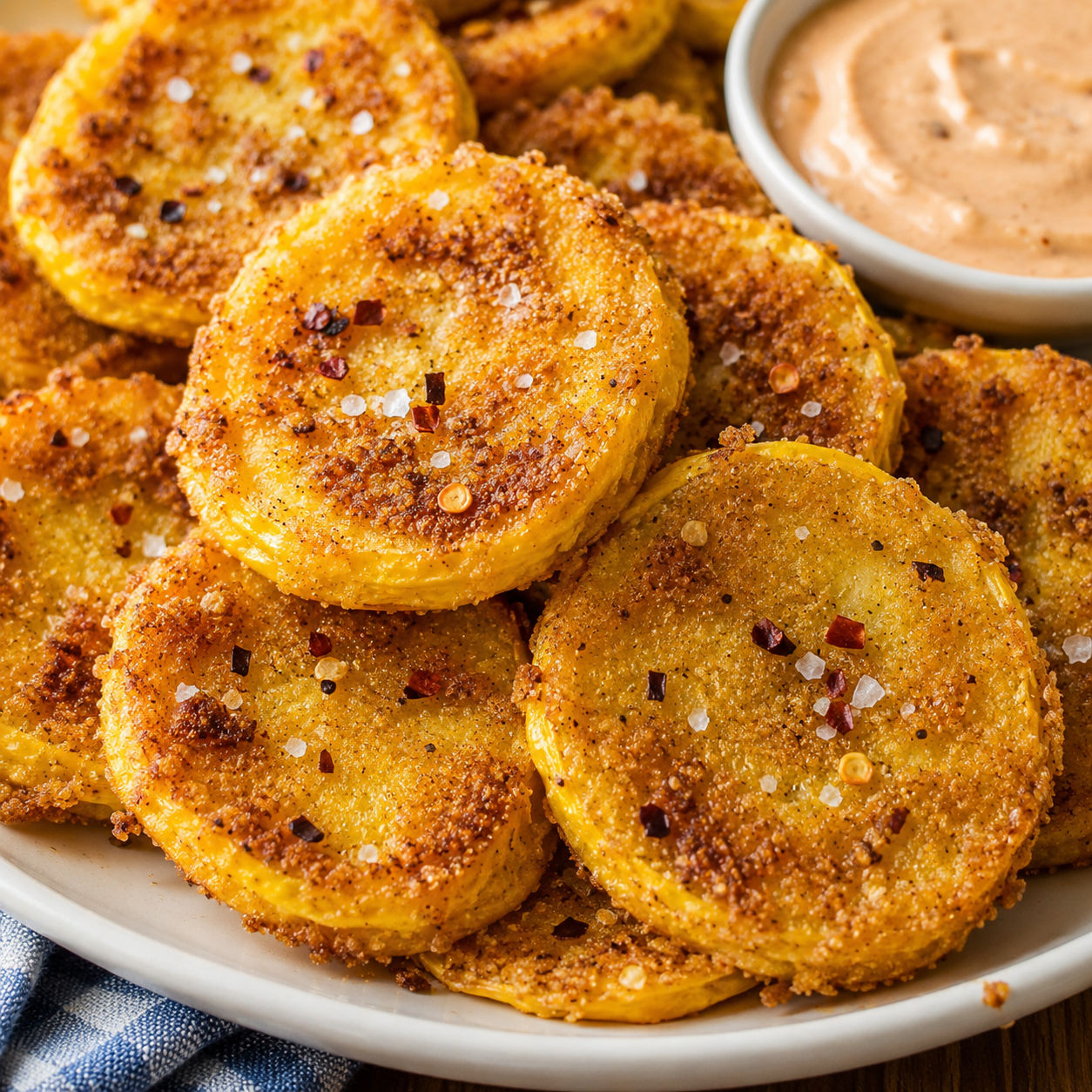
Crispy Southern Fried Squash is the kind of side dish that disappears before the main course hits the table. The centers stay soft and sweet, while the cornmeal crust turns golden and craggy around the edges.
I like this best with small yellow squash from the market, sliced thin enough to cook fast but not so thin that they go limp. A short buttermilk soak helps the coating cling, and a cast iron skillet gives the rounds that old-school fried edge.
Summer Squash With Crunch
Start with firm yellow squash that feels heavy for its size. Smaller squash have tender skins and fewer seeds, which means less water in the skillet.
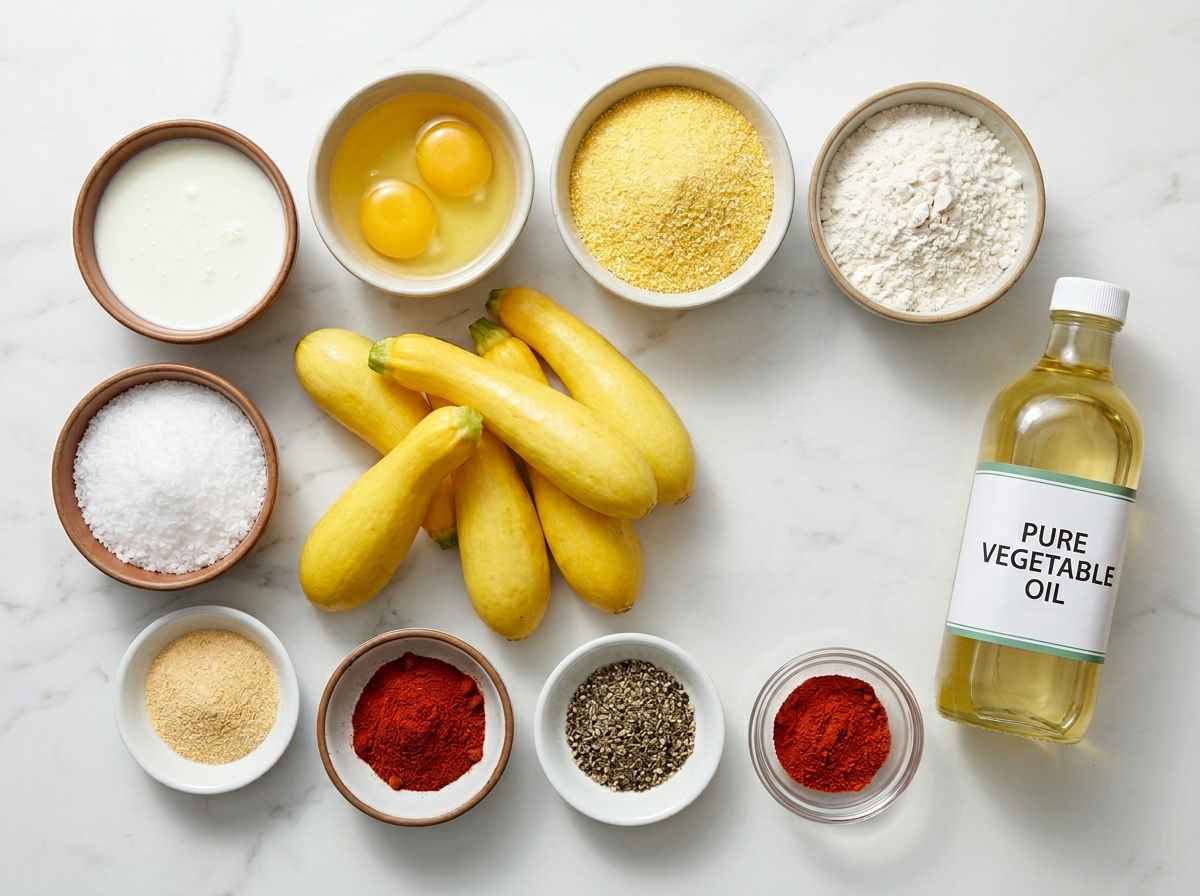
- Yellow squash. The sweet, tender base of the recipe. Thin rounds fry quickly and keep a soft center.
- Buttermilk. Adds tang and helps the cornmeal coating grab onto each slice.
- Eggs. Give the wet dip enough body to hold the breading in place.
- Yellow cornmeal. Brings the sandy crunch that makes Southern fried squash taste right.
- All-purpose flour. Lightens the coating so it does not fry up gritty or heavy.
- Garlic powder and paprika. Add savory warmth without covering the squash flavor.
- Cayenne or red pepper flakes. Optional heat for a sharper finish.
- Neutral oil. Canola, vegetable, or peanut oil all handle skillet frying well.
Crispy Southern Fried Squash Method
- Slice and dry. Cut the squash into even 1/4-inch rounds, then pat them dry with a clean towel so the coating sticks instead of sliding off.
- Mix the dips. Whisk buttermilk and eggs in one shallow bowl. Stir cornmeal, flour, salt, pepper, garlic powder, paprika, and cayenne in another.
- Coat the squash. Dip the slices in the buttermilk mixture, let the excess drip off, then press each round into the cornmeal coating on both sides.
- Heat the skillet. Warm 1/2 inch of oil in a cast iron skillet to about 350°F. A pinch of cornmeal should sizzle right away.
- Fry in batches. Add a single layer of squash and cook 2-3 minutes per side until deep golden. Do not crowd the pan.
- Drain and season. Move the fried squash to a wire rack and salt it while hot. Serve right away.
Oil Heat Matters
The oil should be hot enough to set the coating fast. If it is too cool, the squash soaks up oil and the breading turns heavy. If it is smoking, the cornmeal darkens before the squash cooks through. Aim for 350°F and give the skillet a minute to recover between batches. I use a thin layer of oil instead of deep-frying here because the squash rounds are small and cook quickly. A cast iron skillet holds heat well, but any heavy pan works. Wash the squash before slicing, following the FDA produce safety guidance, then dry it well before it touches the buttermilk.
Keep the Crust Light
Southern fried squash should taste like squash with a crisp jacket, not like a thick fritter. Shake off extra buttermilk before dredging and press the dry mixture on gently. Too much wet dip makes clumps that fall off in the oil. The flour and cornmeal blend is also important. Cornmeal alone can taste rough, while flour alone misses that familiar Southern crunch. This same balance of hot oil and a dry surface is what makes Southern fried potatoes and crispy fried mushrooms work so well.
Smart Swaps for Squash
Zucchini works if yellow squash is not available. Cut it the same thickness and dry it carefully, because zucchini can be wetter. For a gluten-free version, swap the flour for a gluten-free blend or use more fine cornmeal. For extra crunch, add two tablespoons of panko to the dry mix, though that takes it away from the most traditional texture. If you would rather bake than fry, try the same summer-squash flavor in crispy baked zucchini chips or turn extra squash into Southern squash casserole.
Serve It While Hot
Fried squash is at its best right after the salt hits the crust. Serve it with ranch, comeback sauce, spicy mayo, or a squeeze of lemon if you want a brighter bite. It also belongs beside beans, barbecue, fried chicken, and fried cornbread. If you are cooking for a crowd, keep finished batches on a rack in a 225°F oven while the rest fry. Do not cover them with foil. That softens the crust fast.
Leftovers Need Dry Heat
Leftovers will not be quite as crisp, but they can still taste good. Cool the squash completely, then refrigerate it in a shallow airtight container for up to two days. FoodSafety.gov has a helpful cold storage chart for general leftover timing. Reheat fried squash in an air fryer or a 400°F oven until hot and crisp around the edges. Skip the microwave unless you do not mind a softer crust.
Summary
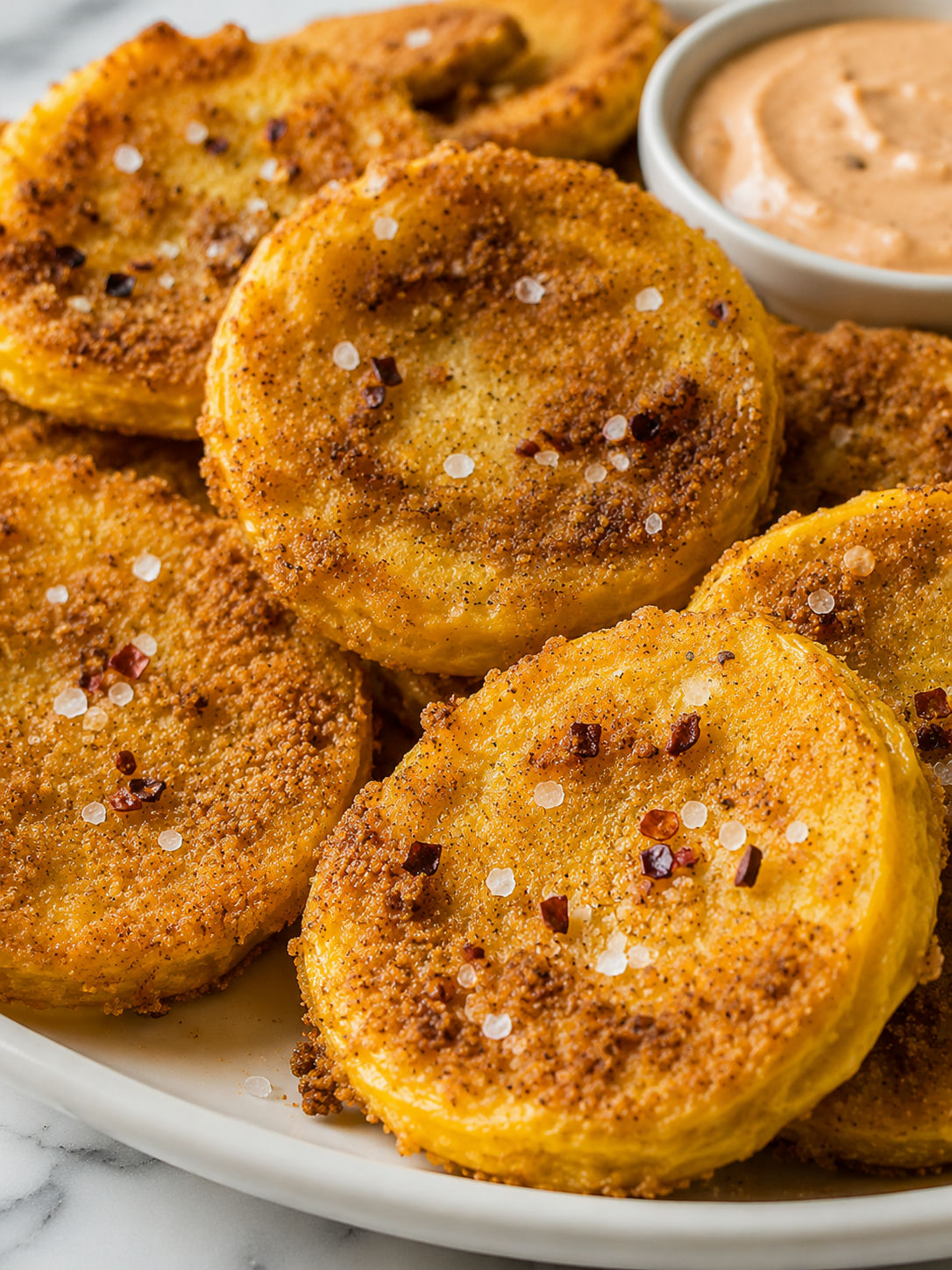
Serve these fried squash rounds hot from the skillet with ranch, spicy mayo, or a plate of cornbread and beans.
FAQs
- What kind of squash is best for fried squash?
Yellow summer squash is the classic choice because it cooks quickly and has a mild, sweet flavor. Pick smaller squash with firm skin and narrow seed pockets. Very large squash can be watery and soft in the center.
- Can I use zucchini instead of yellow squash?
Yes. Zucchini fries the same way, but it can hold a little more moisture. Pat the slices dry well and keep the oil hot so the coating sets before the vegetable softens too much.
- How do I keep fried squash crispy?
Slice evenly, dry the squash, and fry in small batches. Drain the cooked pieces on a wire rack instead of stacking them on a plate. If the oil drops too low, wait a minute before adding the next batch.
- Can I make Southern fried squash gluten-free?
Yes. Replace the all-purpose flour with a cup-for-cup gluten-free flour blend or use extra fine cornmeal. Check that your cornmeal is labeled gluten-free if cross-contact matters in your kitchen.
- Can I make fried squash ahead of time?
Fried squash tastes best right after frying. You can slice the squash and mix the dry coating a few hours ahead. Wait to dredge and fry until just before serving.
- What do you serve with fried squash?
Serve it with ranch, comeback sauce, spicy mayo, or honey mustard. For a full Southern plate, pair it with fried chicken, beans, cornbread, or a simple tomato salad.
