 Pin it
Sourdough crumpets are what I make when my starter jar is full but I do not want another loaf project. The batter is already alive with sourdough flavor, and baking soda wakes it up fast so it bubbles the moment it hits the bowl.
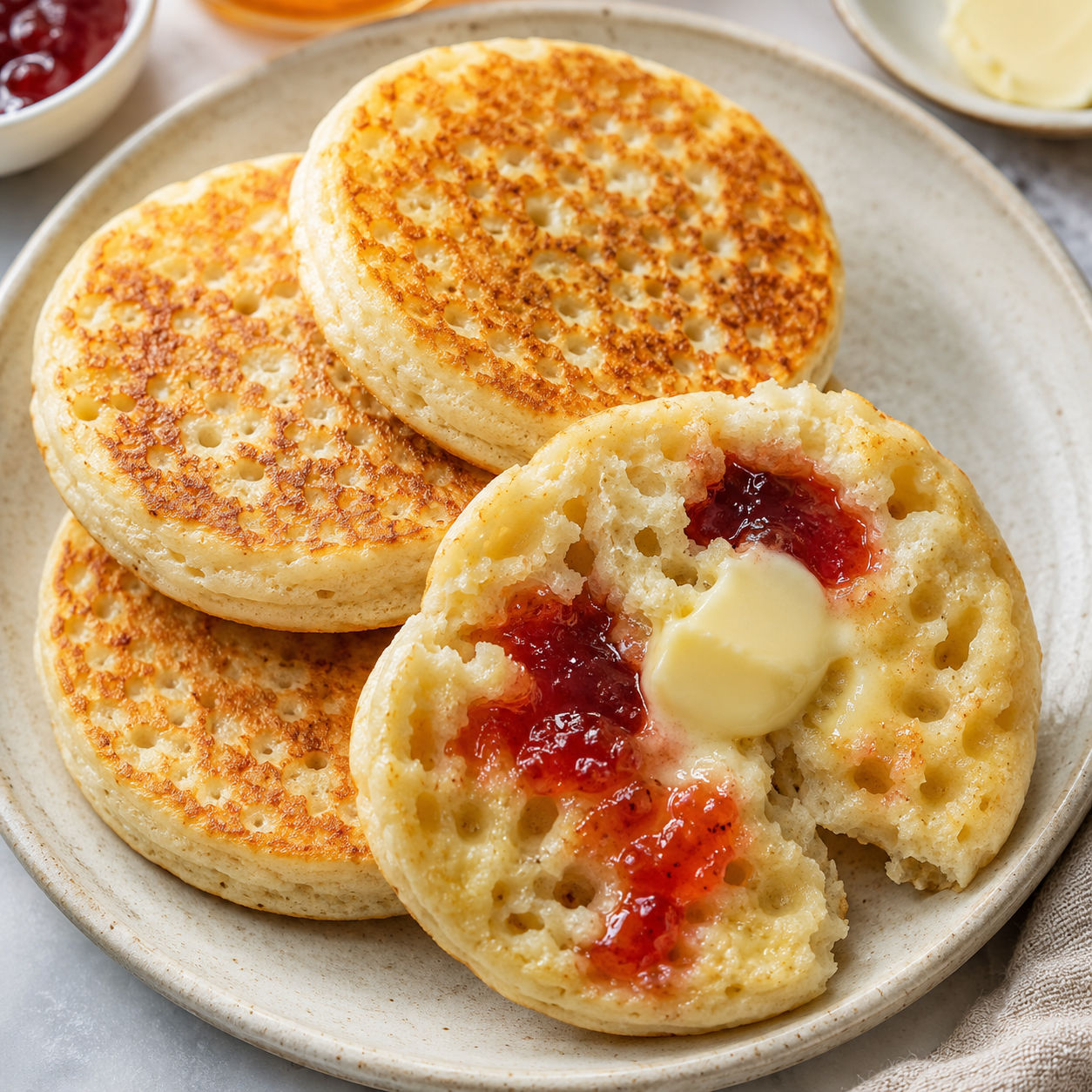
The best ones are soft and a little chewy in the center, with tiny holes across the top for catching butter or jam. Keep the heat gentle and give the tops time to set. That is where the good texture happens.
Starter Batter Basics
You only need a few pantry ingredients, so the starter matters most. Use 100 percent hydration discard if you can. It should look like thick pancake batter, not bread dough.
- Sourdough discard. Gives the crumpets tang, structure, and a head start on bubbles.
- Granulated sugar. Softens the sour edge and helps the crumpets brown on the griddle.
- Fine salt. Keeps the flavor from tasting flat.
- Baking soda. Reacts with the acidic starter and makes the batter puff quickly.
- Neutral oil. Keeps the rings and griddle from sticking without adding heavy flavor.
- Butter or jam for serving. Optional, but those little holes are made for something melty or spoonable.
Cook Them Low And Patient
- Warm the griddle. Set a skillet or griddle over medium-low heat and lightly oil the surface and rings.
- Mix the batter. Stir the discard with sugar and salt, then add baking soda last. It should foam and look airy within seconds.
- Fill the rings. Spoon batter into each ring until it is about halfway full. Do not overfill or the centers will take too long to cook.
- Wait for holes. Cook until the tops are mostly dry and dotted with holes, about 5-7 minutes.
- Flip and finish. Remove the rings carefully, flip the crumpets, and cook 2-3 minutes more until the second side is golden.
- Toast or serve. Eat warm right away or cool and toast for a crisper bite.
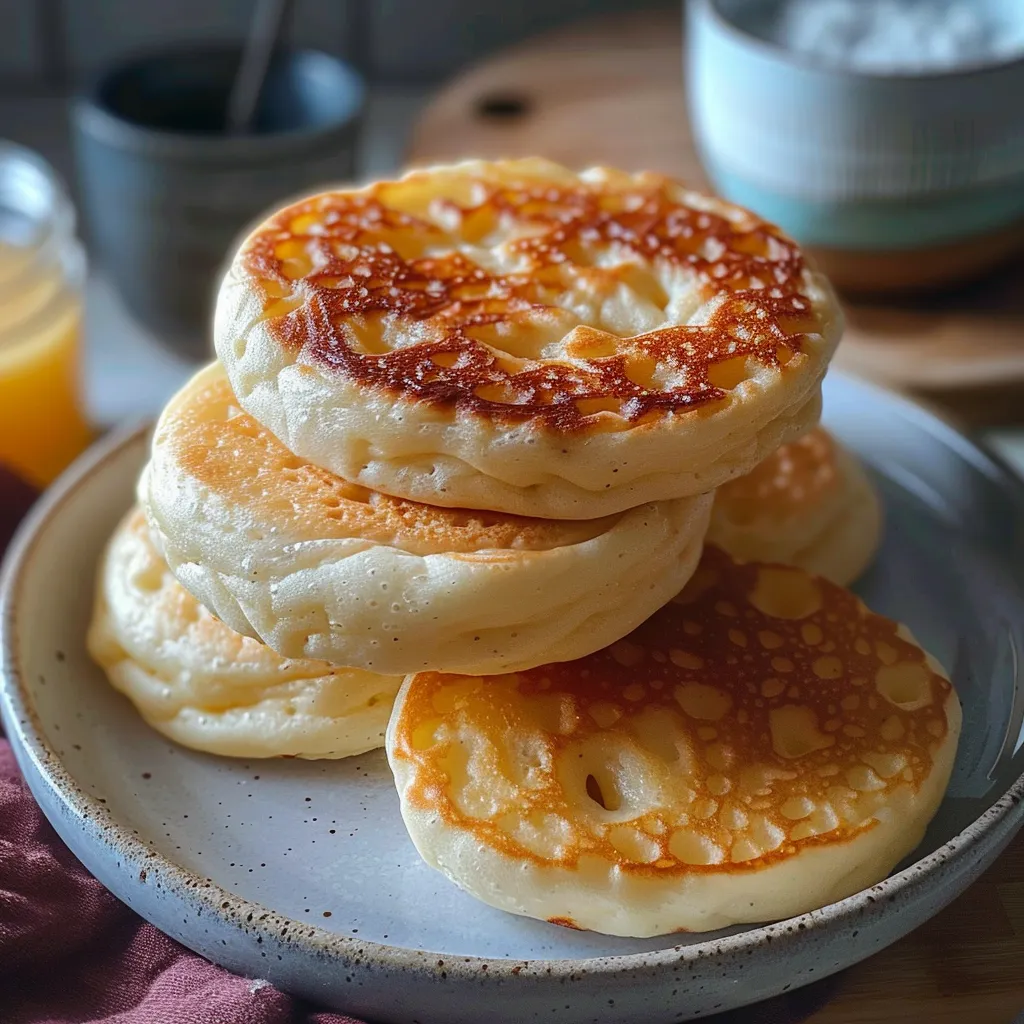
Sourdough Crumpets Need Gentle Heat
The pan should feel warm enough to sizzle a drop of water softly, not spit and smoke. High heat browns the bottom before the center has time to bubble through. That is how you get a smooth top instead of the little tunnels that make sourdough crumpets worth making.
I like a cast-iron skillet once it has been heated evenly, but a nonstick griddle is easier for a first batch. King Arthur Baking also recommends cooking sourdough crumpets around 300°F in their sourdough crumpets guide, which is a good target if your griddle has a temperature dial.
Getting The Batter Right
Discard can vary a lot. A freshly fed starter may be loose and bubbly, while an older discard can be thicker and more sour. Both can work. The batter should spoon easily and settle inside the ring. If it sits in a mound, loosen it with a teaspoon or two of water before adding the baking soda.
Add the baking soda right before cooking. Once it hits the acidic starter, the batter lifts fast. Stir only until you no longer see dry soda streaks. Too much stirring knocks out the bubbles you just created. If you keep a starter mostly for discard recipes, the sourdough starter whole grain method is a useful one to have nearby.
Rings Make The Shape
Crumpet rings or English muffin rings give the batter height. Grease them well, including the inside walls. I use a thin swipe of oil rather than a puddle. Too much oil fries the edges and makes the sides slick.
Fill each ring only halfway. The batter rises as it cooks, and a thin layer makes better holes. If you do not own rings, use clean wide-mouth canning jar bands with the flat lid removed. You can also make small free-form rounds. They will look more like pikelets, but they still toast beautifully.
Toppings That Fit The Tang
Warm butter and berry jam are classic because they sink into every hole. Honey works too, especially if your starter is very tangy. For a savory breakfast, add cream cheese, smoked salmon, a soft egg, or a swipe of herbed butter.
These also fit well on a brunch table with something sweet, like apple cinnamon breakfast quesadillas. If you are already in a discard mood, make a batch of sourdough discard focaccia later in the day and you have used the jar in two very different ways.
Storage And Toasting
Fresh from the pan, sourdough crumpets are soft and tender. After they cool, the toaster becomes your friend. It crisps the outside and wakes up the sourdough aroma again.
Store cooled crumpets in an airtight bag for 1 day at room temperature or up to 4 days in the fridge. Freeze them if you want to keep them longer. For measuring starter by weight, the King Arthur ingredient weight chart is handy because a cup of starter is much more consistent when weighed.
Summary
These sourdough crumpets use unfed starter discard, sugar, salt, and baking soda. Cook them low and slow in rings for tender, holey crumpets that toast well.
FAQs
- Can I make sourdough crumpets with discard straight from the fridge?
Yes. Cold discard works, but let it sit at room temperature for 10-15 minutes if it is very stiff. The batter should loosen enough to spoon into the rings and bubble after the baking soda goes in.
- Why did my crumpets not get holes on top?
The heat was probably too high or the batter was too thick. Cook over medium-low heat so the bubbles can rise before the top sets. If your discard is very thick, stir in 1-2 teaspoons of water before adding the baking soda.
- Do I need crumpet rings?
Rings give sourdough crumpets their height and round shape. If you do not have them, use wide-mouth canning rings or cook the batter free-form as pikelets. They will be flatter but still good toasted.
- Can I make these without sugar?
You can reduce the sugar, but I would not skip it completely. A small amount balances the sour starter and helps the surface brown. The crumpets will not taste sweet.
- How should I store sourdough crumpets?
Cool them fully, then store airtight at room temperature for 1 day or in the fridge for up to 4 days. Toast them before serving to bring back the crisp edges.
- Can I freeze sourdough crumpets?
Yes. Freeze them in a single layer, then move them to a freezer bag for up to 2 months. Toast from frozen or thaw briefly on the counter first.
