 Pin it
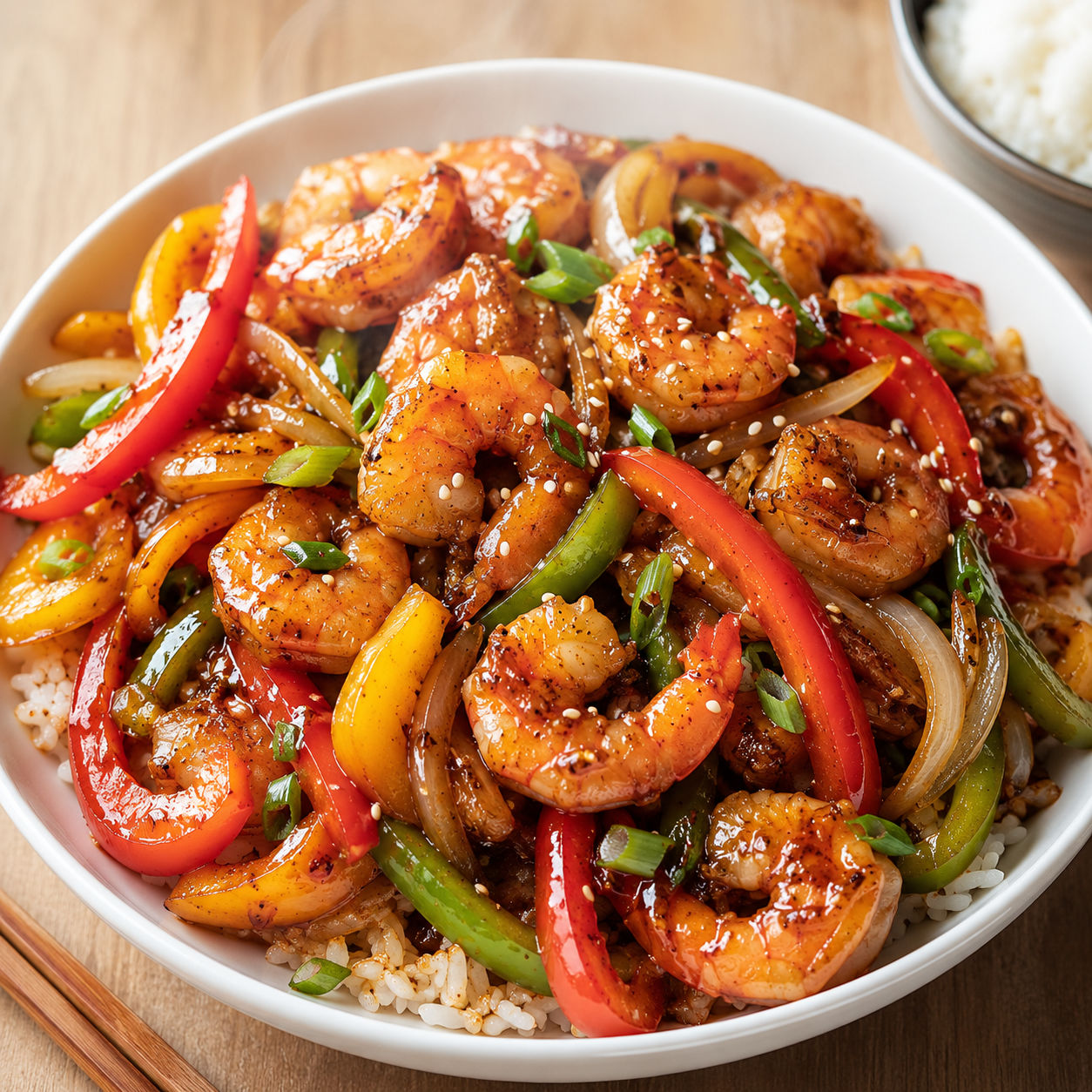
Shrimp and Bell Pepper Stir-Fry with Garlic Soy Sauce is one of those dinners that pays you back fast. The shrimp turn pink in minutes, the peppers stay bright, and the sauce coats everything with a salty garlic shine.
I like this when I want takeout flavor without waiting on delivery. The key is having the sauce mixed and the vegetables sliced before the pan gets hot.
Serve it over steamed rice for a full meal, or spoon it into lettuce cups if you want something lighter.
Bright Pantry Lineup
This stir-fry is simple, so the details matter. Use firm bell peppers, fresh garlic, and shrimp that smell clean and sweet, not fishy.
Low-sodium soy sauce gives you better control over salt. Oyster sauce adds body and a quiet sweetness that helps the glaze cling.

- Shrimp. The main protein, quick to cook and tender when pulled from the heat at the right moment.
- Bell peppers. Bring color, crunch, and natural sweetness that balances the salty sauce.
- Yellow onion. Softens around the edges and adds a sweet backbone to the pan.
- Garlic. Gives the sauce its sharp, savory aroma.
- Soy sauce. Supplies salt and deep umami for the garlic soy base.
- Oyster sauce. Thickens the flavor and adds a glossy, restaurant-style finish.
- Chicken broth. Loosens the sauce so it coats instead of clumps.
- Cornstarch. Turns the sauce silky in less than a minute.
- Rice vinegar and sesame oil. Add brightness and a toasted finish.
Fast Wok Method
- Mix the sauce. Whisk soy sauce, oyster sauce, broth, cornstarch, vinegar, sesame oil, and sugar until smooth. Stir it again right before adding it to the pan.
- Prep the shrimp. Pat the shrimp dry and season lightly with pepper. Keep them near the stove because they cook fast.
- Cook the vegetables. Heat oil in a wok or large skillet, then stir-fry peppers and onion until crisp-tender with a few browned edges.
- Add the garlic. Stir in the garlic for about 30 seconds. It should smell fragrant but should not brown deeply.
- Cook the shrimp. Add shrimp in an even layer and stir-fry until just pink and mostly opaque.
- Glaze and serve. Pour in the sauce and toss until glossy and thick. Serve right away with scallions and sesame seeds if you like.

Why High Heat Works
A good stir-fry is quick because the pan is hot and everything is ready before you start. Peppers need enough heat to blister at the edges without collapsing. Shrimp need even less time, so they go in after the vegetables have a head start.
If your skillet is small, cook in two batches. Crowding the pan traps steam and gives you soft peppers with pale shrimp. A wide skillet or wok makes a huge difference. For another sauce-forward dinner, try the site's all-purpose stir-fry sauce with chicken, beef, or extra vegetables.
The Shrimp Doneness Cue
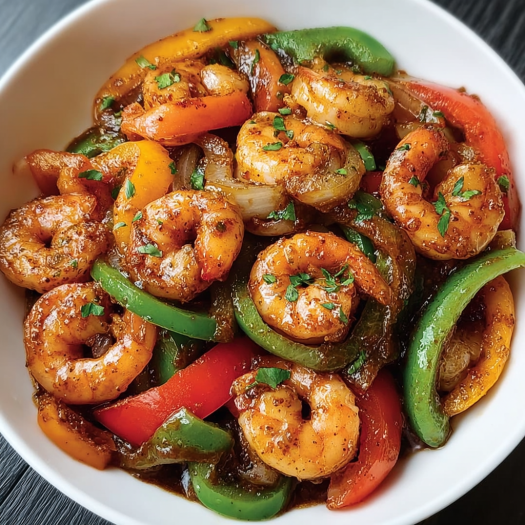
Shrimp tell you when they are done. They turn pink, lose their gray translucence, and curl into a loose C shape. Keep cooking past that point and the texture tightens.
The FDA seafood guide recommends cooking shrimp until the flesh is pearly and opaque, and seafood safety guidance is worth reading if you cook shrimp often. You can find it in the FDA seafood-safety guide.
Easy Swaps For Tonight
Use red, yellow, orange, or green peppers in any mix. Red and yellow taste sweeter. Green peppers taste sharper and hold their bite a little longer.
No oyster sauce in the fridge? Use hoisin for a sweeter glaze, or add extra soy sauce with a pinch of sugar. For a spicier pan, add chili garlic sauce or crushed red pepper with the garlic. If you want noodles instead of rice, the flavor lines up nicely with shrimp lo mein with red and green pepper.
What To Serve With It
Plain steamed rice is the cleanest match because it catches the glossy sauce. Jasmine rice is soft and fragrant, while brown rice makes the bowl feel more filling.
You can also serve this over rice noodles, spoon it onto cauliflower rice, or add a side of garlic butter stir-fried vegetables if you want a bigger table. For another shrimp-heavy weeknight option, keep flavorful shrimp stir fry with fresh vegetables in rotation.
Storage Without Tough Shrimp
Leftovers keep in an airtight container in the fridge for up to two days. Reheat them gently in a skillet over medium-low heat with a splash of water. Stop as soon as the sauce loosens and the shrimp are warm.
The microwave works in a pinch, but use short bursts and stir between them. Long reheating is the fastest way to lose that tender bite.
Summary
This quick shrimp stir-fry is best eaten hot from the skillet, while the peppers still have snap and the garlic soy sauce is glossy.
FAQs
- Can I use frozen shrimp for this stir-fry?
Yes. Thaw frozen shrimp under cold running water, then drain and pat them very dry. Dry shrimp sear better and keep the sauce from turning watery.
- What can I use instead of oyster sauce?
Use hoisin sauce for a sweeter finish, or add an extra tablespoon of soy sauce with a small pinch of sugar. The flavor will be lighter, but the garlic soy sauce will still coat the shrimp well.
- How do I keep shrimp from getting rubbery?
Cook them only until pink, opaque, and curled into a loose C shape. If they curl tightly into circles, they have gone too far. Pull the pan off the heat as soon as the sauce thickens.
- Can I make this ahead?
You can slice the peppers, mince the garlic, and whisk the sauce up to one day ahead. Cook the shrimp right before serving because reheated shrimp can toughen quickly.
- Is this recipe gluten-free?
Not as written, because many soy sauces and oyster sauces contain wheat. To make it gluten-free, use certified gluten-free tamari and a gluten-free oyster sauce or mushroom stir-fry sauce.
- What should I serve with shrimp and bell pepper stir-fry?
Steamed jasmine rice is the easiest match. Brown rice, rice noodles, cauliflower rice, or quick stir-fried cabbage also work well with the savory garlic soy sauce.
