 Pin it
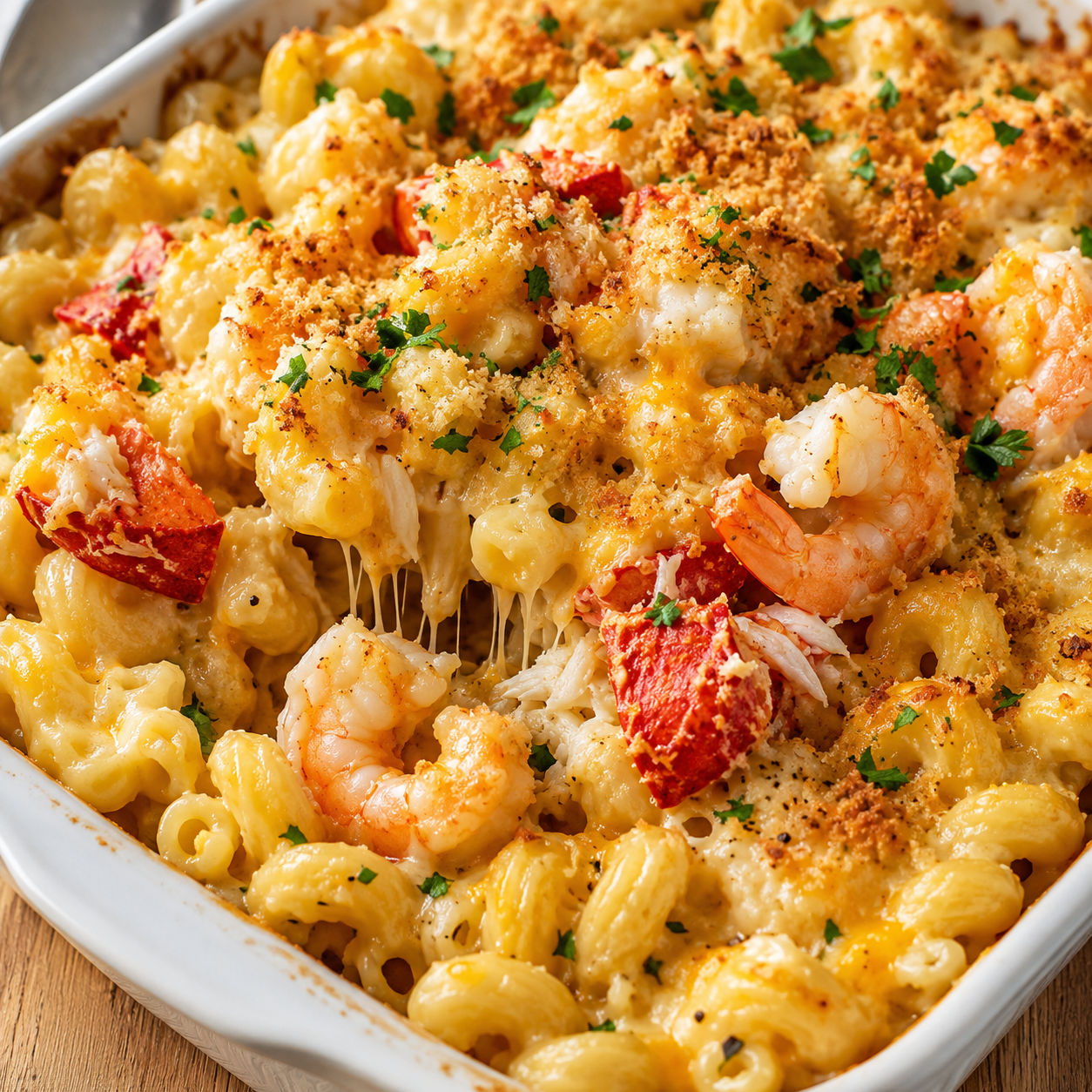
This is the kind of dish that turns a regular Tuesday into something worth sitting down for. It takes the familiar comfort of baked mac and cheese and folds in sweet shrimp, tender crab, and rich lobster meat so every forkful feels a little special.
The sauce is a classic roux-based cheese sauce, sharp with cheddar and nutty with Gruyère. The trick is pulling the seafood from the heat while it still has a little bounce left, then letting the oven do the final warming. If you liked our Seafood Mac and Cheese, this version adds more layers and a crunchy panko lid.
The seafood and cheese lineup
A good seafood mac starts with good seafood. Buy cooked lobster meat or boil small tails yourself, pick through crab for shell fragments, and use shrimp that still smell like the ocean. The cheeses matter just as much: sharp cheddar for tang, Gruyère for melt, and Parmesan for a salty backbone.
- Cavatappi pasta. The ridges and hollow centers trap the cheese sauce so every bite is coated.
- Lobster meat. Sweet and buttery, it makes the dish feel indulgent without being fussy.
- Large shrimp. Chop them into bite-sized pieces so they distribute evenly and cook fast.
- Lump crab meat. Delicate and flaky, it adds a briny depth that complements the cheese.
- Sharp cheddar and Gruyère. The cheddar brings tang and color; Gruyère melts into a silky, nutty base.
- Whole milk and heavy cream. Full-fat dairy is what gives the sauce body and keeps it from breaking.
- Panko breadcrumbs. Toasted with butter and Parmesan, they give the top a crisp, golden crunch.
How the layers come together
- Cook the pasta. Boil the cavatappi in well-salted water until just shy of al dente, about two minutes less than the package timing. Rinse under cold water to stop the cooking, then drain well.
- Sauté the seafood. Melt 2 tablespoons butter in a large skillet over medium heat. Cook the shrimp for two to three minutes until pink and curled. Gently fold in the lobster and crab just to warm through, about one minute. Transfer to a plate.
- Make the roux. Melt 4 tablespoons butter in a large saucepan over medium heat. Whisk in the flour, onion powder, garlic powder, dry mustard, Old Bay, and black pepper. Cook for two minutes, stirring constantly, so the raw flour taste disappears.
- Build the cheese sauce. Warm the milk and cream together, then slowly pour into the roux while whisking constantly. Bring to a gentle simmer and cook until thick enough to coat the back of a spoon, about five minutes. Remove from heat and stir in the cheddar, Gruyère, and Parmesan until completely melted and smooth.
- Assemble the dish. Toss the pasta with the cheese sauce and half of the seafood mixture. Spread into a buttered 9x13 inch baking dish. Scatter the remaining seafood over the top, then sprinkle with the panko mixture.
- Bake until golden. Bake at 400°F for twenty to twenty-five minutes, until the edges bubble and the panko topping is deep golden brown. Let rest for five minutes before serving.
The roux is everything
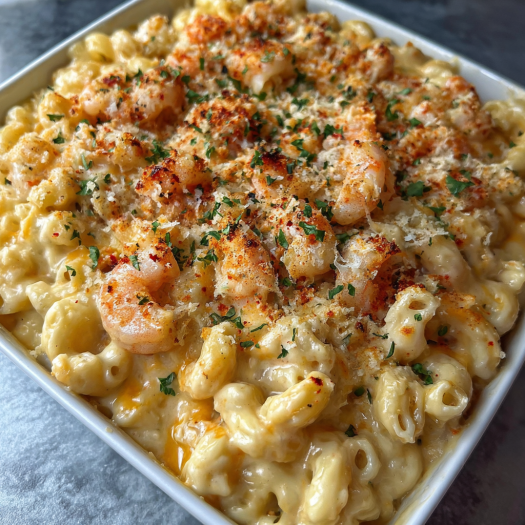
A broken cheese sauce is almost always caused by adding cheese over high heat or using pre-shredded bags coated in anti-caking powder. Grate your cheese from the block and add it only after the pot is off the burner. The residual heat melts it gently into a smooth, glossy sauce. If you want another take on creamy pasta, our Garlic Shrimp Pasta with Butter and Herbs uses a simpler stovetop method.
Don't overcook the seafood
Shrimp turn rubbery fast, and crab flakes apart if it sits too long in a hot pan. Sauté the shrimp just until they curl and turn pink, then pull them immediately. The lobster and crab only need a gentle fold-in to warm them. They will finish cooking in the oven, so leave them slightly underdone on the stove. The FDA recommends cooking shrimp to an internal temperature of 145°F; see their seafood safety guide for more details.
Swaps that still work
No lobster? Double the shrimp or use scallops instead. Scallops should be seared hard for one minute per side and kept whole for texture. You can also swap Gruyère for fontina or Havarti, both of which melt beautifully. For a different pasta shape, try cellentani or large shells. If you prefer a hands-off version, our Creamy Crock Pot Mac and Cheese skips the crunchy topping but stays rich and creamy.
Storing and reheating right
Leftovers keep in an airtight container in the refrigerator for up to three days. Reheat gently in a skillet with a splash of milk to loosen the sauce. The microwave works in a pinch, but it can make the shrimp tough and the sauce grainy. This dish does not freeze well; dairy-based cheese sauces tend to separate and turn mealy once thawed.
What to serve alongside
This mac is rich, so pair it with something sharp and green. A simple arugula salad with lemon vinaigrette cuts through the creaminess. Roasted asparagus or broccolini with a squeeze of lemon works well too. For bread, a crusty baguette is useful for scooping up the sauce that pools at the bottom of the bowl. If you are feeding a crowd, our Classic Baked Mac and Cheese is a great plain alternative for anyone who prefers their pasta without seafood.
FAQs
- Can I use frozen seafood?
Yes. Thaw shrimp, lobster, and crab overnight in the refrigerator or under cold running water. Pat everything very dry before sautéing so the seafood sears instead of steaming.
- What pasta shape works best?
Cavatappi and cellentani are ideal because their ridges and hollow centers grab the sauce. Large shells or elbow macaroni also work well. Avoid long noodles like spaghetti.
- How do I keep the cheese sauce smooth?
Grate cheese from the block, add it off the heat, and stir until just melted. Pre-shredded cheese and high heat are the two main reasons a sauce turns grainy.
- Can I make this ahead of time?
Assemble the dish up to the baking step, cover tightly, and refrigerate for up to twenty-four hours. Bake straight from the fridge, adding five to ten extra minutes until bubbly and hot in the center.
- What cheeses can I substitute?
Swap Gruyère for fontina, Havarti, or Swiss. You can replace half the cheddar with smoked gouda for a deeper flavor. Keep at least one sharp, acidic cheese in the mix for balance.
- How long do leftovers last?
Store leftovers in an airtight container in the refrigerator for up to three days. Reheat gently on the stove with a splash of milk to revive the sauce.
- Can I add vegetables to this dish?
Yes. Steamed peas, sautéed spinach, or roasted red peppers fold in nicely. Add them when you combine the pasta and sauce so they heat through without overcooking.
