 Pin it
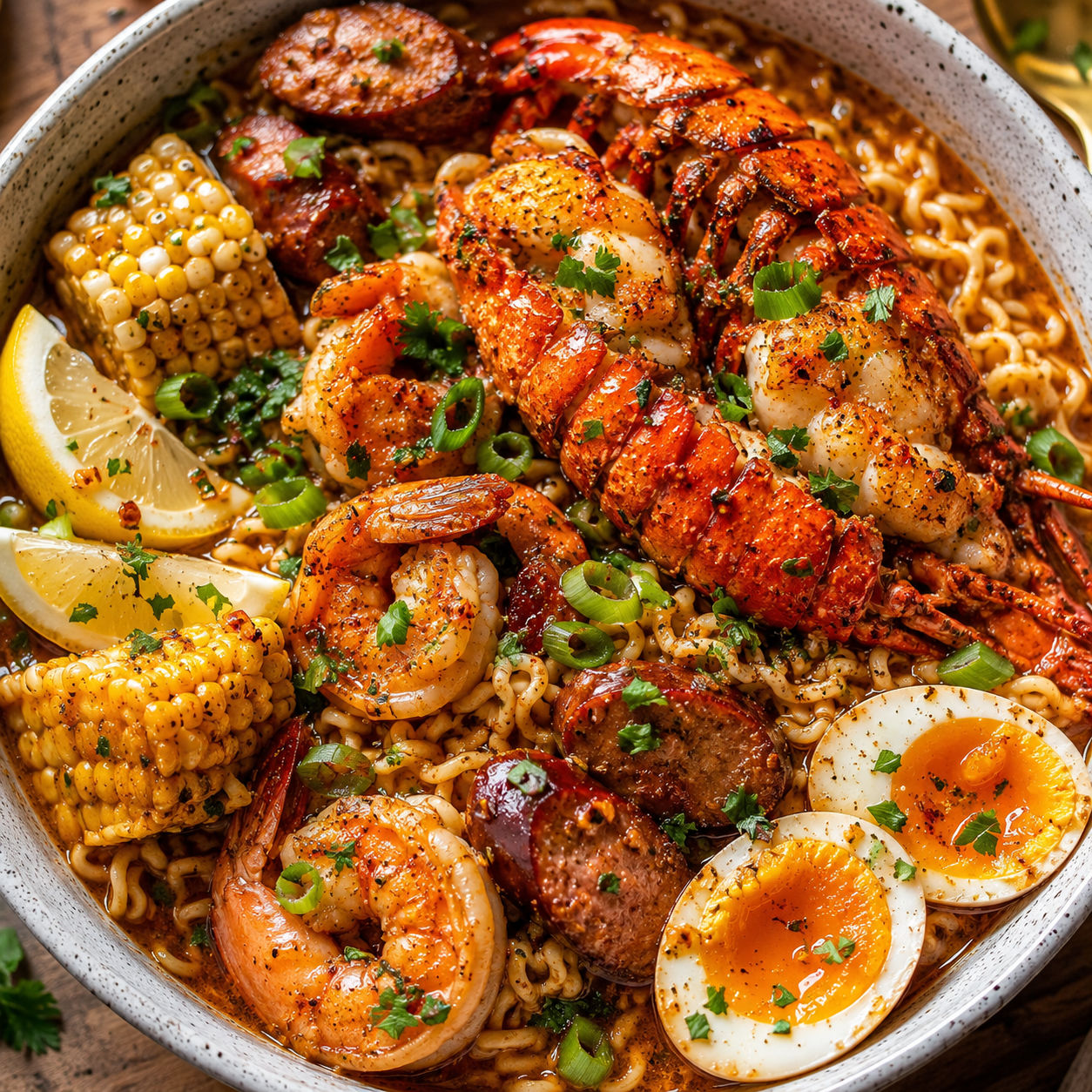
Seafood boil ramen is what I make when I want the messy fun of a boil without spreading newspaper across the table. You still get sweet corn, smoky sausage, juicy shrimp, and lobster, but everything lands in a deep bowl with noodles and hot broth.
The order matters here. Corn and sausage can handle a longer simmer, while lobster and shrimp need a gentle hand. Cook the noodles separately and the bowl stays slurpable instead of starchy and heavy.
The Boil Bowl Lineup
Choose seafood that smells clean and briny, never sour. Fresh corn and a good smoked sausage give the broth sweetness and depth before the shellfish even goes in.
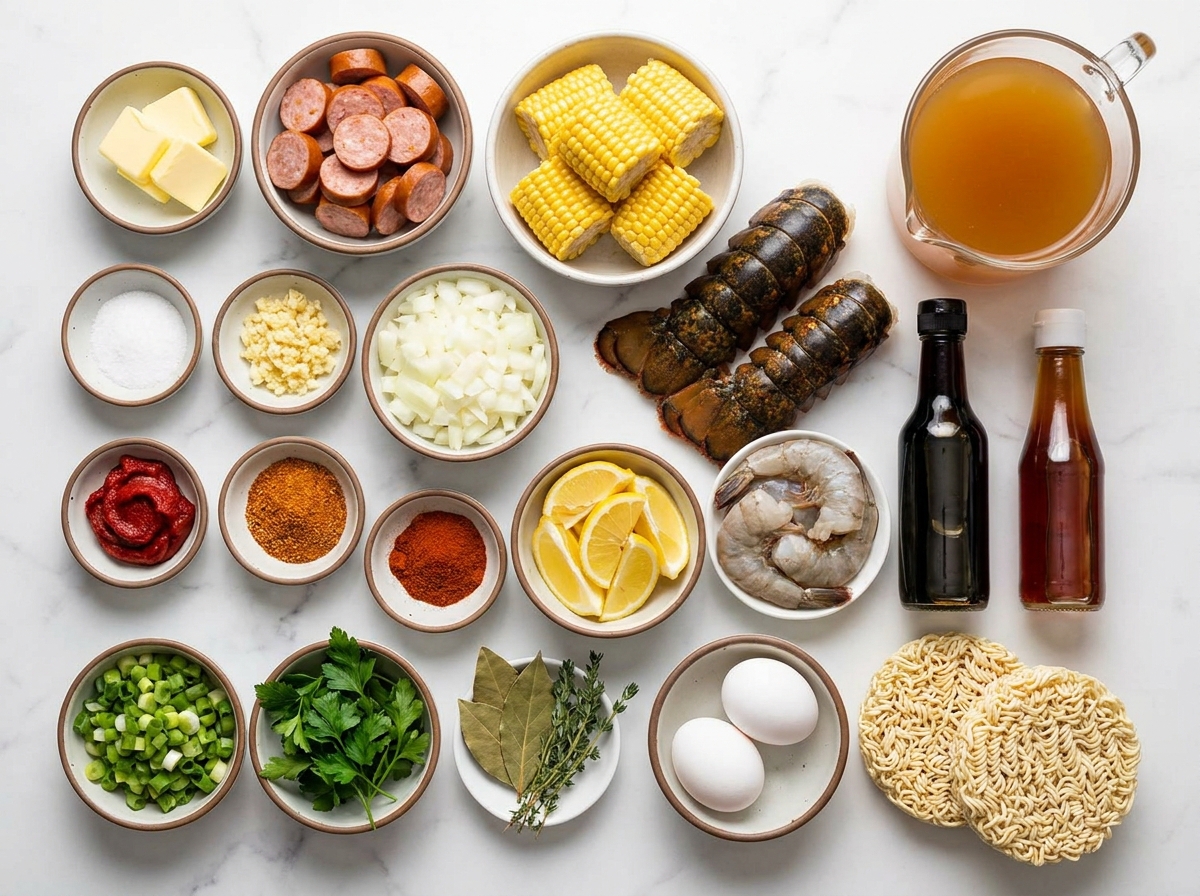
- Shrimp. Large shrimp cook quickly and give the bowl sweet, firm bites.
- Lobster tails. They make the ramen feel special and add rich shellfish flavor to the broth.
- Smoked sausage. Andouille brings heat and smoke, while kielbasa gives a milder finish.
- Corn on the cob. The kernels soak up the Cajun broth and add sweetness.
- Seafood stock. A savory base that keeps the ramen from tasting thin.
- Cajun seasoning. This gives the bowl its seafood boil backbone.
- Ramen noodles. Springy noodles turn the boil into a full meal.
- Jammy eggs. The yolks soften into the broth and add richness.
- Lemon and green onion. They brighten the finished bowl.
Seafood Boil Ramen Method
- Boil the eggs. Simmer the eggs for 6-7 minutes, then chill them in ice water so the yolks stay jammy.
- Start the broth. Cook onion in butter and oil until soft, then add garlic, tomato paste, Cajun seasoning, paprika, and cayenne. Toast for a short minute so the spices smell warm.
- Simmer the base. Add seafood stock, soy sauce, fish sauce, thyme, bay leaves, and lemon juice. Let it bubble gently for 10 minutes.
- Cook corn and sausage. Add corn chunks and sausage rounds. Simmer until the corn is tender and the sausage has seasoned the broth.
- Poach the shellfish. Add lobster tails first, then shrimp near the end. Pull them when the lobster is opaque and the shrimp are pink and curved.
- Cook the noodles. Boil ramen in a separate pot until just chewy, then drain well.
- Build the bowls. Divide noodles into bowls, ladle over broth, and arrange the seafood, corn, sausage, eggs, green onions, and lemon wedges on top.
Keep The Shellfish Tender
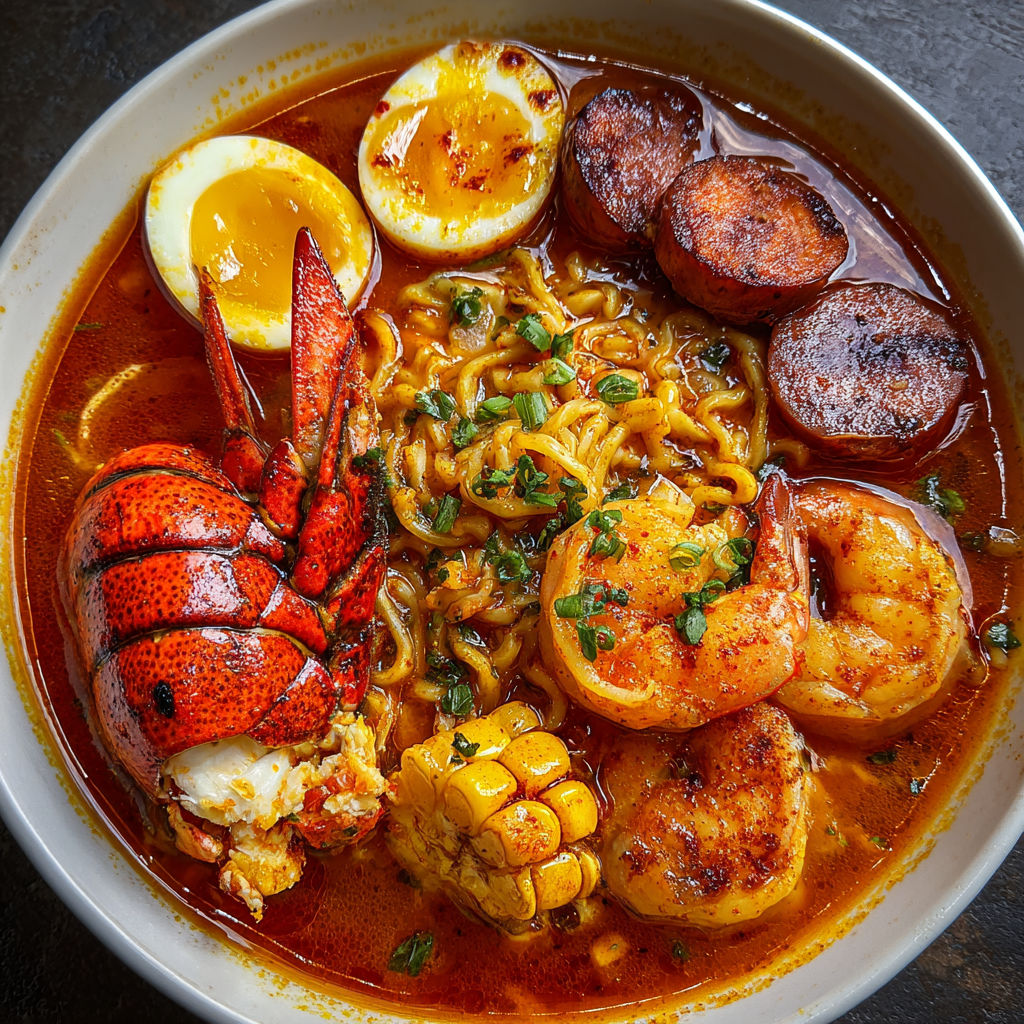
The biggest risk with seafood boil ramen is tough shellfish. Lobster tails need a gentle simmer, not a hard boil. Shrimp need even less time. Once shrimp turn pink and form a loose C shape, they are done. If they curl tight, they have gone too far.
The FDA recommends cooking seafood to 145 F, and its seafood safety guide is worth checking if you are working with frozen shellfish. I like to remove the lobster and shrimp to a plate while the noodles cook. That small pause keeps the hot broth from carrying them past tender.
Why Noodles Cook Separately
Ramen noodles can turn a clean seafood broth cloudy in a hurry. Cooking them in a separate pot keeps the broth bold but loose. It also gives you better control over texture. Drain the noodles when they still have a little chew, since the hot broth softens them more in the bowl.
If you enjoy the same boil flavors in a simpler bowl, the site's Seafood Boil Ramen Bowl follows a similar idea. For a no-noodle version built around corn, potatoes, shrimp, and sausage, try shrimp corn potato sausage foil packets. Both are useful when you want the same flavors with a different pace.
Seasoning Without Over-Salting
Cajun seasoning, soy sauce, sausage, and seafood stock all bring salt. Taste the broth before adding any extra. If it feels flat, add lemon first. If it needs more body, add a little butter. If it needs heat, add cayenne or hot sauce at the end.
A spoonful of seasoned melted butter over the finished seafood gives the bowl that shiny seafood boil feel. The flavor is close to a boil sauce, so garlicky seafood boil butter sauce is a strong extra if you want dipping on the side. For another shrimp and sausage dinner with a creamier finish, creamy Cajun shrimp and sausage pasta hits the same smoky notes.
Leftovers Need Separation
Store the broth, noodles, and seafood separately if you can. Noodles swell as they sit, and shrimp can get rubbery if reheated hard. Warm the broth in a pot, turn the heat low, then add the seafood only until it is hot. Add noodles to each bowl last.
For best quality, I keep cooked shellfish for 1-2 days. FoodSafety.gov has a helpful cold storage chart if you want exact timing for leftovers. The broth alone freezes well for about a month. Thaw it, simmer fresh noodles, and add new shrimp for a fast repeat dinner.
Swaps That Fit The Bowl
Crab legs can replace lobster, and extra shrimp can stand in for both if you want to keep the cost lower. Kielbasa works in place of andouille when you want smoke without much heat. Rice noodles can replace ramen for a gluten-free direction, but also use gluten-free soy sauce and check the stock label.
You can add small potatoes, mushrooms, mussels, or clams, but watch the timing. Potatoes need to simmer before the seafood. Mussels and clams go in near the end and should open in the hot broth. Any that stay closed should be discarded. Finish with lemon every time. It keeps the butter and sausage from taking over the bowl.
FAQs
- Can I use frozen shrimp and lobster?
Yes. Thaw both in the refrigerator overnight or under cold running water if you are short on time. Pat them dry before cooking so they do not water down the broth.
- Can I swap the lobster for crab?
Crab legs or clusters work well in this ramen. Add them just long enough to heat through if they are already cooked, then arrange them over the noodles with the shrimp and sausage.
- Should I cook ramen noodles in the broth?
I prefer cooking them separately. Ramen releases starch fast, and that can make the seafood broth cloudy and thick. Separate cooking also keeps leftovers from turning mushy.
- How spicy is this seafood boil ramen?
It has medium heat with Cajun seasoning and a small amount of cayenne. For a milder bowl, skip the cayenne and use less Cajun seasoning. For more heat, add hot sauce at the table.
- How do I store leftovers?
Store broth, noodles, and seafood in separate airtight containers for up to 2 days. Reheat the broth first, then warm the seafood gently in it just until hot.
- What can I serve with it?
This bowl is rich, so keep sides simple. Cucumber salad, lemon wedges, garlic bread, or a crisp corn salad all work well without competing with the broth.
