 Pin it
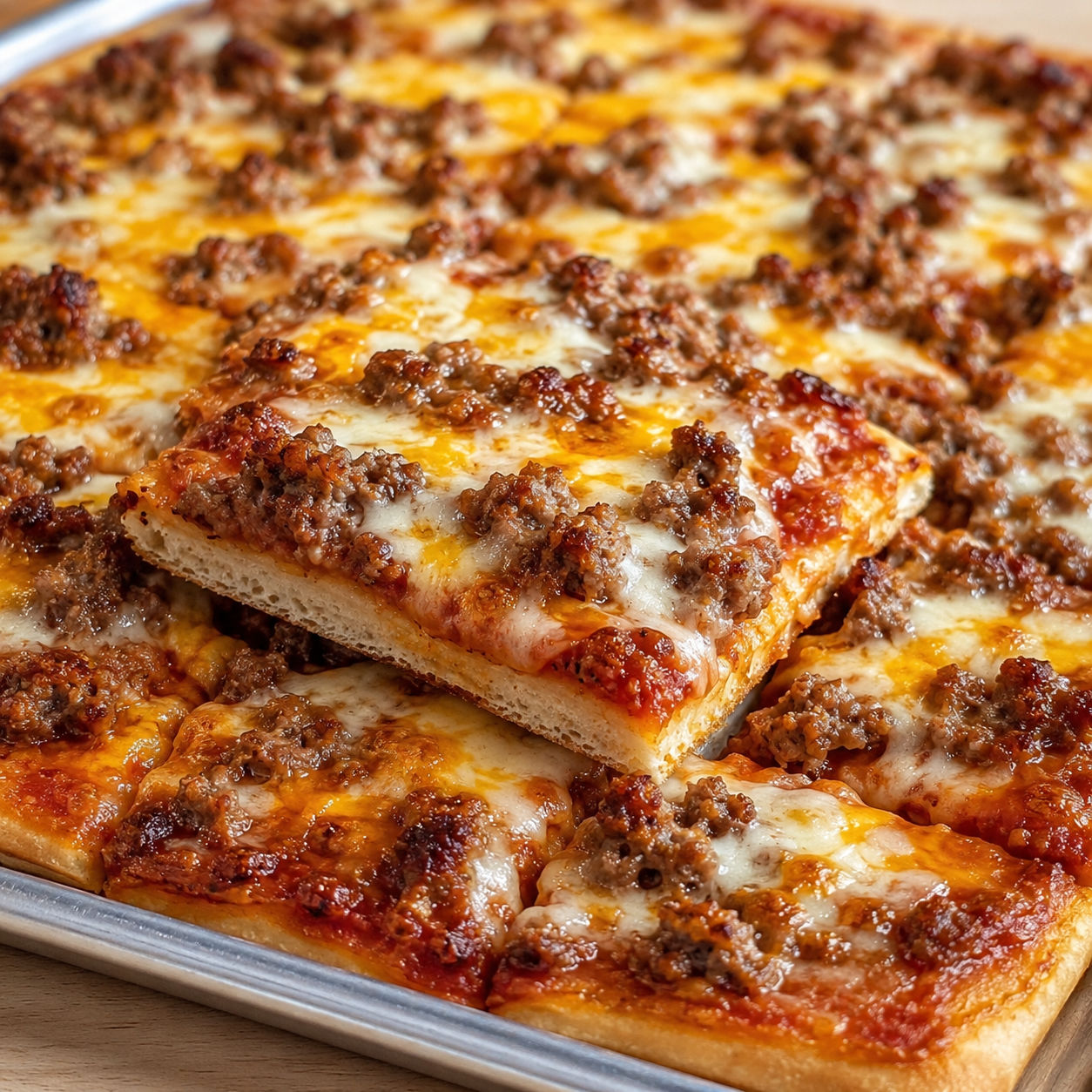
Classic School Pizza with Sausage and Cheese is all about the rectangle slice. The crust is softer than takeout pizza, the edges get lightly crisp, and the topping is meaty, tomato-rich, and cheesy enough to pull when you lift a square from the pan.
The trick is the batter-style crust. Dry milk gives it that old lunchroom tenderness, while a quick parbake keeps the sauce from making it soggy. It is simple food, but the details matter.
Classic School Pizza Pantry Lineup
Choose basic ingredients and let the pan do the work. The crust should be soft, the meat should be browned well, and the cheese should melt into an even golden layer.
Use mild Italian sausage if you want that familiar cafeteria flavor without too much heat.
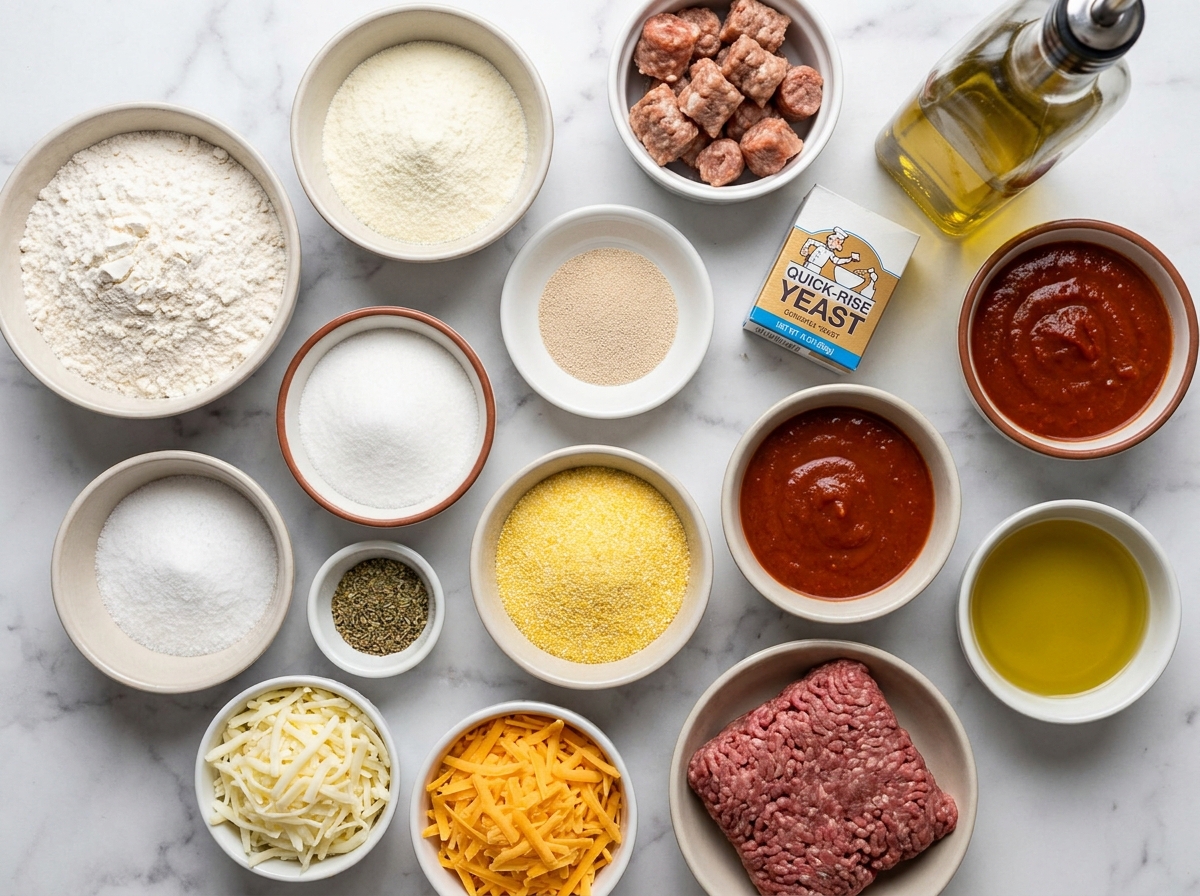
- All-purpose flour. Builds the soft sheet-pan crust and keeps the slice sturdy enough to pick up.
- Instant dry milk. Adds tenderness and a lightly sweet lunchroom-style flavor.
- Quick-rise yeast. Gives the crust lift without a long rise.
- Yellow cornmeal. Keeps the crust from sticking and adds a faint crunch underneath.
- Mild Italian sausage. Brings savory seasoning and little browned bits across every slice.
- Ground beef. Rounds out the meat topping and makes the pizza hearty.
- Pizza sauce. Gives the topping its tangy tomato base without extra simmering.
- Mozzarella and cheddar. Melt into a stretchy, golden layer that tastes close to the cafeteria version.
Bake The Rectangle Slices
- Prepare the pan. Heat the oven to 475 degrees F. Coat an 18x13 rimmed sheet pan with oil and scatter cornmeal over the bottom.
- Mix the crust batter. Stir flour, dry milk, sugar, yeast, and salt. Add warm water and oil until you have a thick, sticky batter that can be spread with a spatula.
- Parbake the crust. Spread the batter to the corners and bake until it looks set and pale golden, about 8 minutes. This keeps the finished slice from turning doughy.
- Brown the meat. Cook sausage and beef in a skillet until no pink remains. Drain well, then stir in pizza sauce and Italian seasoning.
- Top and finish. Spread the meat sauce over the crust, cover with cheese, and bake until bubbling and lightly browned. Rest 5 minutes before cutting into rectangles.
Why The Crust Feels Right
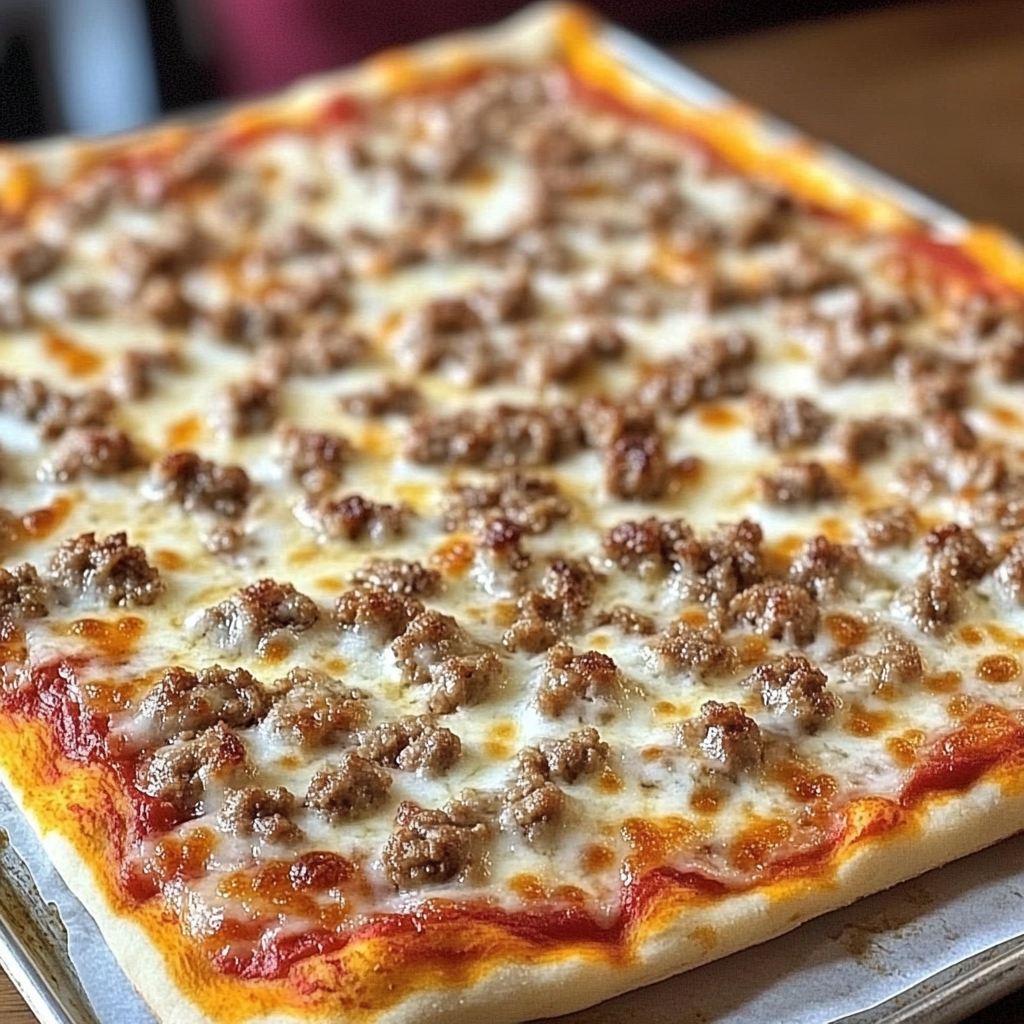
The crust is closer to a soft bread base than a chewy pizzeria dough. That is the point. A wetter batter spreads easily into the sheet pan and bakes into a tender layer that can hold sauce without turning tough. Dry milk helps with browning and gives the crust a mild sweetness.
Do not add too much extra flour while mixing. The batter should look sticky and a little loose. If it fights the spatula, wet the spatula lightly and press it into the corners. For another nostalgic pan pizza, try School Cafeteria Pizza.
Get The Meat Layer Right
Brown the sausage and beef until the edges look a little crisp. That browning is where the old-school flavor comes from. Drain the skillet before adding sauce, because extra grease can pool under the cheese.
Ground meats should be cooked to 160 degrees F. The FoodSafety.gov temperature chart is a good quick reference if you cook with a thermometer. If you like sausage on breakfast-style pizzas too, the Sausage Gravy Breakfast Pizza is a good next pan to try.
Cheese That Melts Evenly
Freshly shredded mozzarella melts best, but a little cheddar gives the top that yellow cafeteria color. Spread the cheese all the way to the edges. Those crisp browned corners are often the best bites.
A small amount of shredded American cheese can be added if you want a more retro flavor. Keep it modest so the topping melts smooth instead of oily. For another cheese-heavy family dinner, the Classic Baked Mac and Cheese has the same cozy feel.
Swaps For Busy Nights
You can use prepared pizza dough if you are short on time, but the texture will be chewier. Press it thin in the pan and parbake before topping. Jarred pizza sauce works well here because the flavor is supposed to be simple and familiar.
For a meatier party tray, add mini pepperoni or diced ham. For a cheese-only version, skip the meat and use a slightly thicker layer of sauce. If small handheld pizza dinners are your thing, Pizza Grilled Cheese is quick and easy.
Storage And Reheating
Store slices in the fridge for up to 3 days. Reheat them on a sheet pan at 350 degrees F until the bottom warms and the cheese softens. The microwave works for speed, but it makes the crust softer.
To freeze, cool the pizza completely and freeze slices on a lined pan. Once firm, move them to a freezer bag. Reheat frozen slices at 375 degrees F until hot and bubbly.
Summary
Serve warm from the pan with a simple salad or a few extra cups of pizza sauce for dipping.
FAQs
- What makes school pizza different from regular pizza?
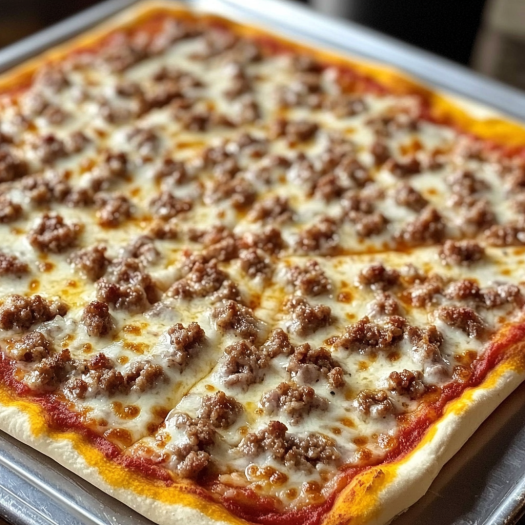
School pizza usually has a soft sheet-pan crust, a thinner sauce layer, and a simple blanket of cheese. It is baked in a rectangle pan and cut into squares or rectangles rather than wedges.
- Can I use only sausage instead of beef and sausage?
Yes. Use 1 pound of mild Italian sausage if you want a stronger sausage flavor. Drain it well before adding sauce so the pizza does not turn greasy.
- Can I make the crust without dry milk?
You can leave it out, but the crust will taste more like plain bread dough. Dry milk adds tenderness and helps the crust brown in a way that feels closer to cafeteria pizza.
- How do I store leftover school pizza?
Cool the slices, then refrigerate them in an airtight container for up to 3 days. Reheat on a sheet pan at 350 degrees F until the cheese softens and the bottom feels warm.
- Can I freeze this pizza?
Yes. Freeze baked slices in a single layer, then stack them with parchment once firm. Reheat from frozen at 375 degrees F until hot in the center.
- What cheese tastes most like cafeteria pizza?
A mix of mozzarella and mild cheddar gives the right melt and color. If you want a more retro flavor, add a little shredded American cheese to the blend.
