 Pin it
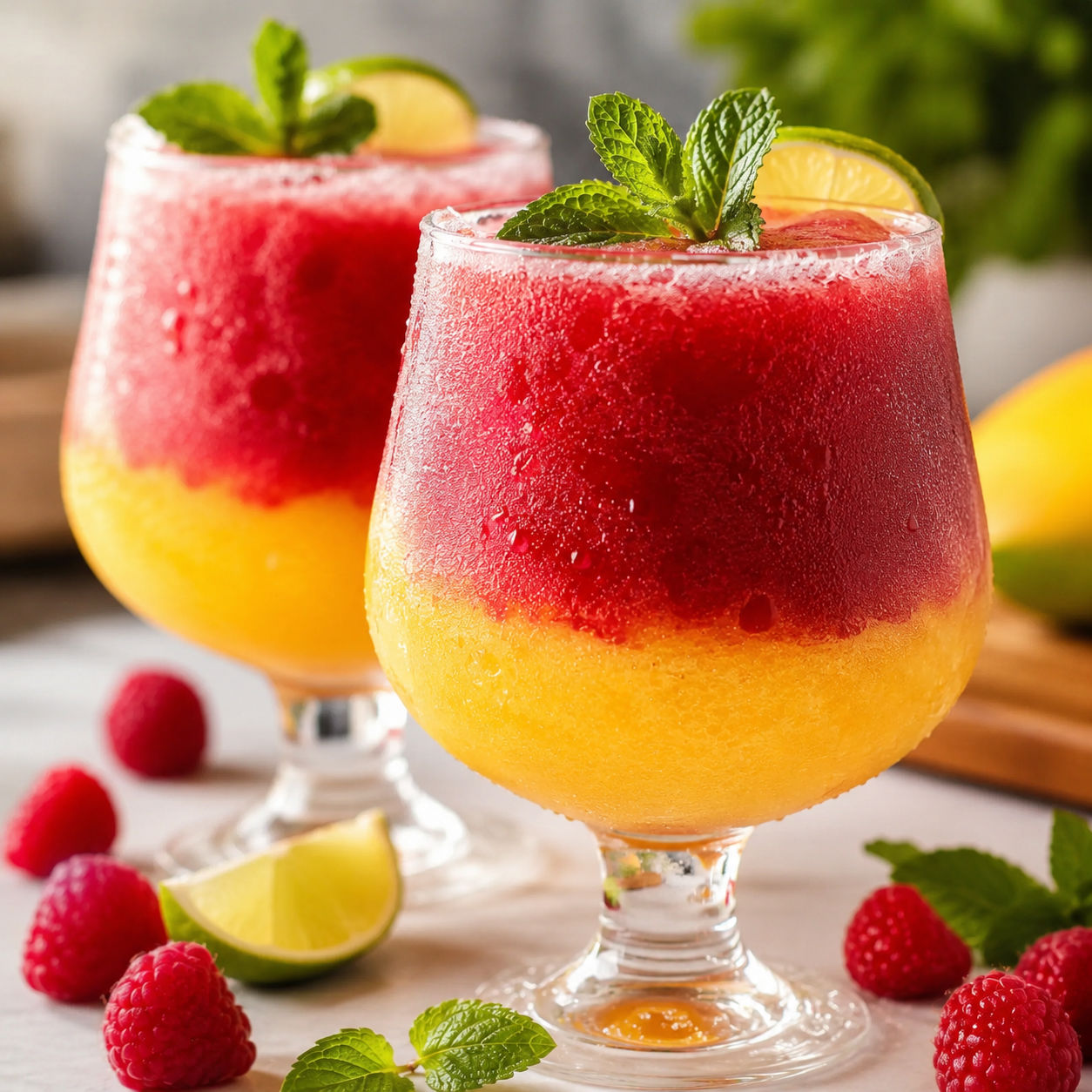
Refreshing Raspberry Mango Daiquiris with Mint are the drink I make when the fruit on the counter is ripe and the blender is already out. The raspberry layer is sharp and berry-bright. The mango layer is smooth, sunny, and just sweet enough.
The mint matters more than it looks. A sprig slapped between your palms wakes up the oils, so every sip smells cool before it tastes fruity. Keep the layers thick and pour slowly, and you get that pretty red-and-gold glass without any fuss.
Fruit That Makes It Sing
Use ripe mango that smells sweet near the stem and raspberries that taste tart, not watery. Bottled lime juice makes the drink flat, so squeeze fresh limes if you can.
- Raspberries. They give the bottom layer its bright color and tart berry bite.
- Mango. Ripe mango makes the top layer creamy without dairy and balances the raspberries.
- White rum. A clean rum keeps the drink in classic daiquiri territory without hiding the fruit.
- Fresh lime juice. The acid keeps the cocktail lively and cuts through the sweetness.
- Agave syrup. It blends easily into cold fruit and lets you adjust sweetness fast.
- Ice. It thickens both layers so they pour slowly and stay separate.
- Fresh mint. The garnish adds a cool aroma every time you lift the glass.
Blend Refreshing Raspberry Mango Daiquiris with Mint
- Chill the glasses. Put clear glasses in the freezer for 10 minutes while you prep the fruit. Cold glass slows melting and helps the layers hold.
- Blend the raspberry layer. Blend raspberries, lime juice, agave, rum, and ice until thick and smooth. Pour it into a small pitcher.
- Rinse the blender. A quick rinse keeps the mango layer golden instead of muddy pink.
- Blend the mango layer. Blend mango, lime juice, rum, and ice until velvety. Taste before pouring and add a little agave only if the mango needs it.
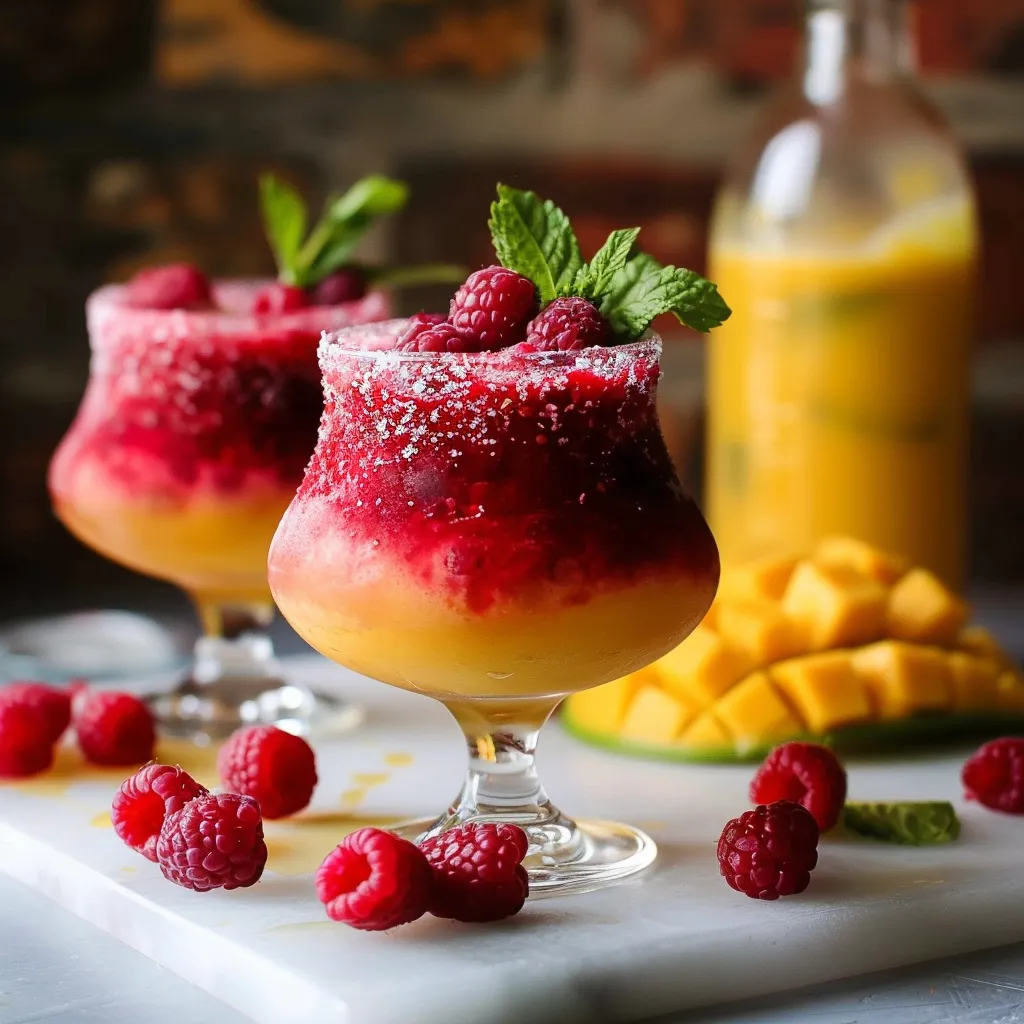
- Layer and garnish. Fill each glass halfway with raspberry daiquiri, then pour mango slowly over the back of a spoon. Finish with mint and serve at once.
The Layering Trick
The clean stripe comes from texture. If the mango layer is thin, it dives into the raspberry layer and the drink turns coral before it reaches the table. Keep both blends thick enough to mound slightly in the pitcher. Add ice first if you need to fix a runny layer. Add liquid only when the blender truly needs help moving. For another cold drink with mint, the Watermelon Lime Mint Mocktails use the same fresh, cooling finish without rum.
Balancing Sweet and Tart
Fruit changes from batch to batch, so taste each layer before you build the glasses. Raspberries usually need more sweetener than mango. Mango can be sweet enough on its own, especially if you use frozen ripe chunks. Lime is the guardrail. It keeps the cocktail tasting crisp rather than jammy. The classic daiquiri family is built around rum, citrus, and sugar, and the International Bartenders Association is a useful reference for that simple structure. This version leans fruitier, but the same balance still matters.
Make It a Mocktail
For a non-alcoholic version, swap the rum for coconut water or white grape juice. Coconut water makes the drink lighter and less sweet. White grape juice gives more body, so start with less agave. Sparkling water works too, but stir it in after blending so the bubbles do not disappear. If you like fruity drinks with a softer brunch feel, try this beside Homemade Mango Iced Tea or Refreshing Strawberry Tea. Keep alcoholic and alcohol-free pitchers clearly separate when serving a group. For general alcohol guidance, the National Institute on Alcohol Abuse and Alcoholism is a reliable place to check current information.
Storage Without Slush Trouble
These daiquiris are best right away, when the ice is tiny and the fruit tastes sharp. If you need a head start, blend the raspberry and mango mixtures separately and chill them in covered jars for up to 4 hours. They may loosen as the ice melts. Stir hard or re-blend with a handful of ice before layering. Do not freeze the finished drink in glasses. It sets unevenly and loses that smooth, pourable texture. Leftover fruit can go toward Mango Strawberry Sunrise Frappuccinos the next morning.
Serving With Summer Food
The drink is bright, cold, and a little tart, so it loves food with salt, smoke, and heat. Serve it with tortilla chips, grilled shrimp, fish tacos, jerk chicken skewers, or a platter of limey fruit. It also works after dinner with coconut desserts because the mango already has that tropical roundness. If you are pouring these outside, keep the pitchers tucked into a bowl of ice and layer the drinks as people ask for them. The color is best when the glass is fresh.
Summary
Serve these daiquiris right after blending for the best frosty texture and cleanest layers.
FAQs
- Can I use frozen raspberries and mango?
Yes. Frozen fruit works very well here and makes the daiquiris extra frosty. If the blender struggles, let the fruit sit at room temperature for 5 minutes or add a small splash of cold water or lime juice.
- How do I keep the layers from blending together?
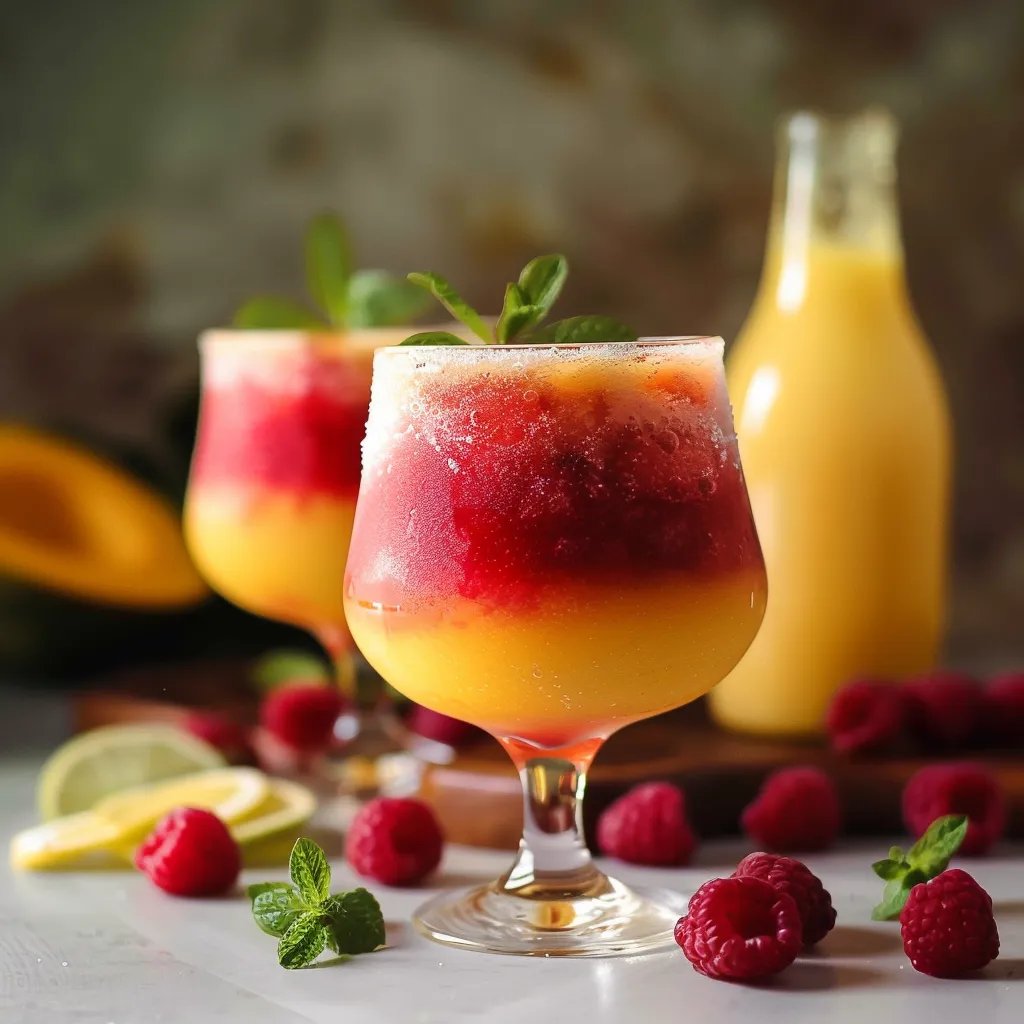
Make both mixtures thick, then pour the second layer slowly over the back of a spoon. Clear glasses help because you can see when the top layer starts to sink and slow down right away.
- Can I make these daiquiris without alcohol?
Yes. Replace the rum with coconut water, white grape juice, or cold sparkling water. The drink will be a little lighter, so reduce the agave by a tablespoon if your substitute is sweet.
- Can I make the daiquiri layers ahead?
You can blend the raspberry and mango layers up to 4 hours ahead and keep them covered in the refrigerator. Stir or re-blend briefly before pouring because fruit and ice can separate as they sit.
- What rum is best for raspberry mango daiquiris?
Use a clean white rum that will not cover the fruit. Aged or spiced rum can taste heavy here, so save those for drinks with warmer flavors.
- What should I serve with these daiquiris?
They are great with salty snacks, grilled seafood, fish tacos, and spicy appetizers. Mango and lime also pair well with coconut desserts if you are serving them after dinner.
