 Pin it
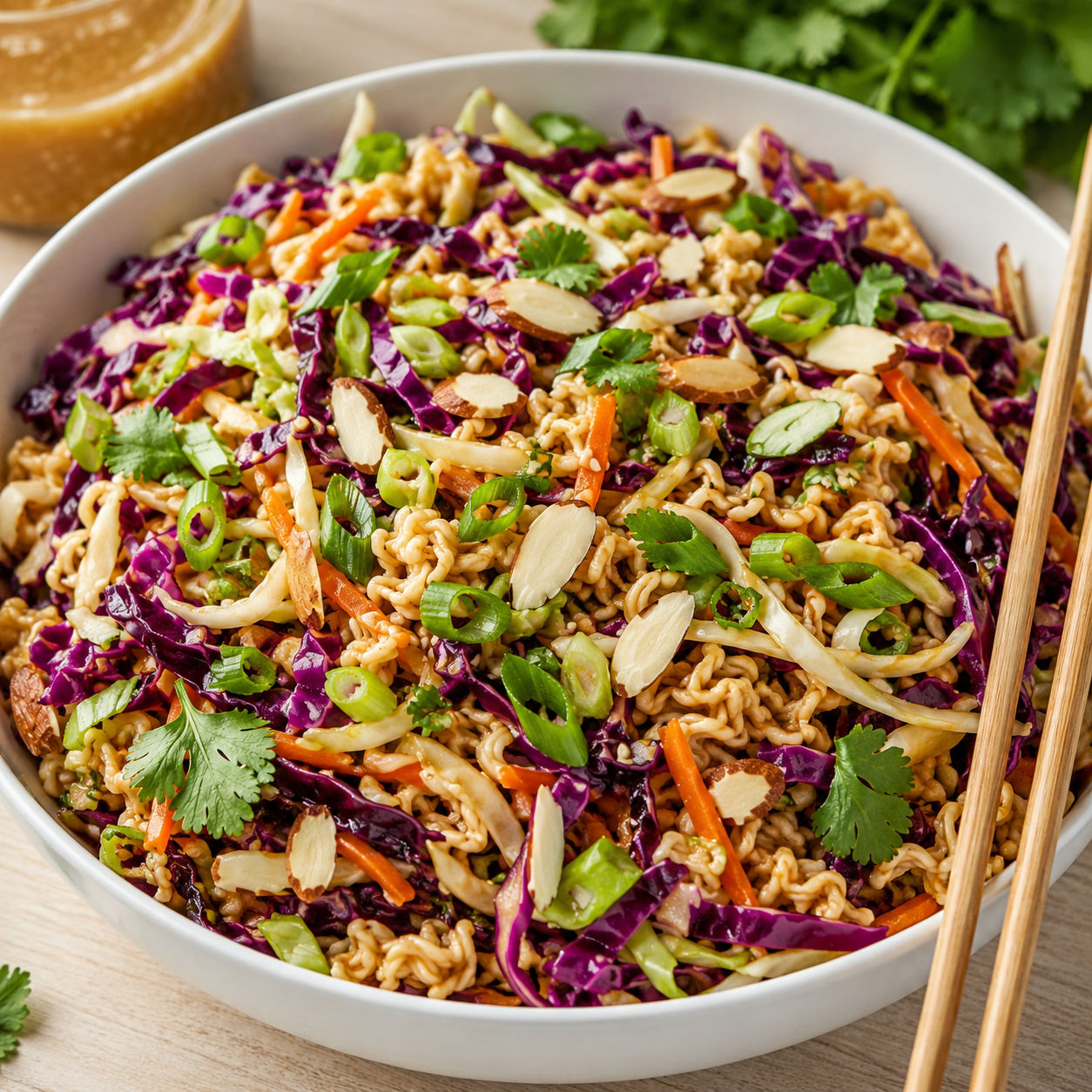
Fresh Ramen Noodle Salad with Crunchy Vegetables and Toasted Almonds is the kind of bowl that disappears fast at a cookout. It has cold crisp cabbage, sweet carrots, green onions, and a nutty crunch from toasted ramen and almonds.
The trick is simple. Toast the noodles dry, keep the dressing punchy, and wait until serving time to combine the crunchy pieces with the vegetables. That keeps every forkful snappy instead of soggy.
Crisp Bowl Building Blocks
Choose sturdy vegetables that can handle a tangy dressing without collapsing. Cabbage is the base here, and the best texture comes from thin shreds that are dry before they hit the bowl.
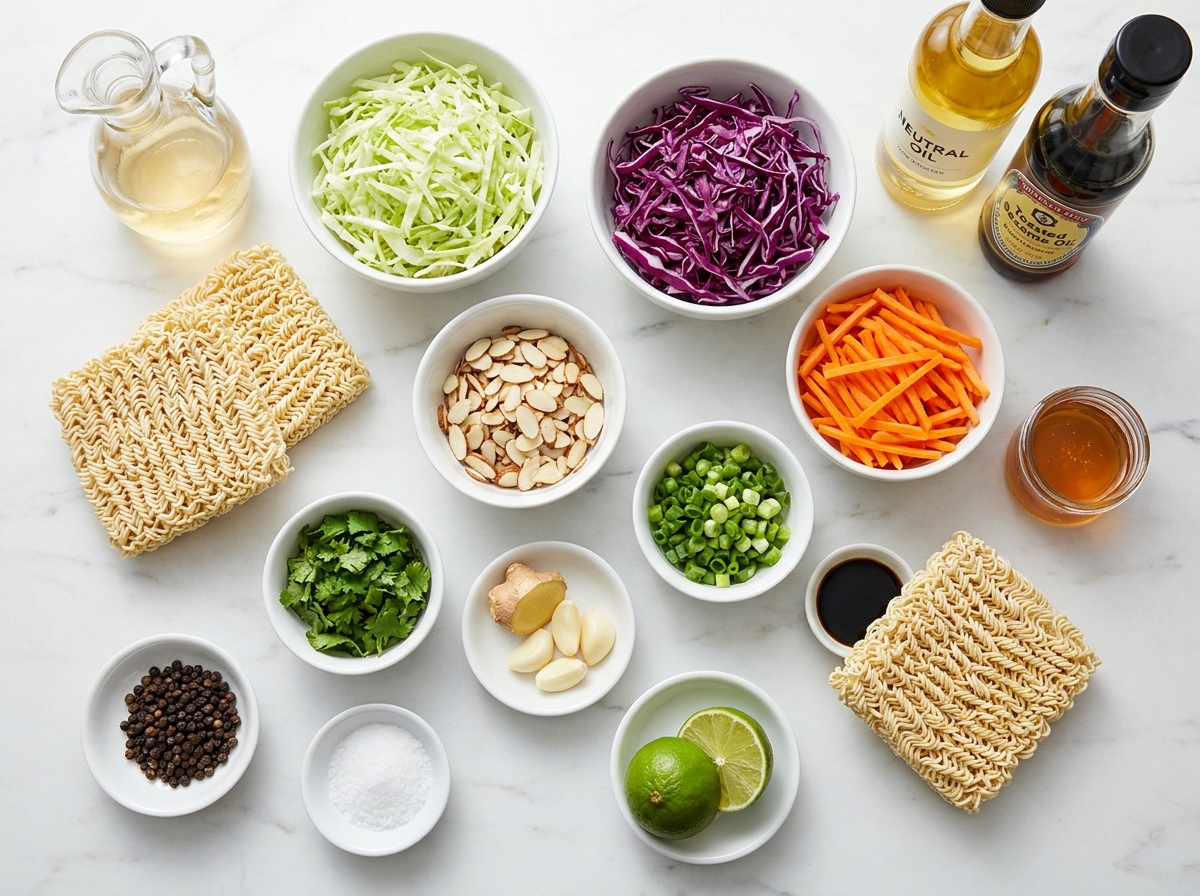
- Dry ramen noodles. They toast into the crunchy topping that makes the salad fun to eat.
- Sliced almonds. They add a deeper nutty flavor and a lighter crunch than whole nuts.
- Green cabbage. It gives the salad bulk, snap, and a clean fresh bite.
- Red cabbage. It brings color and a little peppery edge.
- Carrots. They add sweetness and thin crisp strands through the bowl.
- Green onions. They give a mild onion bite without overpowering the dressing.
- Rice vinegar. It keeps the dressing bright and sharp.
- Soy sauce. It brings salt and savory depth, so the ramen seasoning packet can stay out.
- Toasted sesame oil. A small amount gives the salad its warm nutty aroma.
- Honey. It softens the vinegar and helps the dressing cling.
Toss It Fresh
- Toast the crunch. Break the dry ramen into small pieces, spread it on a sheet pan with the almonds, and bake until lightly golden. Let it cool fully so it stays crisp.
- Shake the dressing. Combine rice vinegar, soy sauce, honey, sesame oil, neutral oil, garlic, and ginger in a jar. Shake until glossy and well mixed.
- Prep the vegetables. Thinly slice both cabbages, shred the carrots, and cut the green onions. Dry vegetables make a cleaner, brighter salad.
- Dress the bowl. Toss the vegetables with most of the dressing first. Add the rest only if the cabbage looks dry.
- Finish with crunch. Fold in the cooled ramen and almonds right before serving. Taste and adjust with a pinch of salt or a splash of vinegar.
Keep The Crunch Alive
The crunchy topping is the whole point, so treat it like croutons. Toast the ramen and almonds until they smell nutty and look pale golden, then let them cool before storing. Warm nuts trapped in a container can steam and soften.
Add the topping only at the end. If you are taking this salad to a picnic, pack the vegetables and dressing in one container and the toasted ramen mixture in another. The same timing helps in Ramen Noodle Cabbage Salad, where the crisp pieces should land in the bowl right before serving.
Dressing That Coats Lightly
A good ramen salad dressing should taste bright before it hits the cabbage. The vegetables dull the vinegar a bit, and the noodles soak up seasoning as they sit. Shake the dressing hard until the honey dissolves and the oil looks evenly blended.
If you like a sharper salad, add another teaspoon of rice vinegar after tossing. For a softer flavor, add a little more honey. Rinse and dry vegetables well, especially if using pre-shredded cabbage. The FDA has practical advice for handling fresh produce in its produce safety guide.
Swaps For Every Bowl
This salad handles changes well. Use napa cabbage for a softer bite, add thin bell pepper strips for color, or toss in snow peas for extra snap. Cilantro is good if you want a fresh herbal finish. Mandarin orange segments work too, but drain them well so the dressing does not turn watery.
For a fuller meal, add rotisserie chicken, chilled shrimp, or edamame. If you want another dinner-style crunchy salad, Asian Chicken Crunch Salad keeps the same fresh, savory direction with more protein.
Make-Ahead Picnic Notes
You can prep every part ahead without sacrificing texture. Slice the cabbage and carrots, then refrigerate them in a covered bowl with a paper towel to catch extra moisture. The dressing can sit in a jar for three days. Shake it again before using because the oil will separate.
The toasted ramen and almonds are best stored at room temperature in an airtight container. Do not refrigerate them, since fridge humidity can dull their crunch. For another bright side that travels well, try Fresh Spring Roll Salad with spicy ginger dressing.
What To Serve Alongside
This works as a side with grilled chicken, burgers, teriyaki salmon, potstickers, or simple sandwiches. It is also strong enough for lunch with tofu or shredded chicken on top. The almonds bring protein and good texture, and the Harvard Nutrition Source has a helpful overview of almonds if you want more background on the nut itself.
If serving a crowd, double the vegetables and dressing but toast the ramen in two pans. Crowding the sheet pan traps steam and gives you pale, uneven crunch.
Summary
This salad is best served the day it is assembled, but the vegetables, dressing, and toasted topping can all be prepared ahead and stored separately.
FAQs
- Do I cook the ramen noodles first?
No. Use the noodles dry and break them into small pieces before toasting. They soften slightly once dressed, but they should stay crisp like croutons.
- Can I make ramen noodle salad ahead of time?
Yes, but keep the parts separate. Slice the vegetables, shake the dressing, and toast the ramen with almonds up to a day ahead. Toss everything together shortly before serving.
- What can I use instead of almonds?
Cashews, peanuts, sunflower seeds, or pepitas all work. Toast them lightly so they taste nutty and stay crunchy in the salad.
- Can I use bagged coleslaw mix?
Yes. A bagged cabbage and carrot mix makes this very quick. Pat it dry if it looks damp, since extra moisture weakens the dressing and softens the noodles.
- How long does ramen noodle salad keep?
Once tossed, it is best within a few hours. Leftovers keep for about two days in the fridge, but the ramen will lose most of its crunch.
- How can I turn this into a main dish?
Add shredded chicken, seared shrimp, edamame, or baked tofu. Keep the protein simple so the sesame dressing and toasted almond crunch still stand out.
