 Pin it
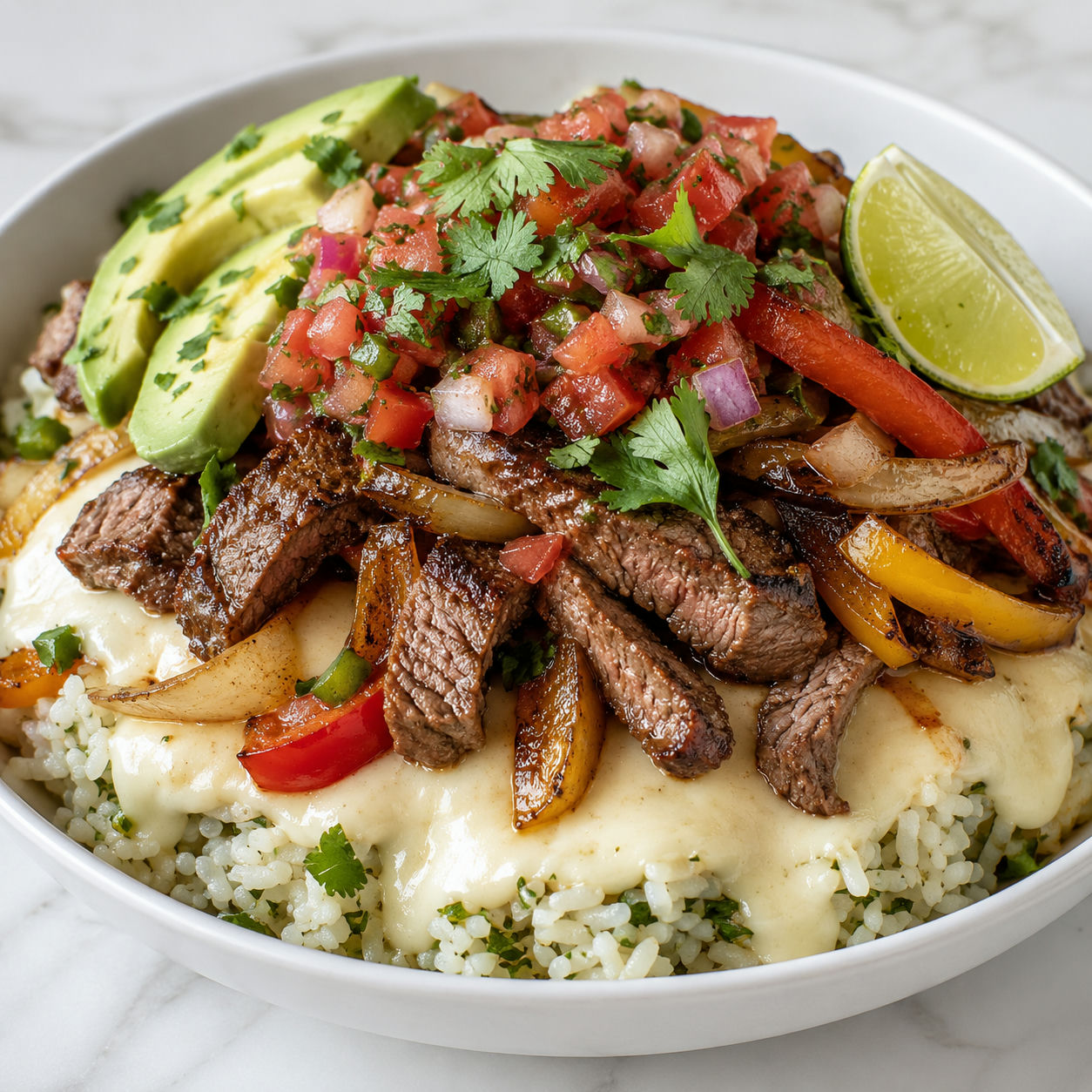
A Queso Steak Fajita Stack is what I make when I want fajita flavor without everyone building their own plate at the table. You get the sizzling peppers, the tender strips of steak, the rice, and the warm queso in one tall, messy, very satisfying stack.
The trick is simple. Cook the steak hot and fast, rest it well, then slice it thin across the grain. The queso goes on warm so it drips into the rice instead of sitting on top like a heavy blanket.
Fajita Stack Building Blocks
This recipe is best with a steak that can handle high heat and a short rest. Choose peppers that feel firm and glossy, and use queso that melts smooth rather than grainy.
- Flank or skirt steak. Gives the stack big beef flavor and slices cleanly when cut across the grain.
- Bell peppers. Bring sweetness, color, and the classic fajita bite.
- Yellow onion. Softens in the pan and picks up the steak seasoning left behind.
- Fajita spices. Chili powder, cumin, paprika, garlic, and oregano make the steak taste smoky and warm.
- Lime juice. Brightens the steak and cuts through the queso.
- Cooked rice. Builds the stack and catches the queso and pan juices.
- Queso blanco. Melts through the layers and holds the whole plate together.
- Cilantro and pico de gallo. Add freshness so the stack does not feel too heavy.
Queso Steak Fajita Stack Method
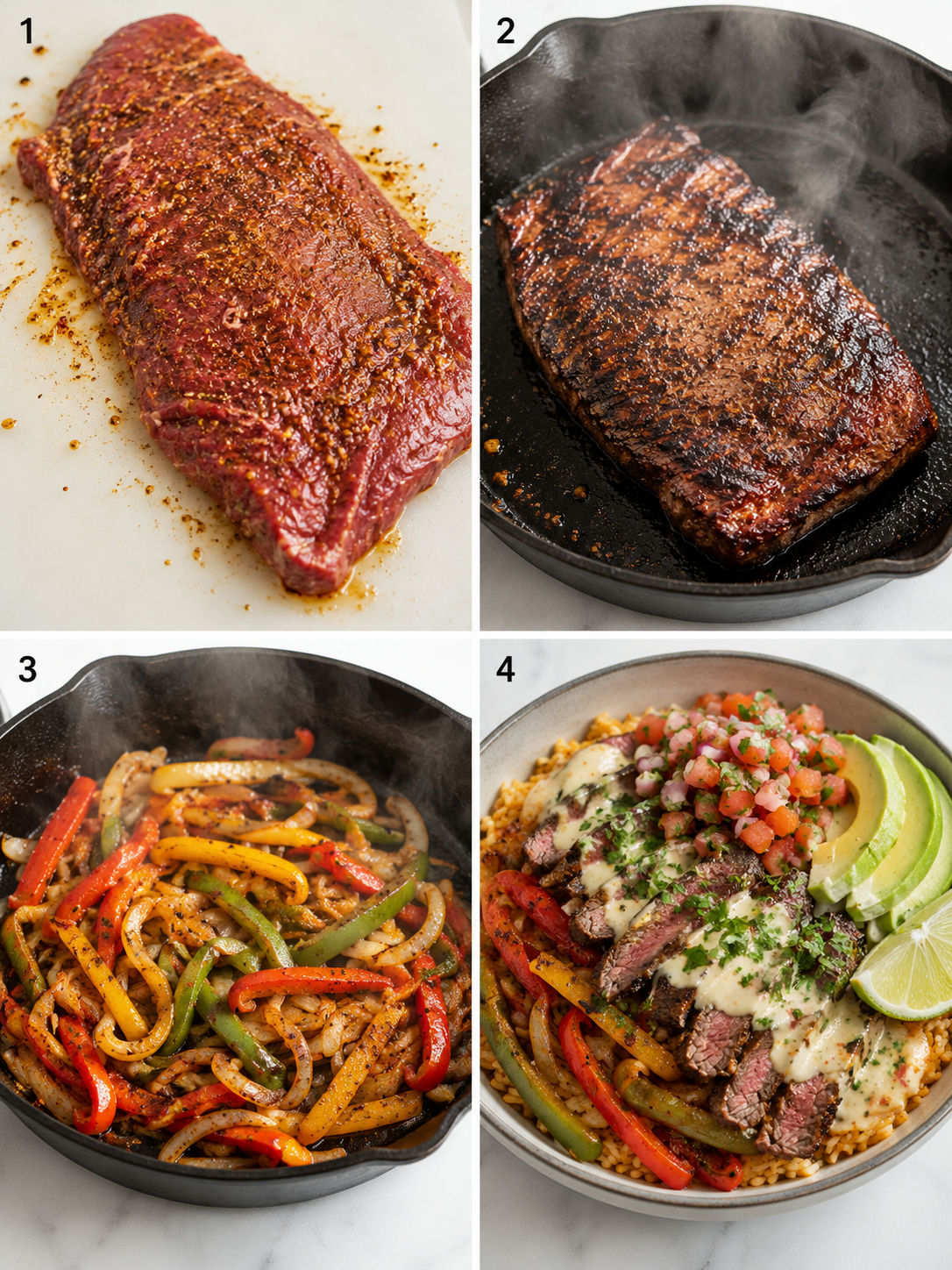
- Season the steak. Rub the steak with oil, lime juice, and spices, then let it sit while the skillet heats.
- Sear it hot. Cook the steak in a very hot skillet until browned outside and cooked to your liking, then move it to a board.
- Cook the vegetables. Add peppers and onions to the same skillet and cook until tender with browned edges.
- Warm the queso. Heat the queso gently with a splash of milk if needed so it pours easily.
- Slice the steak. Cut the rested steak thinly across the grain so each bite stays tender.
- Build the stacks. Layer rice, queso, peppers, steak, more queso, pico de gallo, and cilantro. Serve right away with lime.
Slice Across The Grain
Steak fajitas live or die by the slicing. Flank and skirt steak have long muscle fibers that run in one clear direction. If you slice with those fibers, the strips chew tough even when the steak is cooked well. Turn the steak so your knife cuts across those lines, then keep the slices thin. That one move makes a bigger difference than any extra marinade. For official safety guidance, the USDA lists 145°F with a 3-minute rest for beef steaks in its beef handling guide. If you like steak dinners built around the same idea, try this queso steak fajita skillet next.
Keep The Queso Silky
Warm queso slowly. High heat can make cheese sauces tighten and split, especially if they sit too long in a hot pan. I like to heat it in a small saucepan over low heat and loosen it with a tablespoon or two of milk. The goal is a pourable sauce that slips between the rice, peppers, and steak. If your queso is thick, add the milk before it looks broken. If it is already grainy, take it off the heat and whisk in a small splash of warm milk. For a richer homemade layer, the flavor in homemade queso fundido fits this stack beautifully.
Build Layers That Hold
Start with hot rice because it gives the stack weight. Spoon a little queso over the rice, then add peppers and onions. The steak goes near the top so it stays visible and does not steam under the rice. Finish with more queso, pico de gallo, and cilantro. A wide shallow bowl is easier than a flat plate if you want clean layers. If you like rice-based steak dinners, this steak queso rice bowl is a good weeknight cousin to this recipe. EatingWell also points out how well fajita-style peppers, onions, and spices work across bowls, casseroles, and quick dinners in its fajita-inspired dinner roundup.
Easy Swaps For Busy Nights
Use leftover rice if you have it. Cold rice reheats well in a skillet with a splash of water and a lid. Swap in chicken, shrimp, or sliced portobello mushrooms if steak is not on the menu. Pepper jack can stand in for queso if you melt it with a little milk, though the texture will be thicker. For more crunch, tuck a few broken corn tortilla chips into the middle layer right before serving. If you want the same steak and cheese flavors in handheld form, these loaded steak quesadillas are an easy pivot.
Storing The Leftovers
Store the steak, peppers, rice, and queso in separate containers if you can. The stack tastes much fresher that way. Refrigerate leftovers promptly and use them within 3 to 4 days, which matches the USDA guidance for leftover food safety. Reheat the rice and peppers first, then warm the steak briefly so it does not turn tough. Queso should be reheated low and slow with a splash of milk. Once everything is hot, rebuild the stack with fresh pico and cilantro.

FAQs
- What cut of steak works best for a Queso Steak Fajita Stack?
Flank steak and skirt steak are the best choices because they cook quickly and slice into tender strips. Sirloin also works if you cut it thin after resting.
- Can I use chicken instead of steak?
Yes. Use thin chicken breast cutlets or boneless chicken thighs and cook them until done through. The peppers, onions, rice, and queso all work the same way.
- How do I keep the stack from falling apart?
Use rice as the base, then add queso between layers instead of only on top. Let the steak rest before slicing so the juices do not flood the plate.
- Can I make the steak fajita stack ahead?
You can cook the steak, vegetables, and rice ahead, then store them separately. Reheat gently and add warm queso right before serving for the best texture.
- Is this recipe gluten-free?
It can be gluten-free if your queso and seasonings are certified gluten-free and you use corn tortillas or tortilla chips. Always check packaged queso and spice blends for hidden wheat ingredients.
- What should I serve with it?
Serve it with pico de gallo, avocado, lime wedges, or a crisp green salad. Warm corn tortillas are nice on the side if you want to scoop up the extra queso and peppers.
