 Pin it
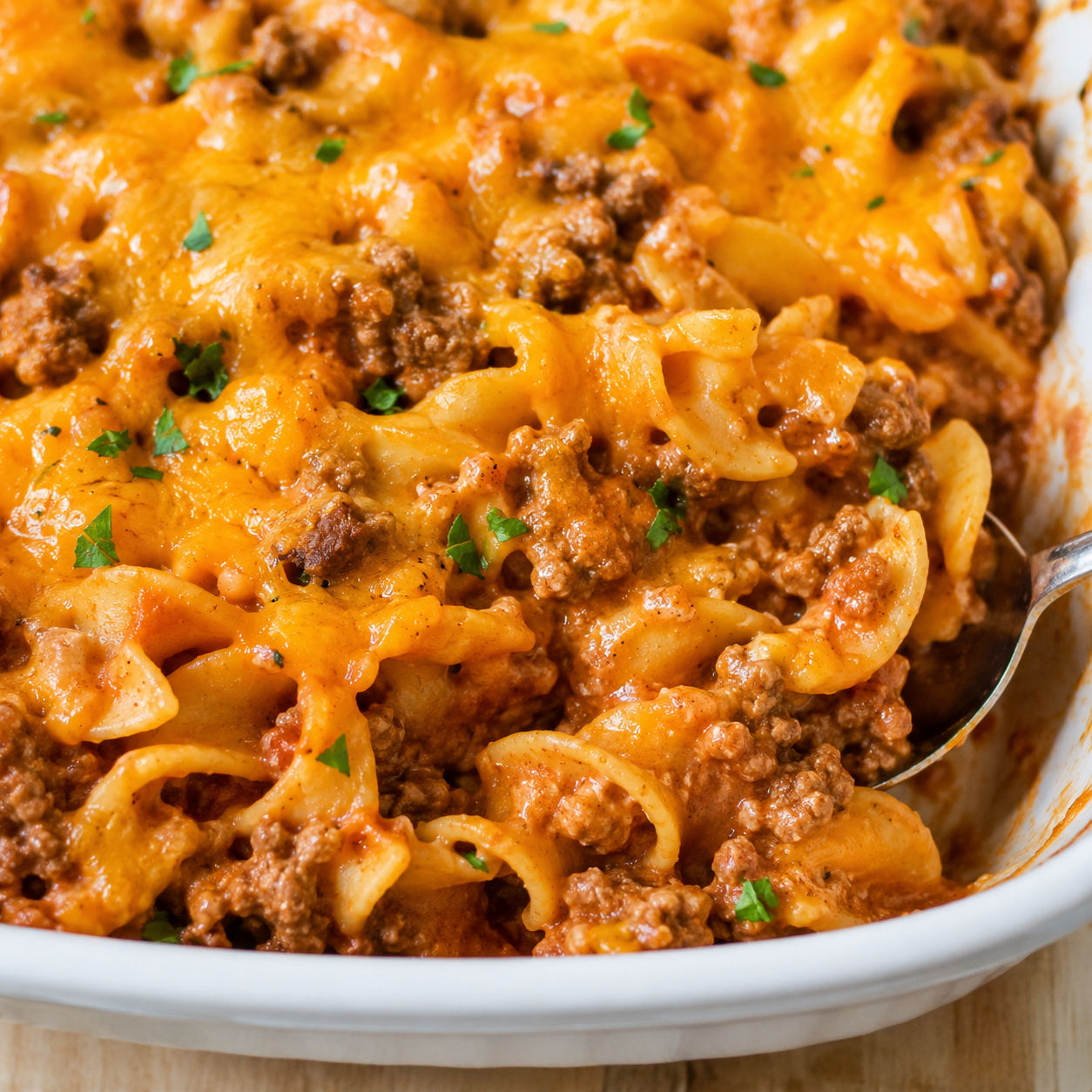
Simple Ground Beef and Noodle Casserole is the kind of dinner that makes sense on a crowded weeknight. The ingredients are plain, but the finished dish comes out creamy, beefy, and bubbling around the edges.
I like this version because it stays scoopable instead of dry. The noodles are coated before baking, the beef sauce gets a short simmer, and the cheddar melts into a golden top without needing extra fuss.
Simple Ground Beef and Noodle Casserole Basics
This dish works best with wide egg noodles, lean ground beef, and a sauce that has enough body to coat every bite. Use a block of cheddar if you can, since freshly shredded cheese melts smoother than bagged cheese.
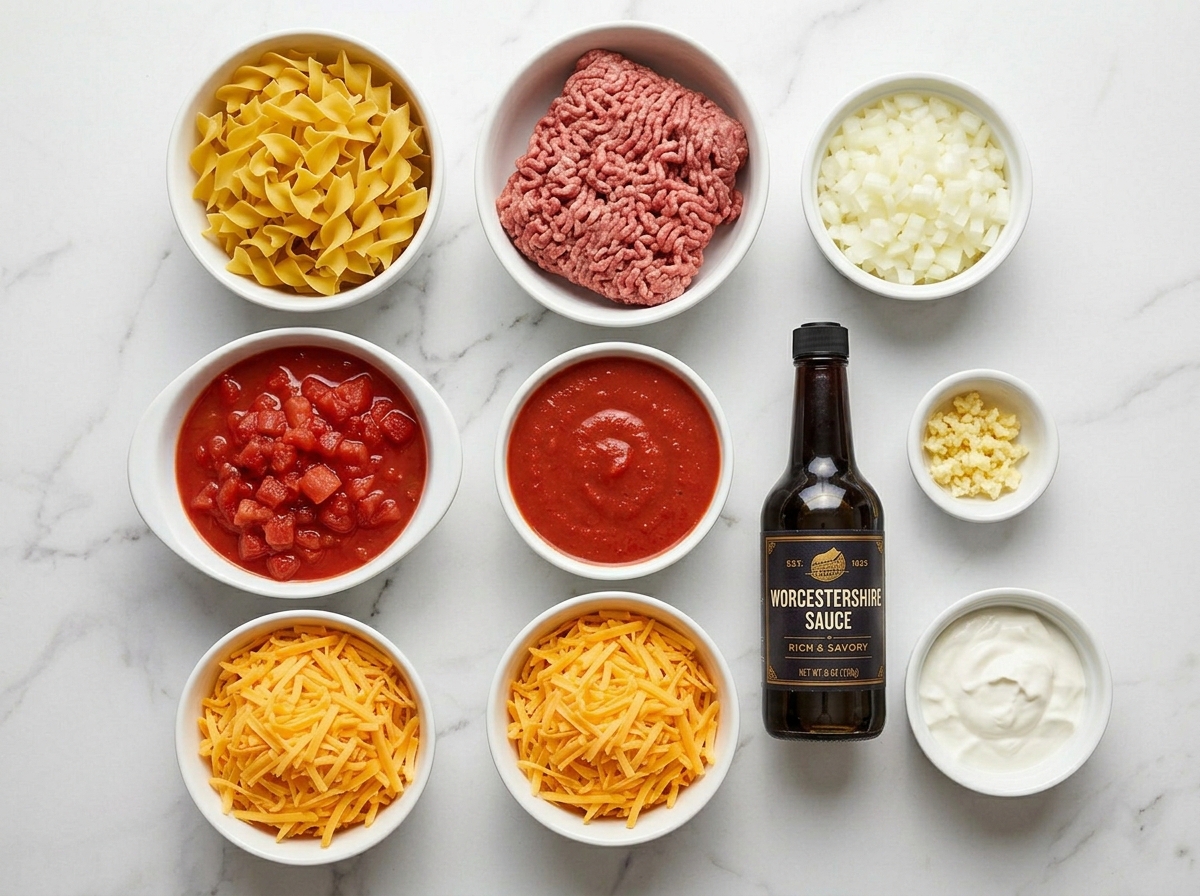
- Ground beef. Gives the casserole its hearty base and savory flavor. Lean beef keeps the dish rich without turning greasy.
- Wide egg noodles. Stay tender and hold the creamy sauce better than thin pasta.
- Onion and garlic. Build a simple, familiar flavor under the beef.
- Tomato sauce and diced tomatoes. Make the beef mixture saucy enough to carry through the bake.
- Worcestershire sauce. Adds a deeper, browned flavor without making the casserole taste sharp.
- Sour cream. Coats the noodles and keeps the middle creamy.
- Cheddar cheese. Melts over the top into a bubbly, lightly golden layer.
- Italian seasoning. Adds a gentle herb flavor that fits the tomato and beef.
Bake It Until Bubbling
- Cook the noodles. Boil the egg noodles in salted water until just shy of tender. Drain them well so the casserole does not turn watery.
- Brown the beef. Cook the ground beef with onion in a large skillet until no pink remains. Drain excess fat so the sauce tastes clean.
- Simmer the sauce. Stir in garlic, tomato sauce, diced tomatoes, Worcestershire sauce, and seasoning. Let it bubble for a few minutes so the flavors settle.
- Coat the noodles. Stir the hot noodles with sour cream off the heat. This gives the casserole its creamy middle without curdling the dairy.
- Assemble the pan. Fold the noodles and beef sauce together, spread into a greased 9x13 baking dish, and cover with cheddar.
- Bake and rest. Bake until the edges bubble and the cheese melts. Rest for 5-10 minutes so it scoops neatly.
Why the Noodles Matter
Egg noodles are softer and more tender than regular pasta, which is why they feel right in old-fashioned casseroles. The main mistake is boiling them all the way before they go into the oven. Stop when they still have a little firmness. They will finish cooking as they soak up the beef sauce.
If you only have shells or rotini, they will still work. Keep the same weight and cook them a minute less than the package says. For another cozy noodle dinner, try Creamy Beef Noodle Casserole, which leans even more into the creamy baked-pasta style.
Make the Sauce Scoopable
This is not meant to cut into tidy squares. It should scoop like a hot, cheesy pasta bake. Tomato sauce gives it moisture, diced tomatoes add small pockets of brightness, and sour cream softens the edges. If your skillet sauce looks thick before baking, add 2-3 tablespoons of water or beef broth.
Ground beef should be cooked to 160 degrees F for food safety. The FoodSafety.gov temperature chart is a useful reference when you are checking doneness.
Easy Swaps That Fit
You can make this casserole fit what is already in the fridge. Swap cheddar for Colby Jack, mozzarella, or a mild Mexican cheese blend. Add frozen peas, corn, or chopped spinach after the sauce simmers. Mushrooms are good too, but cook them with the beef so their moisture has time to leave the pan.
If you want a simpler pantry-style bake, 5 Ingredient Ground Beef Casserole follows the same comfort-food idea with fewer moving parts. For a cheesier pasta shape, One Pot Cheesy Beef Shells keeps everything on the stovetop.
Storing and Reheating Leftovers
Cool leftovers, then pack them in an airtight container. They keep well in the fridge for 3-4 days. Reheat single servings in the microwave with a small splash of water, or warm a larger portion covered in a 325 degrees F oven until hot.
This casserole also freezes well. I prefer freezing it before baking when I am planning ahead. Cover the pan tightly, thaw overnight, then bake covered for the first 20 minutes so the noodles heat through before the cheese browns.
What to Serve Beside It
Because the casserole is creamy and rich, serve it with something crisp or green. A simple salad with vinegar dressing is enough. Roasted broccoli, steamed green beans, or a bowl of pickles on the table all cut through the cheese.
If your family likes beef casseroles, Beef and Rice Casserole is a good no-noodle option for another night. For a classic pasta bake with a different protein, Classic Tuna Noodle Casserole scratches the same creamy casserole itch.
Summary
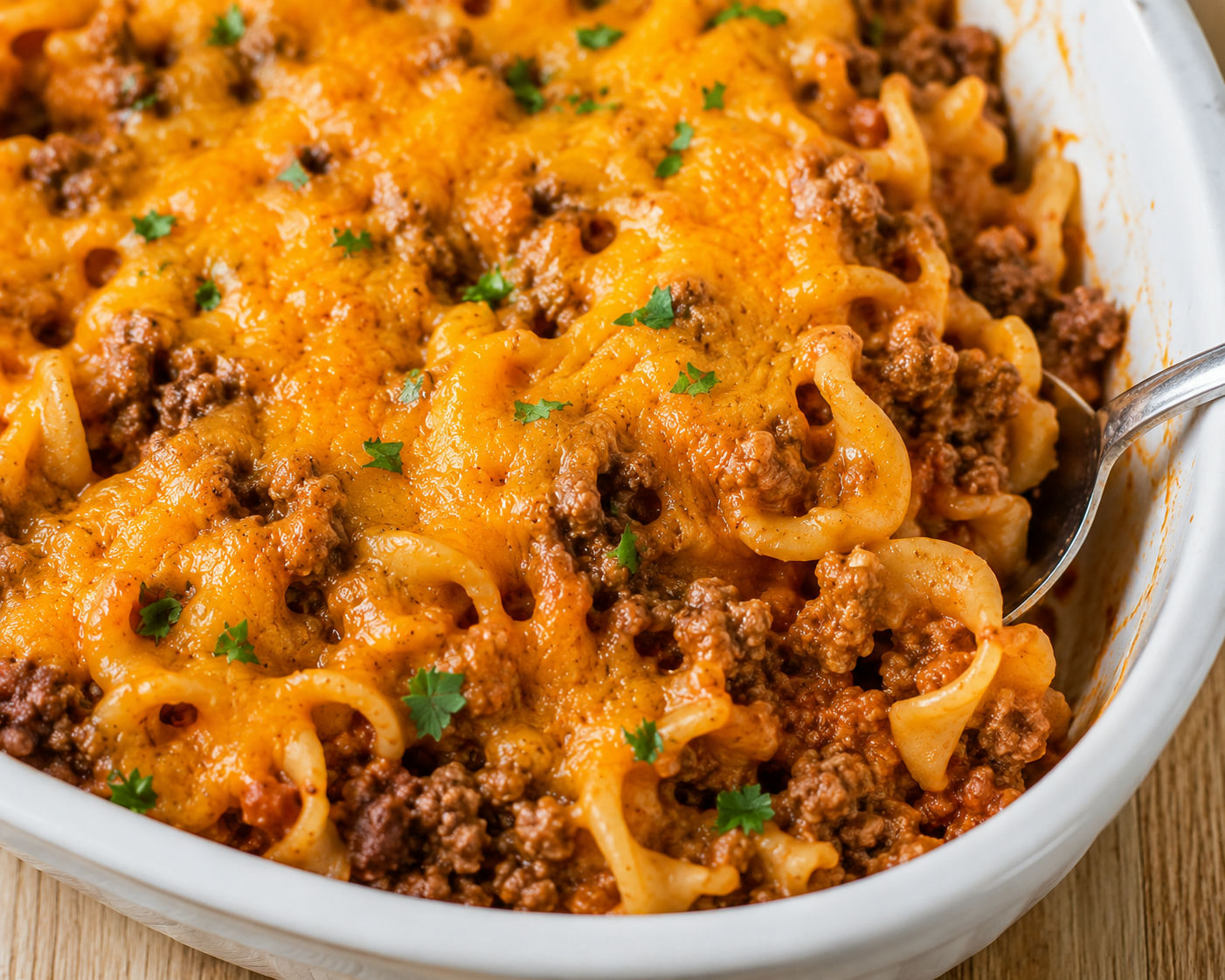
This casserole is best served warm after a short rest, with a crisp salad or green beans on the side.

FAQs
- Can I make ground beef and noodle casserole ahead of time?
Yes. Assemble it up to one day ahead, cover tightly, and refrigerate. Add 5-10 minutes to the baking time if it goes into the oven cold.
- Can I use a different pasta instead of egg noodles?
Yes, but choose a short pasta that catches sauce well. Rotini, shells, or elbow macaroni work nicely. Cook it just shy of tender so it does not turn mushy while baking.
- What can I use instead of sour cream?
Plain Greek yogurt works if you stir it in off the heat. Cottage cheese also gives the casserole a creamy texture. For a richer bake, use softened cream cheese thinned with a splash of milk.
- How do I keep beef noodle casserole from drying out?
Do not overcook the noodles before baking. Keep enough sauce in the skillet, and let the casserole rest only 5-10 minutes before serving. If reheating leftovers, add a spoonful of water or broth.
- Can I freeze this casserole?
Yes, freeze it before or after baking. Wrap it well and freeze for up to 2 months. Thaw overnight in the fridge, then bake covered until hot in the center.
- What should I serve with this casserole?
A green salad, roasted broccoli, garlic bread, or green beans all work well. The casserole is rich, so something crisp or fresh on the side balances the plate.
