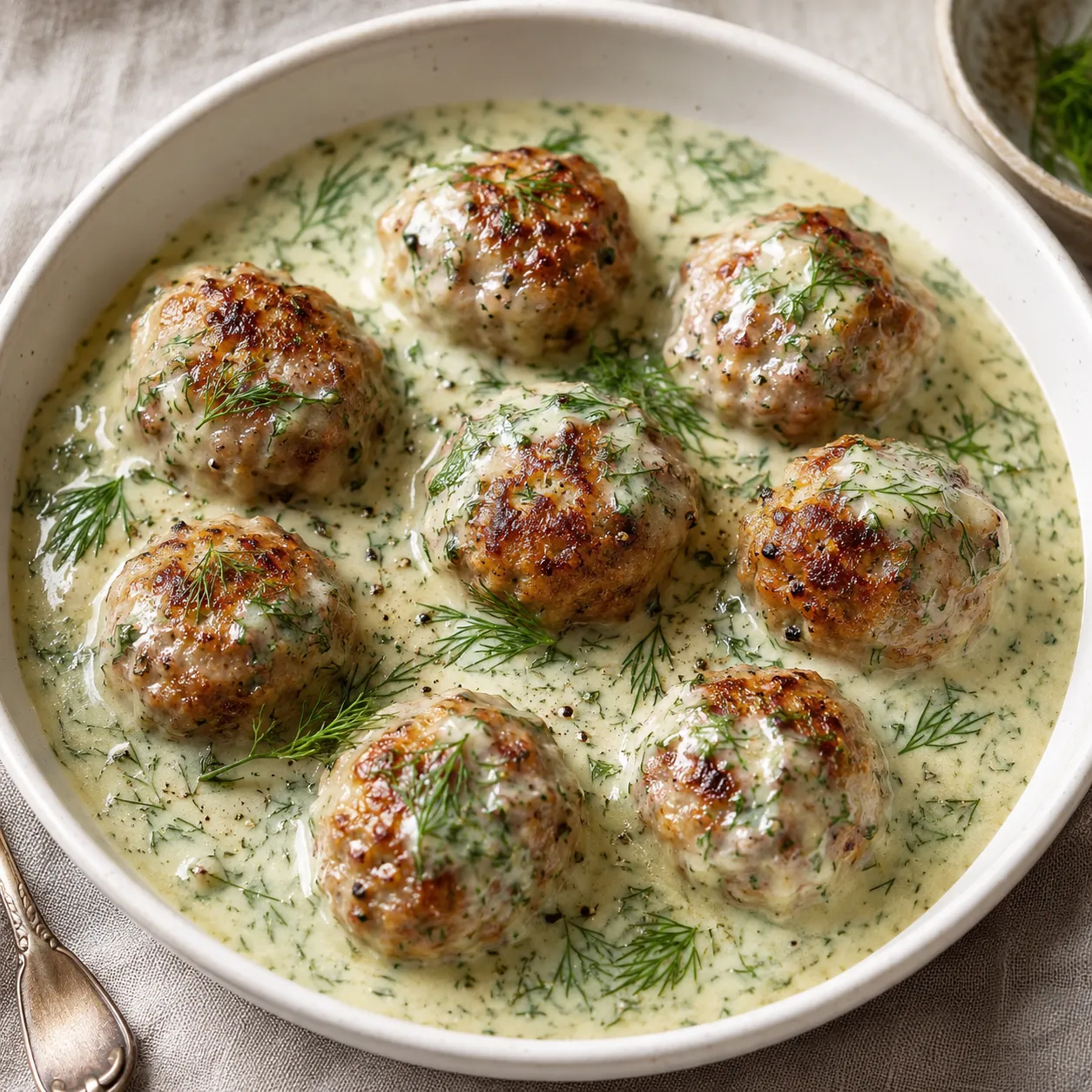
 Pin it
Klopsiki have been on Polish family tables for generations, and for a good reason. They are softer and more delicate than most meatballs you will encounter elsewhere, because the meat mixture gets milk-soaked bread pressed into it before the balls are even shaped. That one step changes the texture completely.
The sauce is the other thing that makes these worth making. It starts as a simple pan roux, takes on depth from the browned bits left behind by the meatballs, and finishes with sour cream and a real pile of fresh dill stirred in off the heat. The smell alone is reason enough to make them on a cold night.
This is Sunday-dinner food that comes together in under an hour. Mashed potatoes are the traditional match, and you will want something starchy to catch every drop of that sauce.
Meat, Milk-Soaked Bread, and Fresh Dill
The meatball mix uses equal parts ground pork and beef, and fresh dill is non-negotiable. Dried dill turns the sauce flat and dusty. Buy a whole bunch and use it generously in both the meat mixture and the sauce.
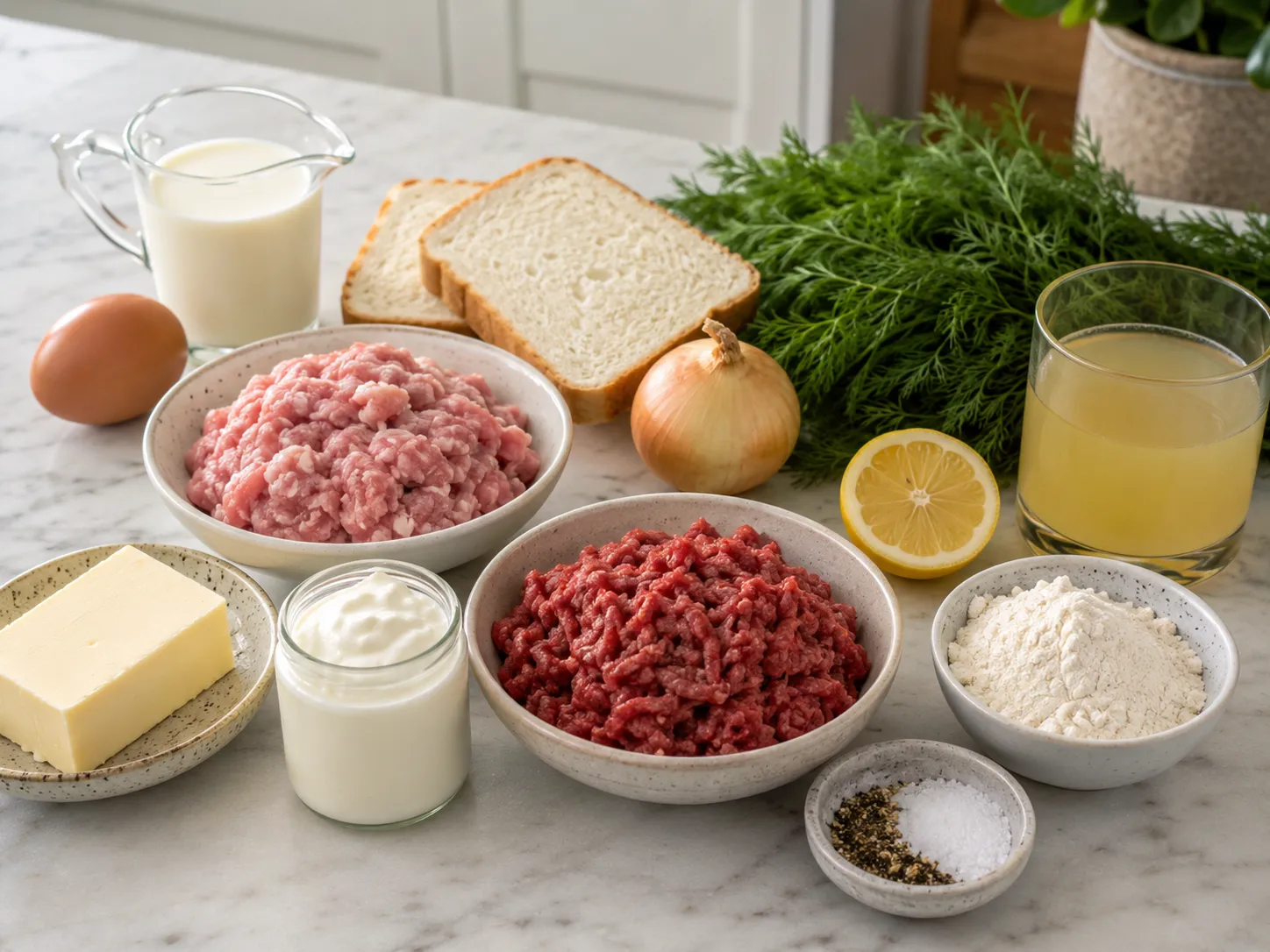
- Ground pork. Provides fat that keeps the meatballs juicy throughout the simmer and prevents the texture from turning tight.
- Ground beef. Adds structure and savory depth. An 80/20 blend is ideal here.
- White bread soaked in milk. This is the panade that gives klopsiki their famously soft, delicate texture. Do not skip it.
- Egg. Binds everything together without making the meatballs dense or tough.
- Onion. Grated directly into the meat so it dissolves during cooking and seasons every bite evenly.
- Fresh dill. Used in both the meatball mix and the finished sauce. It is the defining flavor of the dish.
- Unsalted butter. For browning the meatballs and building the roux that forms the base of the sauce.
- Chicken broth. The liquid base of the sauce. A good broth makes a noticeably richer result than water or stock cubes.
- Full-fat sour cream. Stirred in off the heat at the very end for a tangy, silky finish that is distinctly Polish.
Shaping, Browning, and Simmering
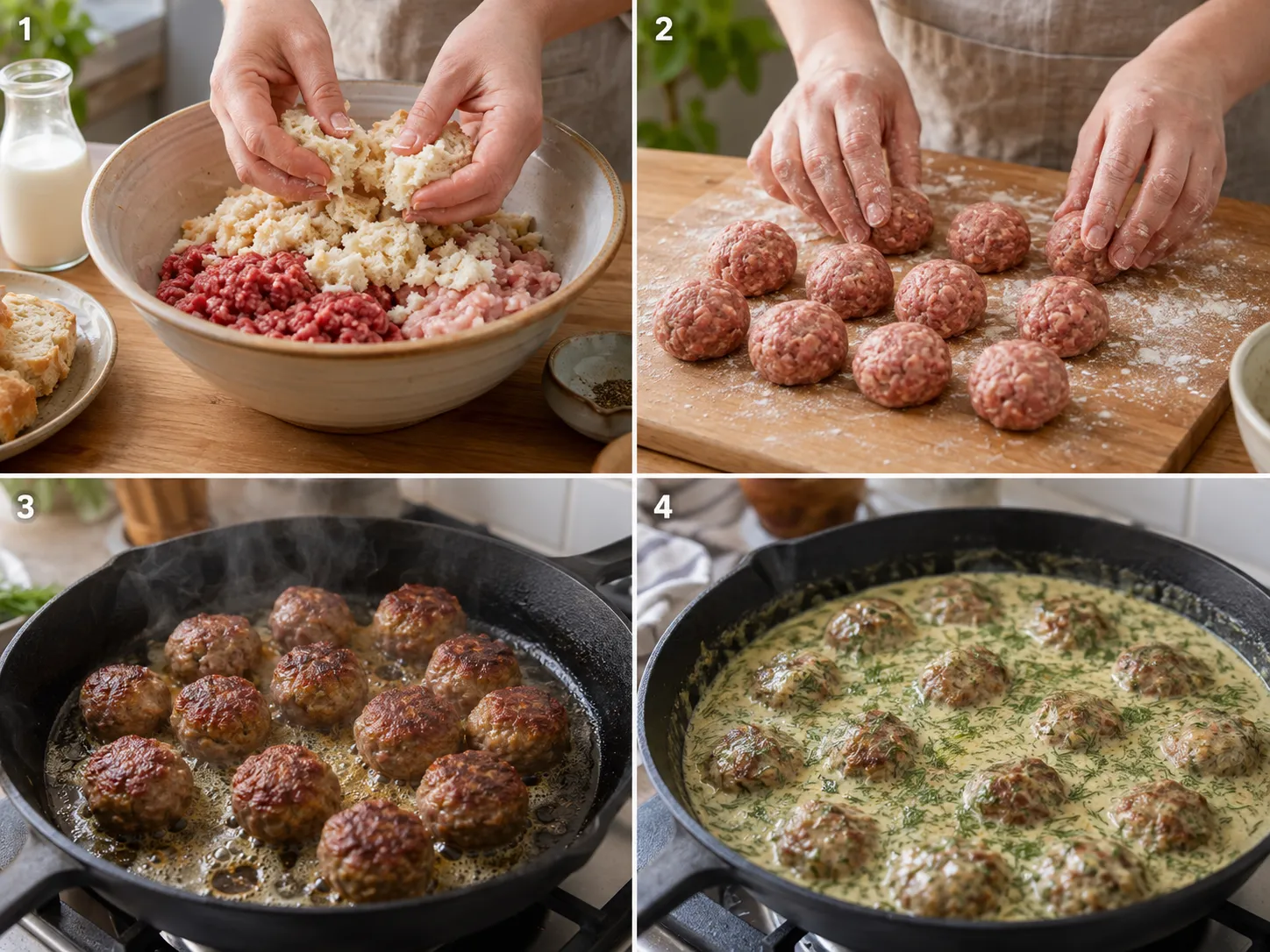
- Soak the bread. Tear two slices of white bread into pieces and place them in a small bowl with 3 tablespoons of milk. Let soak for five minutes, then squeeze out the excess liquid firmly. Crumble the bread loosely into a large mixing bowl.
- Mix and shape. Add the ground pork, ground beef, egg, grated onion, 2 tablespoons of chopped dill, half a teaspoon of salt, a pinch of nutmeg, and black pepper. Mix gently until just combined. With damp hands, roll into balls about 1.5 inches (4 cm) across. You should get 18 to 20 meatballs.
- Brown in butter. Melt 2 tablespoons of butter in a wide, heavy skillet over medium-high heat. Brown the meatballs in batches for about 2 minutes per side. They do not need to be cooked through at this stage. Transfer them to a plate and set aside.
- Build the roux. Lower the heat to medium and add the remaining tablespoon of butter to the same pan. Stir in 2 tablespoons of flour and cook for one minute. Pour in the chicken broth gradually, whisking constantly to avoid lumps. Simmer for three minutes until the sauce begins to thicken.
- Simmer the meatballs. Return the meatballs to the pan, placing them into the sauce. Cover and cook over low heat for 12 to 15 minutes, turning once halfway through, until cooked through to 160°F (71°C) at the center.
- Finish with sour cream and dill. Pull the pan off the heat. Stir in the sour cream, remaining 3 tablespoons of fresh dill, and a small squeeze of lemon juice. Season with salt and pepper. The sauce should be silky and coat the back of a spoon.
Why Soaked Bread Changes Everything
The milk-soaked bread is called a panade, and it does two jobs at once. First, it dilutes the protein density of the meat so the meatballs stay soft even after 15 minutes of simmering. Second, it traps moisture inside each ball during cooking. Without it, ground pork and beef shrink and tighten as they heat, and the center goes dry before the outside is done.
Two slices is the right amount for this quantity of meat. More makes the meatballs fragile and hard to shape. Less and you lose the tenderness that makes klopsiki worth making over any other meatball. Squeeze the bread firmly so it is moist but not wet, and crumble it loosely rather than pressing it into a paste.
Keeping the Cream Sauce Silky
Sour cream breaks if it hits direct high heat, which is why you pull the pan completely off the burner before stirring it in. Add it slowly and the residual heat does the rest, thickening the sauce without any curdling. If the sauce looks a little grainy after adding the sour cream, whisk in a small splash of warm broth over very low heat and it will smooth back out.
The roux gives the sauce its body, but the browned bits left in the pan after searing the meatballs add their own depth. Do not clean the pan between browning and making the sauce. Scrape those bits into the roux and the result is noticeably richer than starting from a clean pot. For reference on safe cooking temperatures for ground meats, see the USDA safe temperature chart.
Swaps That Respect the Original
Breadcrumbs soaked in milk work when you don't have fresh bread on hand. Use about four tablespoons of plain breadcrumbs in place of two slices. Fine crumbs dissolve into the meat. Coarser ones hold a little more texture, which is not necessarily a bad thing.
Ground turkey or chicken can replace the pork-beef mix for a lighter version, though the meatballs will be noticeably less rich. Adding a tablespoon of olive oil to the meat mixture compensates for the lower fat content. The sauce stays exactly the same.
For a gluten-free version, use cold mashed potato or cooked rice in place of the bread, and replace the flour roux with a cornstarch slurry. Stir one tablespoon of cornstarch into two tablespoons of cold water, then pour it into the simmering broth instead of the flour-butter step.
Serving Klopsiki the Right Way
Mashed potatoes are the Polish standard, and the cream sauce disappears into them perfectly. Make the mash on the richer side, with plenty of butter and warm milk, so there is real contrast between the creamy base and the tangy dill sauce on top.
Broad egg noodles are a close second. Toss them lightly in butter before plating so they don't clump, then spoon the meatballs and sauce over the top. A simple cucumber salad dressed with a little vinegar and dill is the most common side dish in Polish homes alongside klopsiki, and the acidity cuts through the cream in exactly the right way.
Storing and Reheating Leftovers
Leftovers keep in the fridge for up to three days in an airtight container. The sauce thickens considerably as it cools. Reheat gently in a covered pan over low heat with a splash of broth stirred in to loosen it. Avoid high heat, which can break the sour cream and toughen the meatballs.
To freeze, let the meatballs cool fully. Freeze them without the sauce, or make the sauce without the sour cream before freezing and stir it in fresh when you reheat. Frozen meatballs keep well for up to three months. Thaw overnight in the fridge before reheating.
FAQs
- What is the difference between klopsiki and pulpety?
Both are Polish meatballs, but klopsiki are typically pan-browned before simmering in a sauce, which gives them a slightly firmer exterior and more developed flavor. Pulpety are more often poached or cooked directly in broth without browning, resulting in a softer, lighter texture. The two names are sometimes used interchangeably in Polish homes, but the cooking method is the real distinction.
- Can I use all beef or all pork instead of a mix?
Yes, either works. All pork makes a juicier, richer meatball because of the higher fat content. All beef gives a firmer texture and a more pronounced savory flavor. The 50/50 mix is the traditional choice because the pork fat keeps the beef from drying out during the long simmer. Avoid extra-lean beef on its own, as the meatballs can turn dry before the sauce is ready.
- Can I substitute the sour cream?
Full-fat Greek yogurt is the closest swap and gives almost identical results in both texture and tang. Heavy cream also works and produces a richer, milder sauce. If you use heavy cream, let it reduce for a couple of minutes so the sauce thickens properly. Whatever you use, stir it in off the heat to prevent it from curdling.
- How do I know when the meatballs are fully cooked?
The USDA recommends cooking ground pork and ground beef to an internal temperature of 160°F (71°C). A quick-read thermometer is the most reliable method. If you don't have one, cut the largest meatball open after simmering for 12 minutes. The center should show no pink and the juices should run clear before you serve.
- Can I make klopsiki ahead of time?
Yes, and they actually improve by the next day. Make the full recipe, let it cool, and refrigerate in an airtight container for up to three days. The sauce thickens considerably in the fridge. Add a small splash of broth when reheating over low heat and stir gently. The meatballs can also be frozen without the sauce for up to three months.
- What can I serve with klopsiki besides mashed potatoes?
Broad egg noodles are the most popular alternative and soak up the sauce just as well. Boiled buckwheat groats (kasza gryczana) are a traditional Polish pairing with great nutty flavor and texture contrast. A simple cucumber-dill salad or a side of braised sauerkraut cuts through the richness of the cream sauce and rounds out the meal nicely.
