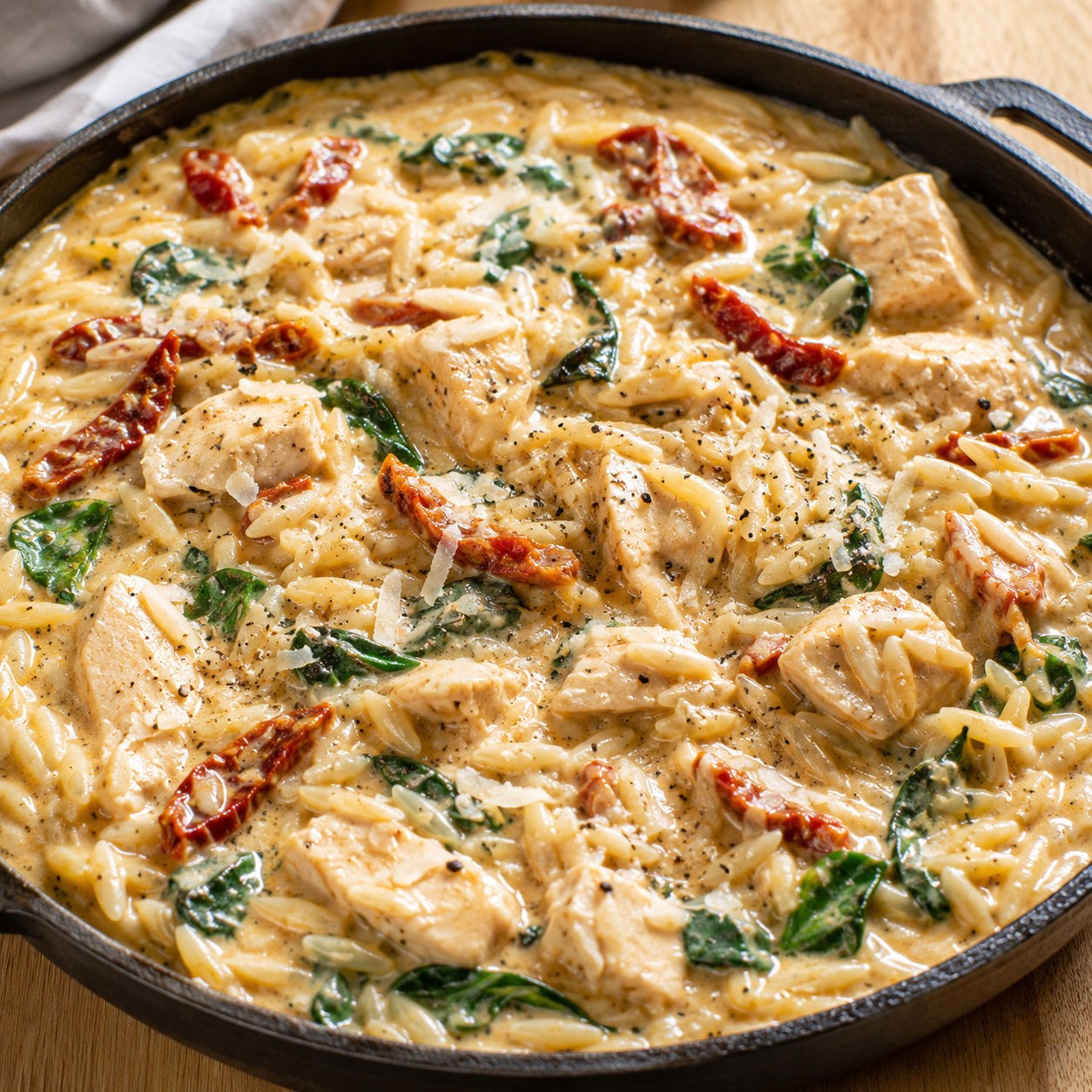
 Pin it
This is the kind of meal you pull together when the fridge looks empty but you still want something that feels thoughtful. Everything cooks in one skillet. The orzo drinks up a garlicky, tomato-laced broth and finishes in a creamy parmesan sauce that clings to every piece of chicken.
I use chicken thighs because they stay tender even if you step away for a minute. If you only have rotisserie chicken, that works too. The whole thing is ready before the takeout app finishes loading.
The skillet lineup
You only need one pan and about eight real ingredients. Most of them are pantry staples, but the quality of the sun-dried tomatoes and parmesan will show, so buy the good stuff.
- Boneless chicken thighs. They cook fast and stay juicy, which means you can focus on the sauce without worrying about dry meat.
- Orzo. This small pasta shape cooks directly in the broth and releases starch that naturally thickens the sauce.
- Sun-dried tomatoes. Jarred ones packed in oil give the deepest flavor, and that oil is perfect for searing the chicken.
- Garlic. Three or four cloves, minced fine, provide the backbone aroma for the whole dish.
- Chicken broth. Low-sodium is best here so you control the salt as the liquid reduces.
- Heavy cream. Just half a cup turns the broth into a velvety sauce without making it heavy.
- Fresh spinach. It wilts in at the end for color and a quiet earthy note.
- Grated parmesan. Aged parm melts smoothly and adds a nutty, salty finish.
How the pan does it all
- Season and sear the chicken. Cut thighs into bite-sized pieces, toss with paprika and Italian seasoning, then brown them in a hot skillet for five to seven minutes. You want color, not just gray cooked edges.
- Bloom the aromatics. Add garlic and chopped sun-dried tomatoes to the same pan and cook for thirty seconds until fragrant. Do not let the garlic brown.
- Simmer the orzo. Pour in broth and stir in the orzo. Bring to a boil, then drop to a simmer, cover, and cook for ten to twelve minutes until the pasta is tender.
- Finish creamy. Stir in spinach, cream, and parmesan off the heat. Let the residual warmth wilt the greens and melt the cheese into a glossy sauce.
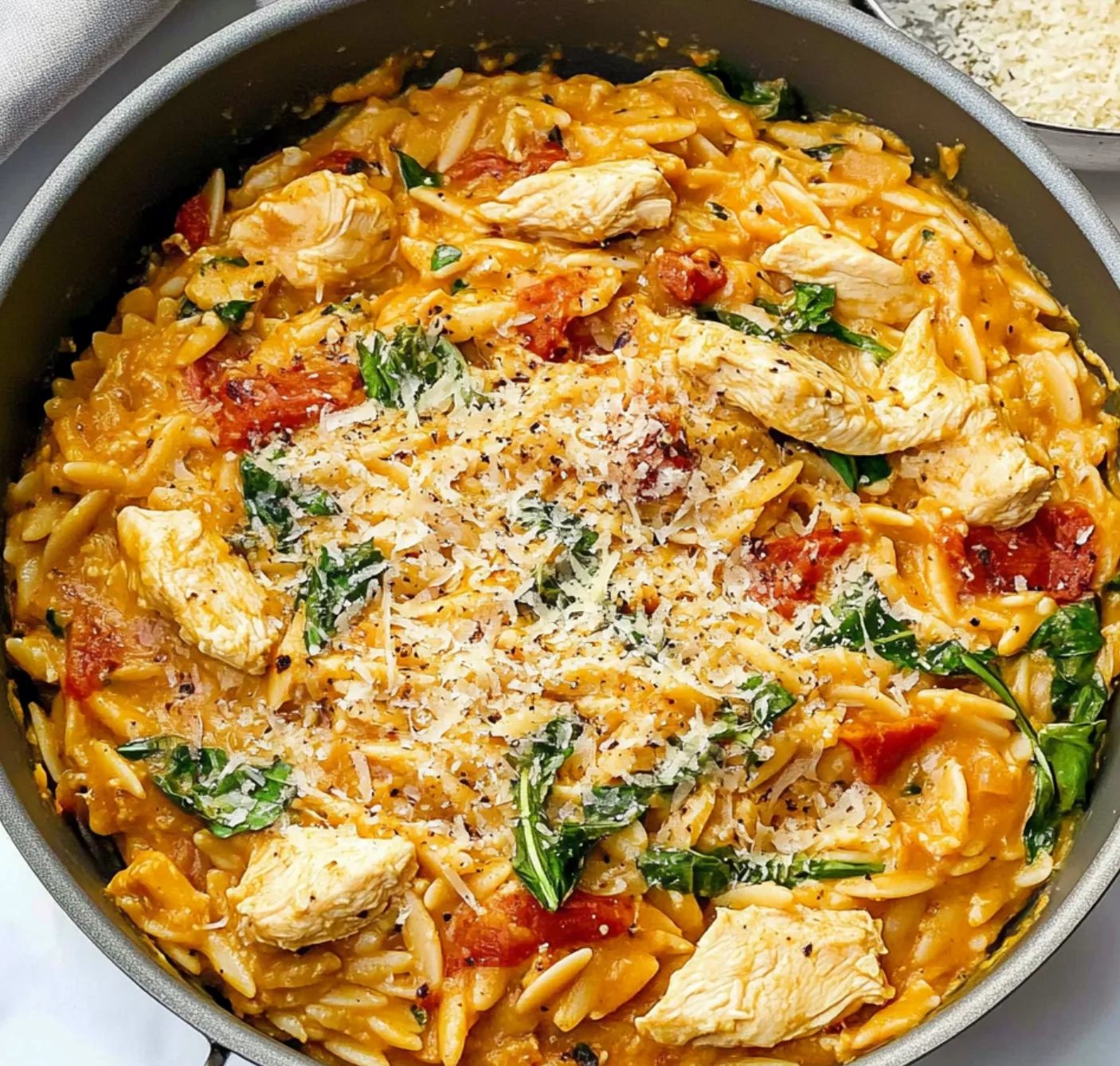
Why thighs beat breasts here
Chicken thighs have more fat and connective tissue than breasts, so they stay moist while the orzo simmers. If you prefer white meat, use rotisserie chicken or sear diced breast quickly and add it back at the very end. The USDA recommends cooking chicken to 165°F. Just do not let breast meat simmer the full twelve minutes or it will tighten up.
The stir that saves the bottom
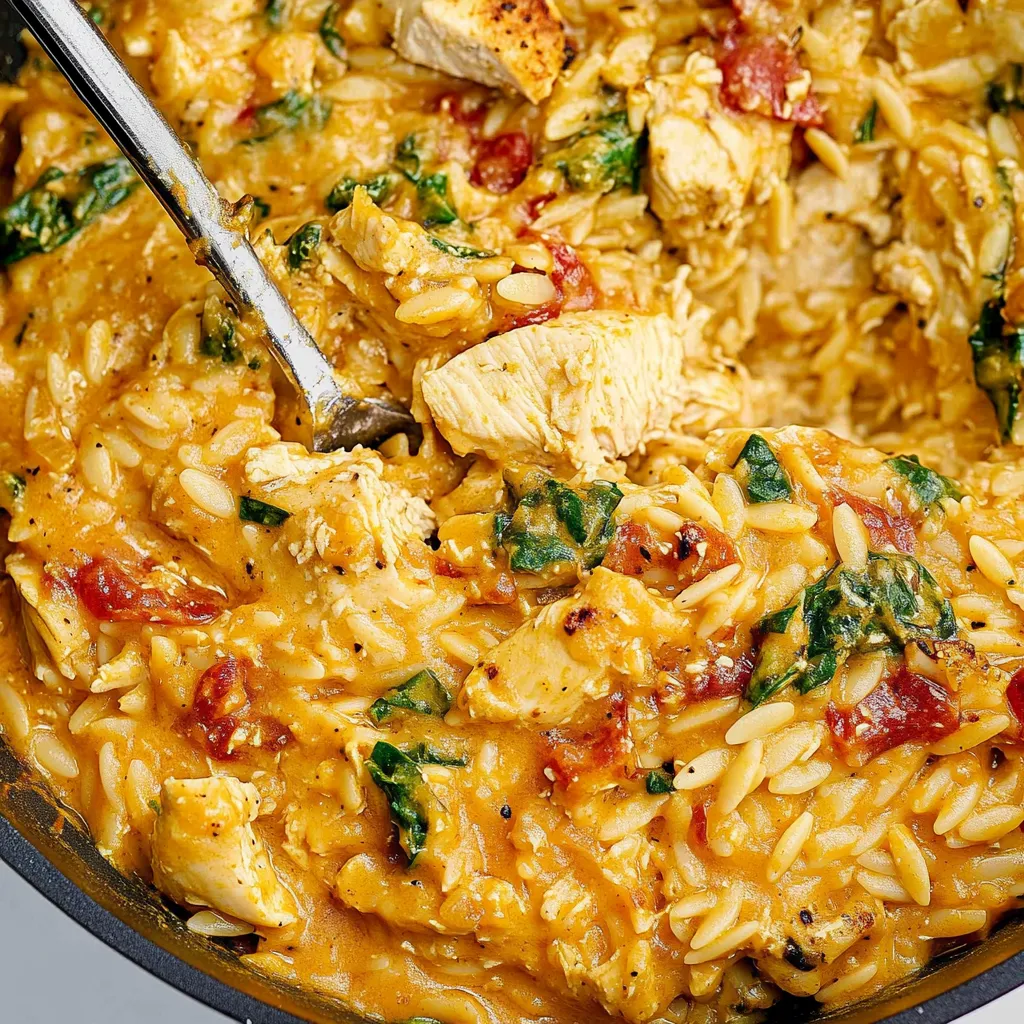
Orzo loves to stick. Stir it every three to four minutes while it simmers, especially along the bottom of the pan where the starch settles. A silicone spoon or wooden spatula works best. If the liquid absorbs too fast before the pasta is tender, splash in another quarter cup of warm broth. The sauce should look slightly loose when you turn off the heat because it will thicken as it sits.
Swaps and add-ins
No heavy cream? Half-and-half works if you simmer it a minute longer. You can also stir in a dollop of cream cheese for extra tang. Want more vegetables? Frozen peas or chopped roasted red peppers go in with the spinach. For heat, add a pinch of red pepper flakes with the garlic. If you enjoy other one-pan pasta dinners, creamy one-pot chicken pasta uses a similar technique with a different flavor profile.
Storing and reheating
Leftovers keep in an airtight container in the refrigerator for up to four days. The orzo will drink up more sauce overnight, so expect a thicker texture the next day. Reheat gently in a skillet with a splash of broth or milk rather than the microwave, which can make the chicken rubbery. For a freezer-friendly version, slow cooker marry me chicken holds up better after thawing.
What to serve with it
This dish is a full meal on its own, but a simple arugula salad with lemon vinaigrette or a slice of crusty garlic bread turns it into a dinner worth lingering over. A glass of dry white wine alongside the pan helps cut the richness. If you like orzo-based mains, Mediterranean creamy chicken orzo is another favorite that leans on olives and lemon instead of tomatoes.
FAQs
- Can I use chicken breasts instead of thighs?
Yes. Dice them small and sear just until golden, then remove them before the orzo simmers. Add the chicken back in the last two minutes so it stays tender.
- What can I substitute for heavy cream?
Half-and-half works for a lighter sauce, though you may need to simmer an extra minute to thicken. Whole milk is thinner but still creamy if you stir in a little extra parmesan.
- How do I keep the orzo from getting mushy?
Stir it often and test for doneness at the ten-minute mark. Orzo goes from al dente to soft quickly, so pull the pan off the heat as soon as the pasta is tender.
- Can I make this ahead of time?
You can prep the chicken and chop the aromatics up to a day ahead. The finished dish reheats well for three to four days, though the texture is best right out of the pan.
- Is this recipe gluten-free?
Standard orzo contains wheat. Swap in gluten-free orzo and check that your broth is certified gluten-free if you need it to be.
- What kind of sun-dried tomatoes should I buy?
Look for jarred sun-dried tomatoes packed in olive oil. They are softer and more flavorful than dry-packed, and the oil is useful for searing.
