 Pin it
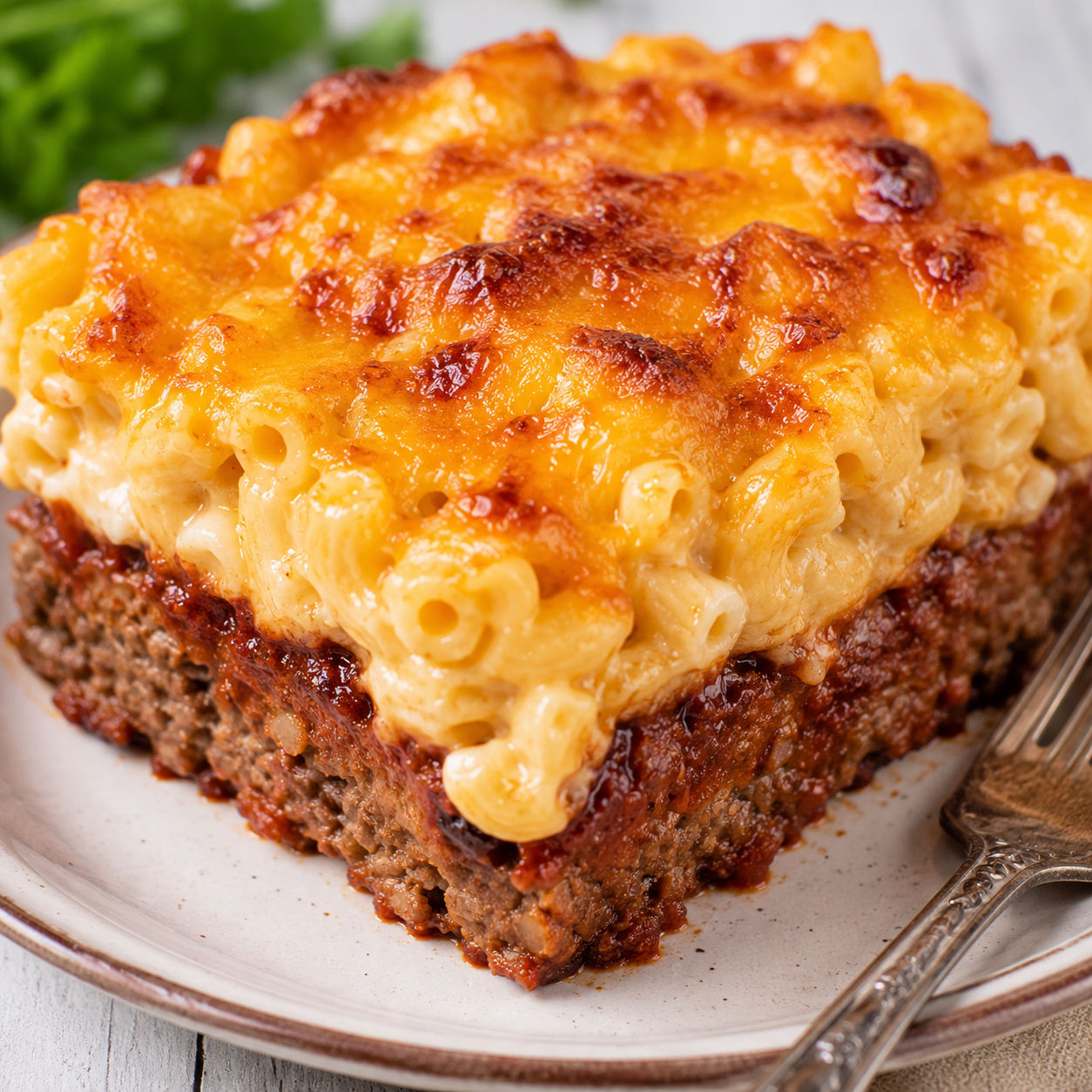
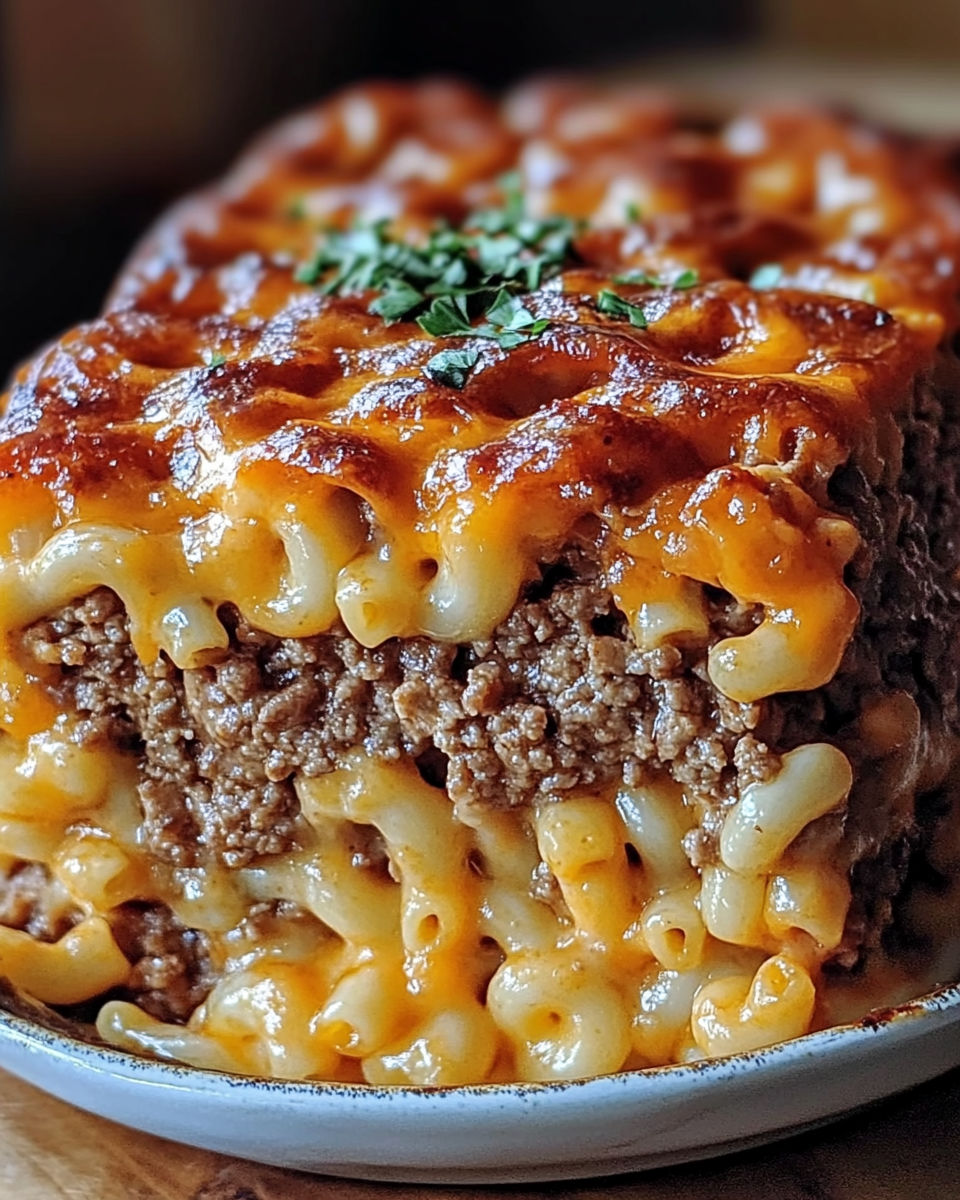
Some nights call for two comfort foods at once. This casserole answers with a seasoned meatloaf base and a thick layer of macaroni and cheese baked right on top. It feeds a crowd, reheats well, and hits every note of savory and creamy.
The method is straightforward. You press a simple meat mixture into the dish, cook the macaroni just shy of done, blanket it with a stovetop cheese sauce, and bake until the top is blistered and golden. Let it rest so the layers hold their shape when you cut.
What goes into the layers
Quality ground beef with a little fat keeps the base juicy. Sharp cheddar and elbow macaroni are non-negotiable for the top layer. A touch of Worcestershire and ketchup in the meat adds depth without overpowering the cheese.
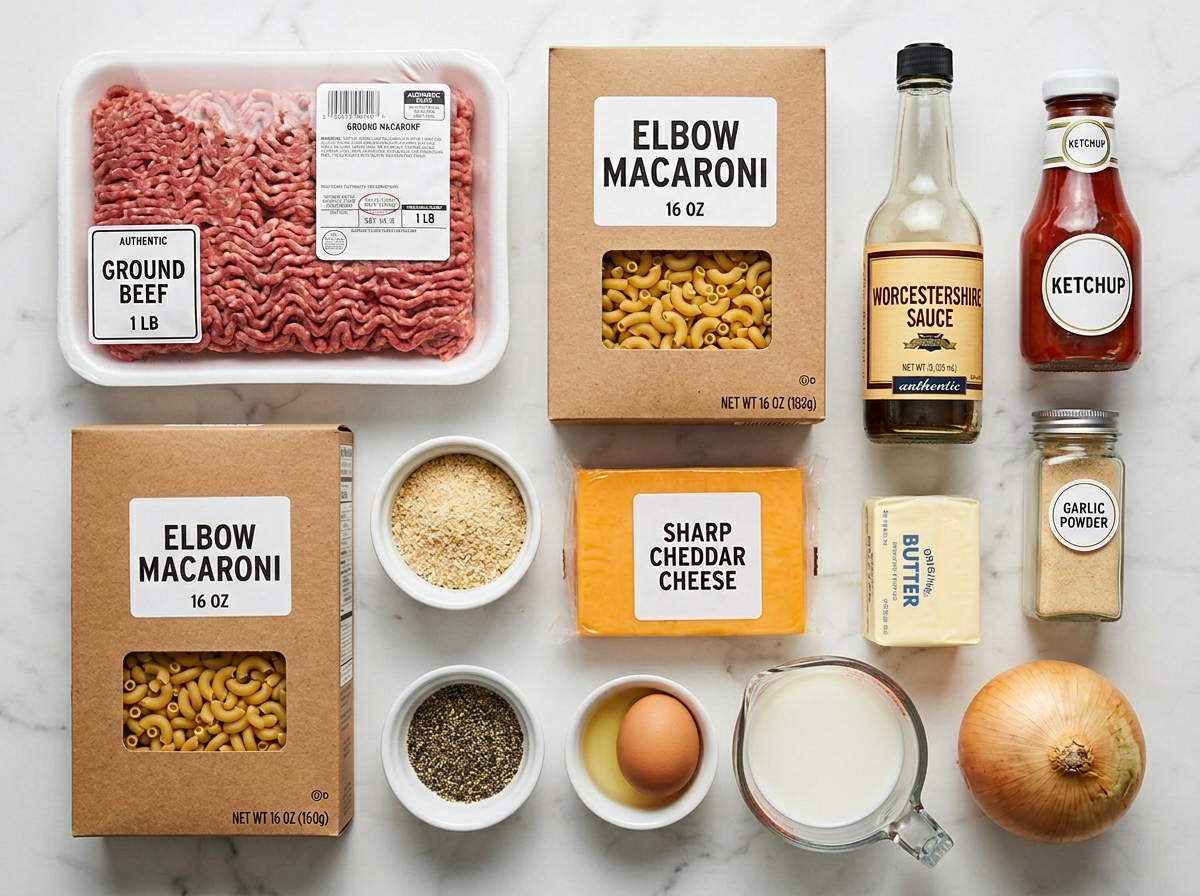
- Ground beef. An 80/20 blend stays moist through baking and carries the savory backbone of the dish.
- Elbow macaroni. The classic shape holds onto cheese sauce and cooks evenly nested into the meatloaf.
- Sharp cheddar. Melts into a rich sauce and forms a blistered golden cap on top.
- Breadcrumbs and egg. Bind the meatloaf gently so it slices cleanly without crumbling.
- Worcestershire and ketchup. A quick duo that deepens the meat with tang and a hint of sweetness.
- Whole milk and butter. Build a smooth béchamel that clings to every curve of pasta.
- Onion and garlic powder. Savory aromatics that season the meat evenly without adding excess moisture.
How to build the bake
- Make the meatloaf base. Mix ground beef with breadcrumbs, egg, milk, ketchup, Worcestershire, diced onion, garlic powder, salt, and pepper. Press it evenly into the bottom of a greased 9x13-inch dish but do not pack it too tightly or it will turn dense.
- Par-cook the macaroni. Boil elbow macaroni in salted water for two minutes less than the package says, then drain. It will finish cooking in the oven and absorb sauce without going mushy.
- Stir up the cheese sauce. Melt butter in a pot, whisk in flour for one minute, then pour in warm milk while whisking until it thickens. Take it off the heat and fold in shredded cheddar until the sauce is glossy and smooth.
- Assemble the layers. Toss the drained macaroni with the cheese sauce, then spoon it evenly over the meat base. Scatter more cheddar on top so it can blister in the oven.
- Bake until bubbly. Bake uncovered at 375°F for thirty to thirty-five minutes until the cheese is spotted with gold and the meat registers 160°F in the center.
- Rest before slicing. Let the dish sit for ten minutes. The cheese sauce sets and the meatloaf firms up so your squares actually hold together.
Getting the cheese sauce right
The sauce is the glue that holds the top layer together, so take the pot off the heat before you add the cheese. If the milk is boiling when the cheddar goes in, the proteins can seize and turn grainy. Warm milk and gentle stirring are your insurance policy. The sauce should be thick enough to coat a spoon but still pourable. It will tighten further in the oven as the pasta absorbs liquid.
Why resting matters most
Cutting too early is the fastest way to ruin the presentation. The cheese sauce is lava-hot and runny straight from the oven, and the meatloaf base is still soft. Ten minutes of resting lets starches absorb excess moisture and the cheese thicken into a sliceable layer. Use an instant-read thermometer to confirm the meat hits 160°F in the center. The USDA ground beef safety guide recommends this temperature for safe consumption.
Smart swaps and riffs
Ground turkey works if you want a leaner base, though the result is less rich. Stir a handful of chopped parsley or spinach into the cheese sauce for color. Swap elbow macaroni for small shells or cavatappi if that is what you have. For a punchier top, mix panko with melted butter and a pinch of paprika and sprinkle it over the final cheese layer before baking. If you love this combo, try our Mac and Cheese Meatloaf for a rolled twist on the same flavors, or go classic with Classic Baked Mac and Cheese on the side.
Storing and reheating leftovers
Cover leftovers tightly and refrigerate for up to four days. Reheat individual portions in the microwave with a damp paper towel over the top to keep the macaroni from drying out. For a larger portion, warm the casserole covered in a 350°F oven for twenty to twenty-five minutes until heated through. The texture stays best when you reheat gently rather than blasting it.
What to serve with it
This casserole is rich, so a crisp counterpoint balances the plate well. A simple iceberg salad with vinegar dressing cuts through the cheese. Steamed green beans or roasted broccoli add color without competing. For bread, warm dinner rolls or a slice of crusty loaf work best to mop up any sauce that escapes the squares. If you want another hearty casserole in your rotation, our Cheesy Loaded Meatloaf Casserole is a close cousin worth trying.

FAQs
- Can I assemble this ahead of time?
Yes. Assemble the casserole, cover it tightly, and refrigerate for up to 24 hours. Bake straight from the refrigerator and add about 10 extra minutes to the cook time so the center heats through properly.
- What is the best cheese to use?
Sharp cheddar is the classic choice because it melts well and delivers bold flavor. You can blend in mozzarella for extra stretch or Gruyère for a nuttier finish. Always grate from a block for the smoothest sauce.
- How do I know when the meat is fully cooked?
The safest way is an instant-read thermometer inserted into the center of the meat layer. Ground beef is fully cooked at 160°F. Color alone can be misleading, so do not rely on visual cues.
- Why did my cheese sauce turn grainy?
Grainy sauce usually means the cheese was added over high heat or boiled milk. Remove the pot from the burner before stirring in the cheese, and add it gradually. Patience and low heat keep the sauce silky.
- Can I freeze the unbaked casserole?
Yes. Wrap the unbaked dish tightly in foil and freeze for up to two months. Thaw it overnight in the refrigerator before baking, then add roughly 10 to 15 minutes to the covered bake time.
- What pasta shapes work besides elbows?
Small shells, cavatappi, or penne all work well because they hold sauce in their ridges and crevices. Avoid long noodles like spaghetti, which tangle and make the casserole hard to serve neatly.
- What sides go well with this casserole?
A crisp iceberg salad with a vinegar dressing, steamed green beans, or roasted broccoli all balance the richness. Warm dinner rolls are also welcome for scooping up any extra cheese sauce.
