 Pin it
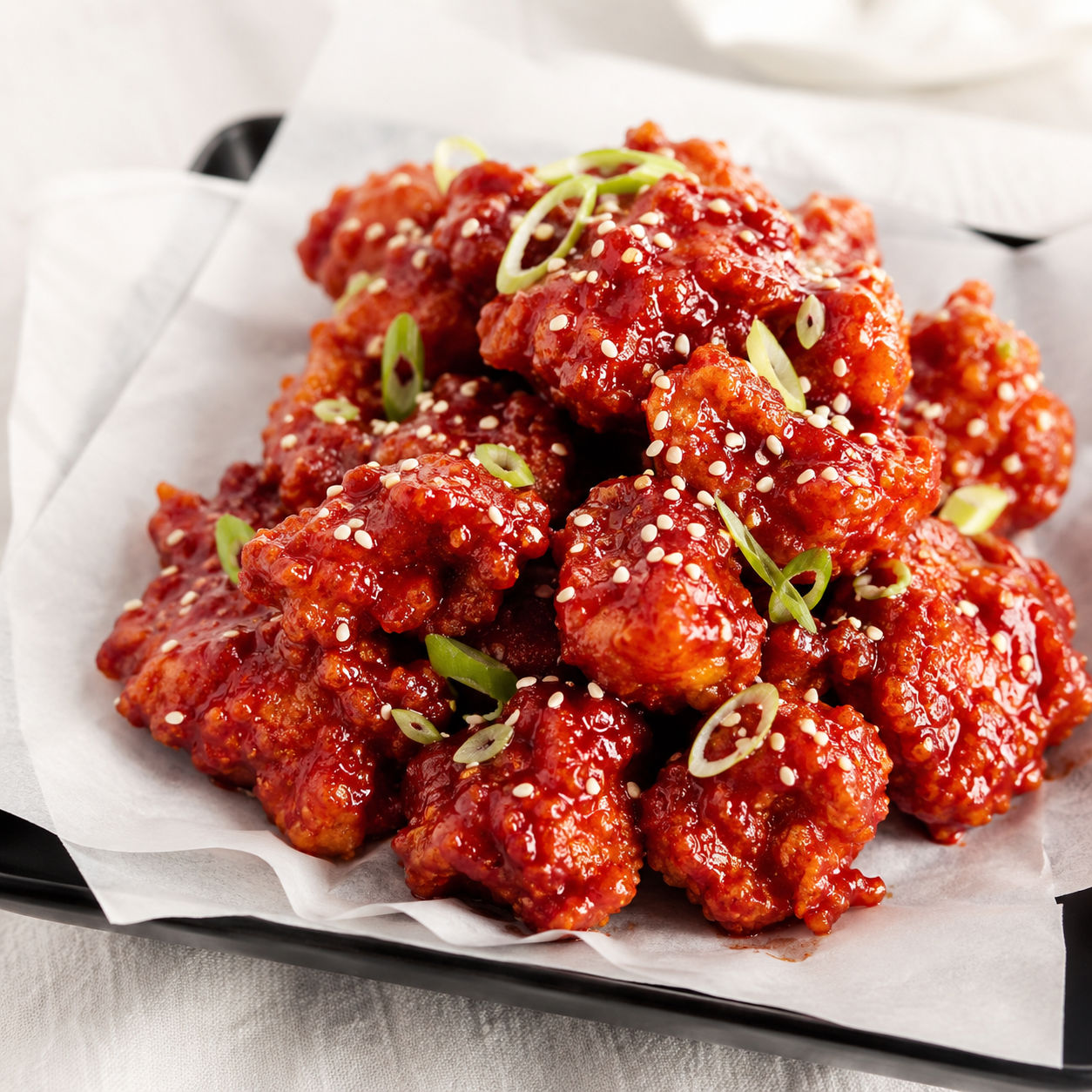
Crispy Korean Chicken with Bold Sweet-Spicy Sauce is the kind of dinner that disappears straight from the pan. The chicken is cut into bite-size pieces, fried until craggy, then coated in a sticky red glaze that tastes sweet first and spicy right after.
The key is the double fry. The first fry cooks the chicken through. The second fry dries and sharpens the crust, so the sauce can cling without turning everything limp in two minutes.
I like boneless thighs here because they stay juicy and forgive a few extra seconds in hot oil. If you want a plate that feels like Korean takeout but tastes fresher, this is the one to make.
The Sweet-Spicy Chicken Lineup
The flavor depends on a few strong ingredients, so use fresh garlic, fresh ginger, and a gochujang you already like. Potato starch is worth buying for this recipe because it fries lighter and crunchier than regular flour.
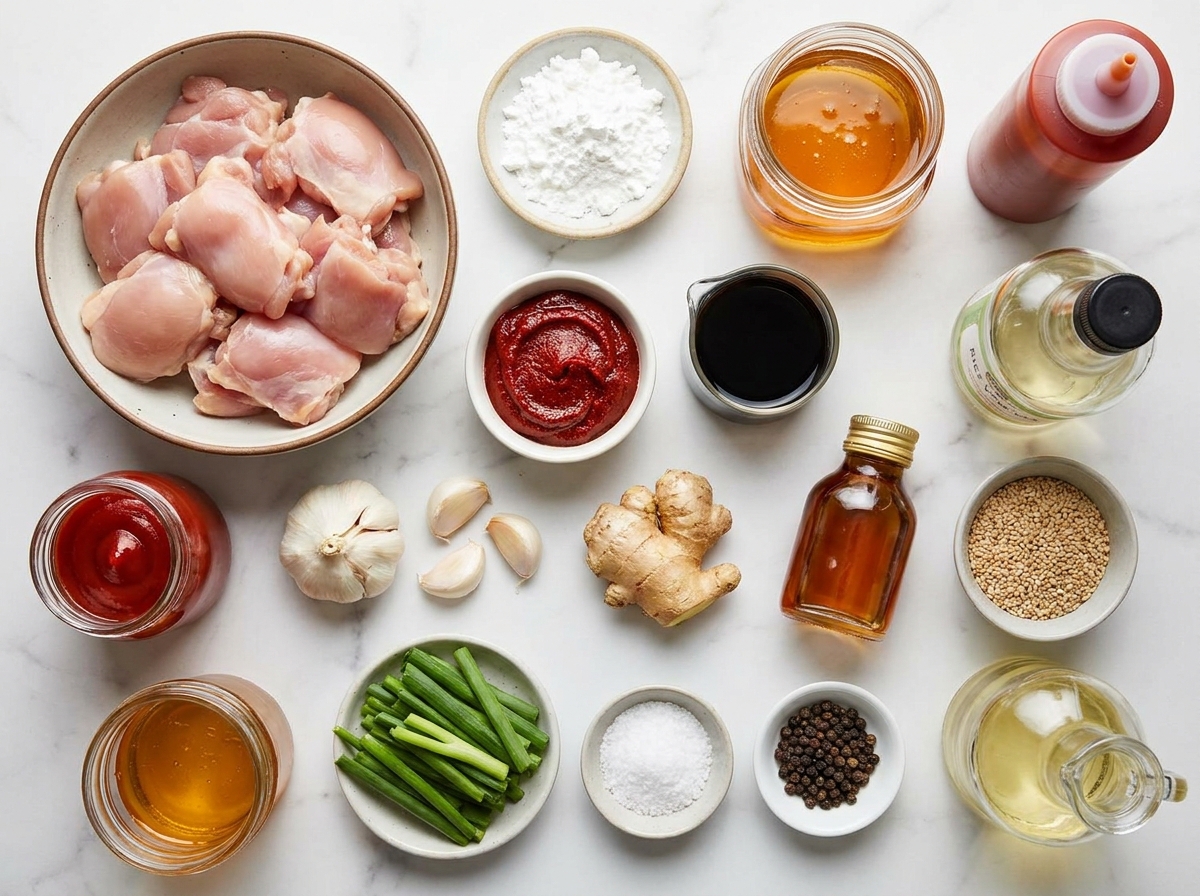
- Boneless chicken thighs. They stay juicy after two rounds in hot oil and give each bite a rich chicken flavor.
- Potato starch. This makes the coating crisp, light, and a little craggy.
- Gochujang. Korean fermented chile paste gives the sauce its deep red color, savory backbone, and slow heat.
- Honey and brown sugar. They build the sticky shine and balance the chile paste.
- Soy sauce. A small amount seasons the glaze without making it taste flat or overly salty.
- Rice vinegar. It cuts through the sweetness and keeps the sauce lively.
- Garlic and ginger. These make the glaze taste fresh instead of bottled.
- Sesame oil and seeds. A finishing touch that adds nutty aroma and a little texture.
Fry, Glaze, Serve
- Season the chicken. Cut the thighs into bite-size pieces, then toss with salt, pepper, garlic, ginger, and a little rice wine or water. Let it sit while the oil heats.
- Coat each piece. Add potato starch and press it onto the chicken so every side has a dry, powdery layer.
- Fry once. Cook in batches at 325°F until the chicken is cooked through and lightly golden. Move it to a rack so steam can escape.
- Make the sauce. Simmer gochujang, ketchup, honey, brown sugar, soy sauce, rice vinegar, garlic, ginger, and sesame oil until glossy and slightly thick.
- Fry again. Raise the oil to 375°F and fry the chicken briefly until deeper golden and crisp.
- Toss and finish. Warm the sauce, add the hot chicken, and turn quickly until coated. Scatter with sesame seeds and scallions.
Crispy Korean Chicken Timing
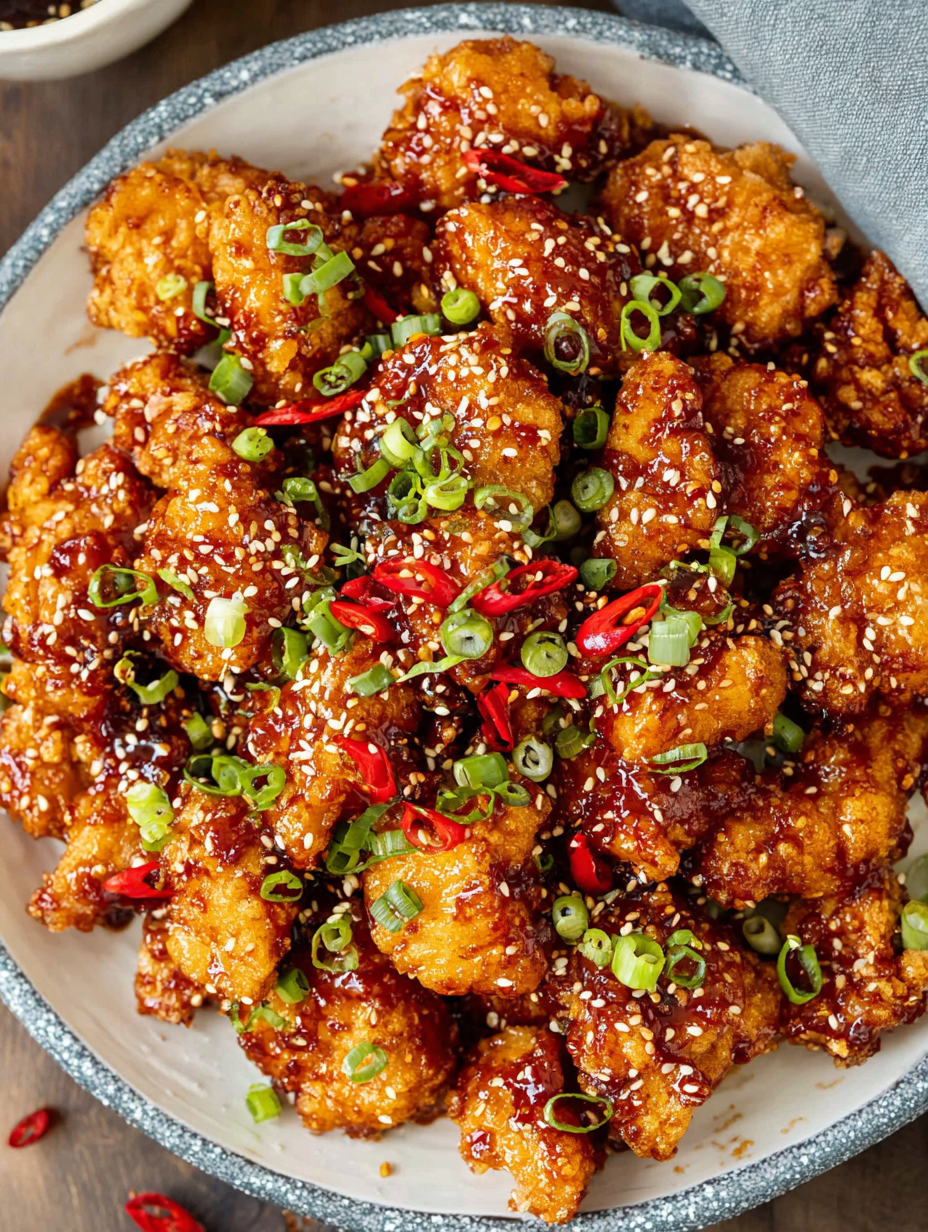
Crispy Korean Chicken with Bold Sweet-Spicy Sauce is all about timing. The sauce should be ready before the second fry starts, because the chicken is at its best the moment it leaves the oil. If the glaze sits too long on the crust, it turns chewy.
Set a wire rack over a sheet pan before you fry. Paper towels trap steam under the chicken and soften the bottom. Fry in small batches too. Crowding the pot drops the oil temperature, and the starch coating starts absorbing oil instead of sealing fast.
For a similar flavor profile without the frying setup, try the site's 30-Minute Spicy Korean Gochujang Chicken. It has the same chile paste warmth in a quicker skillet style.
Why Potato Starch Wins
Potato starch fries into a crisp shell that feels delicate at first, then snaps when you bite it. Cornstarch works if that is what you have, but it gives a slightly harder crunch. Flour is my last choice here because it makes the coating thicker and more bready.
Do not mix the starch into a wet batter for this version. Press it onto the seasoned chicken until the pieces look dry and dusty. Let them sit for 5 minutes, then press again anywhere that looks damp. That little rest gives the starch time to hydrate just enough to cling.
This method is close to the dakgangjeong style described by Korean Bapsang in its sweet crispy Korean fried chicken recipe, where bite-size chicken pieces are coated and glazed after frying.
Balance The Gochujang Glaze
The sauce should be thick enough to shine on the chicken but not so thick that it clumps. Simmer it only until the bubbles look slow and glossy. If it gets too tight, loosen it with a teaspoon of water and stir until smooth.
Gochujang brands vary. Some are sweeter. Some are saltier. Taste the sauce before the chicken goes in. Add honey if it tastes too sharp, rice vinegar if it tastes heavy, or a pinch of gochugaru if you want a cleaner chile kick. The goal is bold, not punishing.
If sweet heat is your favorite lane, the Korean Fried Chicken Crispy Sweet recipe and Crispy Juicy Bang Bang Chicken are good next stops.
Make It Milder Or Hotter
For a milder family version, reduce the gochujang and use a little more ketchup. You still get the red glossy sauce, just with less heat. For a hotter version, add gochugaru to the simmering sauce or finish with thin sliced fresh chile.
You can also change the shape of the dish. Wings work well, but they need a longer first fry. Boneless breast works for a leaner version. Keep the pieces small and even so they cook before the coating gets too dark.
Serve with plain rice, quick cucumber salad, or a crunchy cabbage slaw. If you want another sweet sauce on the table, the site's Sweet Chilli Pineapple Sauce makes a bright dip for the extra crispy pieces.
Store And Reheat Smart
This chicken is best right after glazing. That is honest. The crust slowly absorbs the sauce as it sits, so leftovers will taste good but softer.
For storage, cool the chicken and refrigerate it in a shallow airtight container for up to 3 days. Reheat on a rack in a 375°F oven or in an air fryer until hot. The USDA lists 165°F as the safe internal temperature for poultry leftovers in its safe temperature chart.
If you are planning for guests, fry the chicken once and hold it uncovered on a rack. Do the second fry and glaze right before serving. That keeps the crunch where it belongs.
Summary
Double-fried chicken thighs, potato starch, and a glossy gochujang honey glaze make this Korean chicken crisp, sticky, and full of sweet-spicy flavor.
FAQs
- Can I use chicken breast instead of thighs?
Yes, but cut it into even pieces and watch the fry time closely. Breast meat dries out faster than thighs, so pull it as soon as the coating is pale golden on the first fry and crisp on the second.
- What makes Korean fried chicken so crispy?
Potato starch creates a thin, brittle coating, and double frying drives off extra moisture. Letting the chicken rest between fries also helps the steam escape instead of getting trapped under the crust.
- Can I make the sauce less spicy?
Use 1 tablespoon gochujang instead of 2 and add another tablespoon of ketchup or honey. The sauce will still taste savory and tangy, just with a softer heat.
- How do I store leftovers?
Store leftover chicken in an airtight container in the fridge for up to 3 days. It will not stay as crisp once sauced, but reheating it in a 375°F oven or air fryer helps bring back some crunch.
- Can I make Korean chicken ahead for a party?
You can fry the chicken once and make the sauce a few hours ahead. Fry the chicken a second time just before serving, warm the sauce, then toss everything together at the last minute.
- What should I serve with sweet-spicy Korean chicken?
Steamed rice is the easiest match because it catches the extra glaze. Pickled cucumbers, cabbage slaw, kimchi, or simple lettuce cups help balance the sweet heat.
