 Pin it
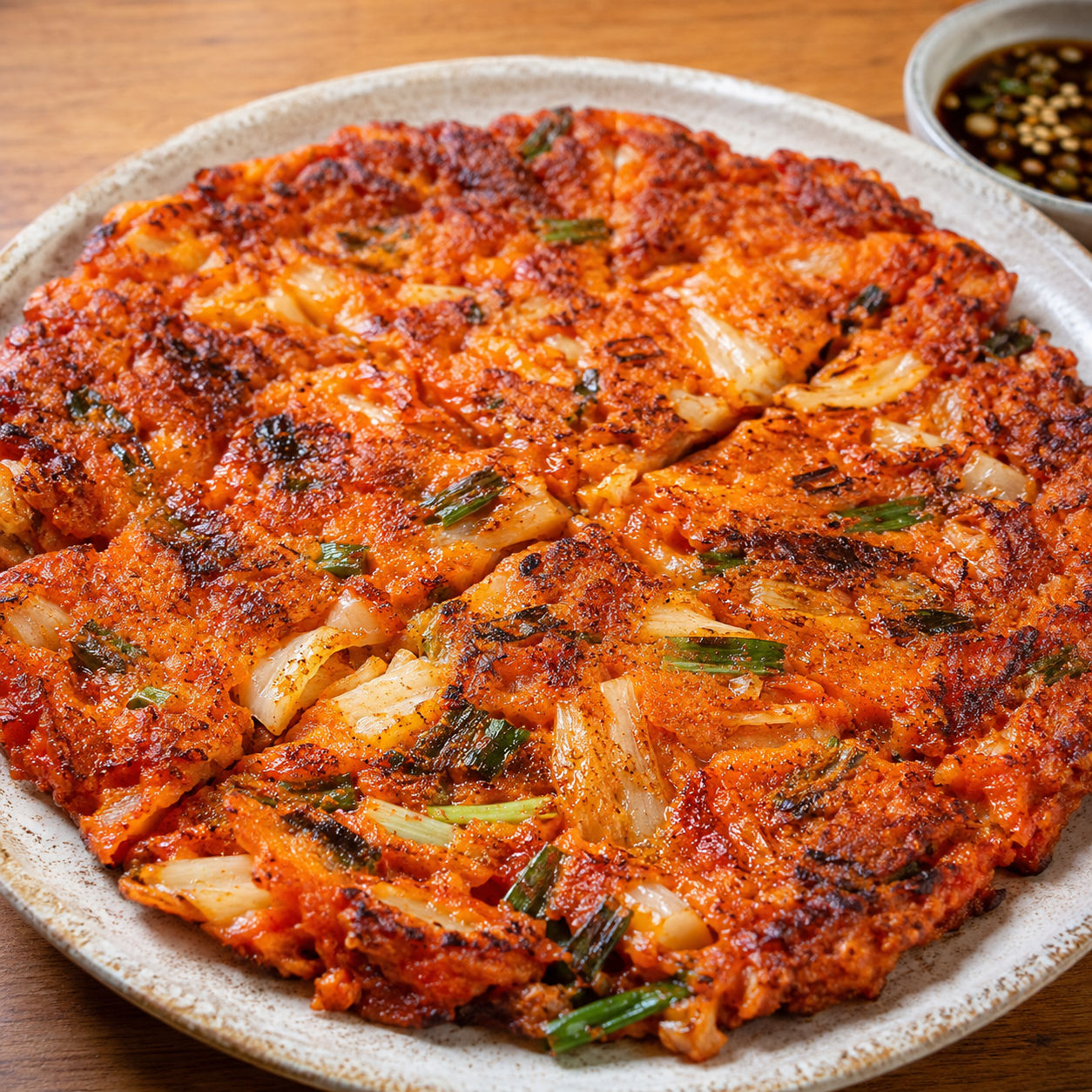
Crispy Korean Kimchi Pancake (Kimchijeon) is what I make when the kimchi jar is down to its last sour, juicy pieces. The batter is quick, the pan does most of the work, and the finished pancake tastes far bigger than the short ingredient list.
The trick is not more flour. It is sour kimchi, a splash of kimchi brine, cold water, and enough oil to actually fry the edges. Serve it hot from the skillet while the surface still crackles.
Sour Kimchi Makes It
Good kimchijeon starts with kimchi that tastes punchy and a little sour. Save the red brine from the jar because it seasons the batter and gives the pancake its warm orange color.
- Well-fermented napa kimchi. Gives the pancake tang, heat, texture, and most of its seasoning.
- Kimchi brine. Colors the batter and adds the sour, spicy depth that plain water cannot bring.
- All-purpose flour. Holds the pancake together without making it heavy.
- Cornstarch. Helps the edges fry up lighter and crisper.
- Ice-cold water. Keeps the batter loose so it spreads thin in the pan.
- Scallions and onion. Add sweetness and soft bite between the pieces of kimchi.
- Gochugaru. Adds a gentle extra heat and deeper red color.
- Neutral oil. Lets the pancake fry instead of merely toast.
- Soy vinegar sauce. Adds a sharp, salty dip for each hot slice.
Crispy Korean Kimchi Pancake Method
- Chop the kimchi. Cut it into small bite-size pieces so the pancake spreads evenly and flips without tearing.
- Mix the batter. Stir flour, cornstarch, kimchi brine, cold water, sugar, and gochugaru until just combined. A few small lumps are fine.
- Fold in vegetables. Add kimchi, scallions, and onion. The batter should fall easily from a spoon, not sit like dough.
- Heat the pan well. Warm a nonstick or cast-iron skillet over medium-high heat, then add enough oil to coat the bottom generously.
- Fry it thin. Spread half the batter into a thin round and cook until the edges look set and the underside is deep golden, about 3-4 minutes.
- Flip and finish. Turn the pancake, drizzle a little more oil around the edge, and cook 3-4 minutes more. Slice and eat while hot.
Why Thin Batter Wins
A thick pancake tastes gummy because the middle steams before the surface has time to brown. A loose batter spreads across the pan and gives you more contact with the hot oil. That is where the crispness comes from.
If the batter feels stiff, add cold water one tablespoon at a time. It should move slowly but easily when you tilt the bowl. For another take on this dish, the site also has a classic kimchi pancake that keeps the same snacky spirit.
The Oil Is Not Optional
Kimchijeon needs enough oil to reach under the pancake. After the flip, drizzle a little oil around the edge and lift the pancake slightly so the oil can run underneath. This gives both sides a fried surface instead of one crisp side and one dry side.
Maangchi explains this same crisping idea in her kimchijeon guide. The short version is simple. If the pan looks dry, the pancake will not crisp properly.
Easy Add-Ins
This base is flexible. Add a handful of chopped shrimp, thin pork strips, drained tuna, or extra scallions if you want a heartier pancake. Keep add-ins small so they cook through quickly and do not break the batter apart.
For a vegetarian version, use kimchi made without fish sauce or shrimp paste. For more Korean dinner ideas, serve small wedges next to quick Korean ground beef or make it part of a snack spread with crispy Korean fried chicken.
Dipping Sauce Balance
The pancake itself is salty and sour, so the sauce should be sharp but not heavy. Soy sauce, rice vinegar, water, a pinch of sugar, and sesame oil make a quick dip that cuts through the fried edges.
If your kimchi is very salty, dip lightly or skip the sauce. Korean Bapsang has useful notes on batter texture and kimchi choice in this kimchi pancake recipe, especially if you are comparing flour and Korean pancake mix.
Storing Leftover Kimchijeon
Kimchijeon is best right away. Leftovers can still be good if you reheat them in a skillet instead of the microwave. Keep slices in an airtight container in the fridge for up to three days.
To reheat, warm a thin film of oil over medium heat and cook the slices until hot and crisp on both sides. For more crisp-edged snacks, try crispy chili crunch tofu with the same kind of bold, spicy payoff.
Summary
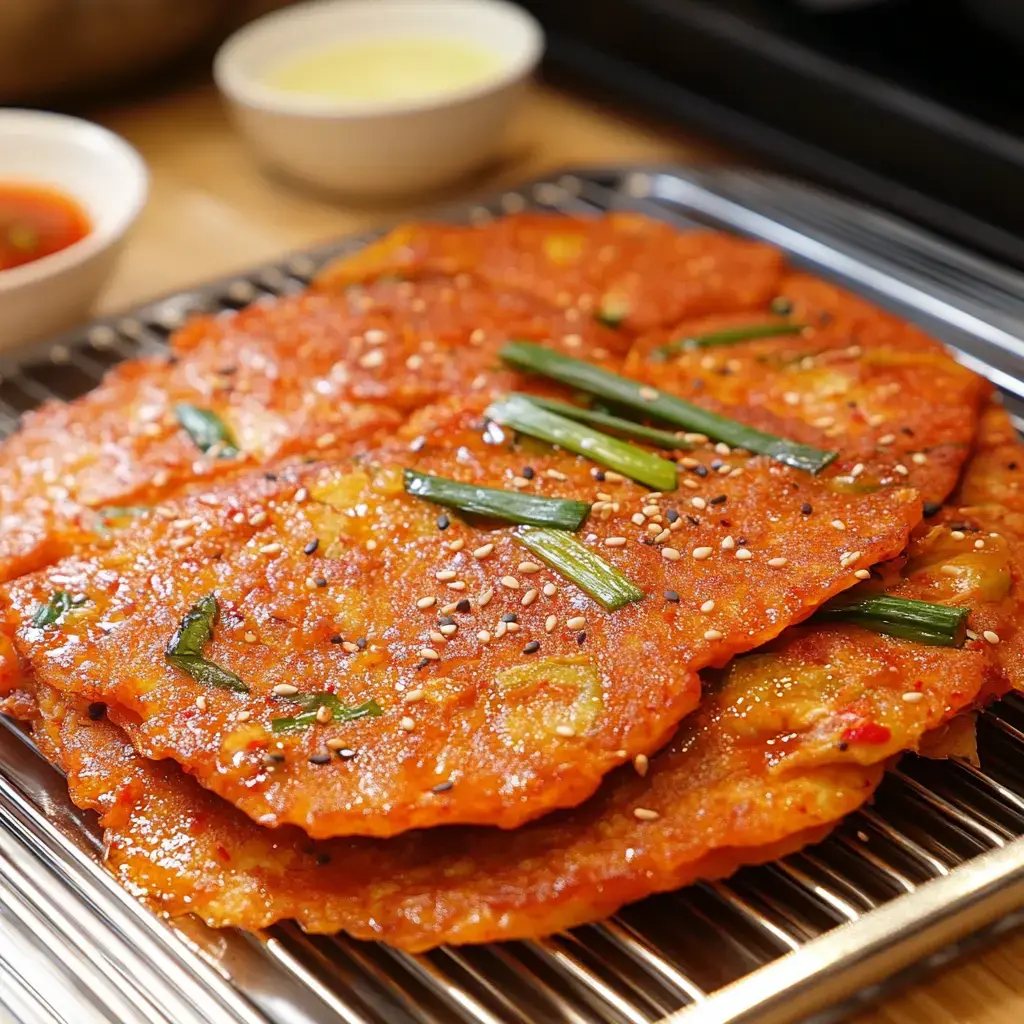
This kimchijeon is thin, crisp, tangy, and best eaten straight from the pan with a small bowl of soy vinegar dipping sauce.

FAQs
- What is kimchijeon?
Kimchijeon is a Korean savory pancake made with chopped kimchi, flour, water, and often kimchi brine. It is pan-fried until the edges are crisp and the center stays tender.
- Can I use fresh kimchi instead of sour kimchi?
You can, but the pancake will taste flatter. Sour, well-fermented kimchi gives the batter deeper flavor and better tang. If your kimchi is mild, add a little gochugaru or gochujang to wake it up.
- How do I make kimchi pancake extra crispy?
Keep the batter loose, spread it thin, and use enough oil to fry the edges. Let the first side cook until deeply golden before flipping. A small amount of cornstarch also helps the surface crisp.
- Can I make kimchijeon gluten free?
Yes. Use a cup-for-cup gluten-free flour blend or rice flour with a little potato starch. Check your kimchi and soy sauce too, since both can contain gluten depending on the brand.
- Can I make the batter ahead?
It is better to mix the batter right before cooking. You can chop the kimchi, scallions, and onion a few hours ahead. Cold batter is good, but batter that sits too long can thicken and lose its light texture.
- What do you serve with kimchi pancake?
Serve it as a snack, appetizer, or side dish with a simple soy vinegar dipping sauce. It also works well next to rice, a fried egg, Korean beef bowls, or crispy Korean fried chicken.
