 Pin it
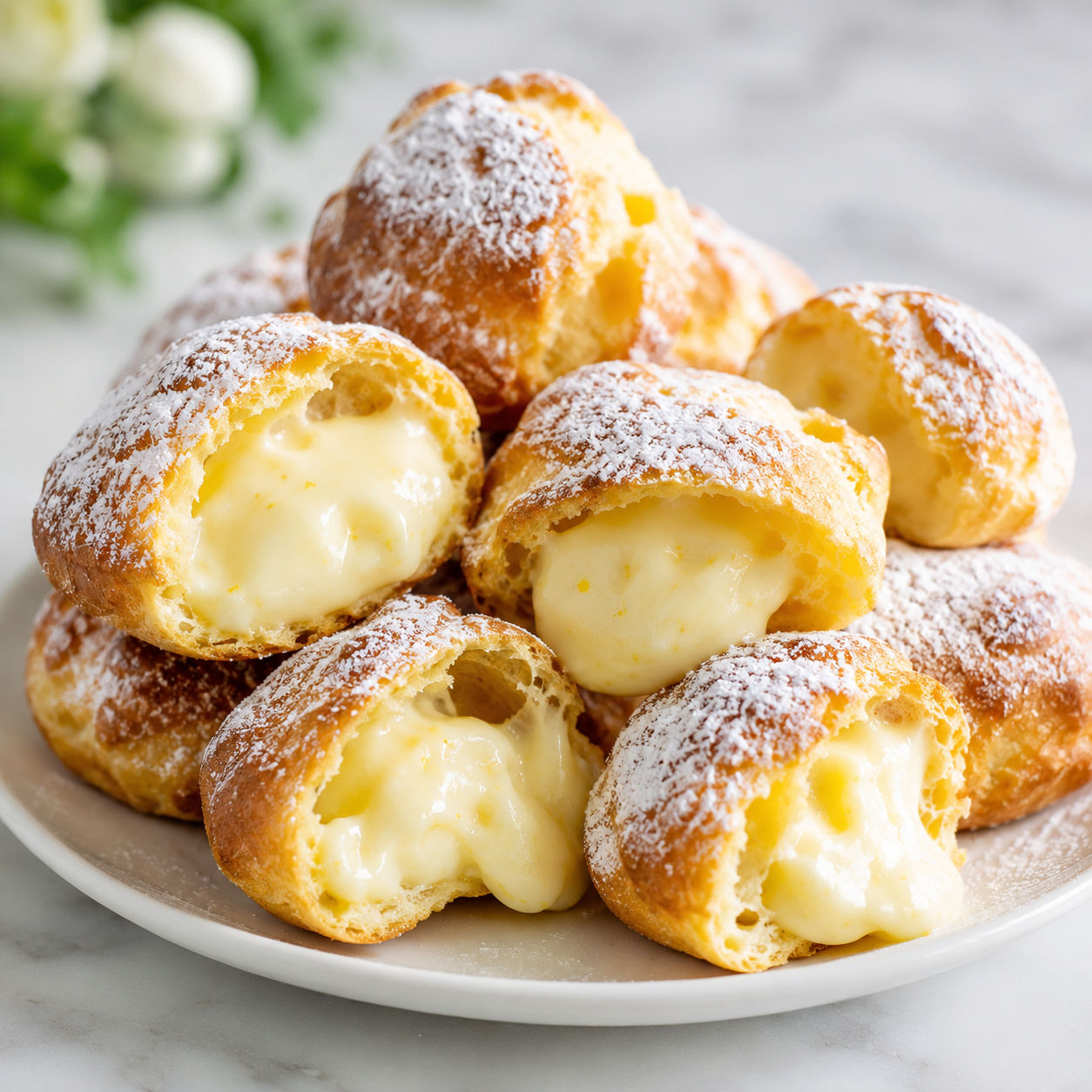
Flaky Italian Cream Puffs with Rich Custard Filling are the kind of bakery-style dessert that feels fancy but comes from a few plain ingredients. Butter, flour, eggs, milk, sugar, and patience do most of the work.
The shells bake up light and hollow, with crisp edges that crack when you bite in. The custard is thick, smooth, and scented with vanilla and a little lemon zest so it tastes fresh instead of heavy.
I like these for holidays, Sunday dinner, and any time a tray of small pastries feels more fun than one big cake. Fill them the same day you serve them and they will taste like they came from a good Italian pastry case.
Custard Puff Essentials
Good cream puffs depend on simple ingredients behaving the right way. Use fresh eggs, real butter, whole milk, and flour you can measure carefully. The dough should feel glossy and pipeable, while the custard should be thick enough to hold a ribbon from the whisk.
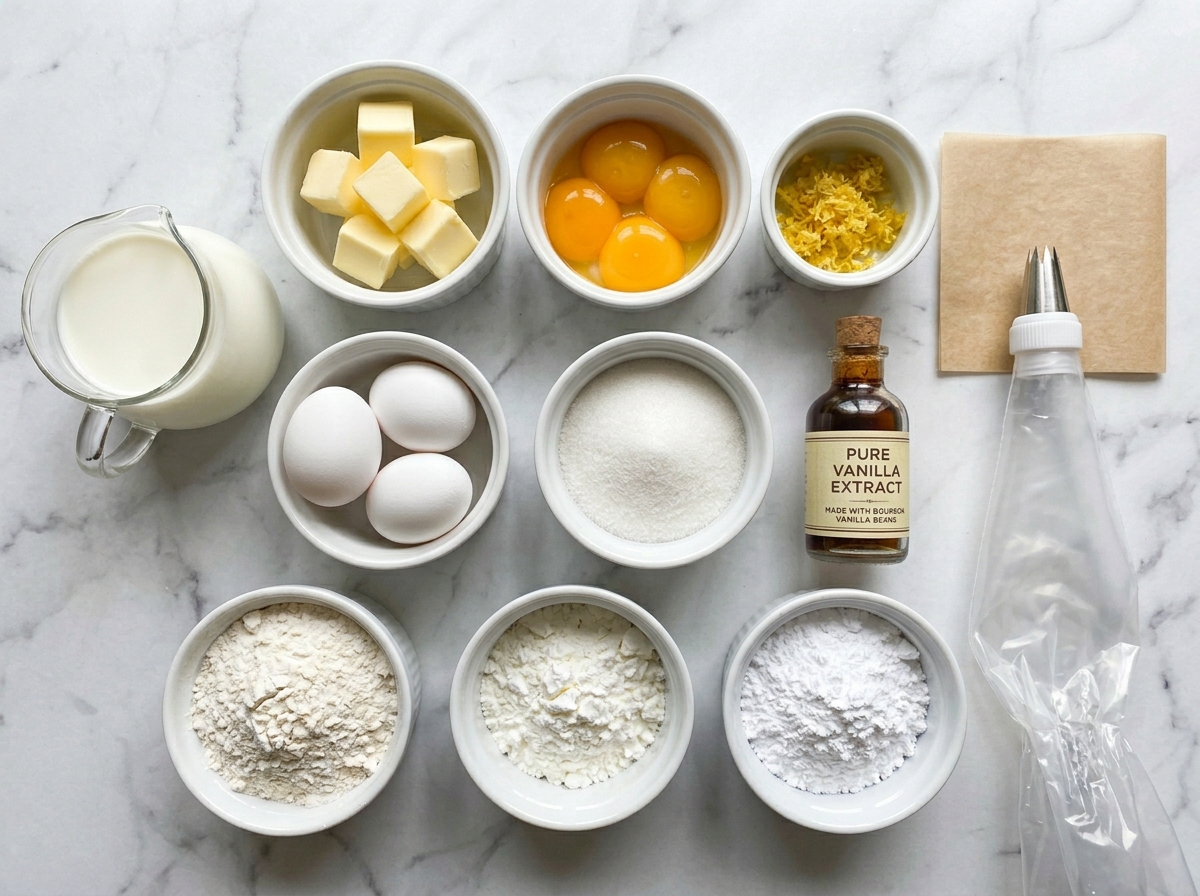
- Whole milk. Gives the custard its creamy body and clean dairy flavor.
- Egg yolks. Thicken the custard and add a rich yellow color.
- Granulated sugar. Sweetens the filling without making it cloying.
- Cornstarch. Helps the custard set firmly enough for piping.
- Vanilla. Gives the filling a warm bakery aroma.
- Lemon zest. Adds a quiet Italian pastry-shop note and keeps the cream bright.
- Unsalted butter. Enriches both the custard and the choux dough.
- All-purpose flour. Forms the structure of the puff shell.
- Eggs. Lift the choux pastry as steam expands in the oven.
- Powdered sugar. Finishes the filled puffs with a light, classic dusting.
Flaky Italian Cream Puffs Method
- Cook the custard. Whisk yolks, sugar, and cornstarch until smooth, then temper with hot milk and cook until thick. Butter, vanilla, and lemon zest go in at the end.
- Chill the filling. Press plastic wrap directly on the custard and refrigerate until cold. A cool custard pipes cleanly and will not melt into the shells.
- Make the panade. Bring water, milk, butter, sugar, and salt to a boil, then stir in the flour all at once until a dough forms and leaves a light film on the pan.
- Add the eggs. Cool the dough briefly, then beat in the eggs one at a time until the dough is shiny and slowly falls from the spoon in a thick ribbon.
- Pipe the shells. Pipe mounds onto parchment and smooth any points with a damp fingertip so they bake evenly.
- Bake and dry. Bake hot until puffed and golden, then lower the heat to dry the centers. Pierce each shell so steam can escape.
- Fill and finish. Pipe custard through the bottom or split the shells and spoon it inside. Dust with powdered sugar right before serving.

Why Choux Rises
Choux pastry rises because the dough holds a lot of moisture. Once it hits the hot oven, that moisture turns to steam and pushes the dough open from the inside. That is why the first part of baking needs strong heat. If the oven is too cool, the shells set before they expand and you get squat puffs instead of airy ones.
The panade matters too. Cook it until it pulls from the pan and leaves a faint film on the bottom. That short cooking step dries the dough just enough so it can take the eggs without becoming loose. For a deeper dive into the same pastry family, the site's Special Italian Cream Puffs Custard is a useful companion recipe.
Getting Custard Smooth
Custard is simple, but it needs steady heat. Whisk the yolks, sugar, and cornstarch until the mixture looks pale and smooth before adding the milk. Pour in the hot milk slowly so the eggs warm up without scrambling. Once everything goes back in the saucepan, keep whisking until the custard bubbles and turns thick enough to mound slightly.
If you see a few tiny lumps, do not panic. Push the custard through a fine-mesh sieve while it is still warm. The butter goes in after cooking and gives the filling a glossy finish. Vanilla is classic, but a strip of lemon zest in the milk makes these taste closer to the pastries I remember from Italian bakeries. For another custard-centered dessert, try the vanilla custard cream squares.
Bake Them Boldly
Pale choux shells are usually underbaked shells. They may look puffed, but the inside is still damp and will collapse as soon as it cools. Aim for a clear golden brown color across the ridges and sides. The shell should feel light for its size and sound a little crisp when tapped.
Do not open the oven during the first 20 minutes. That rush of cooler air can deflate the structure before it sets. After the puffs are browned, pierce each one with a skewer or paring knife and let them sit in the turned-off oven with the door cracked for a few minutes. This extra drying step makes a big difference. If you like filled pastry projects, the coconut caramel cream puffs use a similar shell with a sweeter filling.
Filling Without Soggy Shells
The best time to fill Italian cream puffs is close to serving. The custard is soft and dairy-rich, so it slowly moistens the inside of the shell. That is pleasant for a few hours, but overnight storage turns the crisp edges tender. If you need to work ahead, bake the shells first and keep them unfilled in an airtight container.
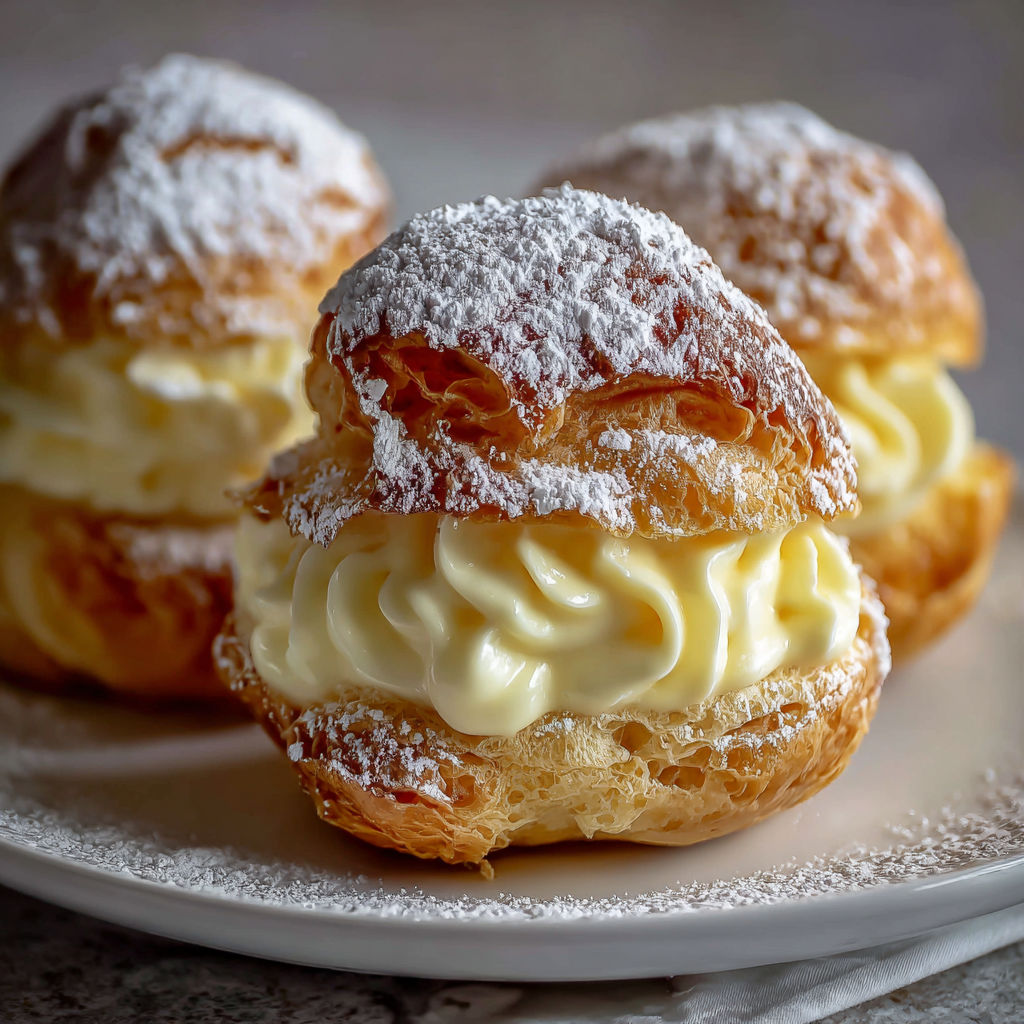
You have two good filling options. For a clean look, poke a small hole in the bottom and pipe custard until the puff feels heavy. For a more generous bakery look, slice off the tops and pipe a swirl of custard inside. Both work. Keep filled puffs refrigerated, and use the FoodSafety.gov cold storage chart as a good reference for dairy desserts.
Flavor Twists That Fit
Vanilla custard is the classic choice, but the base can take small changes without losing the Italian feel. Steep the milk with orange zest instead of lemon, add a spoonful of espresso powder for a coffee version, or whisk a little melted chocolate into half the custard for a mixed tray. Keep additions modest so the cream stays pipeable.
You can also fold a small amount of whipped cream into chilled pastry cream for a lighter diplomat-style filling. It tastes softer and less eggy, but it will not hold quite as long. For a richer Italian dessert spread, serve these beside homemade Italian cream cannoncini and fresh berries. The shared custard flavor makes the tray feel planned without asking you to make a complicated centerpiece.
Summary
A from-scratch Italian cream puff recipe with crisp choux shells, rich vanilla custard, make-ahead tips, and simple filling instructions.
FAQs
- What are Italian cream puffs called?
Italian cream puffs are often called bignè alla crema or bignè di San Giuseppe, depending on the shape and occasion. They are made with choux pastry and usually filled with pastry cream.
- Why did my cream puffs collapse?
They were probably underbaked or trapped too much steam inside. Bake until the shells are deep golden, then prick each puff and return it to the oven for a few minutes to dry.
- Can I make the custard ahead?
Yes. Make the custard up to two days ahead and keep it covered in the refrigerator. Whisk it until smooth before piping so it loosens without turning runny.
- Can I use pudding instead of pastry cream?
You can use a thick vanilla pudding in a pinch, but pastry cream has a richer egg flavor and holds its shape better. If using pudding, choose a cooked version and chill it until firm.
- How far ahead can I fill cream puffs?
For the crispest shells, fill them within a few hours of serving. Filled puffs can sit in the fridge for about one day, but the pastry softens as it absorbs moisture from the custard.
- Can I freeze Italian cream puffs?
Freeze the baked empty shells, not the filled puffs. Thaw them at room temperature, then refresh in a 325°F oven for 5-7 minutes before cooling and filling.
- What should I serve with them?
Serve them with espresso, black coffee, or fresh berries. They also fit nicely on a dessert tray with Italian cream cannoncini or fruit-based pastries.
