 Pin it
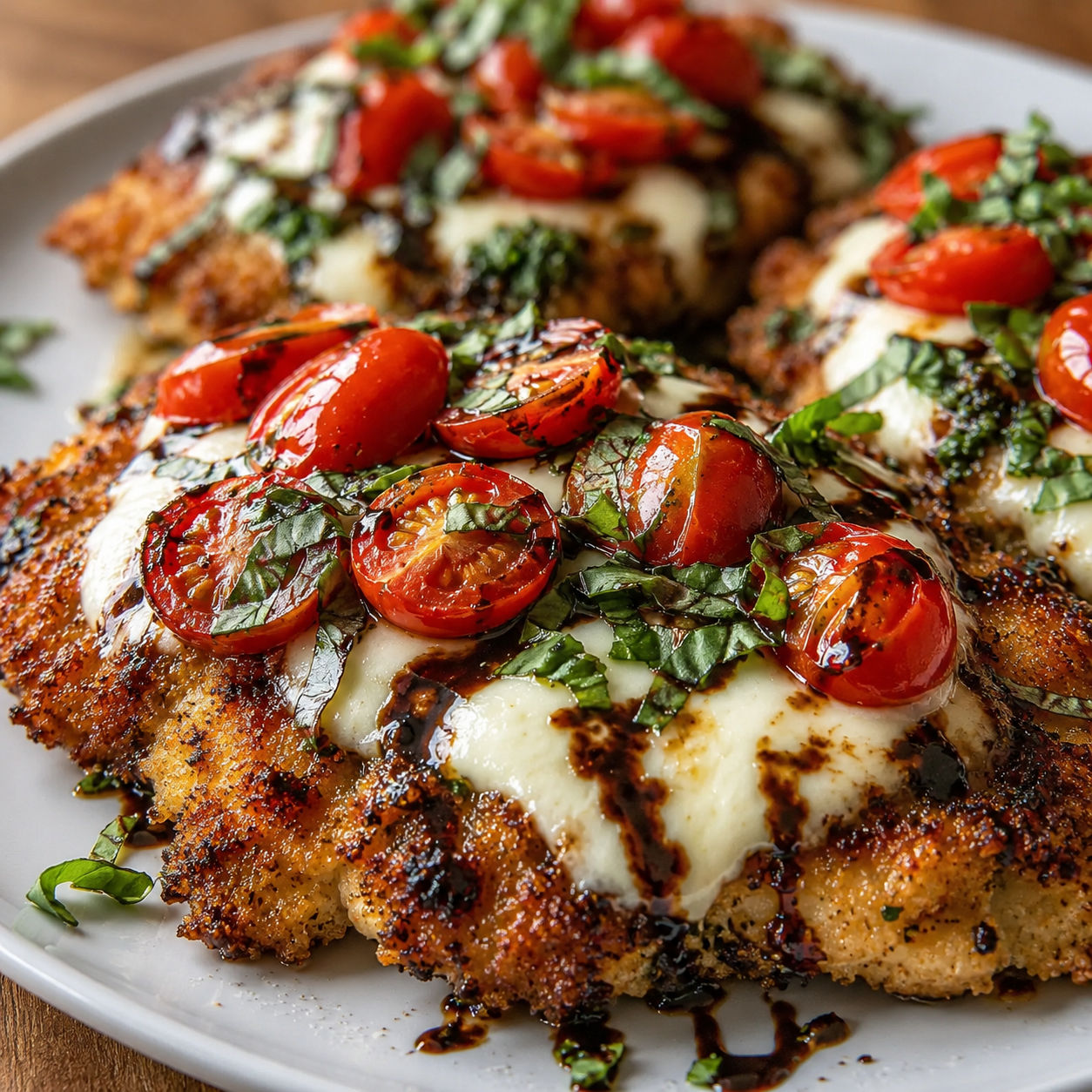
Italian Basil Chicken Cutlets with Tomato and Mozzarella Topping is the kind of dinner that feels fresh and generous without asking much from you. The chicken gets a thin golden crust, then the tomatoes soften just enough under the broiler to turn juicy.
I like this when I want chicken Parmesan energy but not a heavy sauce. Fresh basil, creamy mozzarella, and a little balsamic glaze do the lifting here.
Tomato Mozzarella Cutlet Lineup
Choose thin chicken cutlets or slice boneless breasts yourself so they cook fast and evenly. The topping is simple, so ripe tomatoes, fresh basil, and mozzarella with real milk flavor matter.
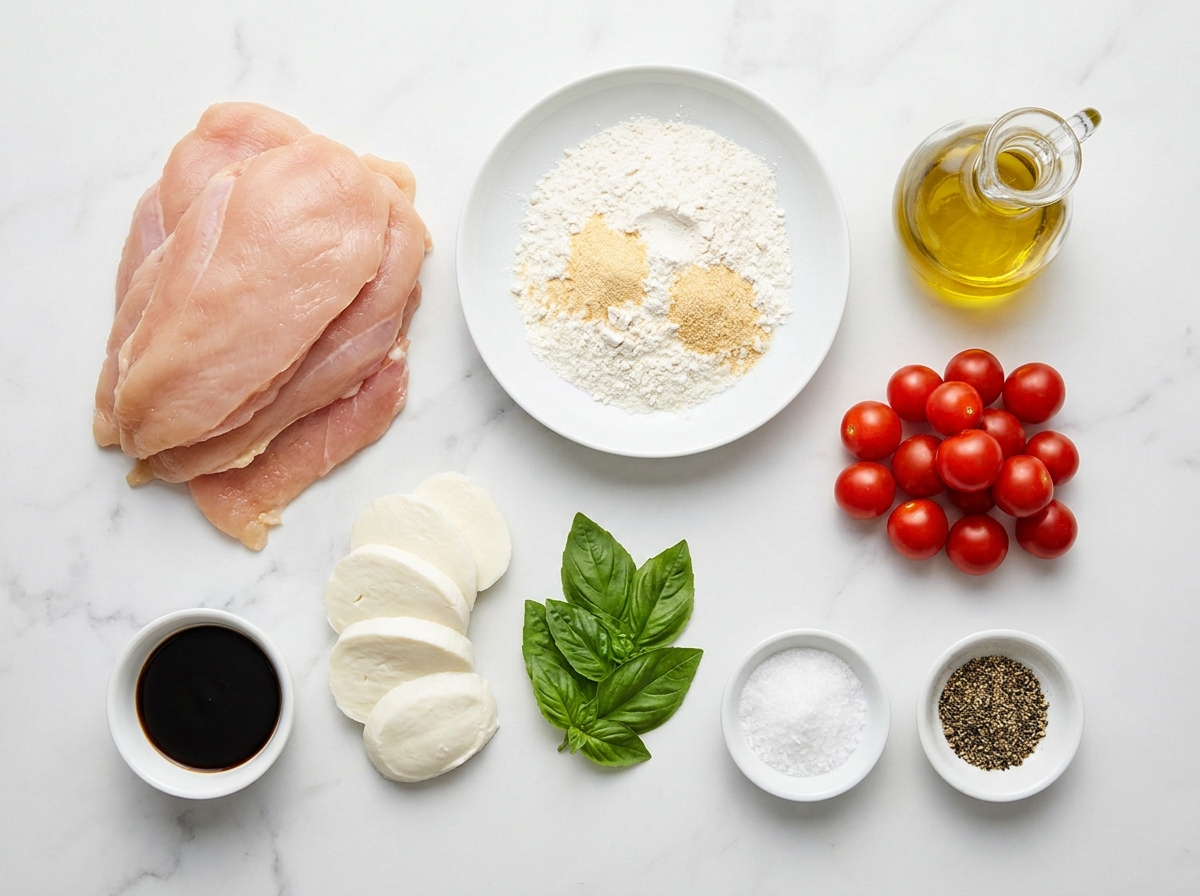
- Chicken cutlets. Thin pieces cook quickly and stay tender under the broiler.
- All-purpose flour. A light dusting gives the chicken a delicate golden crust without turning it heavy.
- Garlic powder. Seasons the coating evenly and adds a savory base note.
- Olive oil. Helps the cutlets brown in the skillet and glosses the tomatoes.
- Cherry tomatoes. They soften fast, release sweet juices, and keep the topping bright.
- Fresh mozzarella. Melts into creamy pockets over the hot chicken.
- Fresh basil. Adds the clean herbal aroma that makes the dish taste lively.
- Balsamic glaze. A small drizzle brings tangy sweetness at the end.
Crisp Then Broil
- Season the flour. Stir flour, garlic powder, salt, and pepper in a shallow dish so every cutlet gets even flavor.
- Coat the chicken. Pat the cutlets dry, press them into the flour, then shake off the extra so the crust stays thin.
- Sear until golden. Cook the cutlets in hot olive oil for 4-5 minutes per side, until browned and cooked through.
- Season the tomatoes. Toss halved cherry tomatoes with olive oil, salt, and pepper while the chicken rests.
- Add the topping. Move the chicken to a baking sheet, spoon tomatoes over each piece, and add thin mozzarella slices.
- Broil and finish. Broil for 2-3 minutes until the cheese melts, then add basil and balsamic glaze just before serving.
Keep the Crust Light
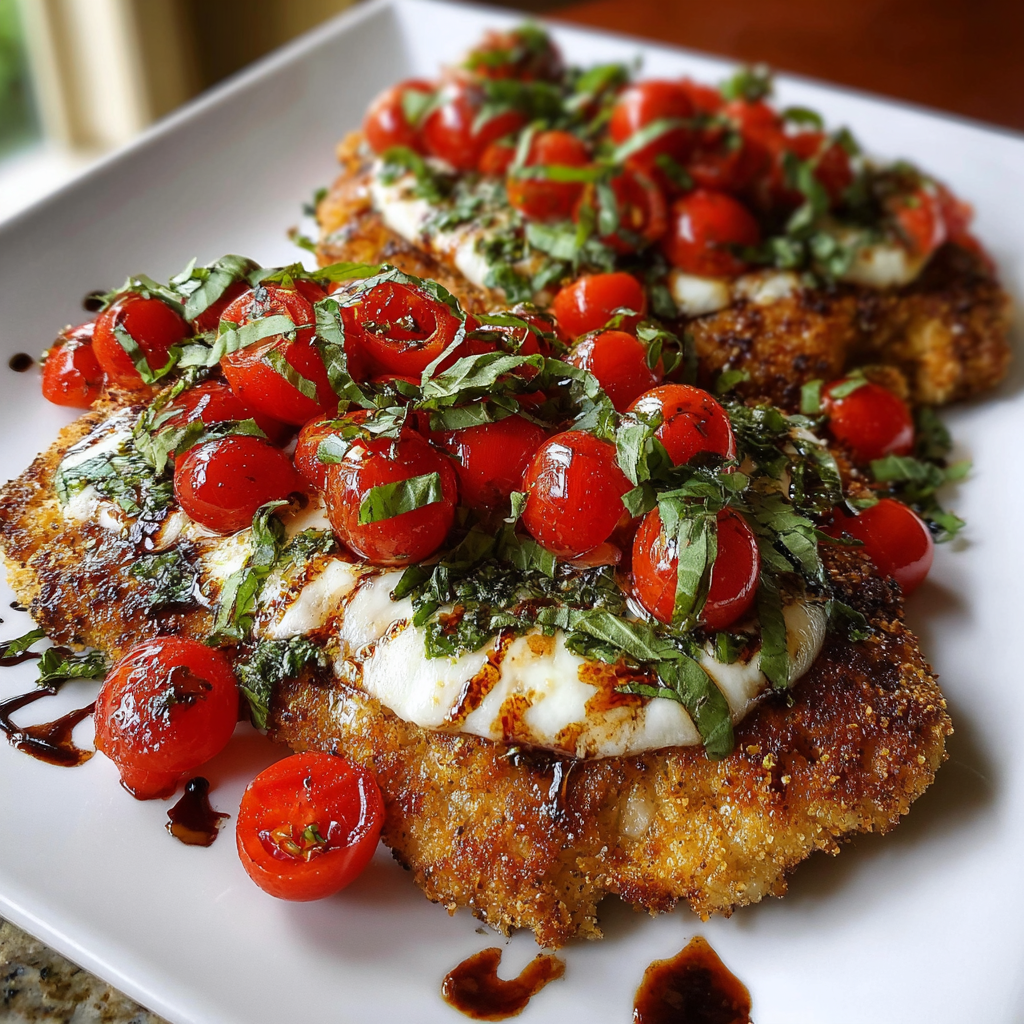
The best cutlets here are crisp around the edges but not buried in breading. Dry chicken is the first step. Moisture on the surface turns flour pasty and makes the coating slide. After dredging, tap each piece well. You should still see the shape of the chicken through the flour.
Give the pan enough heat before the chicken goes in. The oil should shimmer, not smoke. Once the cutlets are down, leave them alone until the underside browns. Moving them too early tears the coating. For a similar quick skillet dinner with the same basil flavor, try Italian Basil Chicken Cutlets. For food safety, chicken should reach 165°F, as listed in the USDA safe temperature chart.
Tomatoes Need Seasoning
The tomato topping should taste good before it ever touches the chicken. Salt wakes up cherry tomatoes and pulls out a little juice, which mingles with the mozzarella as it melts. I use a small spoonful of olive oil so the tomatoes roast instead of drying out under the broiler.
Add basil after broiling. Heat dulls its fresh flavor and can turn the leaves dark. Tear or chop it right at the end, then finish with balsamic glaze if you like a sweet-tart edge. If you have extra tomatoes and basil, Fresh Caprese Pasta with Basil and Mozzarella uses the same ingredients in a cooler, picnic-style way.
Mozzarella Without Soggy Chicken
Fresh mozzarella is lovely here, but it carries more water than shredded cheese. Pat the slices dry with a paper towel before they go on the cutlets. Thin slices melt quicker, which means less time under the broiler and less chance of drying out the chicken.
If your mozzarella is packed in liquid, slice it first and let it sit on a towel while the chicken cooks. Low-moisture mozzarella is less delicate but very practical. It melts cleanly and keeps the crust firmer. Burrata also works, but add it after broiling instead of before. For another tomato, basil, and cheese idea, Burrata Bruschetta with Tomato and Basil makes a good starter before these cutlets.
Serve It While Melty
These cutlets are best right after the broiler, when the cheese is soft and the tomato juices are warm. I like them with a sharp green salad, roasted vegetables, or buttered pasta. Crusty bread is useful too because the pan juices are too good to leave behind.
Leftovers keep for up to 2 days in the fridge. Reheat them in a low oven on a rack if you want to bring back some crispness. A covered skillet over low heat also works. Add fresh basil after reheating, not before. For a side with the same summer flavor, serve them with Tomato Zucchini with Fresh Basil and Parmesan.
Summary
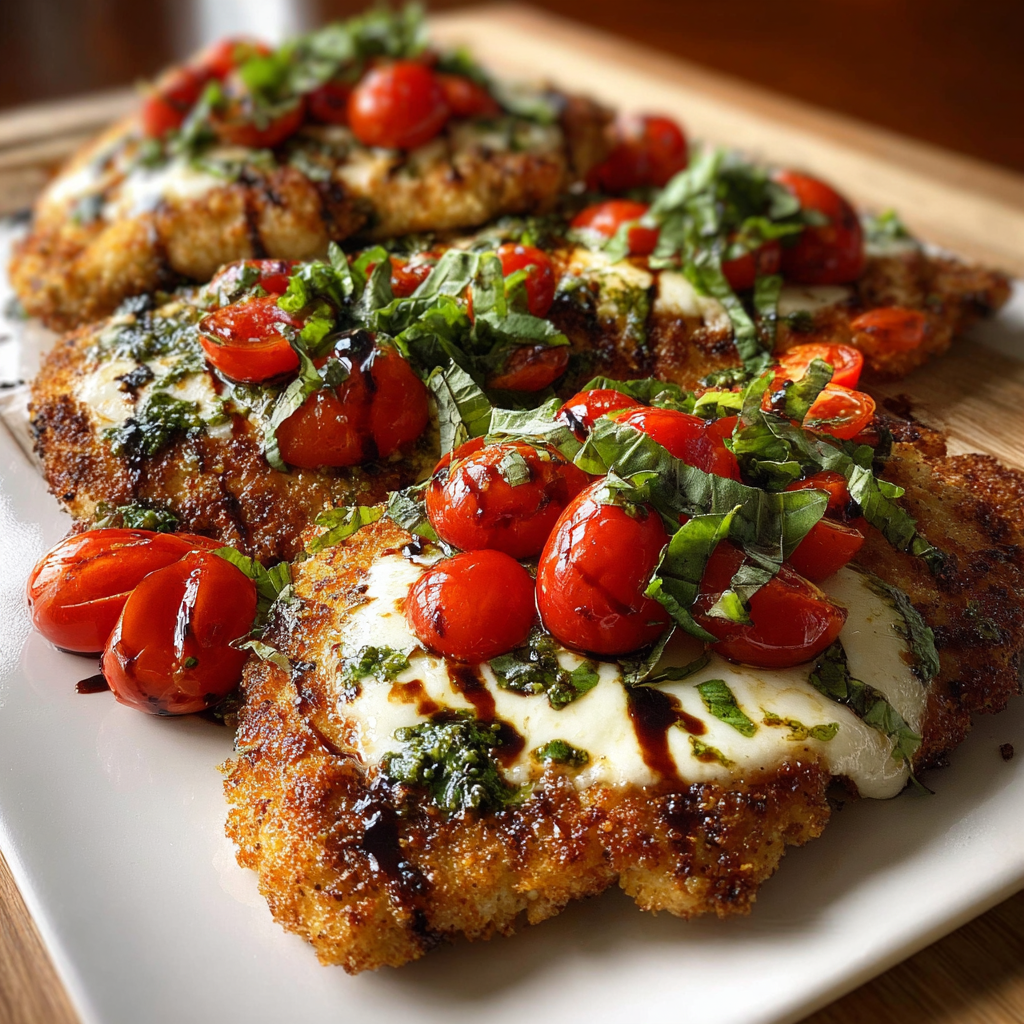
Serve these cutlets hot from the broiler with a green salad, pasta, or crusty bread for catching the tomato juices.
FAQs
- Can I use chicken thighs instead of cutlets?
Yes, boneless skinless thighs work, but they need a little longer in the skillet. Pound them to an even thickness and cook until they reach 165°F in the thickest part.
- Can I make this gluten free?
Use a cup-for-cup gluten-free flour blend in place of all-purpose flour. The coating will still brown well if the chicken is dry before dredging.
- What kind of mozzarella melts best?
Fresh mozzarella gives the creamiest finish, especially if sliced thin and patted dry. Low-moisture mozzarella melts faster and browns more evenly, so it is a good swap when you want less moisture on the pan.
- Can I prep Italian basil chicken cutlets ahead?
You can slice and season the chicken, halve the tomatoes, and slice the cheese earlier in the day. Cook the cutlets and broil the topping right before serving so the crust stays crisp.
- How should I store leftovers?
Refrigerate leftovers in an airtight container for up to 2 days. Reheat in a 325°F oven until warm, or use a covered skillet over low heat. The microwave works, but it softens the crust.
- What should I serve with tomato mozzarella chicken cutlets?
Serve them with pasta, lemony salad, roasted zucchini, or garlic bread. They are also good over arugula because the warm tomato juices make a quick dressing.
- Why did my chicken coating fall off?
The chicken was probably too wet or the pan was not hot enough. Pat the cutlets dry, shake off extra flour, and let the first side cook without moving it until a golden crust forms.
