 Pin it
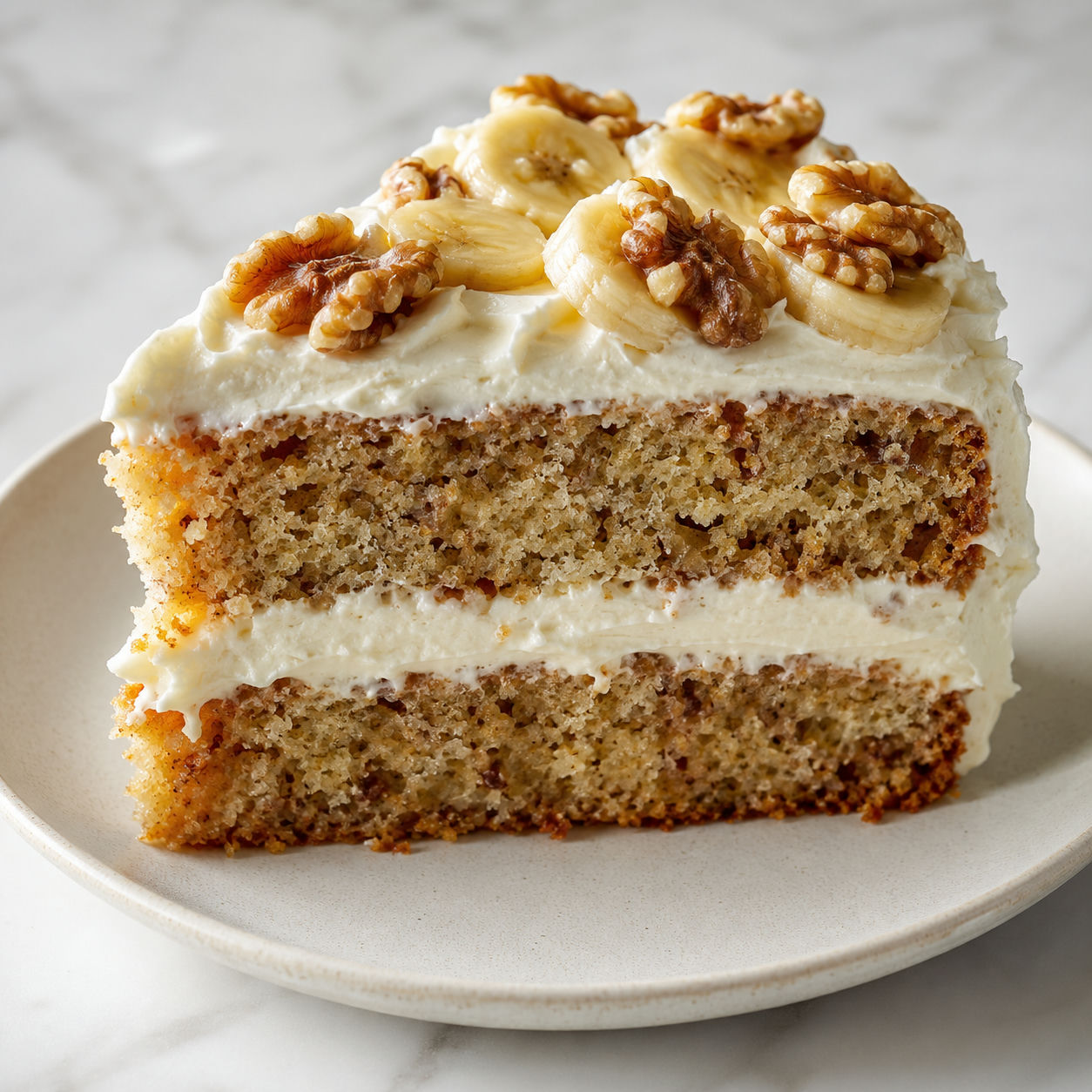
This cake is what happens when three very ripe bananas meet a cloud-light cream cheese filling and a handful of toasted walnuts. It is the kind of dessert people ask about before they have finished their first slice.
Spotty, nearly-black bananas carry a concentrated sweetness that fresh yellow ones cannot match once baked. The sour cream keeps the crumb moist and tender. The walnuts add crunch and a slight earthiness that keeps the whole thing from tasting too sweet.
It keeps well in the fridge and genuinely tastes better on the second day once the filling has settled into the layers.
What Goes Into Each Walnut-Studded Layer
A short list built mostly on pantry staples. The quality of the bananas matters more than anything else here. Buy the freshest walnuts you can find too. Stale walnuts have a flat, papery quality that drags the whole cake down.
- Very ripe bananas. Three spotty-black bananas give the batter its sweetness, moisture, and deep banana flavor. Yellow bananas will not produce the same result once baked.
- Unsalted butter. Creamed with sugar, it creates the lift and tenderness in the crumb. Unsalted lets you control the salt level throughout.
- Sour cream. Keeps the crumb moist and tender without weighing the batter down. Full-fat Greek yogurt is a direct swap.
- Walnuts. Toasted and roughly chopped, they add crunch and a slight bitterness that balances the sweet banana base.
- Cream cheese. The base of the filling. Full-fat and softened to room temperature so it blends smooth without lumps.
- Heavy cream. Whipped separately and folded in to make the filling light and cloud-like rather than dense.
- Powdered sugar. Sweetens the filling without any graininess. Sift it first for the smoothest result.
How Each Layer Comes Together
- Prep the pans. Preheat oven to 350°F (175°C). Grease two 9-inch round cake pans, line the bottoms with parchment rounds, and grease the parchment.
- Build the batter. Whisk flour, baking soda, baking powder, salt, and cinnamon in one bowl. In a large bowl, beat softened butter and sugar on medium-high for 3 to 4 minutes until pale and fluffy. Beat in eggs one at a time, then add mashed bananas, sour cream, and vanilla and mix until combined.
- Add flour and walnuts. Stir in the flour mixture in two additions just until no dry streaks remain. Fold in the chopped walnuts. Do not overmix.
- Bake and cool. Divide batter evenly between the pans and bake 30 to 35 minutes, until a toothpick inserted in the center comes out with just a few moist crumbs. Cool in pans 10 minutes, then turn out onto a wire rack and cool completely before filling.
- Make the cream filling. Beat softened cream cheese and butter until completely smooth. Add powdered sugar and vanilla and beat until fluffy. Whip the cold heavy cream to stiff peaks in a separate bowl, then fold it into the cream cheese mixture in two additions.
- Assemble and chill. Spread half the filling over the first layer. Set the second layer on top and spread the remaining filling across the top. Scatter toasted walnut halves and banana slices over the top and refrigerate at least 1 hour before slicing.
Choosing Bananas for Maximum Flavor
The single biggest factor in how this cake tastes is the ripeness of your bananas. Spotty, heavily darkened bananas are dramatically sweeter and more fragrant than yellow ones because the starch inside converts to sugar as the fruit ripens. When mashed, they break down completely and blend into the batter without chunks or raw pockets.
If your bananas are still yellow, bake them unpeeled on a lined sheet pan at 300°F (150°C) for 15 to 20 minutes until the skins go black and the flesh is very soft. Cool them a few minutes before peeling and mashing. If you end up with more ripe bananas than this cake needs, the Ultimate Cream Cheese Banana Bread is a great way to use the rest.
Getting the Cream Filling Right
Both the cream cheese and the butter must be fully softened to room temperature before you start. Cold cream cheese creates lumps that no amount of extra mixing will fix. Leave them out for a full hour, then beat them together until completely smooth before adding anything else.
Folding in whipped cream is what transforms a dense frosting into something mousse-like. Whip the heavy cream in a cold bowl to stiff peaks, then fold it in two additions using a rubber spatula. Move slowly, folding from the bottom up. This same technique works beautifully in the Banana Cream Cheesecake Roll, another banana-and-cream dessert worth keeping in rotation.
Toasting Walnuts and Measuring Flour
Raw walnuts have a papery texture and flat flavor that fade into the background of the cake. Five to eight minutes in a dry skillet over medium heat changes them completely. The natural oils heat up, the flavor deepens, and they come out crunchier and more fragrant. Shake the pan every minute or so and pull them off the heat the moment you smell them. Let them cool fully before chopping so they do not steam the surrounding batter.
While in baking mode, pay attention to how you measure flour. Scooping directly from the bag packs it and can add up to 20% more than the recipe intends. Spoon it into the measuring cup and level it off. King Arthur Baking has a clear guide on how to measure flour accurately if you want the full breakdown.
Swaps and Easy Variations
Pecans are the most natural replacement for the walnuts and many people prefer them. They are milder and a little sweeter, which lets the banana flavor lead more clearly. Toast them the same way, use the same amount, and nothing else changes.
For the sour cream, full-fat Greek yogurt is a direct swap. If you want the filling to carry more banana flavor, stir two tablespoons of instant banana pudding powder into the cream cheese mixture before beating. It deepens both the color and the taste. You can also bake the whole batter in a greased 9x13 pan at 350°F for 35 to 40 minutes and skip the layering entirely.
Storing and Serving This Cake
Once assembled, the cake needs at least one hour in the refrigerator. The filling firms slightly as it chills and slices come out much cleaner. Leftovers keep covered in the fridge for up to four days and honestly taste better on day two.
Because of the cream cheese filling, this cake should not sit out for more than two hours. FoodSafety.gov recommends keeping dairy-based fillings refrigerated until just before serving. Pull it out 20 minutes before cutting so the filling softens slightly. For something in the same banana-and-cream family that needs no oven at all, the No-Bake Mini Banana Cream Pies are a great companion recipe.
FAQs
- How ripe do the bananas need to be?
Very ripe is the only answer here. You want bananas that are heavily spotted or almost entirely black on the outside. Those bananas are much sweeter and softer than yellow ones, and they mash down completely into the batter. If you only have yellow bananas, bake them unpeeled at 300°F (150°C) for about 15 minutes until the skins blacken and the flesh is very soft.
- Can I substitute pecans for the walnuts?
Yes, and it is a good swap. Pecans give a milder, slightly sweeter result and let the banana flavor come through more clearly. Toast them the same way and use the same quantity. The method does not change at all.
- Can I make this cake ahead of time?
It is actually better made the day before. Assemble the cake with the filling, cover it, and refrigerate overnight. The filling firms up nicely and the flavors come together more fully. Pull it out 20 minutes before serving so the filling softens back to its best texture.
- How long does the finished cake keep?
Up to four days covered in the fridge. The banana flavor intensifies over time, which makes leftovers genuinely good. Do not leave the assembled cake out for more than two hours because of the cream cheese filling.
- Can I bake this as a sheet cake instead of layers?
Yes. Pour all the batter into a greased 9x13-inch pan and bake at 350°F (175°C) for 35 to 40 minutes. Check with a toothpick at 35 minutes. Once fully cooled, spread the cream cheese filling across the top and scatter toasted walnut halves over it. No stacking required.
- Why did my cake layers come out dense?
The most likely cause is too much flour from scooping directly out of the bag. Spoon the flour into your measuring cup and level it off instead. Overmixing after adding the flour is the other common culprit. Stir just until no dry streaks remain, then stop.
