Pin it
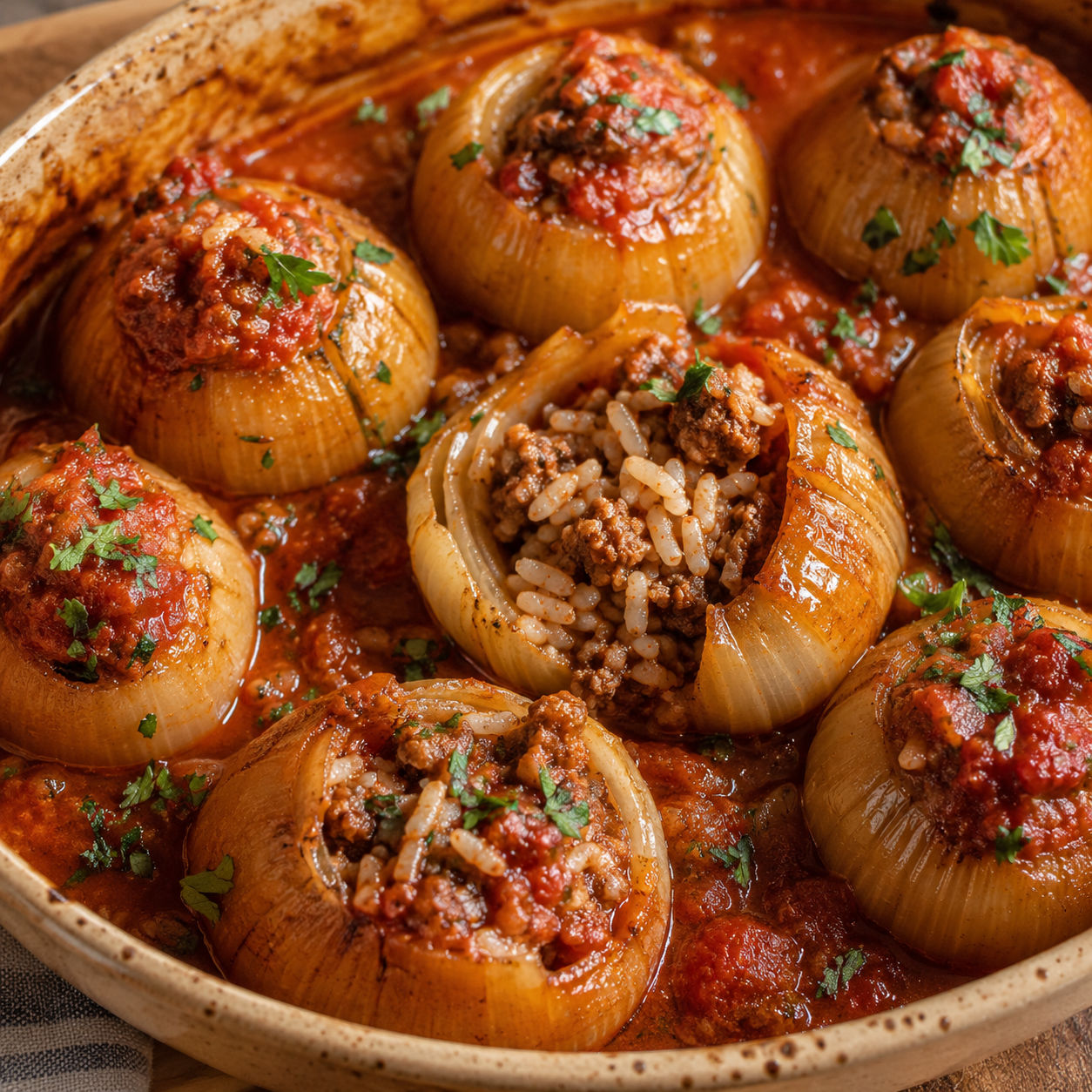
Greek Stuffed Onions look fancier than they are. Once the onions are softened, each layer becomes a sweet little wrapper for beef, rice, tomato, parsley, mint, and oregano.
The dish is called salantourmasi in many Greek kitchens. It sits somewhere between stuffed cabbage, gemista, and a saucy baked casserole. Serve it warm from the pan with bread, potatoes, or a crisp salad.
The Salantourmasi Lineup
Choose large yellow or white onions with tight skins and a fairly round shape. They separate into stronger layers than small onions, and they turn sweet after a long bake.
The filling needs rice that can absorb sauce without falling apart. Arborio works well, but any medium-grain rice is fine.
- Large onions. They become the wrappers and give the dish its sweet, soft body.
- Ground beef. Adds a hearty base that makes the onions feel like a main dish.
- Arborio rice. Absorbs tomato, onion broth, and meat juices while staying tender.
- Olive oil. Helps the filling cook gently and gives the sauce a Greek-style richness.
- Garlic. Brings warmth without overpowering the sweet onions.
- Tomato puree. Moistens the filling and makes the baking sauce glossy.
- Parsley, mint, dill, and oregano. Keep the beef and rice from tasting heavy.
- Balsamic vinegar. Adds a mild sweet tang to the tomato sauce.
- Onion broth. The cooking water from the onions carries flavor into the sauce.
Greek Stuffed Onions, Layer By Layer
- Soften the onions. Trim the onions, peel them, and cut one slit down the side of each onion without cutting through the center. Boil them in salted water until the layers bend easily.
- Separate the wrappers. Let the onions cool until you can handle them. Peel off the large outer layers and chop the small inner pieces for the filling.
- Start the filling. Cook the chopped onion in olive oil until soft, then add garlic and beef. Break the beef up finely so the filling rolls neatly.
- Add rice and herbs. Stir in tomato puree, rice, onion broth, parsley, mint, dill, and oregano. Cook only until the liquid is mostly absorbed because the rice finishes in the oven.
- Roll the onions. Place a spoonful of filling inside each onion layer and roll it into a plump packet. Set each one tucked side down in a baking dish.
- Bake in sauce. Pour over tomato puree, onion broth, vinegar, olive oil, salt, and pepper. Cover and bake, then uncover until the onions are tender and caramelized at the edges.
Soft Onions Roll Best
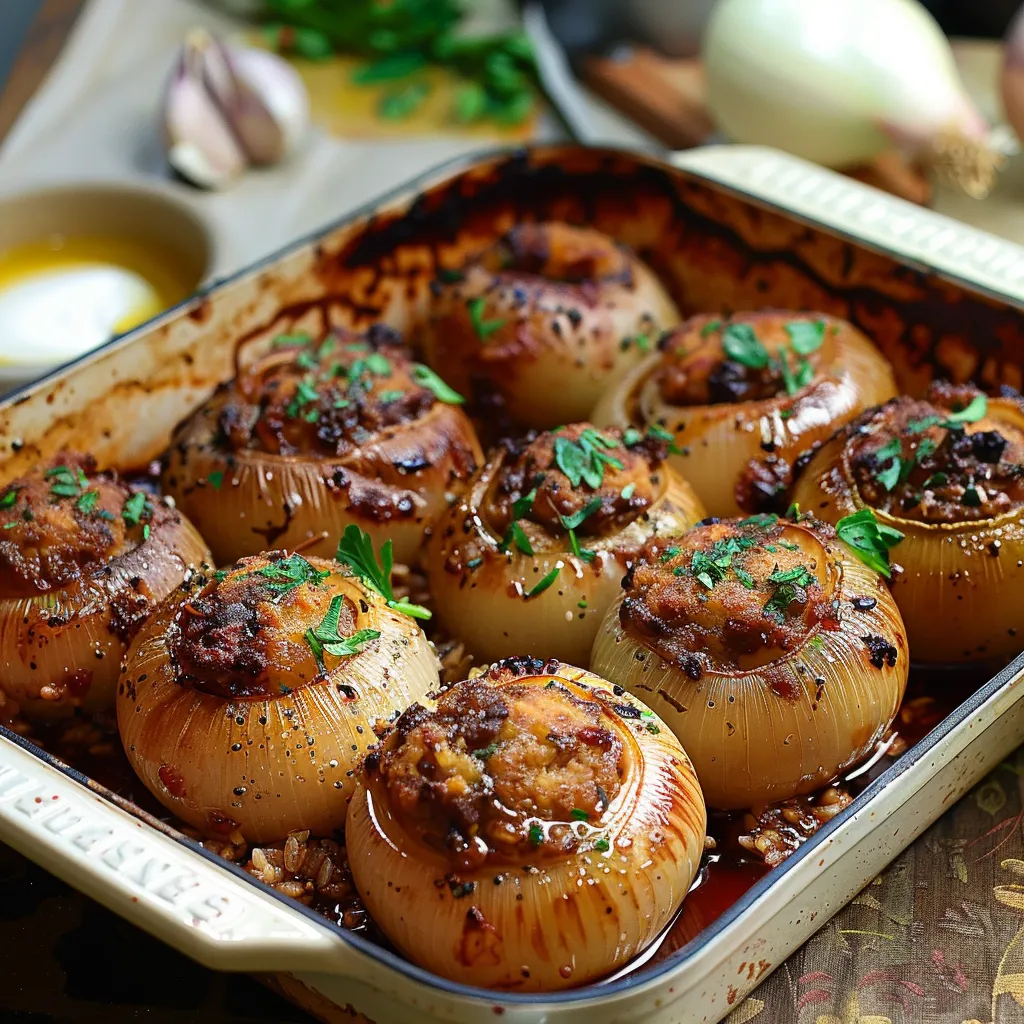
The onion prep is the part that decides how easy this recipe feels. Cut the slit only to the center, not all the way through, so each layer stays wide enough to wrap around the filling. After boiling, let the onions rest for at least 10 minutes. Hot onion layers tear more easily and can burn your fingertips.
If a layer splits, keep it. Torn pieces are useful for patching thin spots or lining the baking dish. That layer on the bottom tastes wonderful after it soaks up the tomato sauce. For a meatless Greek stuffed vegetable night, the same slow-baked comfort shows up in stuffed zucchini boats.
Do Not Finish The Rice
The filling should look a little wet and underdone before it goes into the onion layers. If you cook the rice fully in the skillet, it can turn soft and pasty during the long bake. Stop when the grains have absorbed most of the liquid but still have a firm center.
Break the beef into small pieces as it cooks. Large chunks make the packets hard to roll and leave empty pockets inside the onion. The goal is a spoonable mixture that holds together but does not feel dry. If the skillet looks tight before you roll, add a splash of onion broth.
Sauce Makes The Dish
The tomato sauce should come about halfway up the stuffed onions, not drown them. Too little sauce leaves the rice dry. Too much sauce makes the packets float and loosen. A covered first bake traps steam so the rice can finish. The uncovered bake concentrates the sauce and gives the onion edges that browned sweetness.
A little vinegar matters here. Balsamic is not strictly traditional in every version, but it plays well with tomato and onion. It softens in the oven and leaves just enough tang. For a rice-and-sauce stuffed dinner with a different mood, try the stuffed cabbage roll casserole.
Swaps That Still Taste Greek
Ground lamb works beautifully if you like a stronger, richer filling. For a lighter version, use ground turkey and add another spoonful of olive oil. You can also fold in toasted pine nuts or currants, a detail used in some rice-based salantourmasi recipes like the one from The Mediterranean Dish.
If mint is not your favorite, use more parsley and dill. Keep the oregano small because too much dried oregano can turn dusty during a long bake. The herbs should lift the filling, not take over the whole pan.
What To Serve Beside Them
Greek Stuffed Onions can be the main dish with a spoonful of yogurt and warm bread. They also sit well next to Greek roast potatoes with lemon and feta or a cold classic Greek salad. If you are feeding a larger table, add Greek chicken gyros and let the onions be the saucy side everyone keeps reaching for.
Let the pan rest for 10 minutes before serving. The packets hold together better, and the sauce settles into a silky spoonable texture.
Storing And Reheating
Leftovers keep in the fridge for up to 3 days. Store the onions with plenty of sauce so the rice stays moist. Reheat covered in a small baking dish at 325°F, or warm gently in a skillet with a splash of water.
They also freeze well. Pack them in a freezer-safe container with sauce and freeze for up to 2 months. Thaw overnight in the refrigerator before reheating. For food safety guidance on cooked ground meat, check the USDA safe temperature chart.
FAQs
- What are Greek Stuffed Onions?
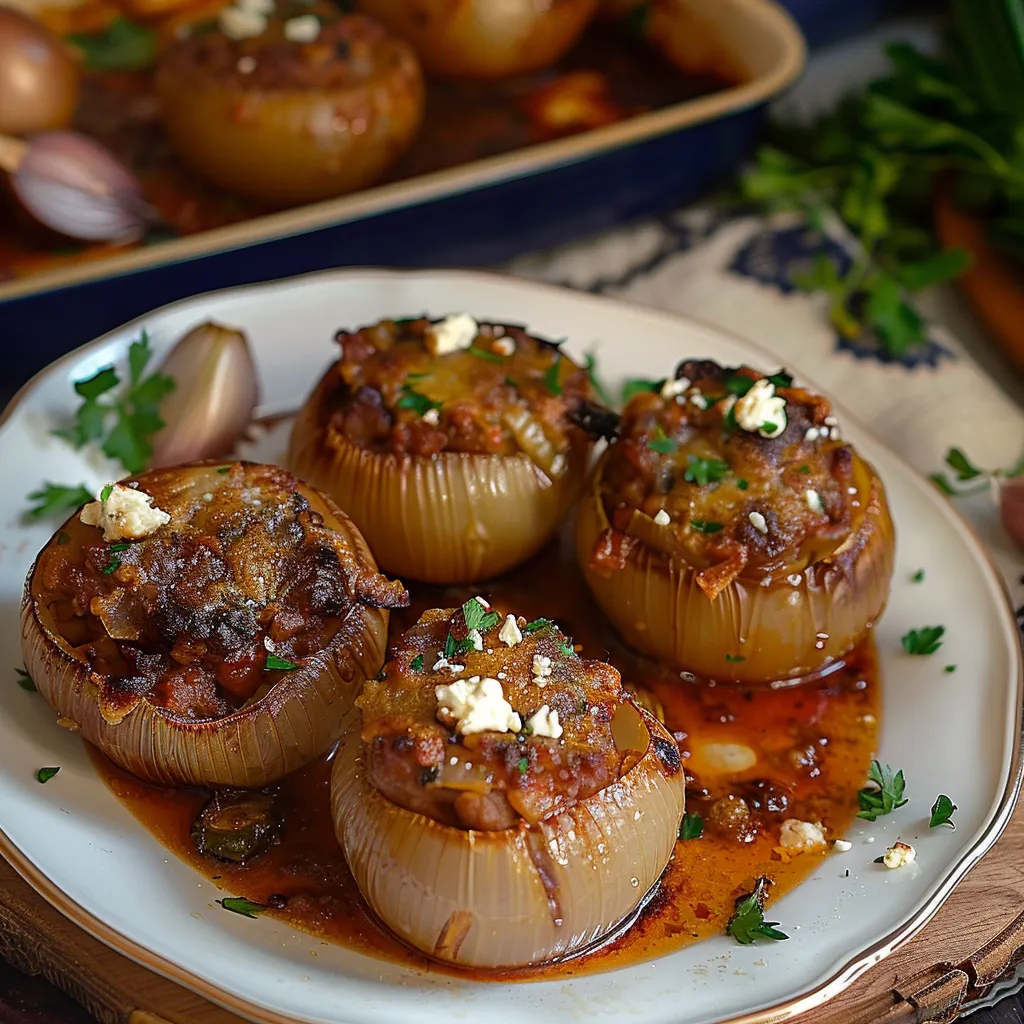
Greek Stuffed Onions are softened onion layers wrapped around a savory filling, usually rice with herbs and sometimes ground meat. This version uses beef, tomato, parsley, mint, and oregano, then bakes everything in a light tomato sauce.
- Can I make Greek Stuffed Onions without meat?
Yes. Skip the beef and use extra rice, chopped onion, toasted pine nuts, currants, and more herbs. Add a little extra olive oil and tomato so the filling stays moist while it bakes.
- Why are my onion layers tearing?
They were likely undercooked or cut too deeply. Boil the onions until the layers bend easily, then let them cool before separating. A few torn pieces are fine because they can line the bottom of the pan.
- Can I make them ahead?
Yes. You can boil and separate the onions one day ahead, then refrigerate them covered. The whole baked dish also reheats well, and the sauce tastes even deeper the next day.
- What should I serve with stuffed onions?
They are filling enough with bread or a salad, but they also pair well with lemon potatoes, feta, yogurt, or grilled chicken. Keep the sides bright because the onions and sauce are rich and sweet.
- Can I freeze Greek Stuffed Onions?
Yes. Freeze them in their sauce in an airtight container for up to 2 months. Thaw overnight in the fridge, then reheat covered with a splash of water or tomato sauce until hot in the center.