 Pin it
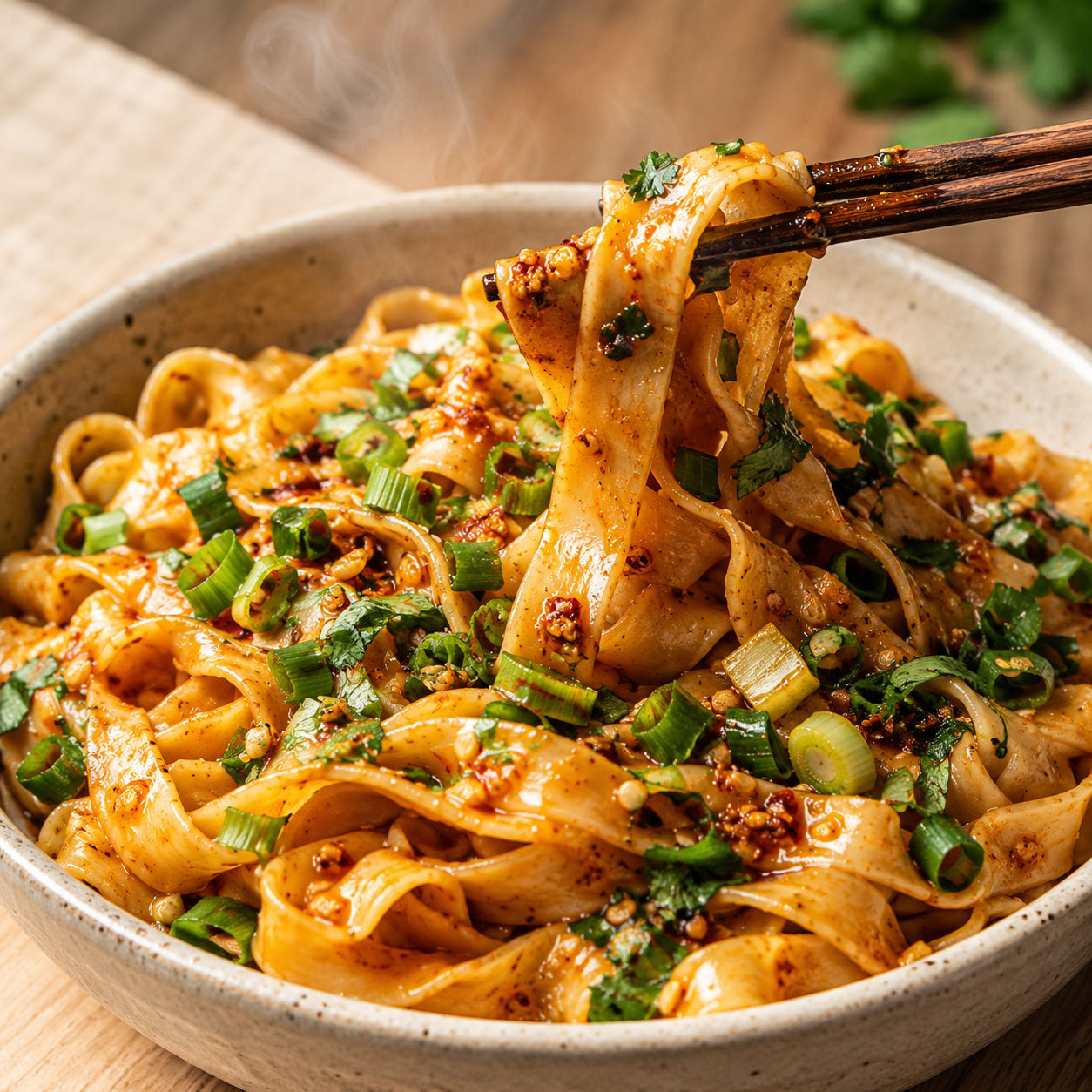
Some nights you need dinner that hits hard and takes almost no time. These garlic chili oil noodles are my emergency plan when the fridge is empty but my craving is not. The whole thing rides on one move: pouring smoking-hot oil over raw garlic and chili so it sizzles into an instant sauce.
The idea comes from Chinese you po mian, where hot oil does the cooking for you. No simmering sauce, no fancy technique. Just chewy noodles, fierce heat, and a pantry list so short you probably own it already.
What you need for the sizzle
This is a pantry rescue mission. The noodles matter most: thick, chewy wheat noodles hold up to the hot oil without turning mushy. Everything else is probably in your kitchen right now.
- Thick wheat noodles. Udon, ramen, or fresh Chinese wheat noodles give you the best chewy bite. Thin spaghetti works but will not carry the sauce the same way.
- Garlic. Freshly minced is the only way. The hot oil flash-cooks it into something sweet and mellow, not sharp.
- Sichuan chili flakes. These provide the signature red color and a slow, fragrant heat. Regular red pepper flakes work too.
- Green onions. The white parts go under the hot oil for flavor. The green tops are for a fresh finish.
- Light and dark soy sauce. Light brings saltiness. Dark adds caramel color and depth.
- Chinese black vinegar. A tiny splash cuts through the fat and adds a subtle tang you cannot skip.
- Neutral oil. Canola, vegetable, or avocado oil. You need it smoking hot, so pick something with a high smoke point.
- Sugar and salt. Just a pinch each to balance the heat and saltiness.
How the magic happens
- Cook the noodles. Cook them in well-salted water until just shy of the package time. They will soften more when tossed. Drain and transfer to a heatproof bowl, saving a splash of the starchy water.
- Load the bowl. Add the minced garlic, chili flakes, white parts of the green onion, both soy sauces, vinegar, sugar, and salt directly over the hot noodles.
- Heat the oil. Pour neutral oil into a small saucepan and heat over high until it shimmers and just begins to smoke, about 2 minutes. You want it hot enough to sizzle on contact.
- Pour and toss. Carefully drizzle the smoking oil over the garlic and chili. It should hiss and bubble immediately, frying the aromatics into the sauce. Toss everything together fast while the oil is hot.
- Garnish and serve. Top with green onion greens, cilantro, and toasted sesame seeds. Eat immediately while the sauce is glossy and clinging.
The oil temperature trick
The difference between flat noodles and a bowl you dream about is the oil heat. It must be hot enough that a wooden chopstick dipped in the oil produces bubbles instantly. If the oil is only warm, the garlic stays raw and harsh and the chili flakes taste dusty. Let it smoke, then pull it off the heat immediately and pour. The residual heat finishes the job. I use a small pan so the oil depth is shallow and it heats fast. A ladle works too if you are careful.
Noodle choices that matter
Thick, wavy wheat noodles are the classic choice because their ridges grab the oil and sauce. Udon delivers a satisfying chew. Fresh Chinese sliced noodles cook in under three minutes. Even instant ramen noodles, minus the seasoning packet, work in a pinch. If you only have dried spaghetti, use it but undercook by a full minute so it stays firm when tossed. For a milder no-heat version, our easy garlic noodles skip the chili entirely. Another fast favorite is sesame garlic ramen noodles.
Add-ins and swaps
This base is a blank canvas. A fried egg on top makes it dinner. Crumbled tofu or shredded rotisserie chicken turn it into a protein-heavy bowl. I sometimes add blanched bok choy or spinach underneath so the hot oil wilts the greens into the noodles. If you crave a nuttier flavor, swirl in a spoonful of peanut butter and check out our spicy peanut chili oil noodles for the full recipe. No Chinese black vinegar? Rice vinegar or even a squeeze of lime gets you most of the way there. For a protein-packed side, try topping the bowl with spicy chili garlic eggs.
Cold noodles for hot days
This dish is just as good served cold. Cook the noodles, rinse them under cold water to stop the cooking, then proceed with the hot oil pour. The noodles firm up and the sauce clings even tighter. I make a double batch, chill half, and lunch is sorted for tomorrow. The U.S. FDA advises cooling cooked food to room temperature within two hours before refrigerating. See the FDA food safety guidelines for proper cooling and storage practices.
Storing and reheating
Leftovers keep in an airtight container in the fridge for up to three days. The oil will solidify slightly and the noodles will soak up most of the sauce, so they lose some of that fresh gloss. Reheat in a skillet with a teaspoon of water to loosen them, or eat them cold straight from the container. I do not recommend microwaving because the garlic can turn bitter and the texture goes soft.
FAQs
- Can I use regular pasta instead of Asian noodles?
Yes. Spaghetti or linguine work if you undercook them by a full minute so they stay firm when tossed. The sauce clings best to thick, chewy noodles with ridges, but thin pasta still tastes great.
- How do I keep the garlic from burning?
The hot oil pour flash-cooks the garlic in seconds, so it rarely burns. Just make sure the garlic is minced evenly and the oil is not smoking for more than a few seconds before you pour. Burnt garlic turns bitter fast.
- What can I use instead of Chinese black vinegar?
Rice vinegar is the closest swap. Apple cider vinegar works too, though it is slightly fruitier. In a pinch, a squeeze of fresh lime or lemon juice adds the needed acidity.
- Can I make this less spicy?
Absolutely. Cut the chili flakes down to half a teaspoon or replace them with mild Korean gochugaru for color without intense heat. A little extra sugar also helps tame the fire.
- Is this recipe vegan?
Yes, as written it contains no animal products. Just check that your sugar is vegan-friendly if that matters to you, and use a soy sauce brand without added seafood or animal extracts.
- How long do leftovers last?
Store them airtight in the refrigerator for up to three days. The noodles will absorb the sauce over time, so they taste best within the first day. Reheat in a skillet with a splash of water rather than the microwave.
