 Pin it
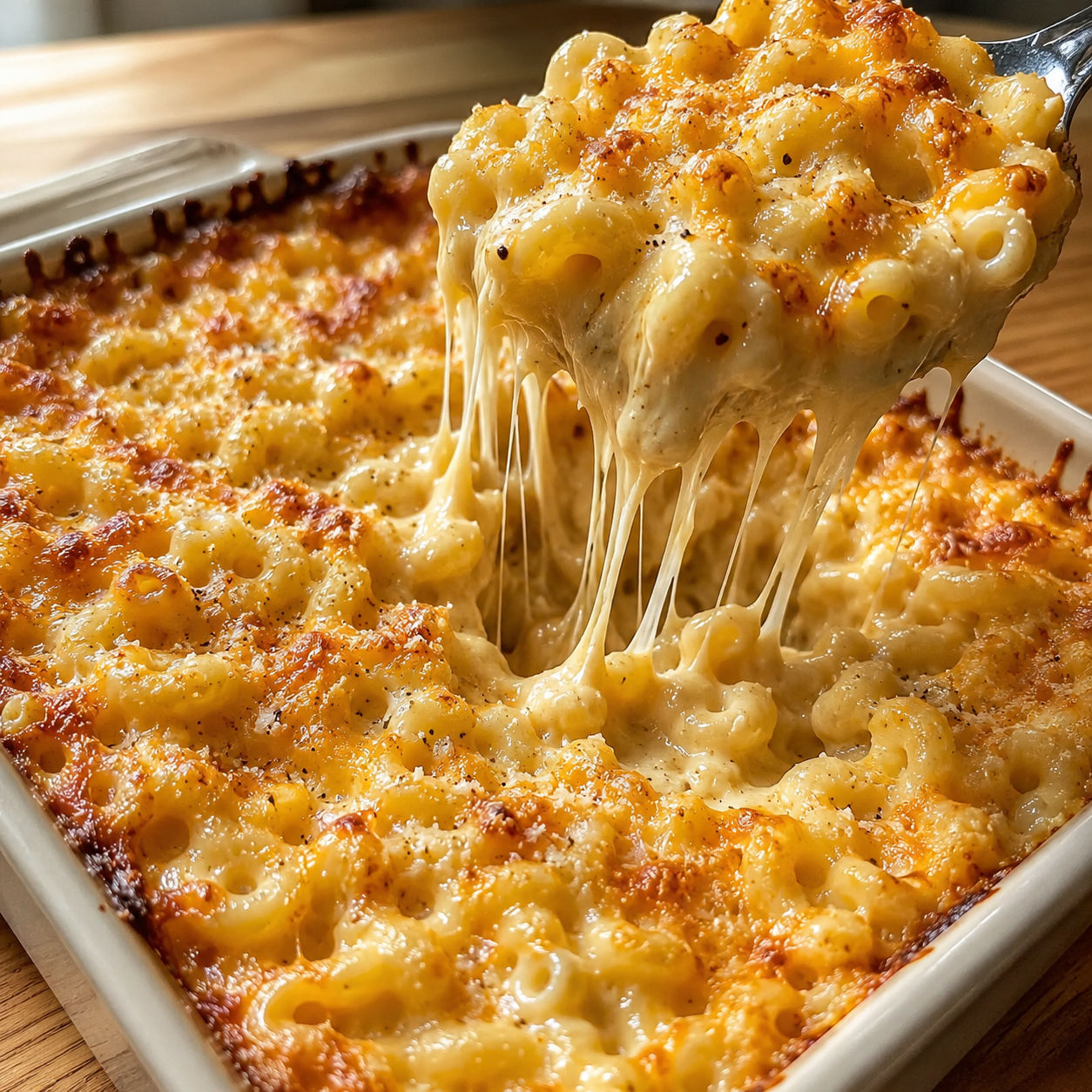
Rich Five Cheese Mac with Cheddar Gouda is the kind of pan that gets quiet at the table for a minute. The sauce is thick and silky, the top browns around the edges, and every scoop pulls up tender elbows coated in cheddar, gouda, mozzarella, parmesan, and cream cheese.
I like this version because it tastes deep without being fussy. Sharp cheddar brings the bite. Gouda adds that buttery, nutty flavor. Cream cheese helps the sauce stay smooth even after baking.
The five-cheese lineup
Use blocks of cheese and grate them fresh. This is the biggest difference between a sauce that melts smoothly and one that feels dusty or stiff.
The blend is rich, so each cheese needs a job. Cheddar and gouda carry the flavor, while cream cheese, mozzarella, and parmesan shape the texture.
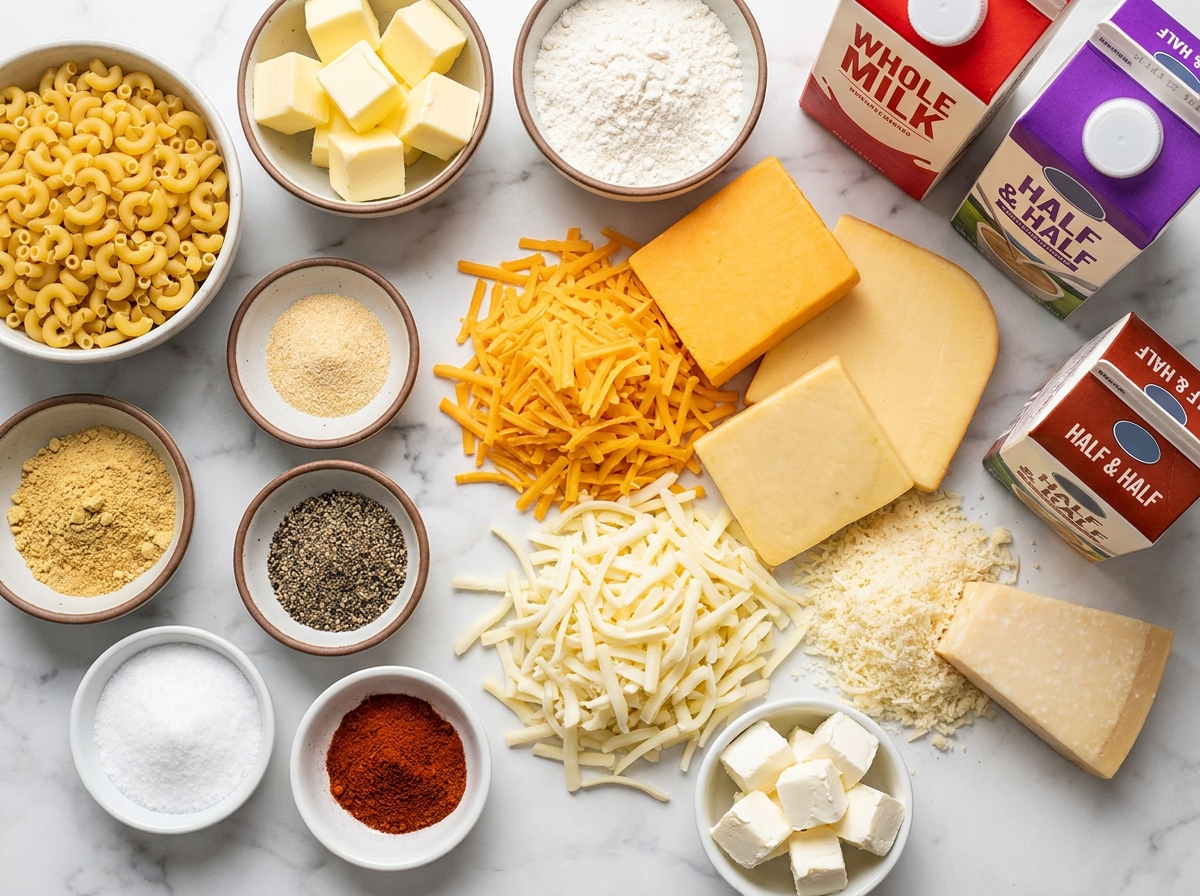
- Elbow macaroni. Holds the sauce in every curve and stays sturdy after baking.
- Sharp cheddar. Gives the dish its classic tang and bold orange color.
- Gouda. Melts into a buttery sauce with a gentle nutty finish.
- Cream cheese. Smooths the sauce and keeps it creamy after the pan rests.
- Mozzarella. Adds stretch without taking over the flavor.
- Parmesan. Brings salty depth and helps the top brown.
- Butter and flour. Make a roux that gives the sauce body.
- Whole milk and half-and-half. Keep the sauce lush but pourable.
- Garlic powder and mustard powder. Wake up the cheese without making the mac taste sharp.
How the pan comes together
- Boil the pasta. Cook the elbows in salted water until just shy of tender. Drain well so the sauce does not thin out.
- Start the roux. Melt butter in a large pot, whisk in flour, and cook for about one minute. This removes the raw flour taste.
- Whisk in dairy. Add the milk and half-and-half slowly. Keep whisking until the sauce thickens enough to coat a spoon.
- Melt the cheeses. Turn off the heat and stir in cream cheese, cheddar, gouda, mozzarella, and parmesan by handfuls until smooth.
- Fold and fill. Stir in the pasta, then spread the creamy mixture into a buttered baking dish.
- Bake and rest. Bake until bubbling at the edges and golden on top, then let it stand for 10 minutes before scooping.
Keep the sauce smooth
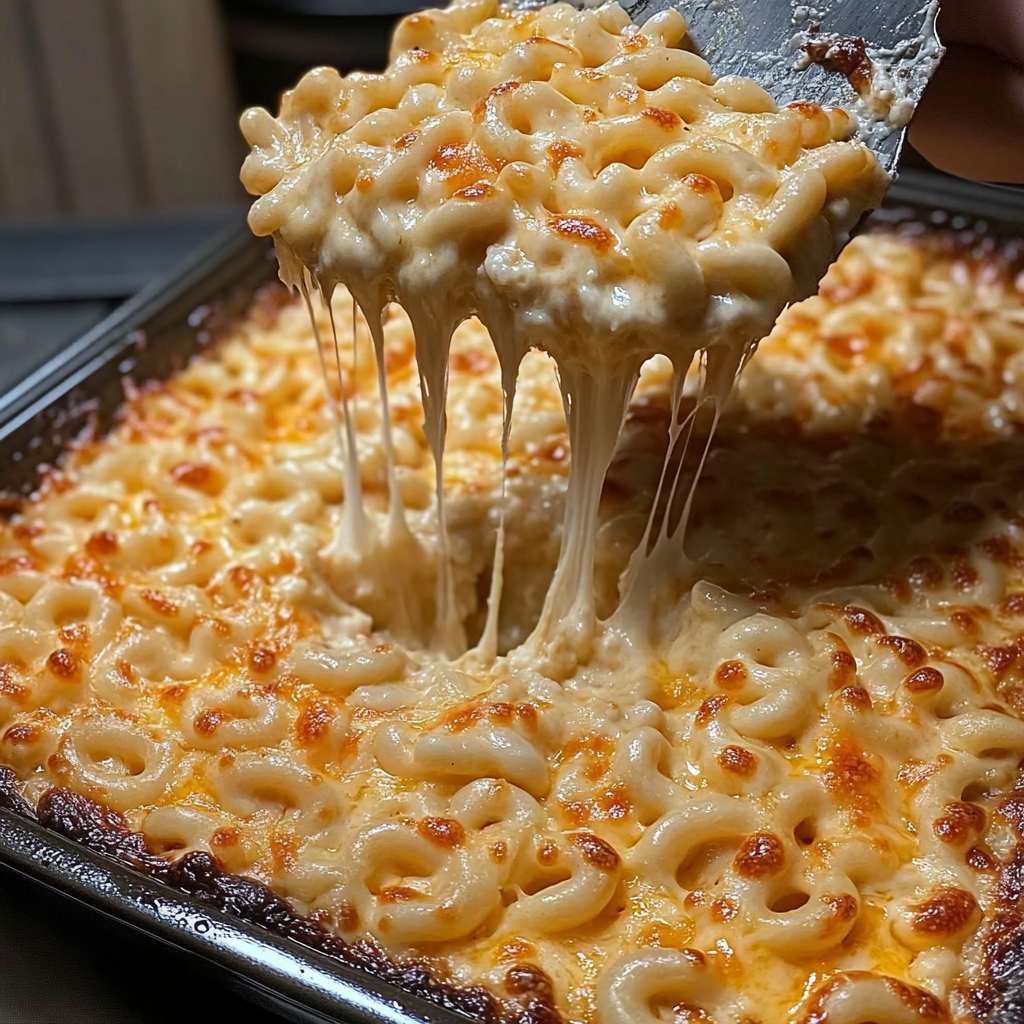
The sauce should be hot enough to melt cheese but not boiling when the cheese goes in. High heat squeezes fat from the cheese and can leave tiny gritty bits. I pull the pot off the burner, add one handful at a time, and stir until each addition disappears before adding more.
Freshly grated cheese matters here. Bagged shredded cheese is handy, but the coating on it can dull the melt. For a similar cheesy comfort bake with a slightly different blend, try Delicious Five-Cheese Mac and Cheese.
Bake it without drying it
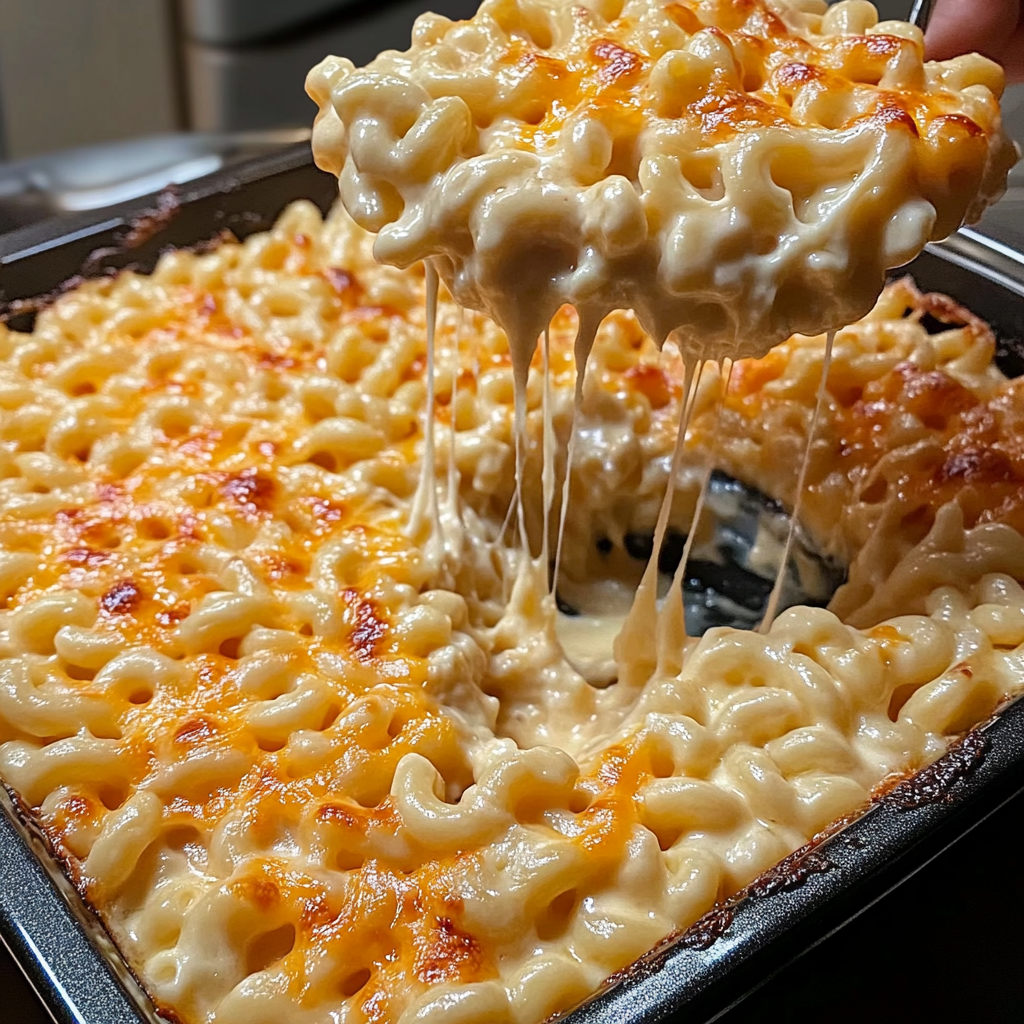
A baked mac needs moisture before it hits the oven. The noodles keep drinking sauce as they bake, so stop the pasta early and keep the cheese sauce glossy. The edges should bubble and brown, but the center should still look creamy when you pull the dish out.
Letting it rest is not optional for a clean scoop. Ten minutes gives the sauce time to settle around the pasta. If you love a more classic pan, Classic Baked Mac and Cheese is a good one to keep nearby.
Easy cheese swaps
You can keep the cheddar and gouda as the main cheeses and still adjust the rest. Monterey Jack can replace mozzarella for a creamier pull. Gruyere can replace part of the gouda for a nuttier flavor. Fontina melts beautifully if you want a softer, richer sauce.
For heat, add a pinch of cayenne or a few dashes of hot sauce to the sauce base. For a smoky version with a vegetable twist, look at Creamy Poblano Smoked Gouda Mac and Cheese.
Serving the rich stuff
This mac is a strong side for roast chicken, barbecue, ham, or a crisp green salad. I serve it in small bowls when it is the main dish because the five-cheese sauce is filling. A spoonful of pickled jalapenos or a little hot honey on top can cut through the richness.
If you want something simpler for a weeknight, Easy White Cheddar Mac and Cheese keeps the creamy mood with fewer cheeses.
Leftovers that stay creamy
Cool leftovers within two hours and refrigerate them in a shallow airtight container. The USDA leftover guidance says cooked leftovers are best used within 3-4 days, and you can read more in the USDA leftovers food-safety guide.
For reheating, add milk before warming. The oven works well for bigger portions if the dish is covered. The microwave is fine for a single bowl, but stop and stir halfway so the edges do not dry out.
Summary
This baked mac is rich enough for a holiday side but simple enough for a weekend dinner. Keep the heat gentle when adding the cheese and let the pan rest before serving.
FAQs
- Can I make this five cheese mac ahead of time?
Yes. Assemble it up to one day ahead, cover it tightly, and refrigerate it before baking. Add 5-10 extra minutes in the oven if it goes in cold.
- Why did my cheese sauce turn grainy?
The sauce likely got too hot after the cheese went in. Pull the pot off the heat and stir in the cheese by handfuls. Pre-shredded cheese can also make the sauce rough because it is coated to prevent clumping.
- Can I use smoked gouda instead of regular gouda?
Yes, smoked gouda is excellent here. It gives the mac a deeper flavor, so I would use mild mozzarella and not add smoked paprika unless you want a stronger smoky note.
- What pasta shape works best?
Elbow macaroni is classic because the curves catch the sauce. Cavatappi, shells, and small ridged tubes also work well. Cook any shape about one minute shy of al dente so it holds up in the oven.
- How do I reheat leftovers without drying them out?
Reheat portions with a splash of milk. Use a covered skillet over low heat or a covered baking dish at 325°F until hot. Stir gently once the sauce loosens.
- Can I make it gluten free?
Yes. Use gluten-free elbow pasta and a gluten-free all-purpose flour blend for the roux. Check the pasta early because gluten-free shapes can soften faster during baking.
