 Pin it
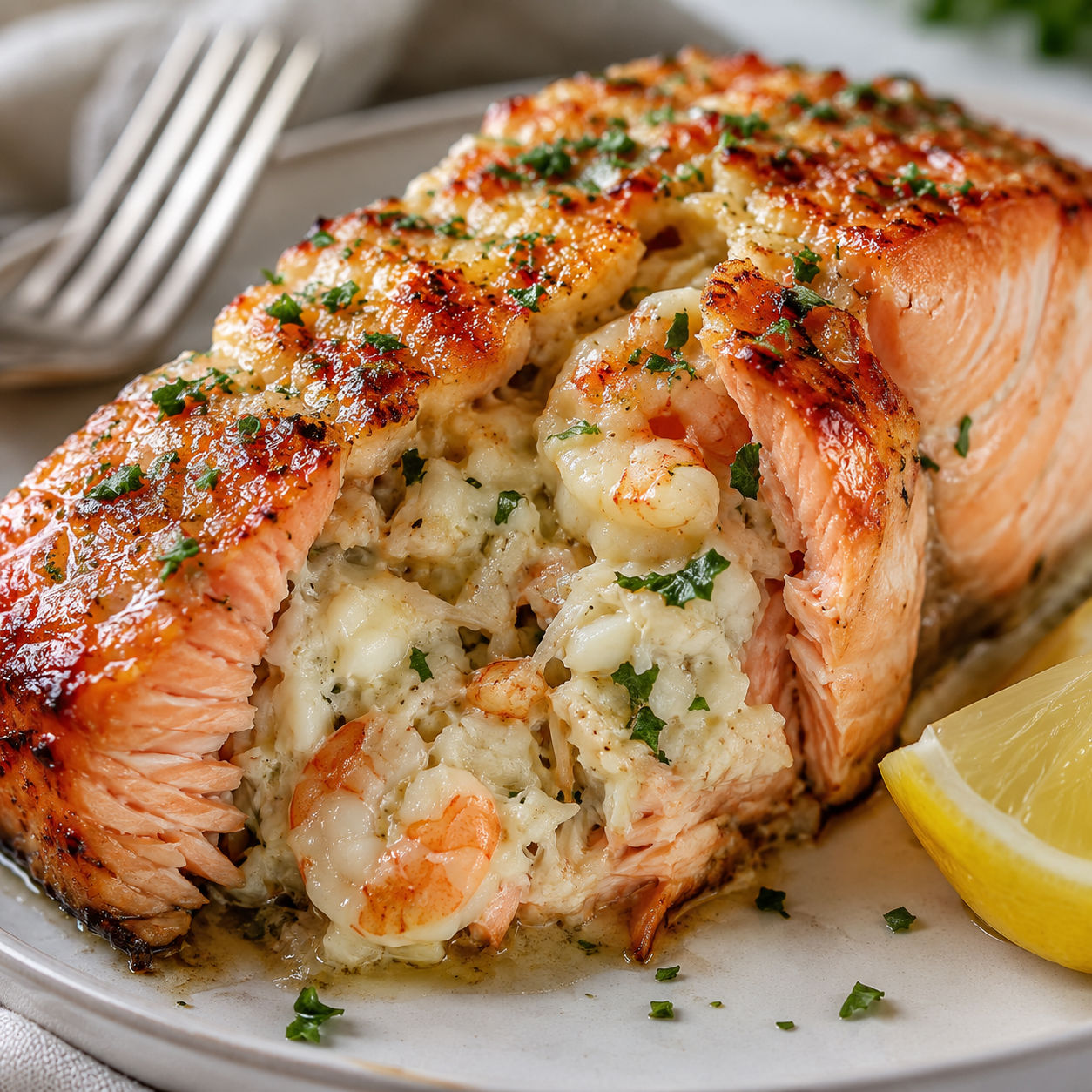
Elegant Crab and Shrimp Stuffed Salmon with Creamy Filling is the seafood dinner I make when I want the table to feel a little dressed up without a long afternoon in the kitchen. The filling is soft and savory, with sweet crab, chopped shrimp, cream cheese, lemon, herbs, and just enough seasoning to wake it up.
The trick is using thick center-cut salmon and making a deep pocket without slicing all the way through. Once the filling is tucked inside, the oven does the gentle work. The top turns glossy with butter and the salmon stays moist.
Seafood and Creamy Filling
Choose salmon fillets that are thick enough to hold a pocket. The filling tastes best when the crab is well drained, the shrimp is chopped small, and the cream cheese is soft before mixing.
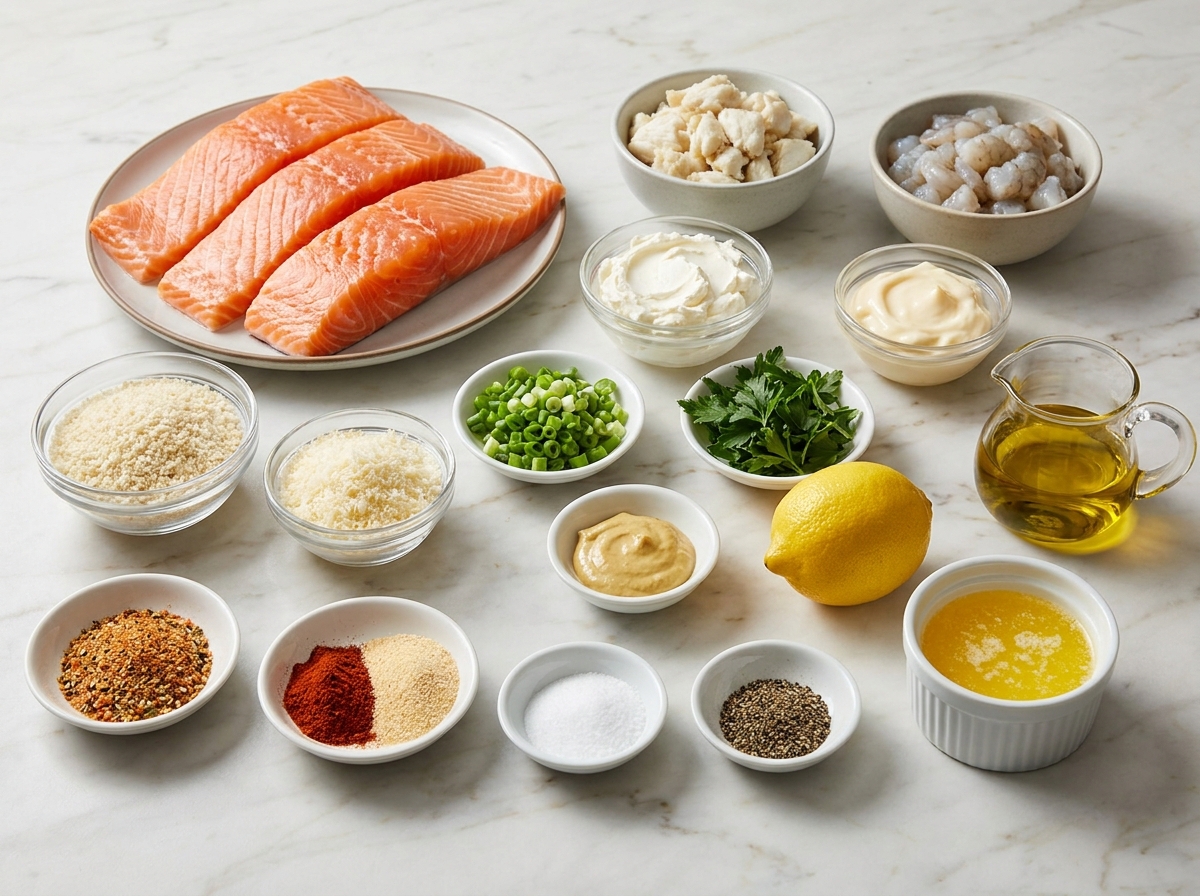
- Salmon fillets. Thick center-cut pieces hold the stuffing and bake evenly.
- Lump crab meat. Adds sweet, delicate seafood flavor and a soft flaky texture.
- Cooked shrimp. Chopped shrimp gives the filling a firmer bite and more seafood richness.
- Cream cheese. Binds the filling and keeps it creamy as the salmon bakes.
- Mayonnaise. Loosens the cream cheese and adds moisture without making the filling runny.
- Panko breadcrumbs. Absorb extra moisture so the filling stays tucked inside the salmon.
- Parmesan. Adds saltiness and a little browned flavor on top.
- Dijon mustard. Cuts through the richness with a small tangy note.
- Lemon zest and juice. Brighten the seafood and keep the filling from tasting heavy.
- Old Bay, paprika, and garlic powder. Bring classic seafood seasoning, color, and warmth.
- Parsley and scallion. Add fresh color and a clean oniony finish.
- Butter. Brushed over the salmon so the top bakes glossy and golden.
Elegant Crab and Shrimp Stuffed Salmon
- Heat the oven. Set the oven to 375°F and line a baking sheet with parchment. Pat the salmon dry so the butter and seasoning stick.
- Mix the filling. Stir cream cheese, mayonnaise, Dijon, lemon, Old Bay, paprika, garlic powder, parsley, scallion, panko, and Parmesan until smooth. Fold in crab and shrimp gently so the crab stays in pieces.
- Cut the pockets. Use a sharp knife to cut a deep slit through the side or top of each fillet. Stop before you cut through the bottom.
- Fill the salmon. Season the fish with salt and pepper, then spoon the seafood filling into each pocket. Press lightly and secure with toothpicks if needed.
- Bake until tender. Brush with melted butter and bake for 16-20 minutes, depending on thickness. The salmon should flake and the filling should be hot in the center.
- Rest and serve. Let the fillets rest for 3 minutes, then serve with lemon wedges and extra parsley.
Cut Pockets That Hold
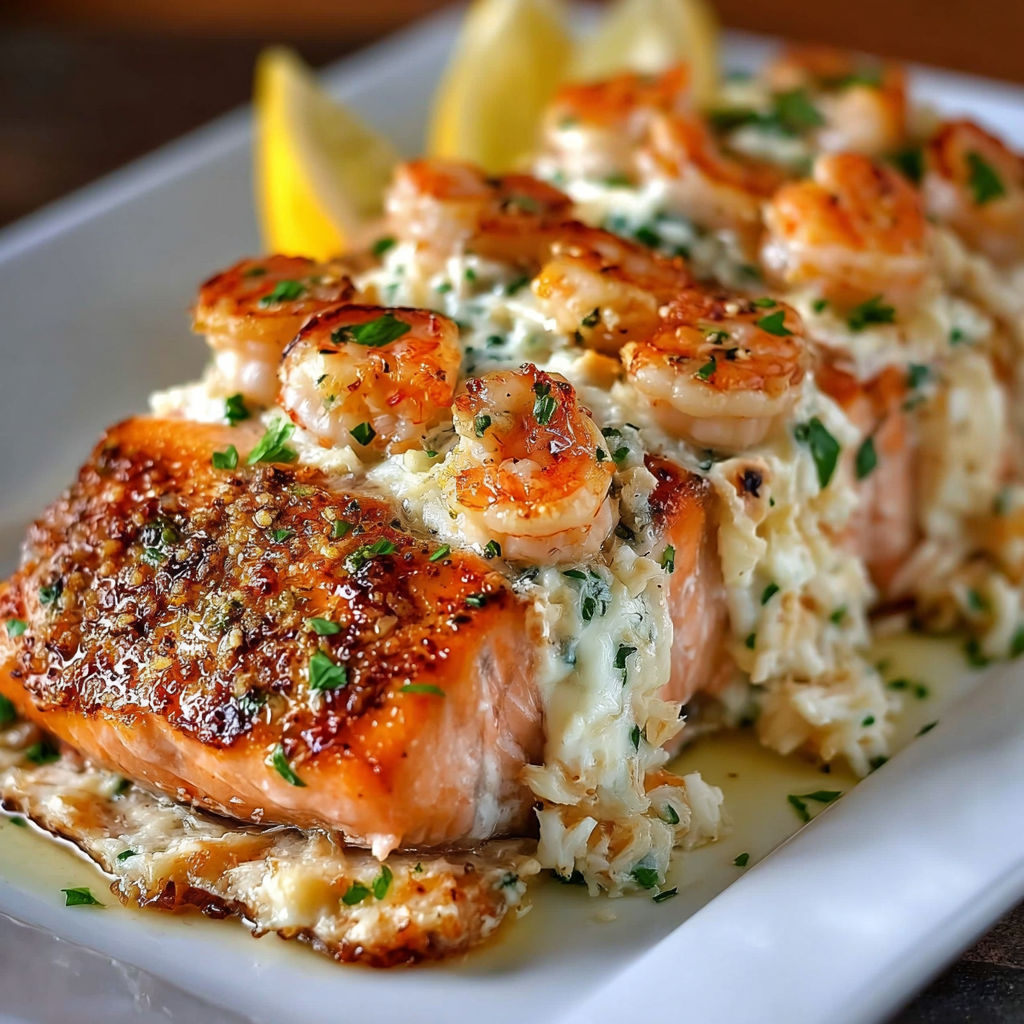
A good pocket matters more than a fancy filling. Use a thin sharp knife and work slowly. For thick fillets, I like cutting from the side so the top stays smooth. For slightly thinner pieces, cut a slit down the top and open it gently with your fingers. Leave at least 1/2 inch of salmon intact around the edges.
If your fillets vary in size, give the thick ones a little extra filling and keep the smaller ones modest. Overstuffed salmon looks generous before baking, then the filling can slide out as it heats. For another take on this same seafood pairing, the site has Crab and Shrimp Stuffed Salmon with fresh herbs, which uses a similar idea with a slightly different balance.
Keep the Filling Tender
The filling should be thick enough to mound on a spoon. If it looks loose, add another tablespoon of panko and let it sit for five minutes. If it feels stiff, stir in a teaspoon of lemon juice or mayonnaise. The goal is creamy, not soupy.
Fold in the crab last and use a light hand. Breaking it down too much makes the filling taste flat because you lose those sweet little pieces. Old Bay gives the classic seafood flavor, but a pinch of Cajun seasoning works if you want a warmer finish. For a no-stuffing seafood option with the same cozy flavor lane, try the creamy garlic butter shrimp bowl.
When the Salmon Is Done
Stuffed salmon can fool you because the filling keeps the center soft. Check the fish at the thickest part and look for flakes that separate with gentle pressure. The filling should be hot, creamy, and slightly puffed.
The FDA seafood safety guide recommends cooking fish to 145°F. If you use a thermometer, slide it into the salmon near the filling instead of straight into the empty pocket. Pulling it out of the oven and resting it for a few minutes helps the juices settle. For a simpler baked salmon dinner, garlic butter baked salmon is a good weeknight reference.
Make Ahead Without Stress
You can make the crab and shrimp filling the day before. Keep it covered in the coldest part of the fridge, then give it a quick stir before stuffing the fish. If you stuff the salmon ahead, limit it to a few hours and keep the fillets tightly covered.
Leftovers keep for up to two days in an airtight container. Reheat them gently in a 300°F oven until warm. The microwave works in a pinch, but short bursts are better than one long blast. FoodSafety.gov has a helpful cold food storage chart if you want a quick reference for seafood storage.
Bright Sides Balance Richness
This salmon is rich, so I keep the plate fresh. Lemon asparagus, roasted green beans, cucumber salad, or a small pile of peppery greens all work. Rice pilaf is lovely if you want something to catch the creamy filling that slips onto the plate.
For a larger seafood spread, add crab and shrimp cakes with citrus and herb as a starter and keep dessert light. A squeeze of lemon right before serving is not optional for me. It sharpens the butter, cream cheese, and crab so each bite tastes clean instead of heavy.
Summary
This stuffed salmon is best served hot from the oven with lemon, a crisp salad, roasted asparagus, or rice pilaf.
FAQs
- Can I use canned crab for stuffed salmon?
Yes. Use good quality canned crab, drain it very well, and pick through it for shells. Lump crab gives the best texture, but canned crab still works when the filling is seasoned with lemon, parsley, and Old Bay.
- Can I use raw shrimp in the filling?
Cooked shrimp is easier because the filling heats through at the same time as the salmon. If you use raw shrimp, chop it small and make sure the stuffing is fully hot before serving. The salmon should also reach a safe internal temperature.
- How do I keep the filling from leaking out?
Cut a deep pocket but leave the bottom and sides intact. Do not pack the filling too tightly, since it expands a little as it warms. Toothpicks can help with thinner fillets.
- Can stuffed salmon be made ahead?
You can mix the filling up to one day ahead and refrigerate it. You can also stuff the salmon a few hours before baking. Keep it covered and cold until the oven is ready.
- What temperature should stuffed salmon reach?
The FDA recommends cooking fish to 145°F. For the best texture, check the thickest part of the salmon and the center of the filling. The fish should flake and the filling should be steaming hot.
- Can I make this gluten-free?
Yes. Swap the panko for gluten-free breadcrumbs or crushed gluten-free crackers. The rest of the recipe is naturally free of gluten if your seasonings and Dijon are labeled gluten-free.
- What should I serve with crab and shrimp stuffed salmon?
Serve it with lemony asparagus, green beans, roasted potatoes, rice pilaf, or a crisp salad. Since the filling is rich, bright sides with lemon or vinegar taste especially good.
