Pin it
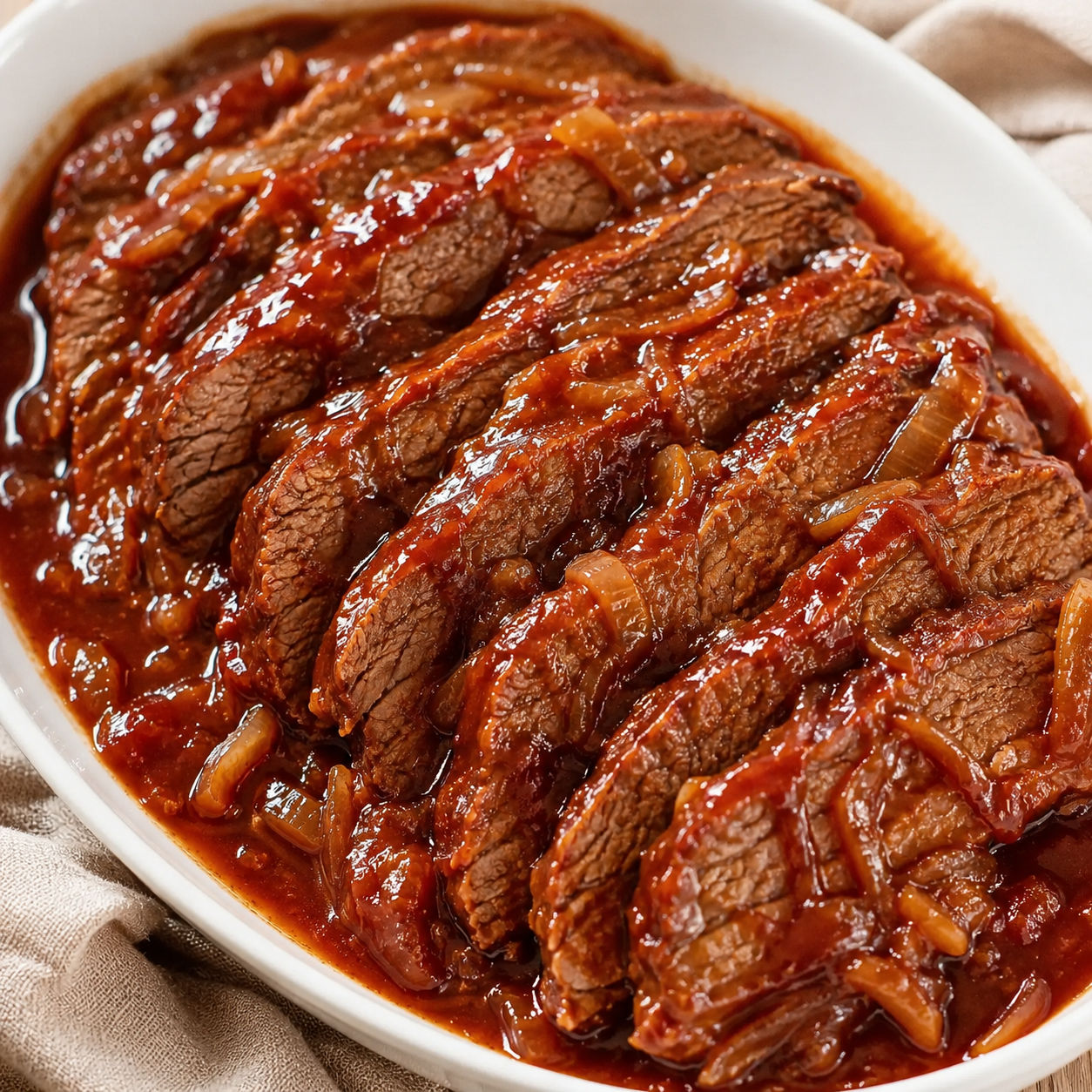
3-Ingredient Brisket is the kind of dinner that looks like you fussed over it, even though the pan does almost all the work. The ketchup cooks down into a tangy glaze, the onion soup mix seasons the beef deeply, and the brisket turns tender after a long, covered roast.
I like this for holidays, Sunday dinner, and any night when I want leftovers that feel useful. The slices reheat well in their sauce, and the flavor gets even better after a night in the fridge.
The Saucy Three
This recipe depends on a short list, so each piece matters. Choose a brisket with a thin layer of fat and enough marbling to handle a long roast.
Ketchup brings sweetness and acidity. Onion soup mix adds salt, onion flavor, and a little body to the pan sauce.
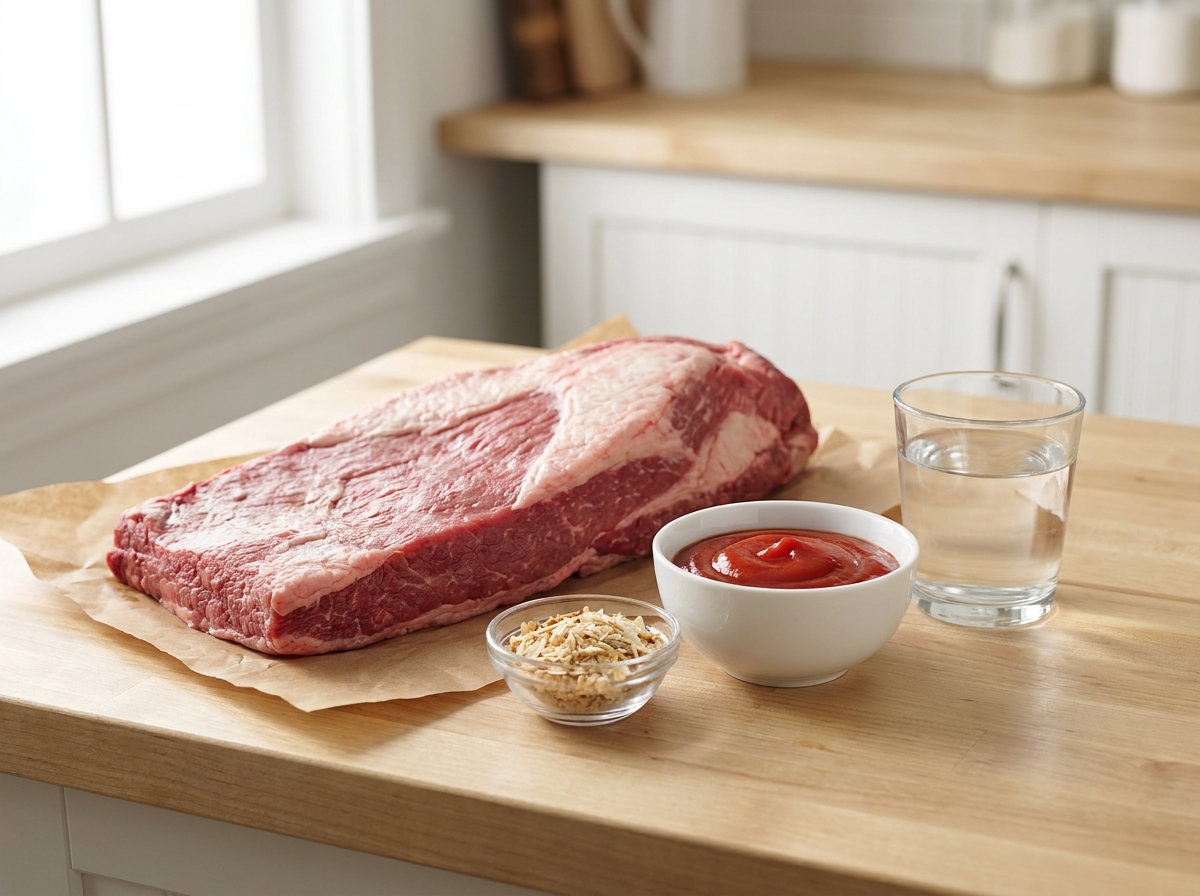
- Beef brisket. A tough, flavorful cut that becomes tender when cooked slowly with moisture.
- Ketchup. Cooks down into a glossy, tangy sauce that balances the rich beef.
- Dry onion soup mix. Seasons the meat and gives the sauce deep onion flavor without chopping anything.
- Water. A small splash loosens the sauce so it can braise without scorching.
Slow Roast, Then Slice
- Heat the oven. Set the oven to 275°F and place the brisket fat side up in a snug roasting pan.
- Mix the sauce. Stir the ketchup, onion soup mix, and water until the dry mix is evenly moistened.
- Coat the beef. Spread the sauce over the brisket and turn the meat once so both sides get covered.
- Cover tightly. Seal the pan with foil so steam stays inside and the sauce does not dry out.
- Bake until tender. Roast for 5 1/2 to 6 1/2 hours, until a fork slides into the thickest part with little resistance.
- Rest and slice. Let the brisket rest for at least 30 minutes, then slice across the grain and spoon sauce over the top.
3-Ingredient Brisket Timing
Brisket is done when it feels tender, not when the clock says so. A 4-pound flat cut usually needs about 6 hours at 275°F, but thickness matters more than weight. Start checking near the 5 1/2 hour mark. Poke the center with a fork or thin skewer. It should go in easily, with only a little resistance.
The USDA safe temperature chart lists 145°F with rest time as the minimum for whole cuts of beef, but brisket needs more heat and time to soften its connective tissue. For sliced brisket, the sweet spot is often much higher. You can read the official guidance on the USDA safe temperature chart.
Picking The Brisket Cut
Flat cut brisket is leaner and easier to slice. It is the one I buy when I want clean pieces for a platter. Point cut has more fat and a looser grain. It is harder to slice neatly, but it tastes rich and stays forgiving during a long bake.
Leave about 1/4 inch of fat on top if your butcher gives you the choice. That thin cap helps baste the meat as it cooks. If you prefer a more barbecue-style sauce, this same cut works beautifully in Slow Cooker Beef Brisket With BBQ Sauce.
Why Resting Matters
Do not slice the brisket the second it comes out of the oven. The meat is hot, the juices are moving, and the slices can fall apart or dry out. Give it at least 30 minutes on the counter while still loosely covered. If you have time, chill it overnight in the sauce and slice it cold the next day.
Always look for the grain before cutting. Brisket has long muscle fibers, and slicing across them makes each piece tender. If the first slice looks stringy, turn the brisket and cut from another angle.
Make The Sauce Better
The sauce will look simple at first, then it thickens as it roasts with the beef juices. If it tastes too sweet after cooking, add a small splash of vinegar while reheating. If it tastes too salty, loosen it with warm water or unsalted beef broth.
You can skim fat from the surface after chilling. The sauce underneath will be thick, dark, and spoonable. That is what you want over potatoes, rice, or soft rolls. For a sweeter brunch idea with cooked brisket, save a few slices for a Bourbon Maple Brisket Wafflewich.
Leftovers Worth Planning
Leftovers are one of the best reasons to make brisket. Store the meat in slices, covered with sauce, so reheating is gentle and even. Warm it covered in a 325°F oven, or use a skillet over low heat with a spoonful of water.
Chop extra brisket for Braised Brisket Tacos, fold it into Rich and Creamy Brisket Mac and Cheese, or pile it into sliders. The sauce gets thicker after chilling, so do not be afraid to loosen it before serving.
Summary
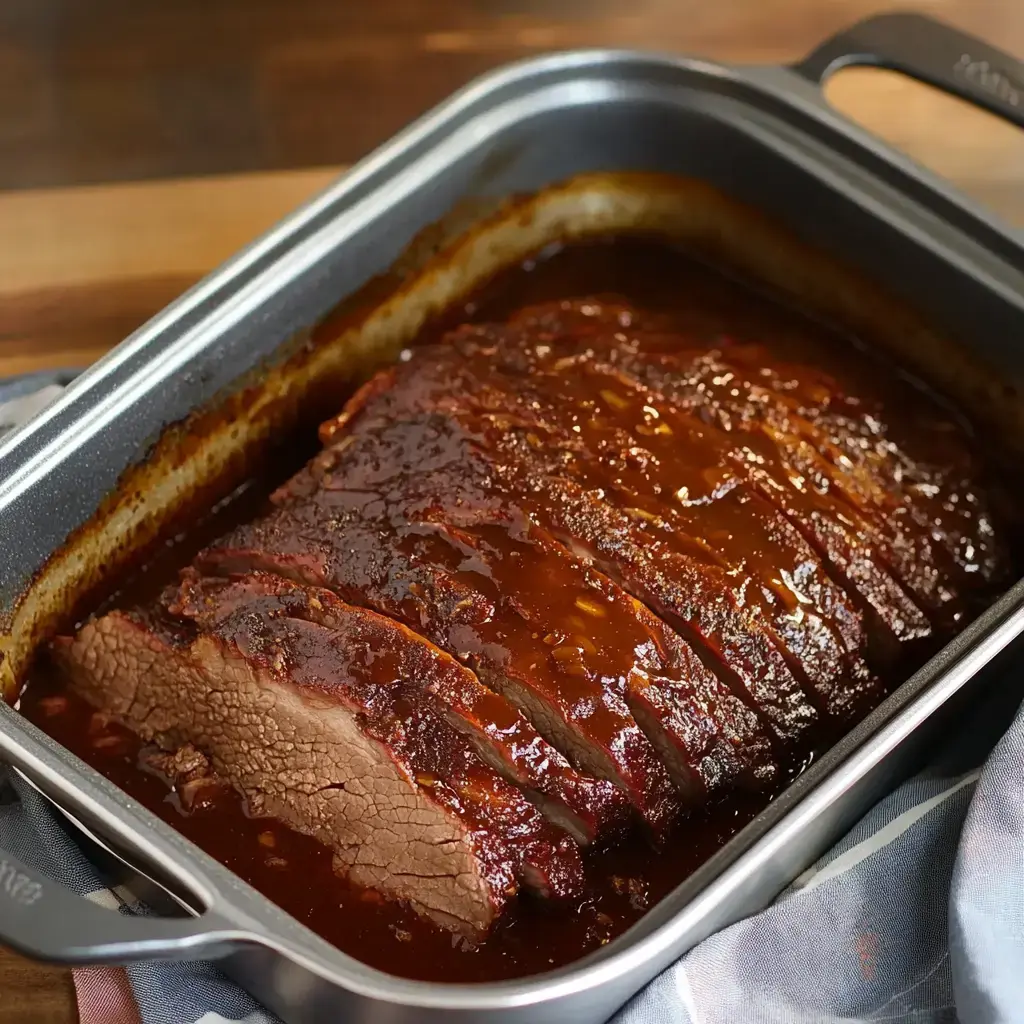
This simple oven brisket is rich, saucy, and practical. Keep the pan tightly covered, rest the meat before slicing, and spoon the thick pan sauce over the top.
FAQs
- What are the three ingredients in 3-Ingredient Brisket?
The three main ingredients are beef brisket, ketchup, and dry onion soup mix. A splash of water can be added to loosen the sauce, but it is not part of the grocery list.
- Can I use chili sauce instead of ketchup?
Yes. Bottled chili sauce gives the brisket a slightly sharper, less sweet flavor. Use the same amount, and expect the pan sauce to taste a little more savory.
- Which brisket cut works best?
A flat cut is easy to slice and looks neat on a platter. A point cut has more marbling and can taste richer. Either works as long as you cook it until a fork slides in with little resistance.
- How do I know when brisket is done?
Temperature helps, but tenderness matters more here. Brisket usually slices best after the collagen has softened, often around 195-205°F. A fork or skewer should slide into the thickest part without much push.
- Can I make this brisket ahead?
Yes, and it is often better that way. Cook it, cool it in the sauce, then slice it cold. Reheat the slices covered with sauce in a 325°F oven until hot.
- How should I store leftovers?
Store sliced brisket with plenty of sauce in an airtight container. It keeps in the fridge for up to 4 days or in the freezer for up to 3 months.
- What should I serve with brisket?
Mashed potatoes, buttered noodles, roasted carrots, green beans, or cornbread all work well. Pick something that can catch the sauce because the pan juices are too good to leave behind.