 Pin it
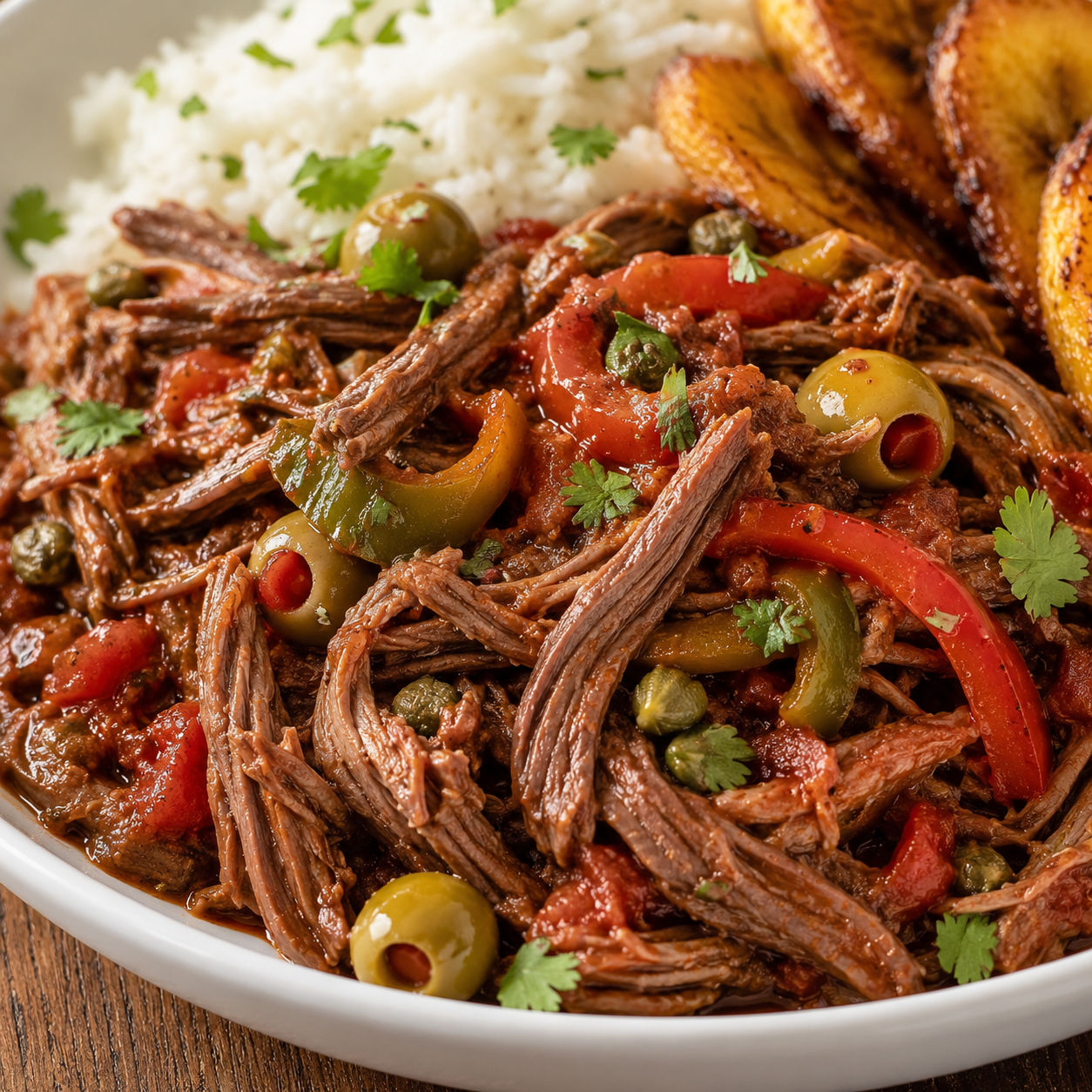
Authentic Cuban Ropa Vieja is the kind of dinner that smells good long before it is ready. The beef simmers until it gives up and turns into long, soft strands, then it goes back into a tomato sauce with peppers, garlic, olives, and capers.
I make this on a day when I can let the pot work slowly. It is not hard, but it does ask for time. The reward is a deep, briny, savory beef stew that tastes even better after a night in the fridge.
The Beef and Sofrito Base
The ingredient list is simple, so each piece has a job. Choose flank steak if you want the long, stringy shreds that make this dish look like true ropa vieja.
The sauce should taste savory, a little briny, and gently sweet from the peppers. Pimiento-stuffed olives and capers matter here, so do not skip both.
- Flank steak. The traditional cut that pulls into long strands after a slow braise.
- Onion and bell peppers. They soften into the sauce and give the stew its sweet, colorful base.
- Garlic. Adds depth once it blooms in the oil with the vegetables.
- Tomato paste and crushed tomatoes. Build a thick sauce that clings to every shred of beef.
- Dry white wine. Deglazes the pot and adds a light acidity.
- Beef broth. Keeps the braise moist and savory.
- Cumin, oregano, and bay leaves. Give the sauce its warm Cuban flavor without making it spicy.
- Green olives and capers. Bring the salty bite that cuts through the rich beef.
- Vinegar and cilantro. Wake up the finished pot right before serving.
Authentic Cuban Ropa Vieja Method
- Sear the beef. Pat the flank steak dry, season it well, and brown it in a heavy pot. Browning gives the sauce a deeper flavor before the long simmer begins.
- Cook the sofrito. Soften the onion and bell peppers in the same pot, then add garlic and tomato paste. Let the paste darken slightly so it loses its raw edge.
- Start the braise. Add wine and scrape up the browned bits. Stir in tomatoes, broth, spices, and bay leaves, then return the beef to the pot.
- Simmer until tender. Cover and cook gently for about 2 hours, turning the beef once or twice. It is ready when a fork slides in easily.
- Shred and finish. Pull the beef into thin strands, return it to the sauce, and add olives, capers, and vinegar. Simmer uncovered until glossy and thick.
- Serve hot. Spoon the ropa vieja over rice and finish with cilantro or parsley. Add plantains on the side if you have them.
Why Slow Braising Matters
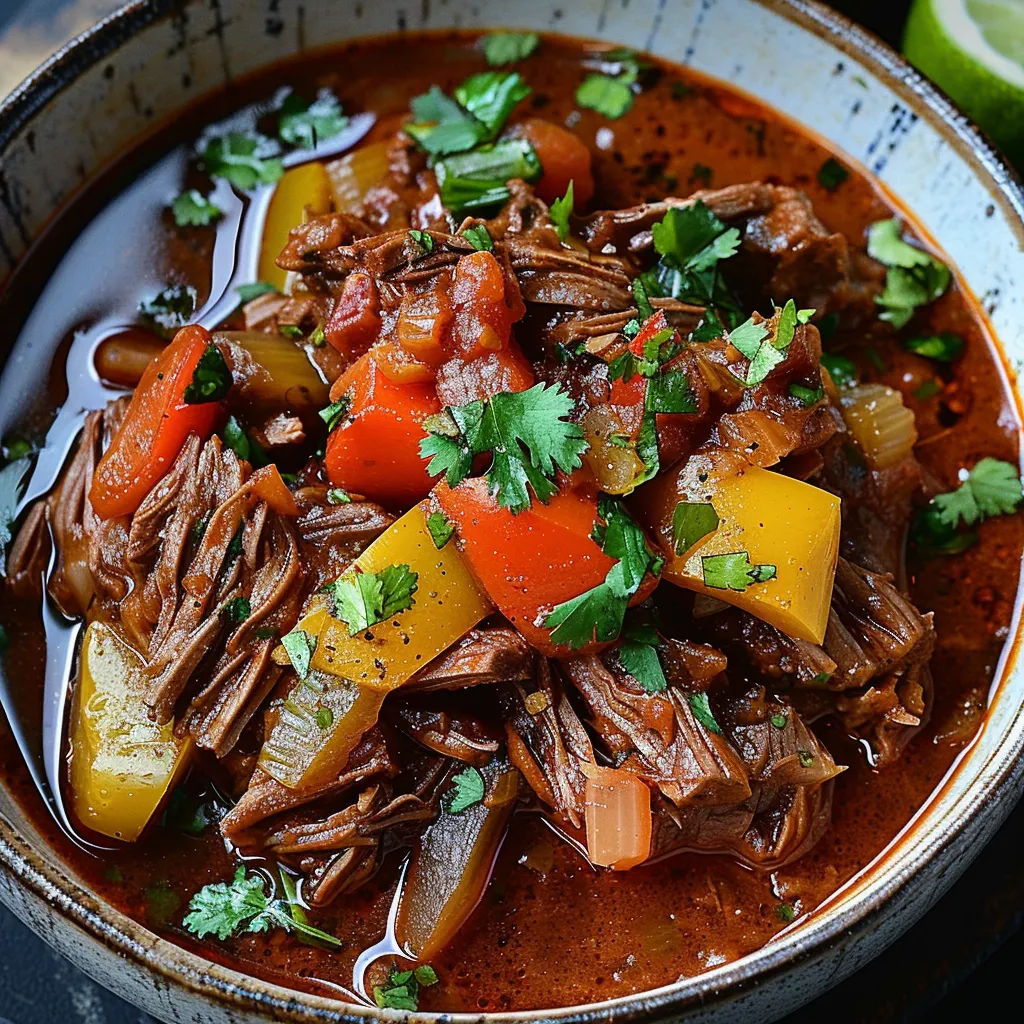
Flank steak is lean, which means it needs patience. A hard boil makes it tough around the edges before the center relaxes. Keep the heat low enough that the sauce barely bubbles. That steady heat softens the meat and lets the peppers melt into the tomato base.
Published versions vary a little. Some use bacon, some use pimientos, and some add capers only at the end. The version from Saveur leans into olives and capers too, which is the briny finish I like most.
The Sauce Should Cling
After you shred the beef, the sauce needs a few more minutes uncovered. This is where it turns from a braising liquid into something spoonable. Stir often and let the strands drink up the tomato, wine, and olive brine.
If the pot looks dry, add broth by the tablespoon. If it tastes heavy, add a small splash of vinegar. For another Cuban-style beef dinner with the same comfort-food feel, try the Healthy Cuban Beef Casserole.
Good Swaps, Same Spirit
Skirt steak is the closest swap for flank. Chuck roast works if you want a more forgiving cut, though it will shred differently. You can use red, green, or yellow bell peppers. Cubanelle peppers are lovely when you can find them.
No dry white wine in the house? Use broth and finish with vinegar. If you like a greener, herb-heavy finish, a spoonful of Caribbean Green Seasoning can be stirred in at the end, but keep it light so it does not take over the Cuban profile.
What To Serve Alongside
The classic plate is ropa vieja with white rice, black beans, and maduros. The rice catches the sauce, the beans make it hearty, and the sweet plantains balance the olives and capers. Leftovers are also excellent in a pressed sandwich. If you like that route, the Slow Cooker Cuban Sandwiches have the same cozy Cuban dinner energy.
Storage, Freezing, Reheating
Ropa vieja is a strong make-ahead meal. Cool it, cover it, and refrigerate it for 3-4 days. The USDA has a clear leftovers safety guide if you want timing details for cooling and storage.
Freeze portions with a little extra sauce so the beef stays moist. Reheat in a covered skillet over low heat with a splash of broth. The microwave works for lunch, but stop and stir once so the edges do not dry out.
Summary
Serve this ropa vieja over white rice with black beans and fried sweet plantains. Keep leftovers for easy bowls, sandwiches, or freezer meals.
FAQs
- What cut of beef is best for authentic Cuban ropa vieja?
Flank steak is the classic choice because it shreds into long strands that give ropa vieja its old-clothes look. Skirt steak also works well. Chuck roast is easier to find and very tender, but the shreds will be shorter and softer.
- Can I make ropa vieja in a slow cooker?
Yes. Sear the beef and cook the onions, peppers, garlic, and tomato paste first, then move everything to the slow cooker. Cook on low for 7-8 hours or until the beef shreds easily, then stir in the olives, capers, and vinegar near the end.
- Can I leave out the wine?
You can replace the dry white wine with more beef broth or chicken broth. Add one extra teaspoon of vinegar at the end if the sauce tastes flat. The wine adds aroma and acidity, but it is not the only way to balance the dish.
- How do I keep ropa vieja from drying out?
Keep the pot covered during the braise and check the liquid once or twice. The beef should sit partly in the sauce, not boil in a dry pan. After shredding, simmer it gently so the strands soak up sauce without tightening.
- How long does ropa vieja keep?
Store cooled ropa vieja in an airtight container in the fridge for 3-4 days. It also freezes well for up to 2 months. Reheat it gently with a splash of broth so the sauce loosens again.
- What do you serve with Cuban ropa vieja?
White rice, black beans, and fried sweet plantains are the usual plate. It is also good with yuca, avocado salad, or tucked into warm bread for a shredded beef sandwich.
