 Pin it
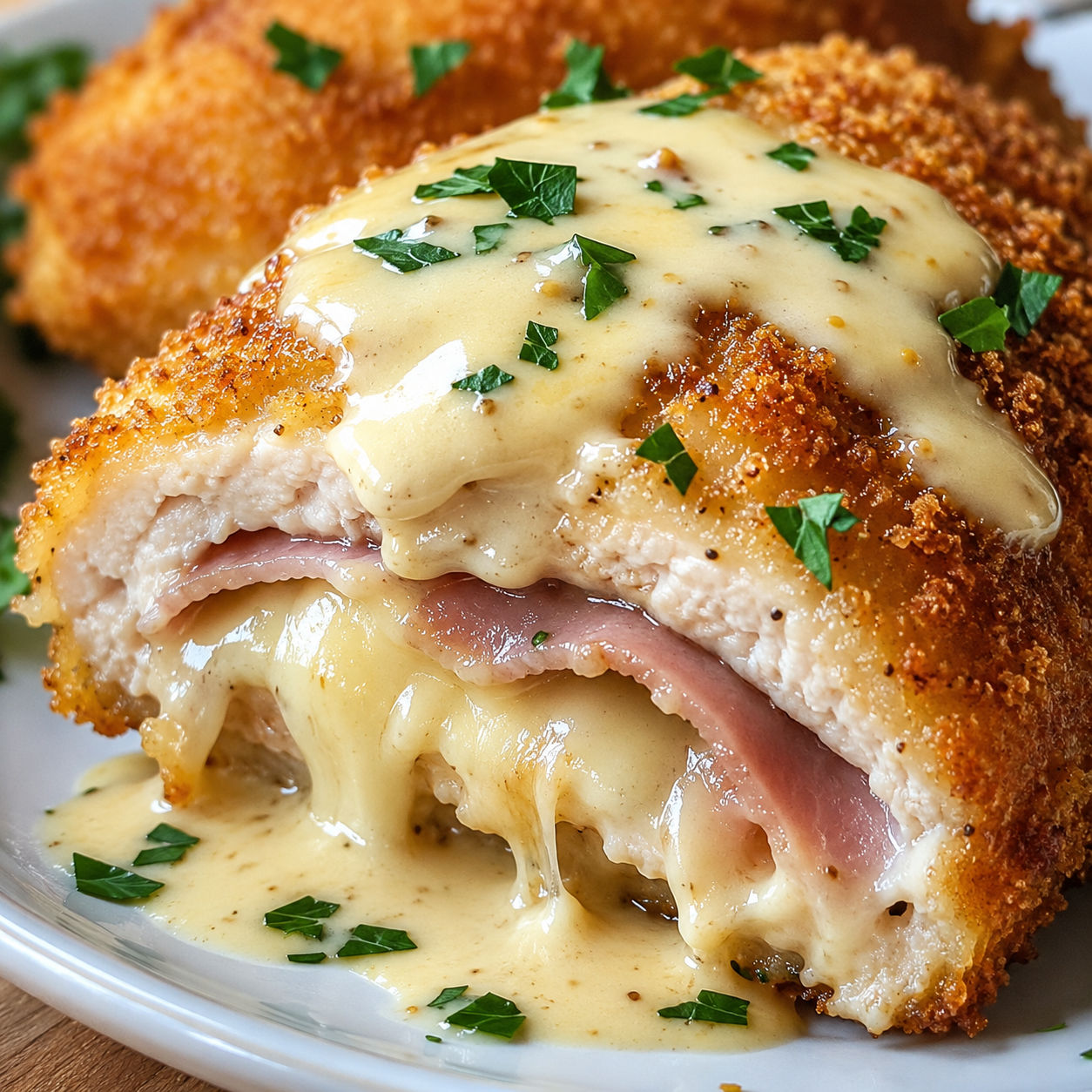
Crispy and Creamy Chicken Cordon Bleu with Dijon Sauce is the kind of dinner that looks much harder than it is. The outside is golden and crunchy, the center is salty and melty, and the sauce brings that sharp mustard bite that keeps the whole plate from feeling heavy.
The important parts are simple. Pound the chicken evenly, chill it after breading if you can, and check the center with a thermometer. That gives you crisp crumbs, cooked chicken, and cheese that melts without completely running away.
What Builds The Crunch
Use sturdy chicken breasts that can be pounded thin without tearing. Thin deli ham and Swiss cheese melt neatly inside, while panko gives the outside a sharper crunch than fine breadcrumbs.

- Chicken breasts. Boneless breasts become wide and even after pounding, which makes them easier to fill and cook through.
- Deli ham. Adds savory saltiness and keeps the classic cordon bleu flavor clear.
- Swiss cheese. Melts into the center without turning oily. Gruyere is a good upgrade.
- Flour. Helps the egg cling to the chicken so the crumb coating stays put.
- Eggs and milk. Make the sticky layer that holds the panko in place.
- Panko breadcrumbs. Create a crisp, craggy crust that stays crunchy under the sauce.
- Parmesan. Seasons the coating and deepens the golden color.
- Dijon mustard. Gives the cream sauce its sharp, clean flavor.
- Chicken broth and cream. Make the sauce smooth, savory, and spoonable.
Cordon Bleu With Dijon Sauce
- Pound the chicken. Slice each breast open like a book, then pound it to about 1/4 inch thick. Even thickness matters more than a perfect shape.
- Fill and secure. Season the chicken, layer with ham and Swiss, then fold or roll it tightly. Use toothpicks if the edges want to open.
- Bread the chicken. Coat each piece in seasoned flour, egg wash, then panko mixed with Parmesan. Press the crumbs on firmly.
- Brown the crust. Sear the chicken in butter and oil until deep golden on both sides. Move gently so the coating stays intact.
- Bake until done. Transfer to the oven and bake until the thickest part reaches 165°F. Rest before slicing.
- Make the sauce. Whisk butter, garlic, flour, broth, cream, Dijon, and Parmesan into a silky sauce. Spoon it over the chicken right before serving.
Pound It Thin Enough
The chicken does not need to look restaurant-perfect. It needs to be even. A thick middle and thin edges will cook badly, with dry outer meat and a slow center. Put the chicken between plastic wrap or parchment and use steady taps with a meat mallet, rolling pin, or heavy skillet. Aim for about 1/4 inch thick.
If a breast tears a little, do not panic. Place the torn side on the inside when you add the ham and cheese. The flour, egg, and panko will help seal small gaps. For a shortcut dinner with similar flavors, the baked Chicken Cordon Bleu casserole keeps the same ham-and-cheese comfort with less hands-on shaping.
Keep The Crust Crisp
Use medium-high heat for browning, not blazing heat. The crumbs should turn golden in 3-4 minutes per side. If they darken in one minute, the pan is too hot and the inside will lag behind. A mix of butter and oil gives flavor without scorching as quickly as butter alone.
Once the chicken goes into the oven, place it on a rack set over a sheet pan if you have one. Air can move under the crust, so the bottom does not steam. Cook chicken to 165°F for safety. The chart at FoodSafety.gov is the reference I use when timing stuffed chicken.
Sauce That Stays Silky
The Dijon sauce should be creamy, not gluey. Cook the butter and flour for about one minute to remove the raw flour taste, then whisk in broth slowly. Add the cream after the broth is smooth. Dijon goes in near the end so its flavor stays bright.
If the sauce gets too thick while the chicken rests, whisk in a spoonful of warm broth. If it tastes flat, add a small pinch of salt or another half teaspoon of Dijon. For extra sauce inspiration, the Dijon Chicken Creamy Sauce recipe is a good place to borrow the same tangy idea for plain chicken breasts.
Swaps Worth Making
Gruyere can replace Swiss for a nuttier center. Black Forest ham, honey ham, or leftover holiday ham all work, as long as the slices are thin enough to fold neatly. For a lighter crust, bake the breaded chicken without pan-browning, but spray it generously with oil first.
Gluten-free panko and a gluten-free flour blend work well here. The sauce can be made with half-and-half, though it will be thinner and less rich. If you like the cordon bleu flavor in a different shape, Chicken Cordon Bleu Meatloaf is a smart family-style version.
Serve It Without Fuss
This dish is rich, so simple sides are best. Green beans, roasted broccoli, asparagus, or a lemony salad cut through the cream sauce. Mashed potatoes and buttered egg noodles are the cozy route because they catch every spoonful of Dijon sauce.
Leftovers keep well, but the crust needs dry heat to come back. Reheat chicken in the oven or air fryer, then warm the sauce separately. If you want a sharp side that matches the mustard in the sauce, try Crispy Brussels Sprouts With Dijon Aioli.


FAQs
- Can I make chicken cordon bleu ahead of time?
Yes. Bread the stuffed chicken, place it on a rack or parchment-lined tray, cover it, and refrigerate for up to 8 hours. Let it sit at room temperature for 15 minutes before browning so it cooks more evenly.
- What cheese works best instead of Swiss?
Gruyere is the closest swap and melts beautifully. Provolone also works if you want something milder. Avoid very soft cheeses because they leak faster during baking.
- How do I keep the cheese from leaking out?
Use thin slices, keep the filling away from the edges, and roll or fold the chicken tightly. Toothpicks help, but the bigger fix is an even panko coating and a short chill before cooking.
- Can I bake it without pan-frying first?
You can, but the crust will be lighter and less crisp. For a baked-only version, mist the breaded chicken well with oil and bake at 400°F until the center reaches 165°F.
- What should I serve with chicken cordon bleu?
Serve it with green beans, roasted asparagus, mashed potatoes, buttered noodles, or a crisp salad. Anything simple works well because the chicken and Dijon sauce are already rich.
- How do I store and reheat leftovers?
Store leftovers in an airtight container in the fridge for up to 3 days. Reheat the chicken on a rack in a 350°F oven until hot. Warm the sauce separately over low heat with a splash of broth or cream.
