Pin it
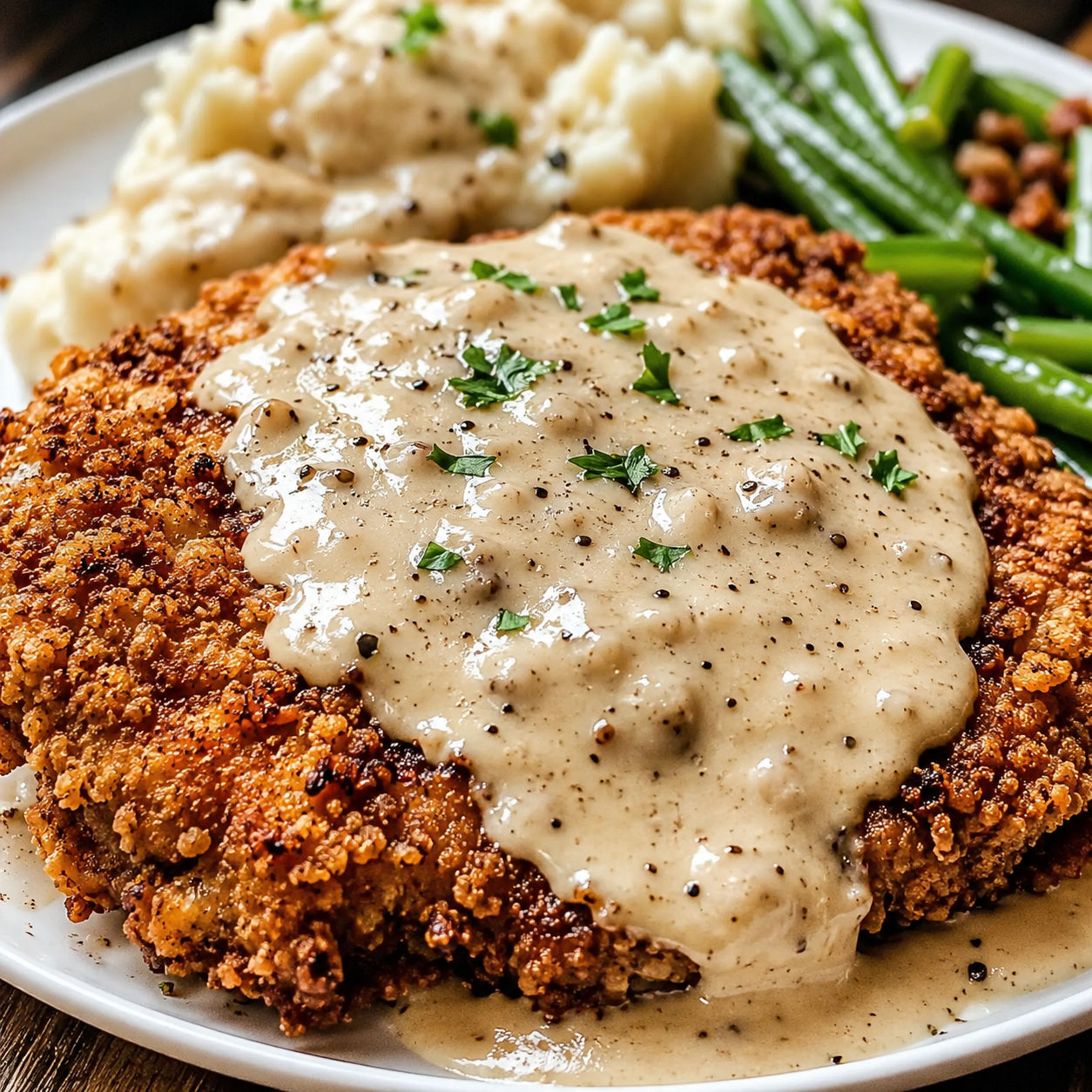
Crispy Buttermilk Chicken Fried Steak with Country Gravy is the kind of dinner that makes the whole kitchen smell like Sunday. The beef is thin and tender, the crust is rough and crunchy, and the gravy is creamy enough to puddle into mashed potatoes.
The coating works because the steak gets a flour dip before the buttermilk. That first dry layer gives the wet mixture something to grab, then the final flour coat fries into those craggy golden edges.
Buttermilk Steak Basics
Start with cube steaks that are about 1/4 inch thick after pounding. Fresh buttermilk, a little hot sauce, and well-seasoned flour make the coating taste good all the way through.

- Cube steaks. Tenderized beef cooks quickly and gives the dish its classic fork-tender bite.
- Buttermilk. Adds tang and helps the flour coating cling to the meat.
- Eggs. Give the wet dip enough body to hold a thick second dredge.
- All-purpose flour. Forms the main crust and thickens the gravy.
- Cornstarch. Lightens the coating so it fries crisp instead of heavy.
- Baking powder. Adds tiny bubbles and a rougher crunch.
- Paprika and cayenne. Bring warmth and color without making the steak too spicy.
- Garlic and onion powder. Season the flour evenly so the crust is savory in every bite.
- Neutral oil. Handles steady frying heat without adding a strong flavor.
- Whole milk. Turns the pan drippings into smooth country gravy.
- Black pepper. Gives the gravy its diner-style bite.
Crispy Buttermilk Chicken Fried Steak
- Pound and season. Pat the cube steaks dry, then pound any thick spots to about 1/4 inch. Season both sides with salt and pepper so the beef itself is not bland.
- Set up the dredge. Whisk buttermilk, eggs, and hot sauce in one dish. In another dish, mix flour, cornstarch, baking powder, paprika, garlic powder, onion powder, cayenne, salt, and pepper.
- Coat the steaks. Dredge each steak in flour first, dip it into the buttermilk mixture, then press it back into the flour. Let the coated steaks rest on a rack for 10 minutes.
- Fry in batches. Heat 1/2 inch of oil to 350°F in a heavy skillet. Fry 2 steaks at a time for 3-4 minutes per side until deep golden and crisp.
- Drain and hold. Move the steaks to a wire rack. Keep them warm in a 200°F oven while you finish the remaining steaks.
- Make the gravy. Pour off most of the oil, leaving 1/4 cup drippings and browned bits. Whisk in flour, cook for 1 minute, then slowly whisk in milk until smooth and thick.
- Serve hot. Spoon the peppery country gravy over the steaks right before serving, or serve it on the side if you want the crust to stay extra crisp.

Why The Crust Sticks
The best crust starts before the steak hits the oil. Pat the beef dry, then give it that first thin coat of flour. It looks like a small step, but it soaks up surface moisture and creates a dry base for the buttermilk mixture. After the final dredge, press the flour into the meat with your fingers. You want uneven ridges, not a smooth shell.
Resting the breaded steaks is just as important. Ten minutes on a rack lets the wet and dry layers bond. That means less breading floating around in the pan and more crunch on your fork. If you like smaller bites for parties, the same breading idea works well in Chicken Fried Steak Bites.
Skillet Gravy With Real Flavor
Country gravy should taste like the steak that came before it. After frying, pour off the oil carefully and leave the browned bits in the pan. Those little crumbs are concentrated seasoning. Whisk the flour into the drippings until it looks sandy and smells lightly toasted, then add the milk slowly. A small pour at first helps prevent lumps.
Keep the heat moderate once the milk goes in. Hard boiling can make milk gravy grainy. Simmer and whisk until it coats a spoon, then season with plenty of black pepper. For more gravy-heavy comfort food, Golden Fried Pork Chops with Bacon-Infused Gravy and Easy Hamburger Steaks with Onion Gravy both lean into that same skillet tradition.
Oil Heat Matters Most
Chicken fried steak needs oil hot enough to set the coating quickly. Aim for 350°F before the first steak goes in. If you do not have a thermometer, drop in a pinch of flour. It should sizzle right away without turning dark in a few seconds. Too cool, and the crust drinks oil. Too hot, and the outside browns before the beef heats through.
Fry in batches and give each steak room. Crowding drops the oil temperature and traps steam. The USDA gives useful beef handling guidance at its beef safety page. For thin cube steak, color and texture are your best kitchen cues. The crust should be deep golden, and the meat should feel tender when pierced.
Swaps That Still Work
No cube steak at the store? Buy top round and pound it thin between sheets of plastic wrap. Pork cutlets also work, though the flavor is a little sweeter. For a spicier crust, add more cayenne or a spoonful of hot sauce to the buttermilk. For a milder family dinner, leave the cayenne out and let the black pepper carry the gravy.
Buttermilk is worth using, but thinned plain yogurt can stand in when needed. A little cornstarch keeps the coating crisp, but you can replace it with more flour if that is what you have. If fried chicken is more your mood, try Homemade Crispy Fried Chicken for the same crunchy comfort in a different form.
Storage And Reheating
This dish is best right after frying, but leftovers can still be good. Store the steaks and gravy in separate airtight containers for up to 3 days. Reheat the steaks on a rack in a 375°F oven until hot and crisp again, about 10-12 minutes. A skillet works too, but use medium heat so the coating does not scorch.
Warm the gravy in a small saucepan with a splash of milk. Whisk as it heats and stop when it turns smooth again. I do not recommend freezing the finished gravy because milk sauces can separate. If you want to prep ahead, bread the steaks a few hours early and keep them uncovered on a rack in the fridge.
Summary
Serve this hot from the skillet with mashed potatoes, green beans, biscuits, or a simple slaw to cut the richness.

FAQs
- What cut of beef is best for chicken fried steak?
Cube steak is the easiest choice because it has already been tenderized. You can also use top round or sirloin tip, but pound it thin so it cooks quickly before the crust gets too dark.
- Can I make this without buttermilk?
Yes. Whisk plain yogurt with a little milk until pourable, or use milk with a spoonful of lemon juice. Real buttermilk gives the best tang and helps the coating cling.
- Why did the breading fall off my steak?
The steak was probably too wet, moved too much in the skillet, or fried before the coating had time to hydrate. Pat the meat dry first, press the flour on firmly, and rest the breaded steaks for 10 minutes before frying.
- How do I keep chicken fried steak crispy?
Drain the fried steaks on a wire rack instead of a flat plate. If you need to hold them, place the rack on a sheet pan in a 200°F oven while you finish the gravy.
- Can I make the country gravy ahead?
You can make it a few hours ahead and reheat it gently. Whisk in a splash of milk as it warms because milk gravy thickens as it sits.
- What should I serve with it?
Mashed potatoes are the classic choice because they catch the gravy. Green beans, corn, buttermilk biscuits, coleslaw, or a crisp salad all work well beside the rich fried steak.
- Can I make this gluten-free?
A cup-for-cup gluten-free flour blend can work for both the coating and gravy. Choose one with rice flour or starch for crispness, and check that your baking powder and seasonings are gluten-free.