 Pin it
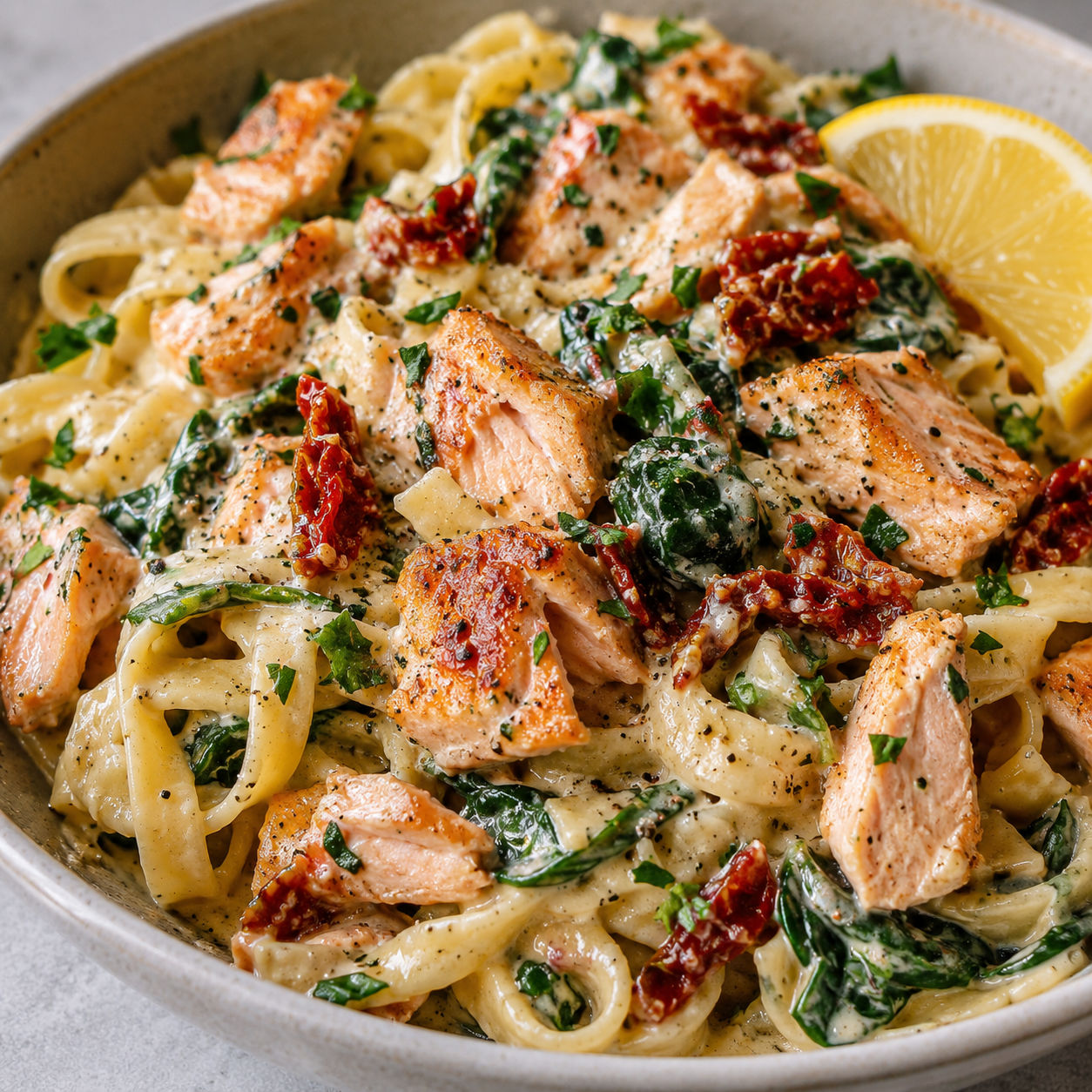
Tuscan Salmon Pasta with Creamy Sauce and Spinach is the kind of dinner that feels like it took more effort than it did. The salmon gets a quick sear, the garlic blooms in the same pan, and the sauce turns silky with cream, parmesan, and a little pasta water.
I like this with fettuccine because the wide noodles catch the sauce, but linguine or penne work too. The spinach softens into the cream without taking over, and the sun-dried tomatoes give every bite a sweet, tangy edge.
Tuscan Salmon Pasta Essentials
The best version starts with salmon fillets that smell clean and feel firm, not mushy. Choose oil-packed sun-dried tomatoes if you can because they soften quickly and season the sauce with their own savory oil.
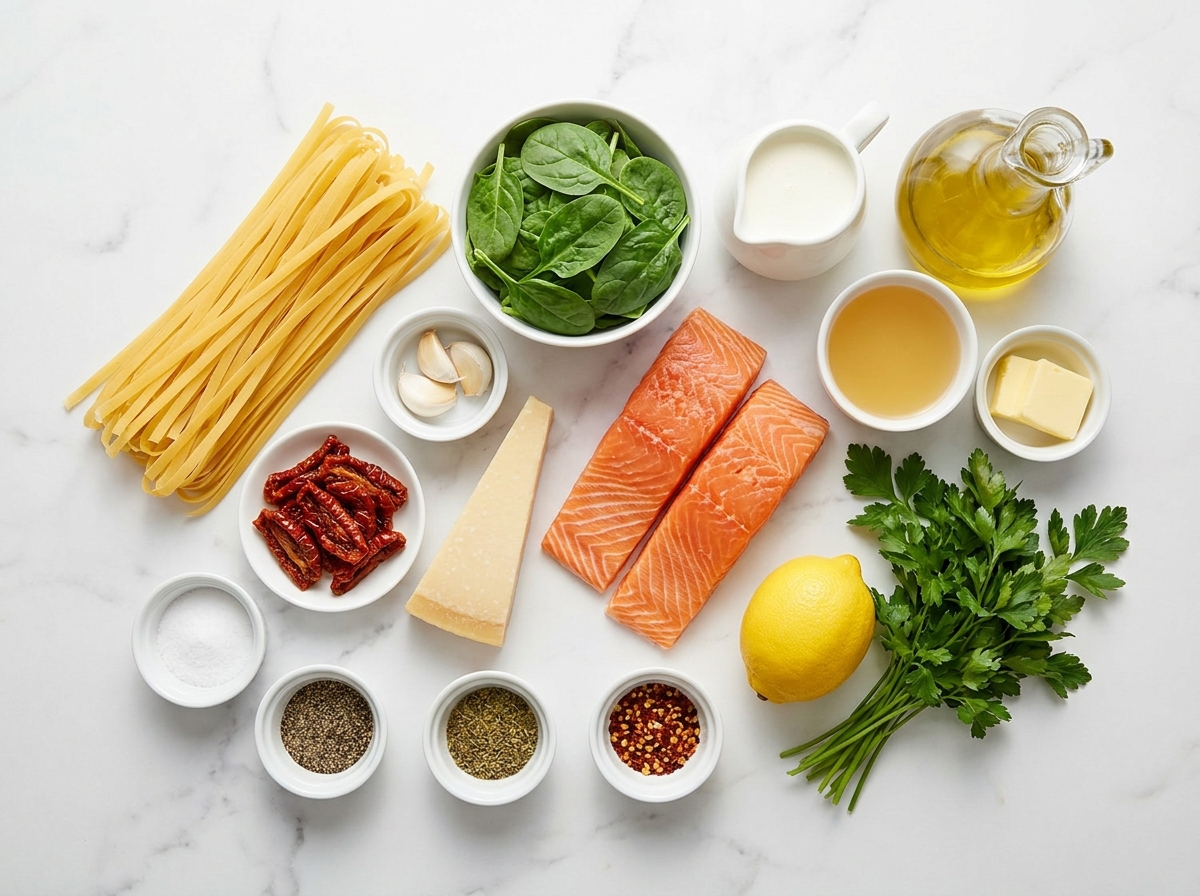
- Salmon fillets. They bring rich flavor and tender flakes that make the pasta feel like a full dinner.
- Fettuccine. The wide ribbons catch the creamy sauce and hold up well beside the salmon.
- Sun-dried tomatoes. They add sweet tang and a deep tomato flavor without making the sauce watery.
- Fresh spinach. It wilts fast and gives the cream sauce color and a fresh finish.
- Garlic. It seasons the pan and gives the sauce its warm base flavor.
- Heavy cream. It makes the sauce smooth and stable when simmered gently.
- Parmesan cheese. It thickens the sauce and adds salty, nutty depth.
- Lemon juice. A small squeeze at the end wakes up the cream and salmon.
Creamy Tuscan Salmon Pasta Method
- Boil the pasta. Cook the fettuccine in well-salted water until just al dente. Save one cup of the pasta water before draining.
- Sear the salmon. Pat the fillets dry, season them, and sear in olive oil until browned and almost cooked through. Transfer them to a plate.
- Start the sauce. Lower the heat and cook the garlic and sun-dried tomatoes in the same skillet until fragrant. This pulls flavor from the browned bits in the pan.
- Simmer the cream. Add broth and cream, then simmer gently until the sauce begins to thicken. Stir in parmesan until smooth.
- Wilt the spinach. Add the spinach and fold it through just until it softens. Do not cook it until dull.
- Toss and finish. Add the pasta with a splash of pasta water, then fold in the salmon in large flakes. Finish with lemon and parsley.
Keep The Sauce Silky
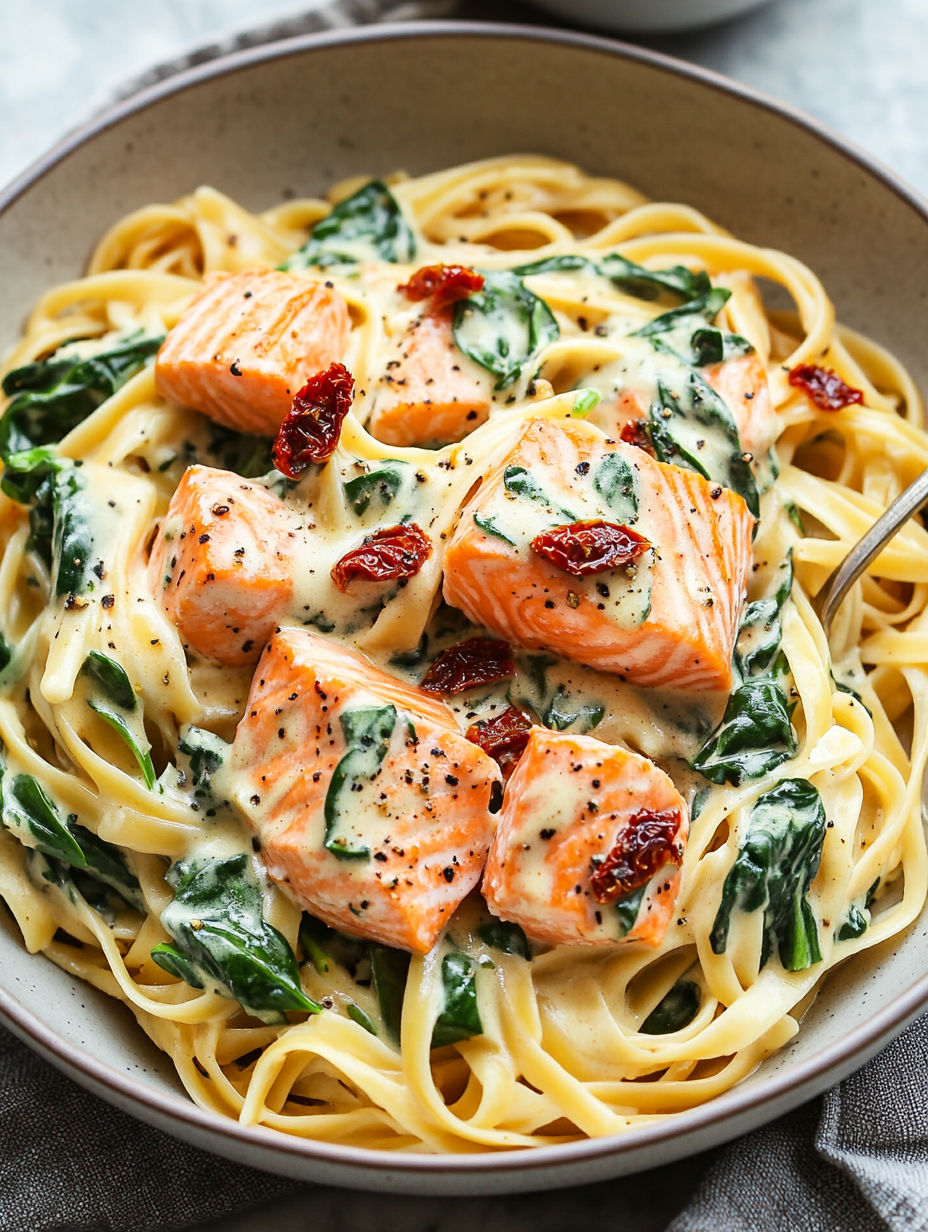
The sauce should bubble gently, not boil hard. Cream can separate when it is pushed too hot, especially after parmesan goes in. I keep the skillet at medium-low, stir often, and add the cheese in small handfuls so it melts instead of clumping.
Reserved pasta water is the quiet helper here. Start with a few tablespoons, toss, and wait a moment before adding more. The starch loosens the cream without making it thin. If you enjoy this style of skillet sauce, try the similar tomato-cream base in Marry Me Salmon with Sun-Dried Tomato Cream Sauce.
A Better Salmon Sear
Dry salmon browns better. Press the surface with paper towels, then season right before it hits the pan. I sear skinless fillets for about 3-4 minutes on the first side and 2-3 minutes on the second, depending on thickness. The center should still be a little glossy when you remove it.
Food safety guidance from the FDA seafood guide recommends cooking fish until it reaches 145°F or flakes easily. For sustainable buying, the Marine Stewardship Council is a useful place to learn what the blue label means.
Smart Swaps For The Skillet
Use linguine, penne, or rigatoni if fettuccine is not in the pantry. Kale can replace spinach, but slice it thin and give it a few extra minutes. For a brighter sauce, add a spoonful of the sun-dried tomato oil with the garlic. For a softer flavor, use roasted red peppers in place of half the tomatoes.
If you want the same creamy salmon comfort with a lighter herb profile, Lemon Dill Salmon with Creamy Pasta is a good next dinner. For a chicken version with the same spinach-and-cream feel, use Chicken With Spinach And Mushrooms In Creamy Parmesan Sauce as your guide.
Storage Without Rubbery Fish
This pasta is best right after cooking, but leftovers can still be good. Store them for up to two days in the fridge. Reheat in a skillet over low heat with a splash of milk, cream, or water. Stir gently so the salmon stays in tender pieces.
I do not recommend freezing this dish. Cream sauces often turn grainy after thawing, and cooked pasta softens too much. If you want to prep ahead, cook the salmon and chop the garlic and tomatoes earlier in the day. Boil the pasta and finish the sauce right before serving.
What To Serve With It
Because the sauce is rich, keep the sides simple. A crisp green salad, roasted asparagus, or lemony broccoli all work well. Garlic bread is welcome if you are feeding hungry people, but a small portion is enough because the pasta is filling.
For another easy salmon dinner with less cream, try Garlic Butter Salmon with Herbs and Lemon. If the table wants extra pasta instead, Creamy Pesto Pasta with Parmesan and Basil pairs nicely with a plain salmon fillet.
Summary
This creamy Tuscan salmon pasta is best served right away while the sauce is glossy and the salmon is tender. Keep the heat gentle once the cream goes in so the sauce stays smooth.
FAQs
- Can I use frozen salmon for Tuscan salmon pasta?
Yes. Thaw it overnight in the fridge, then pat it very dry before seasoning. Extra surface moisture keeps the salmon from browning and can thin the sauce.
- What pasta shape works best?
Fettuccine, linguine, and tagliatelle are my first choices because they hold creamy sauce well. Short pasta like penne also works if you want smaller pieces of salmon mixed through the bowl.
- Can I substitute the heavy cream?
Half-and-half can work, but the sauce will be lighter and more likely to split if boiled. Keep the heat low and add a little extra parmesan to help it thicken.
- How do I keep salmon from overcooking?
Sear it until the outside is browned and the center is almost done, then move it to a plate. It finishes gently when you fold it back into the hot sauce.
- How long do leftovers keep?
Store leftovers in an airtight container in the fridge for up to two days. Reheat gently in a skillet with a splash of milk, cream, or water to loosen the sauce.
- Can I make this gluten-free?
Yes. Use your favorite gluten-free pasta and check that the parmesan and stock are gluten-free. Cook gluten-free pasta just until tender because it can soften quickly in the sauce.
