 Pin it
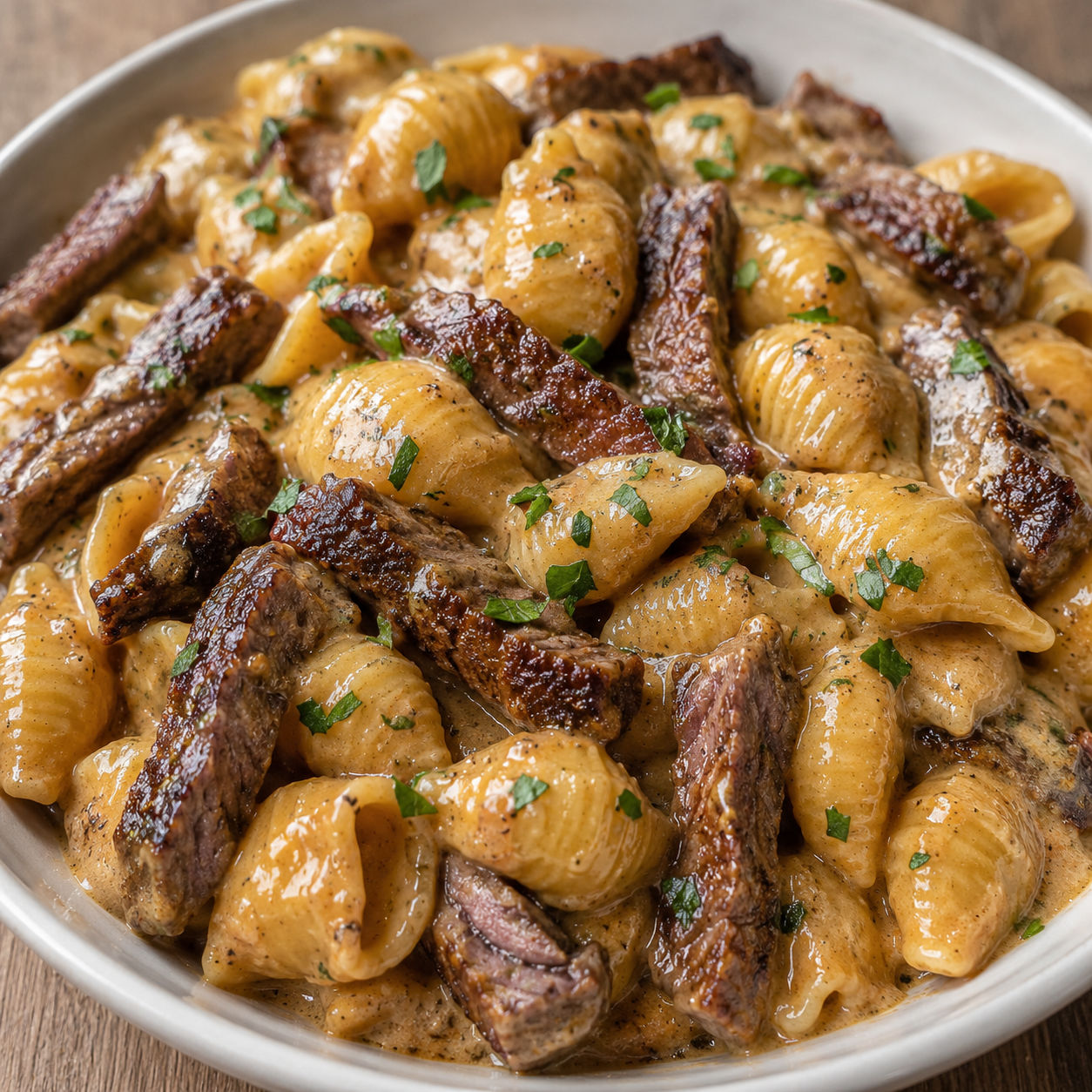
Indulgent Creamy Paprika Steak Shells with Pasta is the kind of skillet dinner that smells expensive before it even hits the table. The steak browns first, then the onion, garlic, broth, cream, and Parmesan pick up every bit of flavor left in the pan.
The shells matter here. They catch the sauce inside their curves, so each spoonful has tender pasta, smoky cream, and a piece of steak tucked in somewhere.
Creamy Paprika Steak Shells Pantry
Start with a tender quick-cooking steak and dry pasta shells that keep their shape. Freshly grated Parmesan and real smoked paprika make the sauce taste deeper than the short cook time suggests.
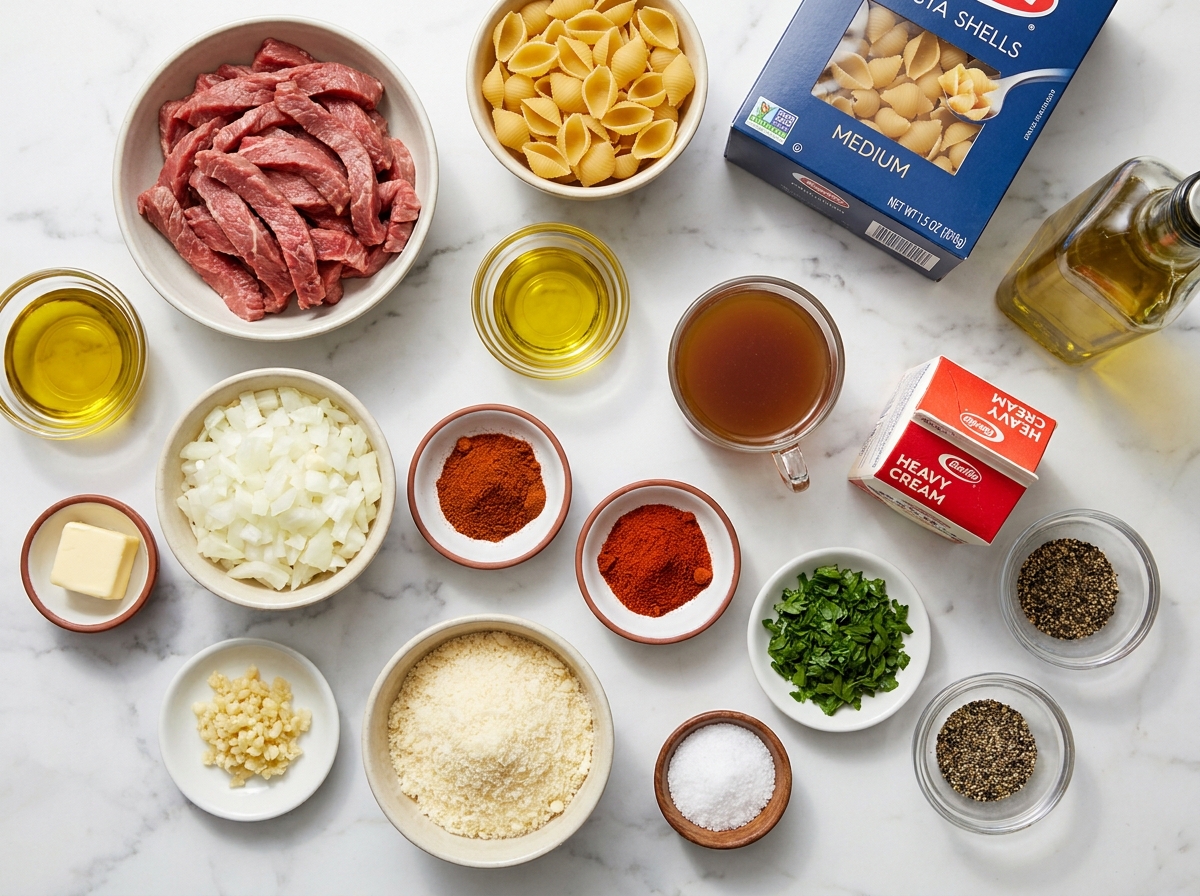
- Sirloin steak. Browns quickly and stays juicy when sliced thinly against the grain.
- Medium pasta shells. Hold pockets of sauce so the pasta tastes creamy all the way through.
- Smoked paprika. Gives the sauce its warm color and gentle smoky flavor.
- Onion and garlic. Build sweetness and savoriness in the skillet after the steak comes out.
- Beef broth. Lifts the browned bits from the pan and keeps the cream from tasting flat.
- Heavy cream. Makes the sauce plush without needing flour.
- Parmesan cheese. Melts into the cream for salt, body, and a nutty finish.
- Fresh parsley. Adds a clean edge so the dish does not taste too heavy.
Build the Skillet Sauce
- Boil the shells. Cook the pasta in salted water until just al dente, then reserve a little pasta water before draining.
- Sear the steak. Pat the steak dry, season it, and cook it in a hot skillet until browned on the outside and still tender inside.
- Soften the aromatics. Lower the heat and cook onion in the same pan until sweet, then stir in garlic and paprika just until fragrant.
- Simmer the cream. Add beef broth, scrape the pan, then pour in cream and let it bubble gently until slightly thickened.
- Melt in Parmesan. Stir in the cheese off a harsh boil so the sauce stays smooth.
- Fold everything together. Return the steak and shells with any resting juices, toss until glossy, and finish with parsley.
Why Shells Hold More
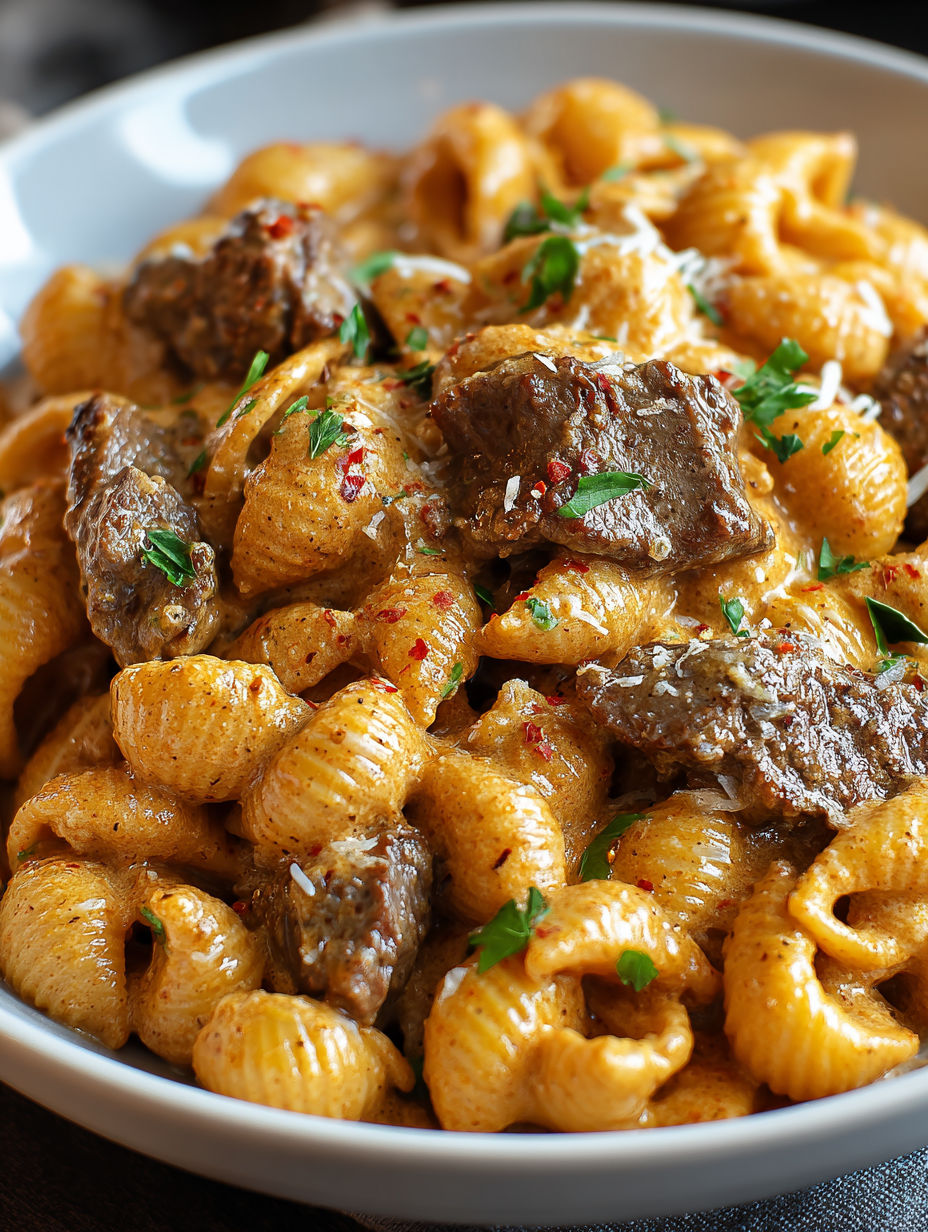
Medium shells are not just cute here. Their scooped shape catches the paprika cream, little onion pieces, and steak juices. That makes the dish feel saucier without drowning it in cream. If your sauce thickens too much, add reserved pasta water one spoonful at a time and toss until it shines.
For another cozy shell dinner with a bigger baked-pasta feel, try creamy ricotta beef stuffed shells pasta. If you want a saucy beef pasta with a simpler ground-beef base, one pot cheesy beef shells scratches that same comfort-food itch.
Keep Steak Juicy
The biggest mistake is crowding the skillet. Steak needs space and heat to brown. If the pieces overlap, they steam and turn gray before they get any crust. Work in two batches if your pan is small.
Pull the steak when it is browned but still tender. It will warm again in the sauce, so cooking it all the way through at the start makes it chewy later. The USDA lists 145°F with a rest as the safe minimum for whole cuts of beef, and you can check their safe temperature chart if you like to cook by thermometer.
Paprika Needs Gentle Heat
Smoked paprika can turn harsh if it scorches. Add it after the onion has softened, stir for about 30 seconds, then get the broth into the pan. That short bloom wakes up the spice without burning it.
Sweet paprika gives a softer flavor. Hot paprika gives more bite. I like mostly smoked paprika with a pinch of cayenne only when I want heat. For a stronger steak-and-cream profile, the sauce in garlic butter steak with creamy pasta is a good place to borrow extra garlic and butter ideas.
Swaps That Still Taste Rich
Half-and-half can stand in for cream, but keep the simmer low and expect a lighter sauce. Ribeye makes the dish richer. Flank steak works too, as long as you slice it thin after cooking. Mushrooms are a strong add-in because they soak up paprika and beef broth nicely.
If you want more smoky heat, add a pinch of chili flakes with the garlic. For a spicier pasta night with the same creamy comfort, garlic butter steak with Cajun pasta leans bolder and hotter.
Store It Without Gumminess
Leftovers keep well for up to 3 days in an airtight container. The shells will soak up sauce as they sit, so the pasta may look thicker the next day. Reheat slowly in a skillet with a splash of broth, milk, or cream until the sauce loosens.
I do not love freezing this one. Cream sauces can split, and the steak loses some tenderness. If you need to stretch dinner, make the sauce and steak fresh, then boil extra shells when you serve.
Summary
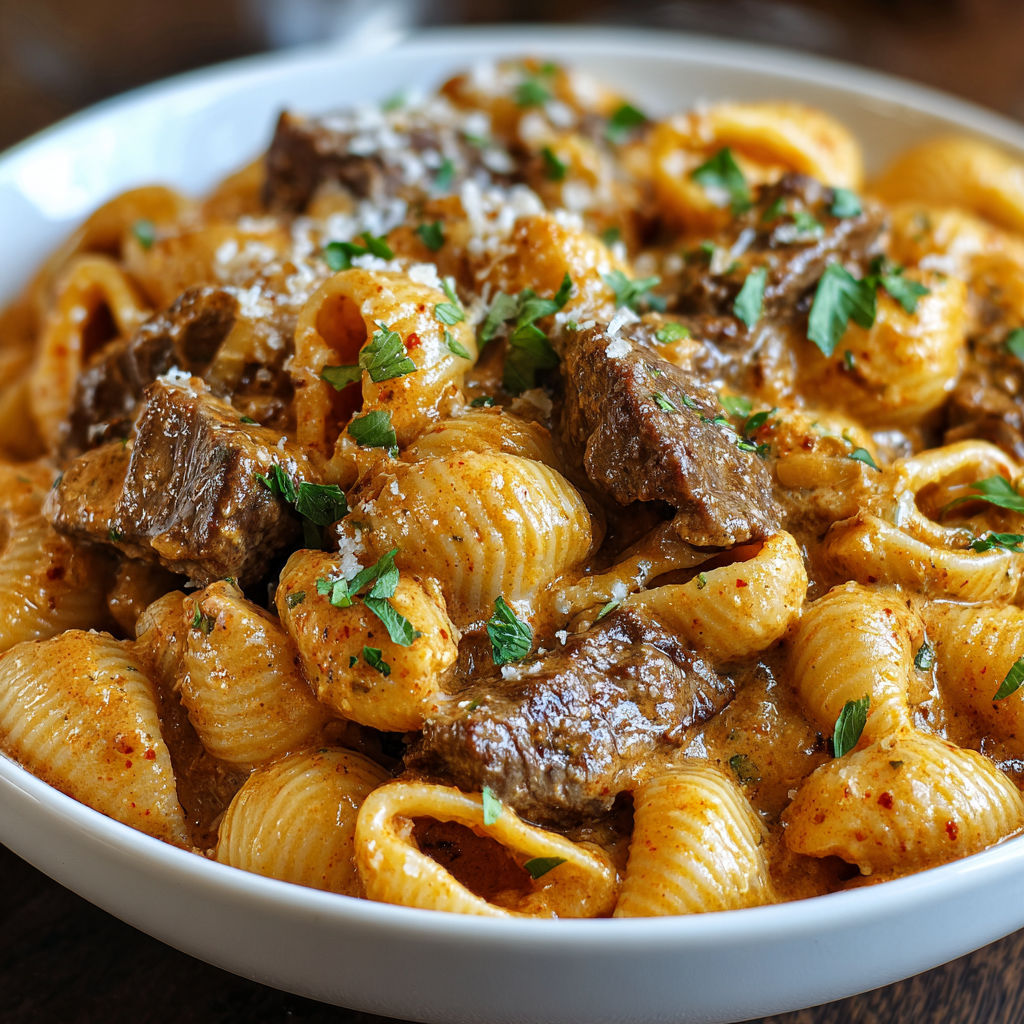
Serve this steak shell pasta hot from the skillet with parsley, extra Parmesan, and something crisp on the side.
FAQs
- What steak is best for creamy paprika steak shells?
Sirloin is my first choice because it is tender, flavorful, and not as costly as ribeye. Flank steak also works well if you slice it thinly against the grain after searing.
- Can I use a different pasta shape?
Yes. Medium shells hold the sauce best, but rigatoni, penne, rotini, or bowties all work. Choose a shape with ridges or hollows so the creamy paprika sauce has somewhere to cling.
- Can I make this ahead?
You can prep the steak, chop the onion, mince the garlic, and grate the Parmesan ahead. For the best texture, cook the pasta and finish the sauce right before serving.
- How do I reheat leftovers without breaking the sauce?
Warm leftovers in a skillet over low heat with a splash of beef broth, cream, or milk. Stir gently until the sauce loosens and coats the shells again.
- Is smoked paprika spicy?
Most smoked paprika is warm and smoky rather than hot. If your jar says hot paprika, use less and taste before adding more.
- Can I make it lighter?
Use half-and-half instead of heavy cream and cut the Parmesan slightly. The sauce will be a little thinner, so simmer it gently and add only enough pasta water to make it glossy.
