 Pin it
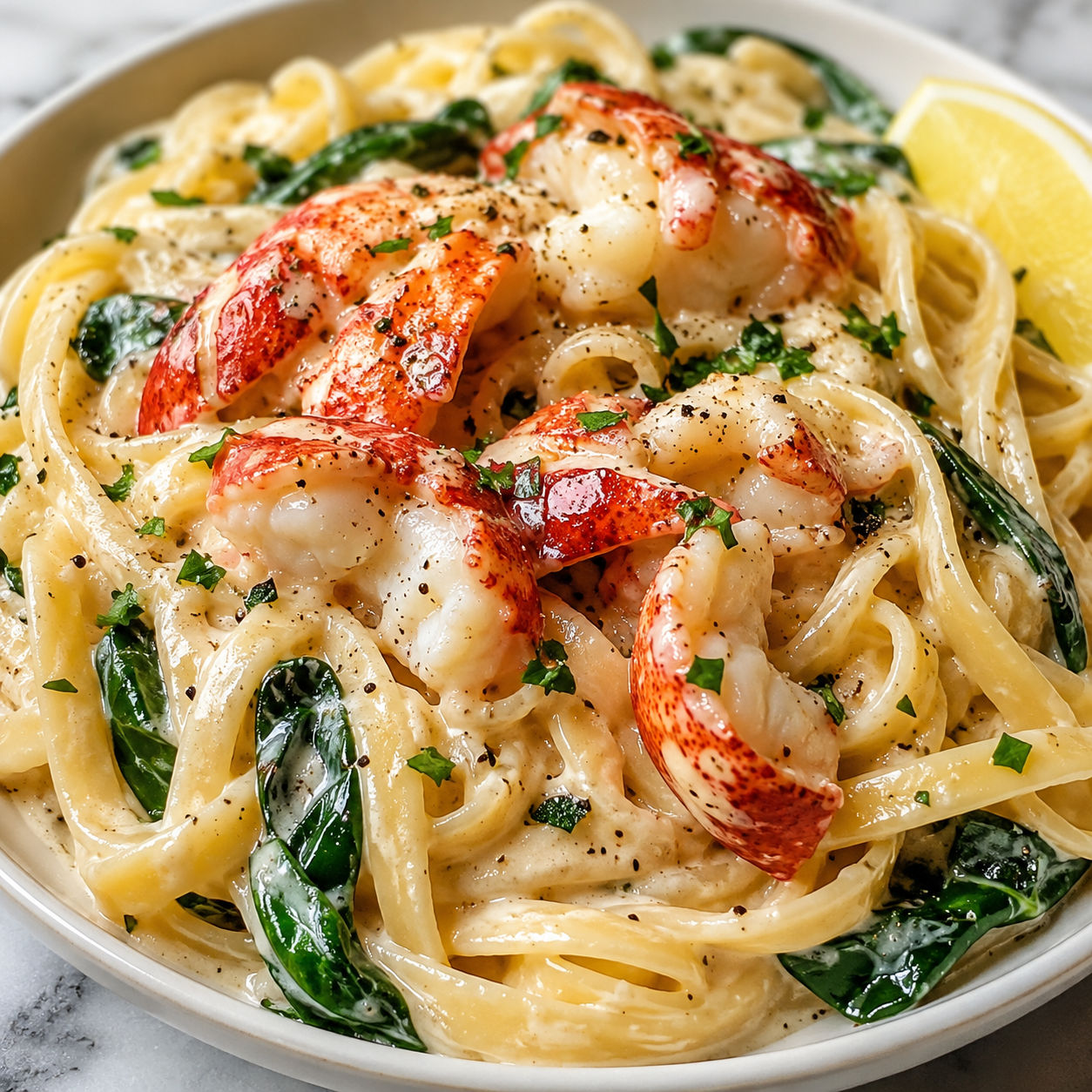
Creamy Lobster Alfredo Pasta With Parmesan and Spinach is the kind of dinner that feels special without asking you to juggle ten pans. The sauce is rich with cream, garlic, and freshly grated Parmesan, while spinach keeps the bowl from feeling too heavy.
The lobster goes in near the end. That matters. Cooked lobster only needs to warm through, and keeping the heat gentle protects its sweet, delicate texture.
The Rich Seafood Lineup
Good lobster and freshly grated Parmesan do the heavy lifting here. Choose cooked lobster meat that smells clean and sweet, not briny or sharp, and use a block of Parmesan so it melts smoothly.
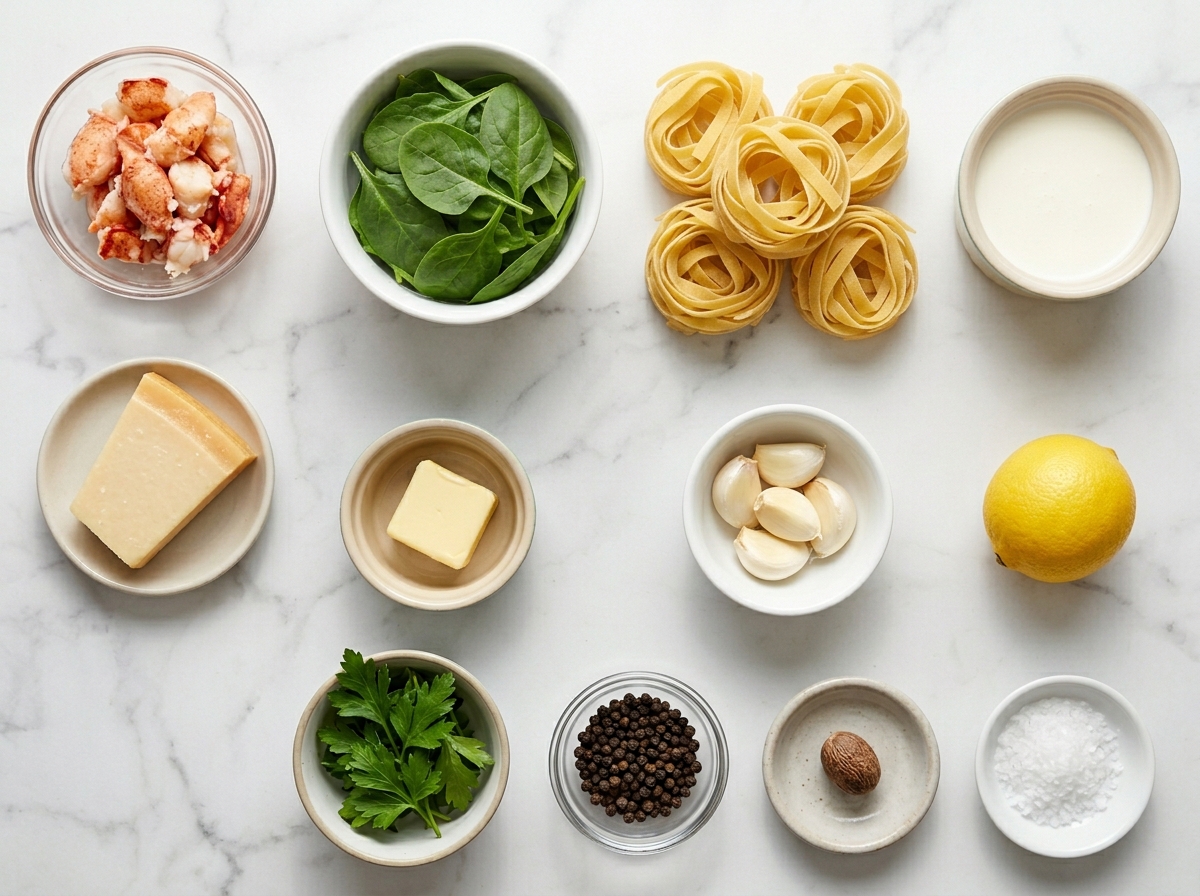
- Lobster meat. Sweet chunks of tail, claw, or knuckle meat make the pasta feel generous and tender.
- Fettuccine. Wide noodles hold the creamy sauce and give each bite a good chew.
- Fresh spinach. It wilts fast and adds color, freshness, and a little balance.
- Heavy cream. The base of the Alfredo sauce, giving it body without needing flour.
- Parmesan cheese. Freshly grated cheese thickens the sauce and brings salty, nutty flavor.
- Garlic. A short cook in butter gives the sauce warmth without bitterness.
- Lemon zest and juice. A small amount wakes up the lobster and cuts through the richness.
- Pasta water. The starchy splash helps the sauce cling to every strand.
Creamy Lobster Alfredo Pasta Method
- Cook the pasta. Boil the fettuccine in salted water until just shy of al dente. Reserve pasta water before draining because it is your best fix for a tight sauce.
- Wilt the spinach. Cook the spinach briefly in a large skillet until it collapses but still looks bright. Move it to a plate so it does not overcook.
- Start the sauce. Melt butter over medium-low heat, then cook the garlic for about 30 seconds. It should smell fragrant, not browned.
- Add cream and cheese. Simmer the cream gently, then whisk in Parmesan a handful at a time until the sauce looks smooth and glossy.
- Toss the pasta. Add the drained fettuccine and a splash of pasta water. Toss until the noodles are coated and the sauce loosens.
- Fold in lobster. Add the lobster and spinach at the end. Warm everything gently, then finish with lemon, parsley, black pepper, and more Parmesan.
Why The Heat Matters
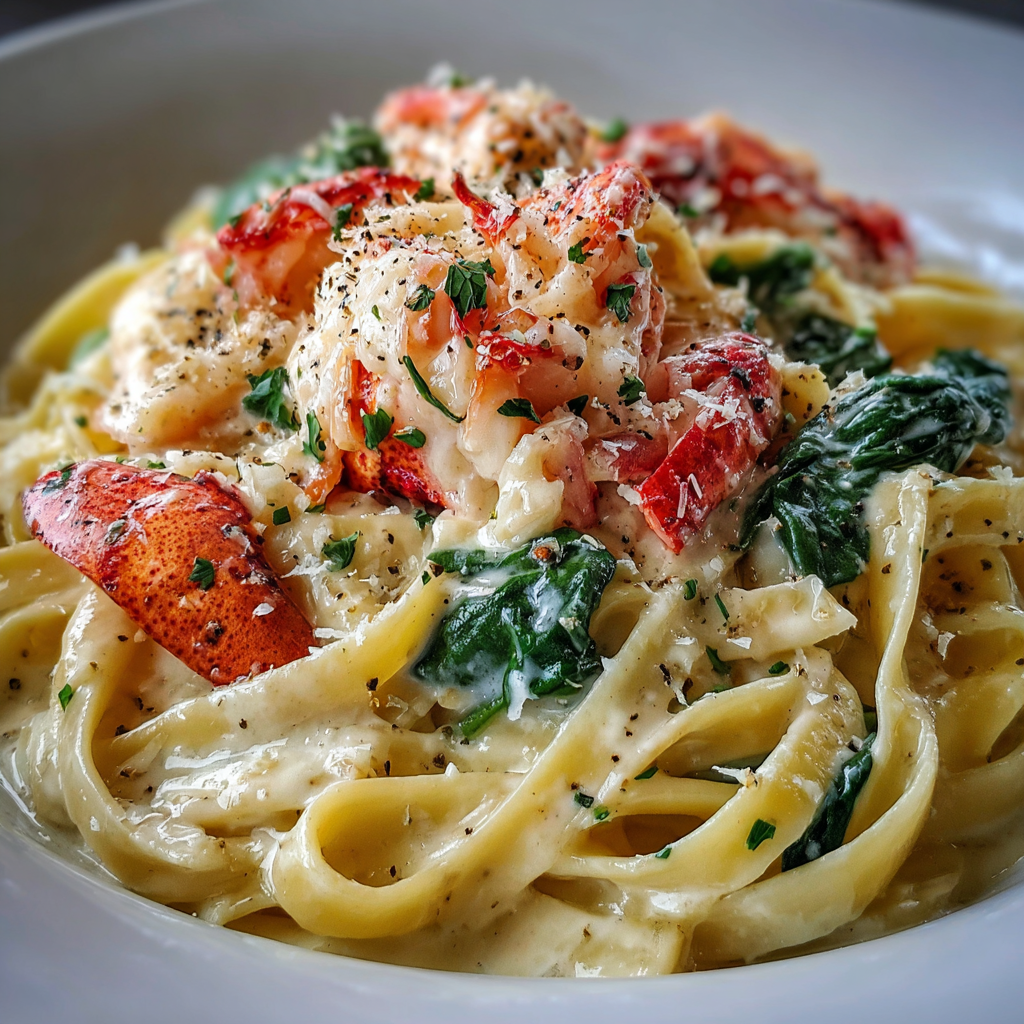
Lobster is already cooked in this recipe, so the goal is warming, not searing. High heat can make it tight and chewy fast. Keep the skillet at a gentle bubble while you build the sauce, then lower the heat before the lobster goes in. If the sauce looks too thick, add pasta water one spoonful at a time and toss until it relaxes. For another seafood pasta with the same creamy backbone, try Creamy Shrimp Alfredo Pasta with Parmesan and Garlic.
Buying Lobster For Alfredo
Cooked tail meat gives firm, pretty pieces, while claw and knuckle meat taste especially sweet. Either works. If you cook lobster tails yourself, chill them just long enough to handle, then pull the meat from the shell and cut it into bite-size pieces. The FDA has a helpful seafood buying and handling guide at its seafood safety page. Avoid lobster that smells sour or has a slippery texture. Good seafood should smell clean, lightly salty, and fresh.
Sauce Texture Fixes
If the Alfredo seems too loose, let it sit over low heat for a minute while you toss. Parmesan continues to thicken as it melts into the cream. If it gets too tight, pasta water is better than more cream because the starch helps the sauce cling. Grate the cheese finely so it disappears into the sauce instead of clumping. Fans of spinach in creamy sauce may also like Chicken With Spinach And Mushrooms In Creamy Parmesan Sauce or Tuscan Salmon Pasta with Creamy Sauce and Spinach.
Smart Swaps
Linguine can stand in for fettuccine. Half-and-half makes a lighter sauce, but it will be thinner and needs lower heat. Shrimp or scallops work if lobster is not available, though shrimp should be cooked separately and scallops need a quick hard sear. A pinch of nutmeg is nice if you like old-school Alfredo flavor. Red pepper flakes add gentle heat without hiding the lobster. For an even richer seafood night, pair this pasta with Broiled Lobster Tails with Creamy Garlic Butter Sauce.
Storing The Leftovers
Store leftovers in an airtight container in the refrigerator for up to two days. Reheat slowly in a skillet with a splash of water or cream, stirring often. The microwave works in short bursts, but it can make lobster tougher. FoodSafety.gov gives general cold storage guidance at its refrigerator storage chart. I do not freeze this pasta because cream sauce can split and the lobster loses its soft texture.
Summary
Serve this lobster Alfredo right away with lemon wedges, extra Parmesan, and a simple salad. The sauce is at its best while glossy and hot.
FAQs
- Can I use frozen lobster meat?
Yes. Thaw it overnight in the refrigerator, then pat it dry before adding it to the skillet. Add frozen lobster only after thawing because extra moisture can loosen the sauce and dull the flavor.
- What pasta shape works best for lobster Alfredo?
Fettuccine is the classic choice because the wide noodles catch the cream sauce well. Linguine works nicely too. Short pasta can work, but it will feel more like a seafood pasta bowl than a twirly Alfredo.
- How do I keep Alfredo sauce from separating?
Keep the heat low once the cream is added and stir in Parmesan gradually. Boiling cream hard or dumping in cold cheese can make the sauce grainy. Pasta water helps bring it back together if it looks too thick.
- Can I make this without spinach?
Yes. Leave it out or replace it with peas, sauteed mushrooms, or thin asparagus pieces. If using asparagus, cook it briefly before adding the lobster so it has time to turn tender.
- Can I make lobster Alfredo ahead?
The sauce is best fresh, but you can cook the lobster, grate the cheese, and mince the garlic ahead. If you need to reheat leftovers, use a skillet over low heat with a splash of cream or water.
- What should I serve with lobster Alfredo?
A crisp green salad, roasted asparagus, or garlic bread works well. Keep the sides simple because the pasta is already rich and buttery.
