 Pin it
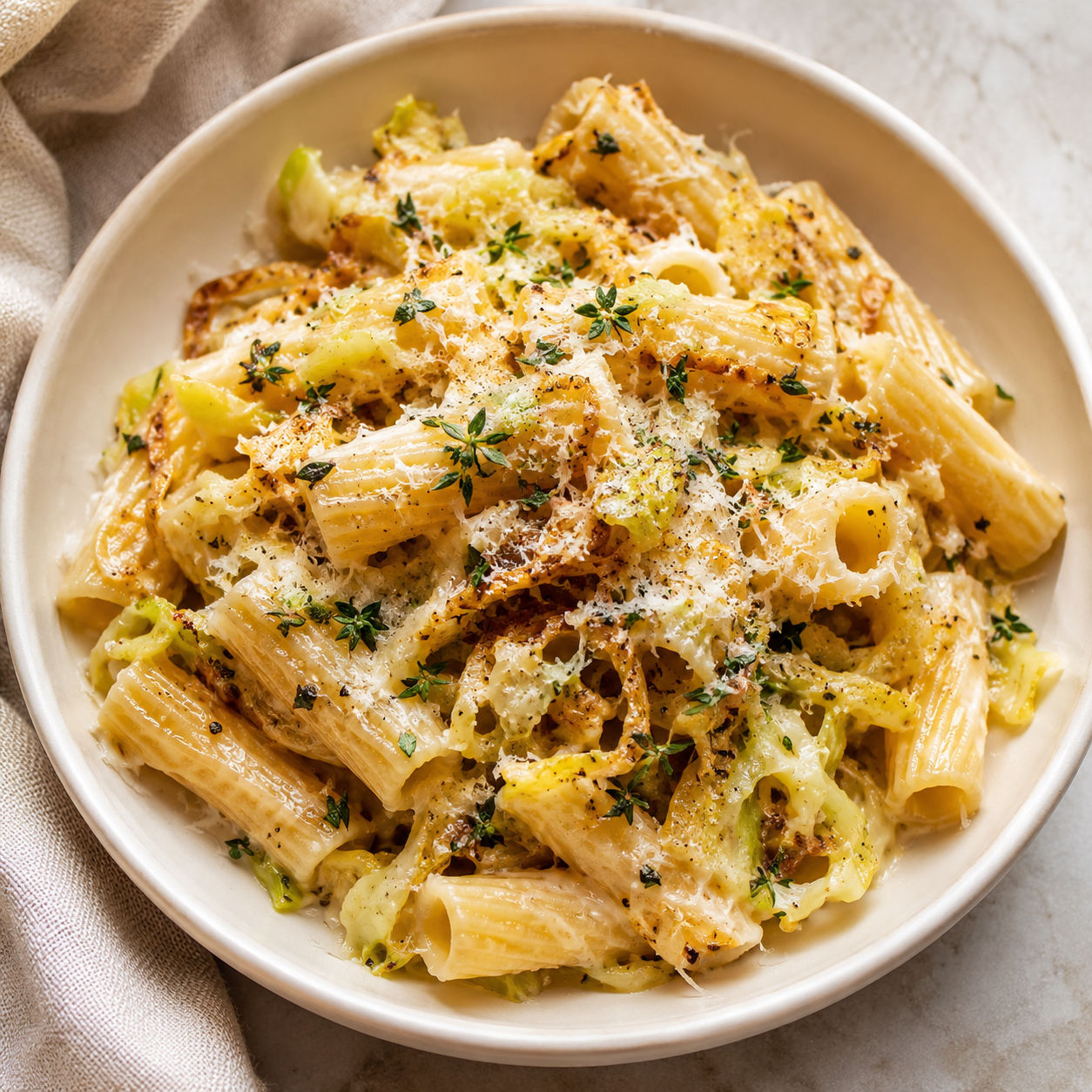
Creamy Caramelized Cabbage Pasta with Parmesan and Thyme is the kind of dinner that makes a plain head of cabbage feel like a find. The cabbage softens, browns at the edges, and turns sweet enough to carry the whole pan.
The sauce is simple. A little cream, a handful of Parmesan, and starchy pasta water pull the browned cabbage into every bite. Thyme keeps it savory and sherry vinegar wakes it up at the end.
The cabbage pasta lineup
Use a firm green cabbage with tight leaves and no soft spots. Parmesan matters here, so grate it fresh if you can because it melts more smoothly into the cream.
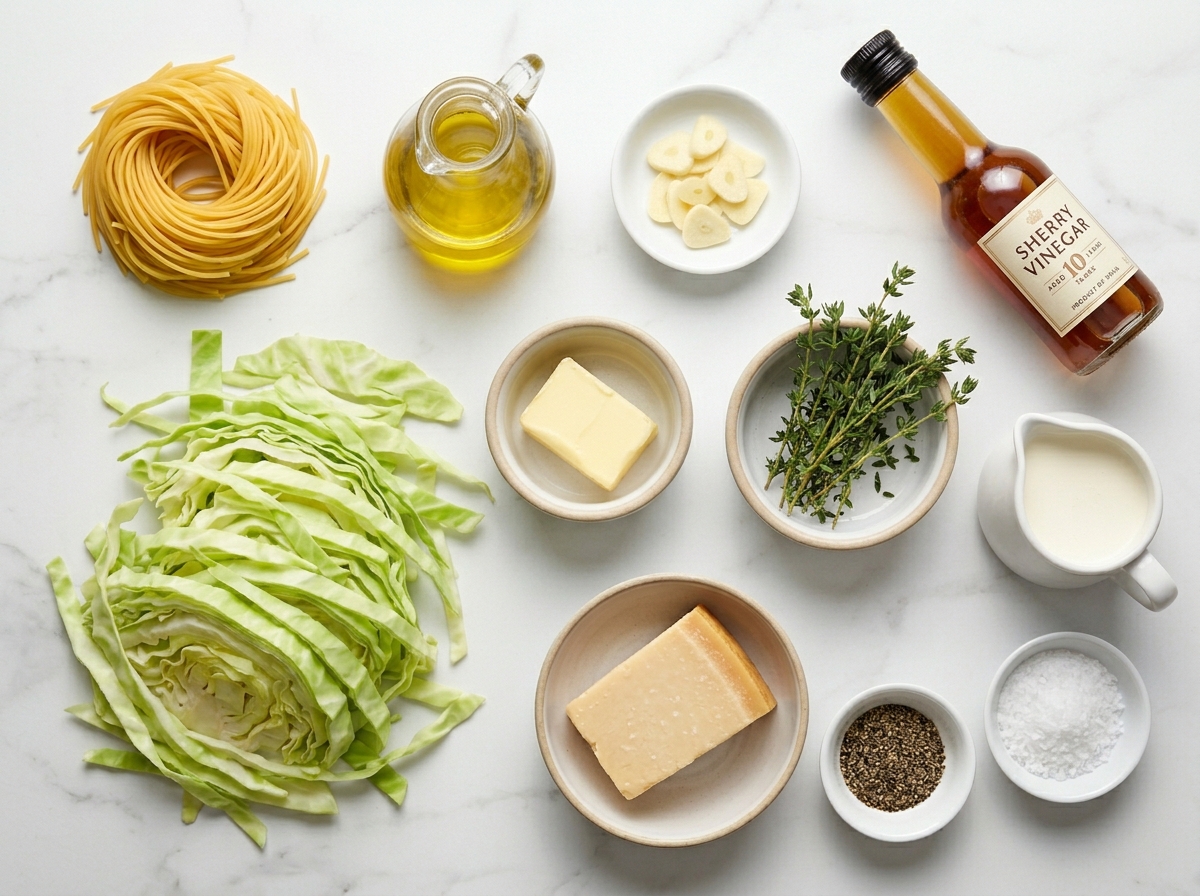
- Green cabbage. The main vegetable. It cooks down into sweet, golden ribbons that cling to the pasta.
- Pasta. Rigatoni, spaghetti, or linguine all work. The starch in the cooking water helps the sauce turn silky.
- Unsalted butter. Helps brown the cabbage and gives the sauce a round, rich base.
- Olive oil. Raises the cooking tolerance a bit so the cabbage can brown without the butter scorching.
- Garlic. Adds savory depth after the cabbage has softened.
- Fresh thyme. Brings a woodsy note that fits the sweet cabbage and Parmesan.
- Sherry vinegar. Cuts through the cream and keeps the pasta from tasting flat.
- Heavy cream. Makes the sauce plush with only a small amount.
- Parmesan cheese. Thickens the sauce and adds salty, nutty flavor.
- Black pepper. Gives the finished pasta a gentle bite.
Creamy caramelized cabbage pasta method
- Boil the pasta. Cook the pasta in well-salted water until just shy of al dente. Save 1 cup of the cooking water before draining.
- Start the cabbage. Melt butter with olive oil in a wide skillet, then add the sliced cabbage and salt. Cook until the cabbage collapses and starts to brown.
- Build the flavor. Stir in garlic, thyme, and black pepper. Cook briefly until fragrant, then add sherry vinegar and let it bubble down.
- Make it creamy. Add the pasta, cream, Parmesan, and some reserved pasta water. Toss over low heat until the sauce coats the noodles.
- Finish the bowls. Taste for salt and pepper, then serve with extra Parmesan and thyme while the sauce is glossy.
Why the cabbage gets sweet
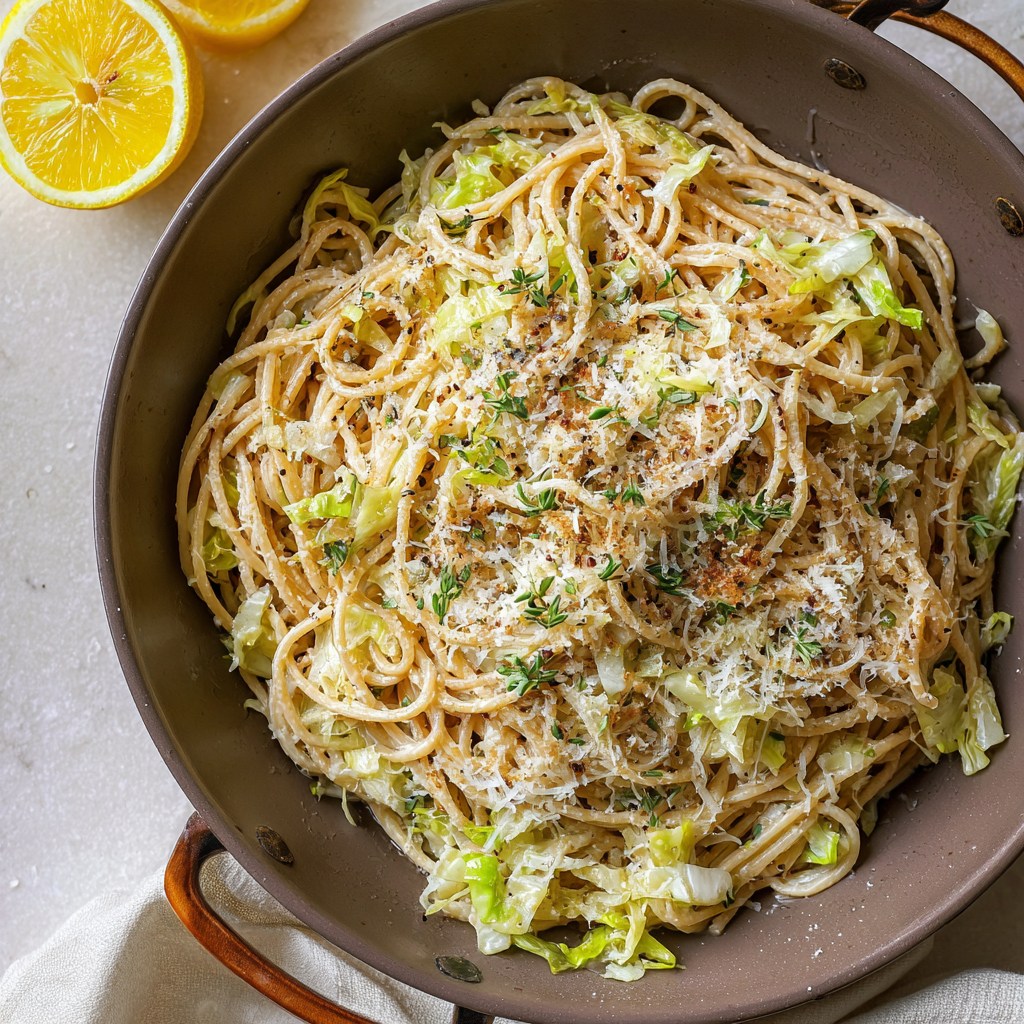
Cabbage starts sharp and watery, then changes once the pan drives off moisture. Give it a wide skillet and steady medium heat. At first it will look like too much. After several minutes it slumps into the pan, then the edges begin to turn tan and gold.
Do not rush this part. If you add the cream while the cabbage is still pale, the pasta will taste more like steamed vegetables than caramelized cabbage. Stir often, but not nonstop. Letting the cabbage sit against the hot pan for a minute at a time gives you the browned bits that make the sauce taste deeper. That same slow browning is why caramelized onion pasta tastes so savory with very few ingredients.
Getting the sauce glossy
The sauce works because hot pasta, cream, Parmesan, and starchy cooking water meet in the skillet. Add the cream after the vinegar has mostly cooked off. Then keep the heat low so the cheese melts instead of clumping.
Start with 1/2 cup pasta water and toss hard. The sauce should look loose at first, then tighten around the pasta as the starch and cheese do their job. If the skillet looks dry, add more water one spoonful at a time. If you like this Parmesan finish, the same idea shows up in creamy chestnut pasta with garlic and thyme and creamy pesto pasta with Parmesan and basil.
Smart swaps for weeknights
Green cabbage is the easiest choice, but Savoy cabbage also works and cooks a little faster. Red cabbage tastes good, but it will tint the sauce and make the dish look less creamy. If you do not have sherry vinegar, use white wine vinegar or a small squeeze of lemon at the end.
Fresh thyme gives the cleanest flavor. Dried thyme is stronger, so use about 1/2 teaspoon and rub it between your fingers before adding it to the pan. Pecorino Romano can replace Parmesan if you want a sharper, saltier finish. For more vegetables, fold in peas or baby spinach at the end. For another cabbage dinner with a different texture, try luscious cabbage with crunchy top.
Avoiding bitter garlic
Garlic should not go into the pan at the same time as the cabbage. Cabbage needs time. Thin slices of garlic can burn in a few minutes and leave a sharp aftertaste that cream will not hide.
Add the garlic once the cabbage is already tender and golden. Stir for about 30-60 seconds, just until it smells sweet and savory. Then add the thyme, pepper, and vinegar. The vinegar lifts the browned bits from the pan and adds a small sour note. That contrast is important because the dish has butter, cream, and cheese. For the nutrition estimate and general pasta structure, I checked the published version at EatingWell, then adjusted the method for deeper browning.
Leftovers and reheating
Creamy cabbage pasta is best right away, but leftovers hold up if you reheat them gently. Store the pasta in a shallow airtight container once it cools. The USDA food safety guidance is a helpful reference for safe handling and storage.
To reheat, use a skillet over low heat with a splash of water, milk, or cream. Stir slowly until the sauce softens. The microwave works in a pinch, but use short bursts and stir between them so the cream does not separate. If you plan ahead, cook the cabbage in advance and make the sauce fresh when you boil the pasta.
Summary
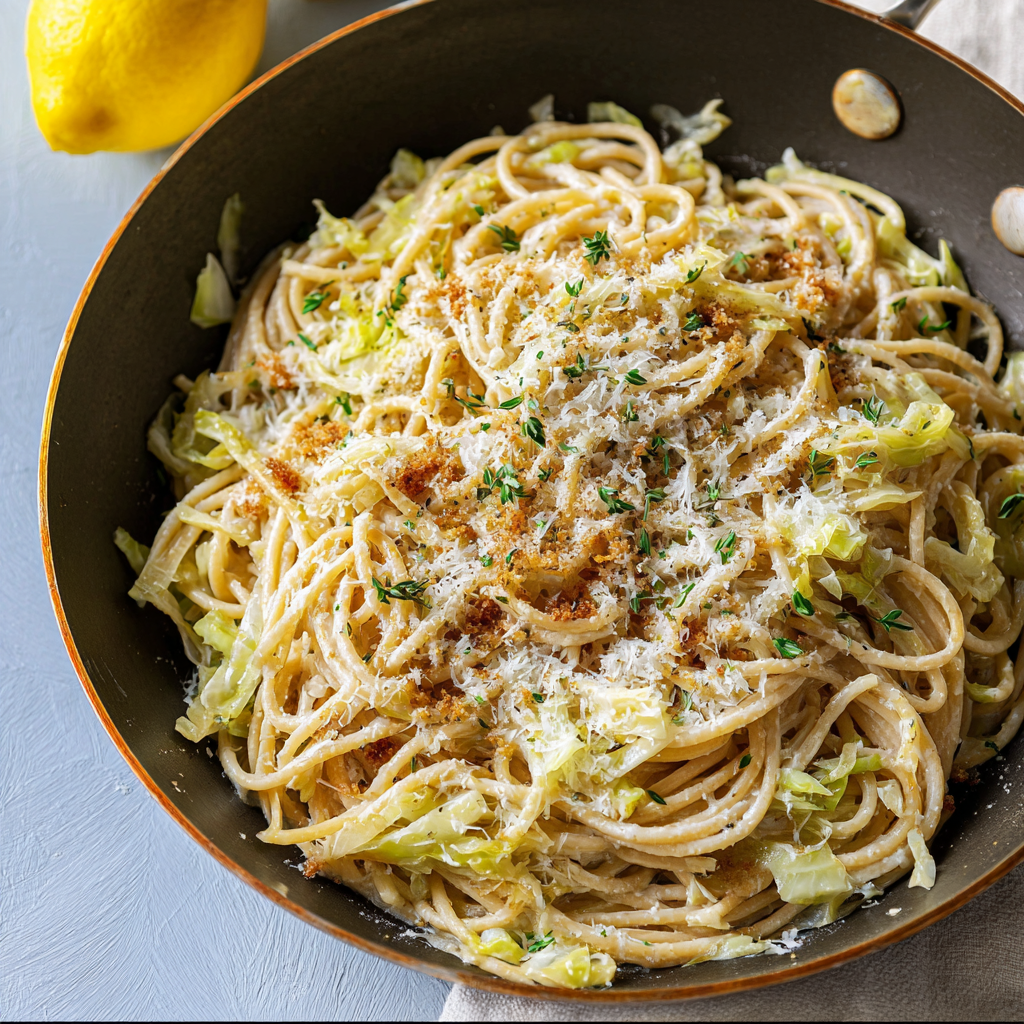
This creamy cabbage pasta is best served hot from the skillet, with extra Parmesan and black pepper at the table.
FAQs
- Can I use a different pasta shape?
Yes. Spaghetti, linguine, rigatoni, fusilli, and shells all work. Choose a shape with enough surface area to catch the cream, cabbage ribbons, and Parmesan.
- Can I make this without heavy cream?
You can use half-and-half for a lighter sauce, but keep the heat low once it goes in. For a richer no-cream version, use extra butter, more pasta water, and finely grated Parmesan to make a glossy sauce.
- How long should cabbage cook for pasta?
Cook it until it shrinks, softens, and picks up golden brown edges, usually 15-20 minutes. If it browns too fast before it softens, lower the heat and add a spoonful of water.
- Can I make caramelized cabbage pasta ahead?
The cabbage can be cooked a day ahead and refrigerated. Rewarm it in the skillet before adding the pasta, cream, Parmesan, and pasta water so the sauce comes together fresh.
- How do I store and reheat leftovers?
Store leftovers in an airtight container in the refrigerator for up to 3 days. Reheat gently in a skillet with a splash of water or milk, stirring until the sauce loosens again.
- Can this recipe be made gluten-free?
Yes. Use a sturdy gluten-free pasta and save extra cooking water because gluten-free pasta can absorb sauce quickly. Check that your Parmesan and other packaged ingredients are labeled gluten-free if needed.
- What should I serve with cabbage pasta?
A crisp green salad or roasted vegetables keeps the meal balanced. If you want more protein, serve it with grilled chicken, white beans, or a soft fried egg on top.
