 Pin it
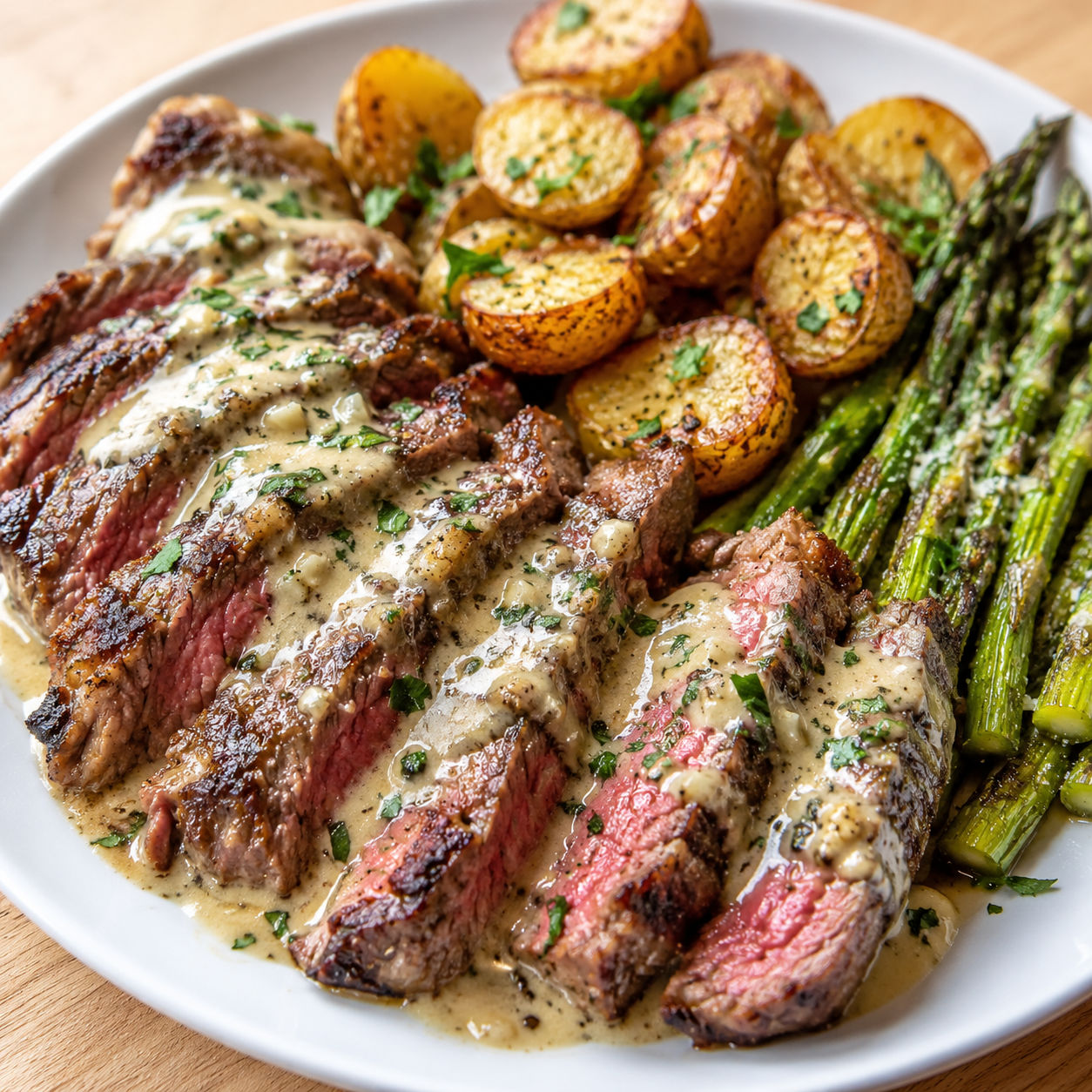
This is the kind of dinner that feels like a splurge at a steakhouse but comes together in your own kitchen with one pan and a sheet tray. The potatoes roast until their edges crisp, the asparagus stays bright, and the steak gets a dark crust before it meets a garlicky parmesan cream sauce.
I make this when I want something hearty without a pile of dishes. The sauce comes together in the same skillet while the steak rests, so nothing goes to waste.
What fills the sheet pan
A good steak dinner starts with good ingredients. Choose well-marbled strip steaks or ribeyes if you can find them, and grab Yukon gold or baby potatoes for the creamiest centers and crispiest edges. Fresh asparagus with tight tips will roast up tender without turning stringy.
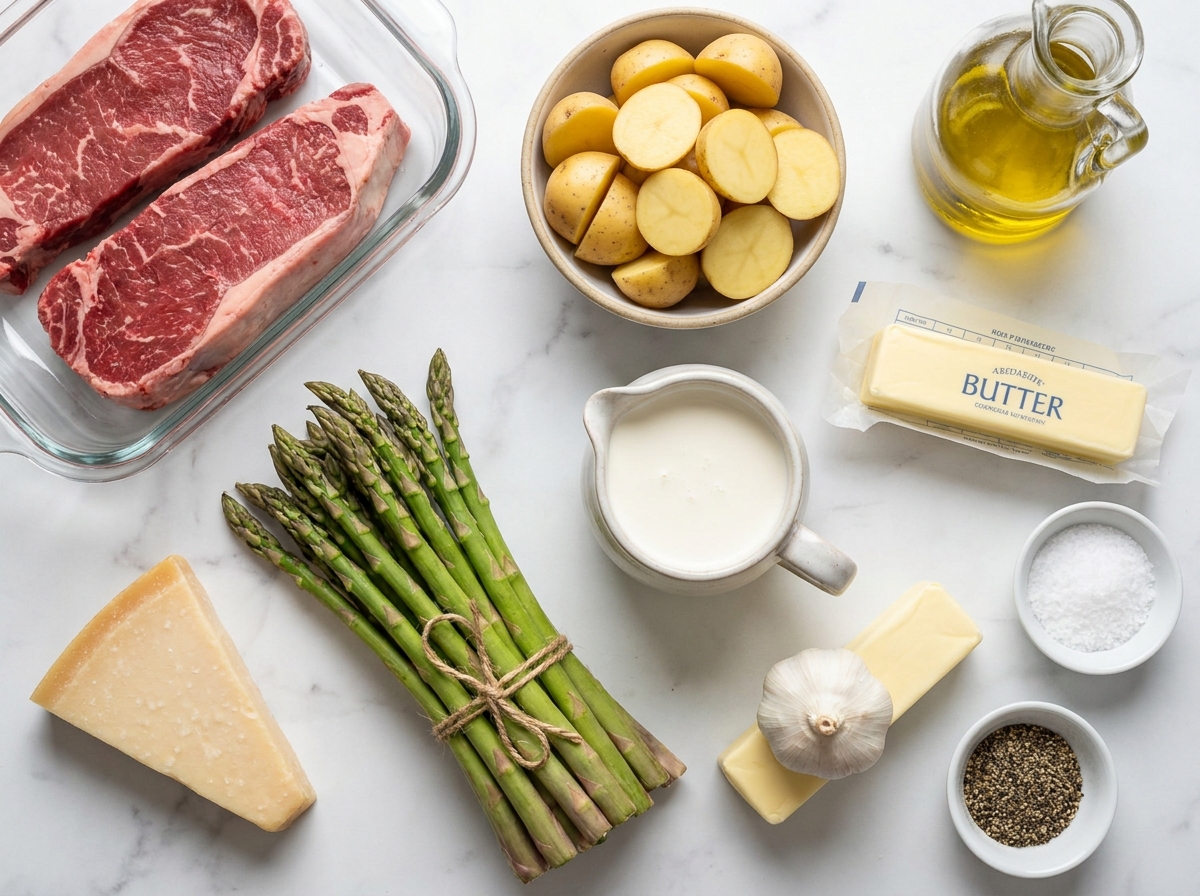
- Strip steaks. Two steaks, about 1 inch thick, give you enough meat for four people when sliced. Look for even marbling.
- Yukon gold potatoes. Halved or quartered so they cook through and develop golden edges in the oven.
- Asparagus. Trimmed spears that roast quickly and stay bright green with a little char.
- Heavy cream and parmesan. The base of the sauce that clings to the steak without feeling heavy.
- Fresh garlic and butter. Build the sauce in the same skillet so you pick up every bit of flavor left behind by the meat.
- Olive oil and seasonings. Simple salt, pepper, and a pinch of garlic powder for the vegetables.
How the dinner builds
- Roast the potatoes. Toss halved potatoes with olive oil, salt, and pepper on a sheet pan. Roast at 425°F for 20 minutes until they start to brown.
- Sear the steaks. Pat the steaks dry and season generously. Sear in a hot cast-iron skillet for 3-4 minutes per side for medium-rare, then transfer to a plate to rest.
- Add the asparagus. Toss asparagus with oil and seasonings and add it to the sheet pan with the potatoes. Roast for another 10 minutes until tender.
- Make the cream sauce. In the same skillet, melt butter and cook minced garlic for 30 seconds. Pour in heavy cream and simmer for 2-3 minutes, then stir in grated parmesan until smooth.
- Rest, slice, and serve. Let the steak rest for at least 5 minutes so the juices settle. Slice against the grain and spoon the sauce over everything.
Sear in a hot skillet
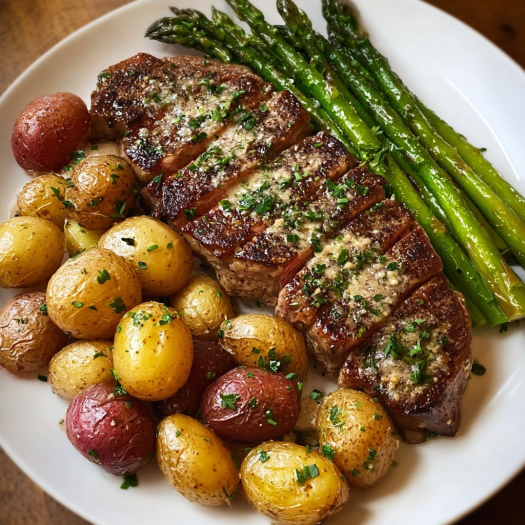
A dark crust on the steak comes from dry meat and a hot pan. Pat the steaks with paper towels before they hit the skillet, and do not move them for the first few minutes. If the pan is not hot enough, the meat will steam instead of brown. I use cast iron because it holds heat well and builds fond for the sauce. For safe cooking temperatures, the USDA recommends 145°F with a 3-minute rest for medium-rare.
Build the sauce in the pan
The best part of this recipe is the sauce that forms in the steak skillet. After you remove the meat, lower the heat and melt butter. The browned bits left behind dissolve into the cream and give the sauce depth. Use freshly grated parmesan rather than the pre-shredded kind. It melts smoother and tastes nuttier. If you want a lighter take, half-and-half works but the sauce will be thinner. This technique is similar to the one in our creamy garlic parmesan steak.
Roast vegetables without sogginess
Give the potatoes a head start so they finish at the same time as the asparagus. Crowding the pan traps steam, so spread them in a single layer with a little space between pieces. Add the asparagus only during the final 10 minutes so it keeps a slight bite. If you love crispy potatoes, flip them once halfway through roasting. For another potato side, try our roasted garlic butter parmesan potatoes.
Swaps that still deliver
No strip steaks? Sirloin or even flank steak works, though flank benefits from a shorter cook and slicing very thin against the grain. Swap the potatoes for cauliflower florets if you want fewer carbs, or use green beans in place of asparagus when they are out of season. For a different protein idea, our garlic butter steak bites with parmesan cream sauce use the same flavors in bite-sized form.
Storing and reheating
Store leftovers in airtight containers in the refrigerator for up to three days. Keep the sauce separate if possible. Reheat the steak gently in a skillet over low heat with a splash of cream or broth to revive the sauce. The microwave works for the vegetables but can toughen the steak.
FAQs
- What cut of steak works best?
Strip steak and ribeye are ideal because they have enough fat to stay juicy. Sirloin is leaner but still works well. Avoid very thin cuts, which overcook before they brown.
- Can I use milk instead of heavy cream?
Half-and-half is the closest substitute, though the sauce will be thinner. Whole milk is too lean and may separate when simmered with parmesan.
- How do I keep the potatoes crispy?
Cut them evenly and spread them out on the sheet pan. Roast at a high temperature and flip them once halfway through. Overcrowding creates steam and soft edges.
- Can I cook everything on one sheet pan?
The potatoes and asparagus can share a pan, but the steak needs a hot skillet to develop a crust. A sheet pan alone will not get hot enough to sear meat properly.
- How do I store leftovers?
Refrigerate in airtight containers for up to three days. Store the sauce separately and reheat the steak gently in a skillet with a splash of cream or broth.
- Is this recipe gluten free?
Yes, as long as you use plain cream, butter, cheese, and seasonings without additives. No flour or breading is needed.
- Can I make the sauce ahead of time?
You can make it up to two days ahead and reheat gently on the stove. Add a splash of cream when warming to bring back the silky texture.
