 Pin it
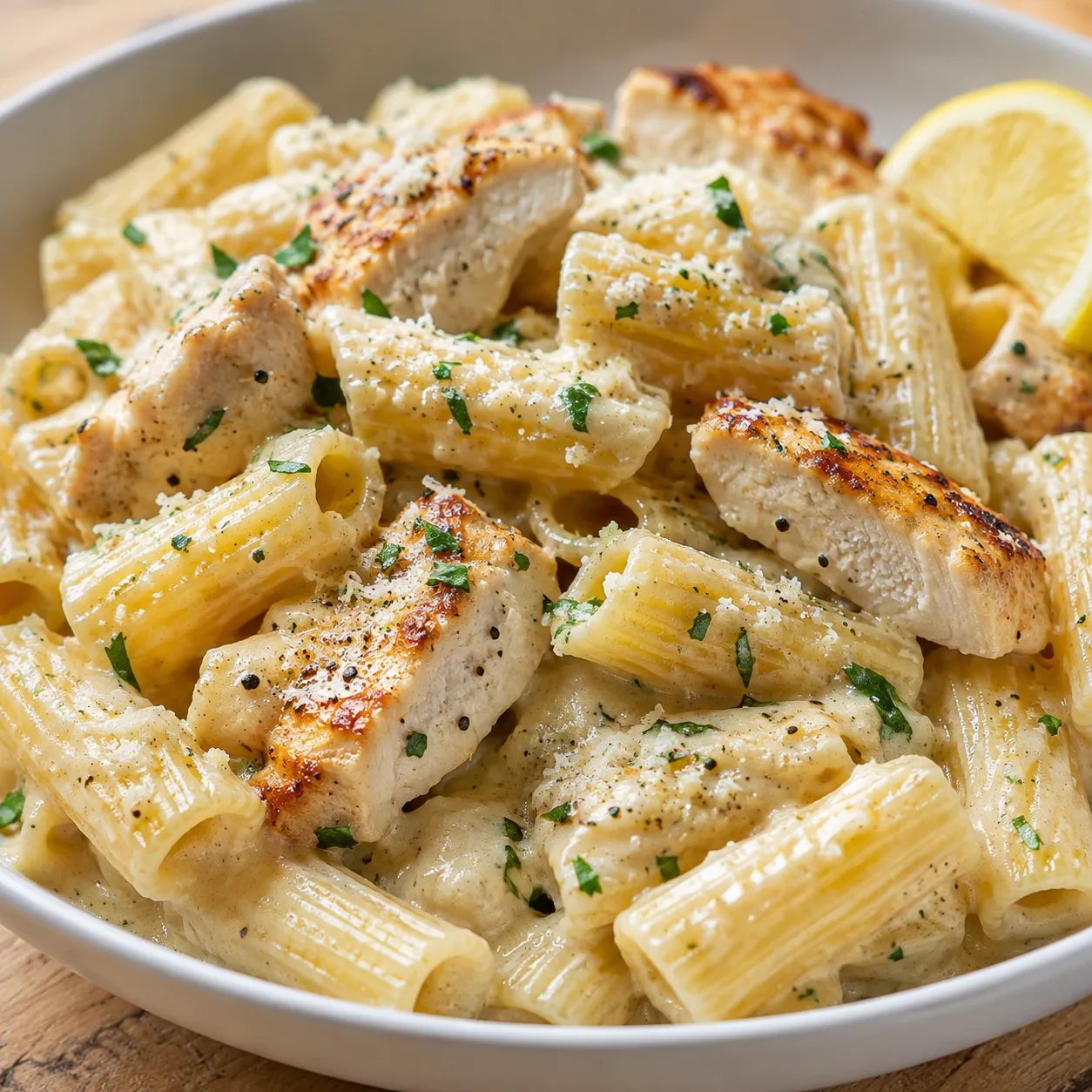
Creamy Garlic Parmesan Chicken Rigatoni is the kind of dinner that makes the kitchen smell good before the pasta even hits the pan. The garlic softens in butter, the chicken browns at the edges, and the sauce turns silky around those ridged tubes of rigatoni.
I like this recipe for nights when everyone wants comfort food but I still need the cooking to stay practical. The whole pan comes together in about 40 minutes, and the sauce tastes richer than the ingredient list looks.
The Sauce-Building Lineup
Use a short pasta with ridges and good Parmesan you grate yourself. Rigatoni is ideal because the tubes catch the cream sauce and little bits of garlic.
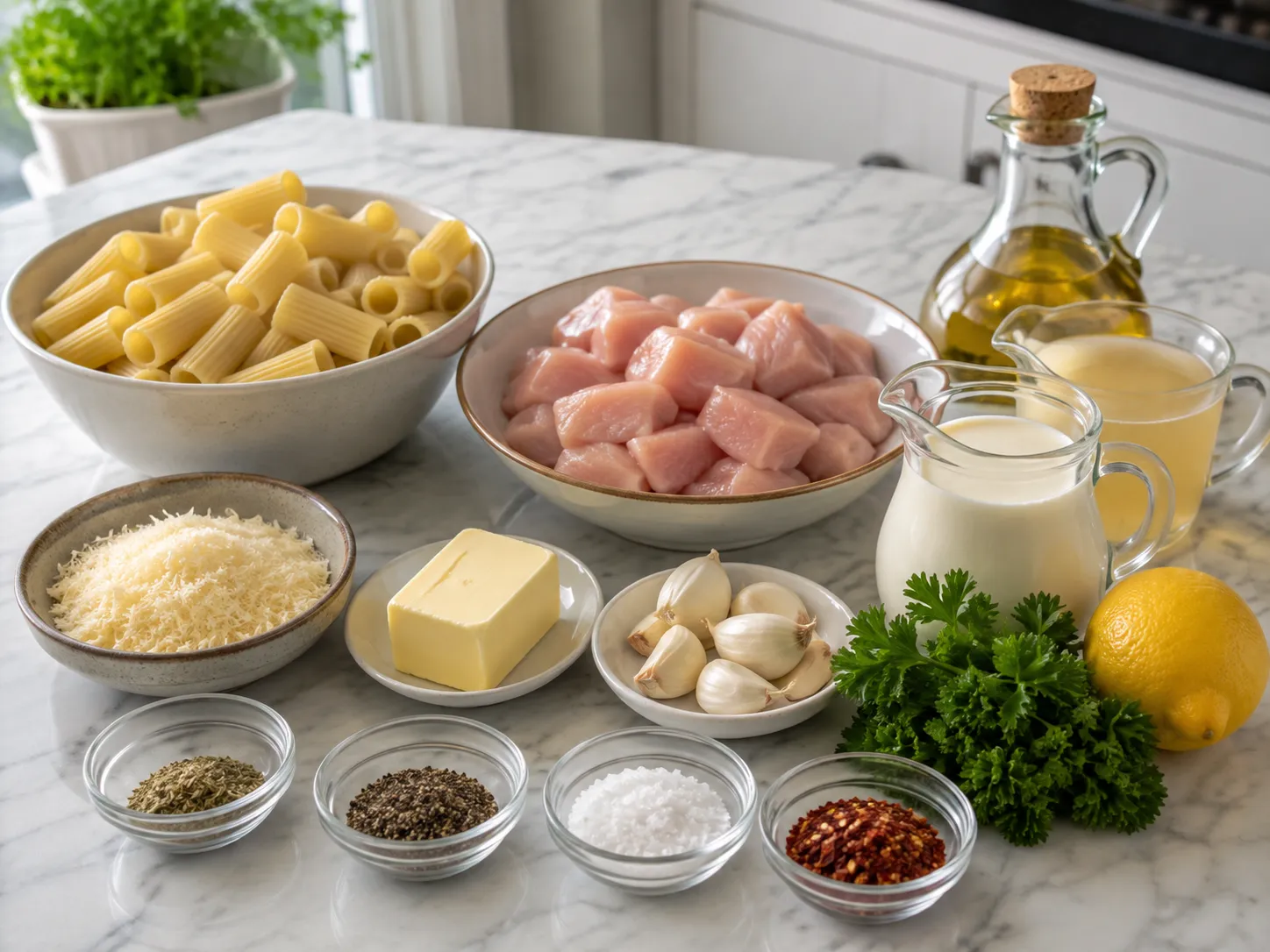
- Rigatoni. The ridges and hollow centers hold the garlic Parmesan sauce better than smooth pasta.
- Chicken breast. Bite-size pieces brown quickly and make the dish feel hearty.
- Olive oil and butter. Oil helps the chicken sear, while butter carries the garlic into the sauce.
- Fresh garlic. Six cloves give the sauce its main flavor without needing a long simmer.
- Chicken broth. It lifts the browned bits from the skillet and adds savory depth.
- Heavy cream. This gives the sauce its smooth body and keeps it from tasting thin.
- Parmesan cheese. Freshly grated cheese melts into a salty, nutty sauce.
- Pasta water. A starchy splash helps the sauce cling to the rigatoni.
- Parsley and lemon. They brighten the finish and cut through the richness.
Build The Creamy Skillet
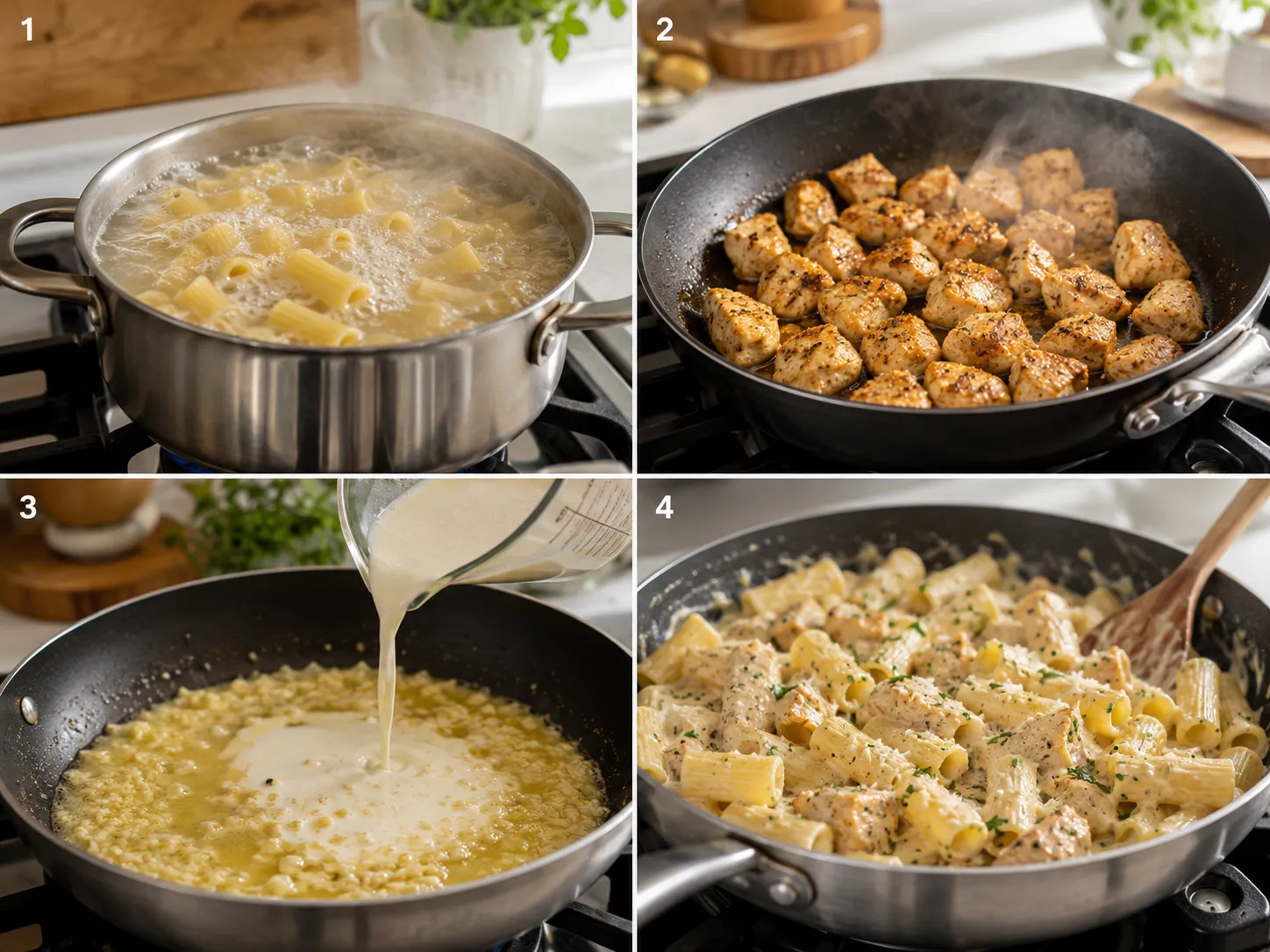
- Boil the rigatoni. Cook it in well-salted water until just shy of al dente. Reserve one cup of pasta water before draining.
- Season the chicken. Pat the chicken dry, then toss it with salt, pepper, Italian seasoning, and garlic powder. Dry chicken browns faster.
- Brown the chicken. Sear it in olive oil over medium-high heat until golden and cooked through. Move it to a plate so it does not overcook while the sauce simmers.
- Soften the garlic. Lower the heat and melt the butter in the same skillet. Stir in the garlic for about 30 seconds, just until fragrant.
- Start the sauce. Add chicken broth and scrape up the browned bits. Pour in the cream and simmer gently until slightly thickened.
- Melt in the Parmesan. Reduce the heat to low and stir in the cheese a handful at a time. Add pasta water as needed until the sauce looks glossy.
- Toss and finish. Return the chicken and rigatoni to the skillet. Coat everything in sauce, then finish with parsley, lemon juice, and more Parmesan.
Keep The Chicken Juicy
The chicken pieces should be close in size so they cook evenly. I aim for pieces about 1 inch wide. Crowding the pan is the fastest way to lose browning, so use a wide skillet and let the chicken sit still for a minute before stirring.
For safety, poultry should reach 165°F. The USDA chicken handling guide notes that color alone is not a reliable doneness check. A thermometer takes the guesswork out and keeps you from cutting every piece open.
A Smoother Parmesan Sauce
Parmesan behaves better when it is finely grated and added over low heat. Boiling cream with cheese can make the sauce tighten and turn grainy. Take your time here. Stir in one handful, let it melt, then add the next.
The pasta water is not an afterthought. It carries starch from the rigatoni and helps the sauce coat instead of puddle. Start with 1/4 cup, then add more only if the pan looks thick. The goal is a sauce that glosses the pasta, not soup at the bottom of the skillet.
Swaps That Taste Right
Chicken thighs can replace breasts with no other changes. Penne, ziti, or cavatappi can stand in for rigatoni, but avoid tiny shapes because they get lost in the sauce. For a vegetable add-in, stir in baby spinach at the end or fold in steamed broccoli with the pasta.
If you want heat, add crushed red pepper with the garlic. If you want a deeper savory flavor, use a splash of dry white wine before the broth and simmer it for a minute. Skip low-fat cream substitutes unless you are comfortable with a thinner sauce.
Storage And Reheating
Creamy pasta is best the day it is made, but leftovers still work if you reheat them gently. Store the rigatoni in a covered container in the refrigerator. The FDA advises using refrigerated leftovers within 3-4 days, and the FDA leftover guidance is a good baseline for timing.
Warm the pasta in a skillet over low heat with a splash of broth, milk, or water. Stir often and stop as soon as the sauce loosens. The FoodSafety.gov temperature chart recommends reheating leftovers to 165°F.
What To Serve Beside It
This pasta is rich, so I keep sides simple. A green salad with lemon dressing works better than a creamy side. Roasted asparagus, broccoli, or green beans also make sense because their edges get a little crisp and their flavor can stand up to garlic.
If you serve bread, choose something crusty rather than soft rolls. It is useful for catching the sauce, and it gives the plate a little texture. A small bowl of extra grated Parmesan on the table never hurts.
Summary
This creamy garlic Parmesan chicken rigatoni keeps the method simple. Brown the chicken, build the sauce in the same skillet, and use pasta water to bring everything together.
FAQs
- Can I use chicken thighs instead of chicken breasts?
Yes. Boneless skinless chicken thighs work very well here and stay juicy in the creamy sauce. Cut them into bite-size pieces and cook until they reach 165°F in the thickest pieces.
- Why did my Parmesan sauce turn grainy?
The heat was probably too high when the cheese went in. Take the pan off the burner or turn it very low, then stir in finely grated Parmesan a handful at a time. Pre-shredded cheese can also make the sauce rough because it often has anti-caking starches.
- Can I make creamy garlic Parmesan chicken rigatoni ahead?
You can cook the chicken and grate the cheese ahead. For the best texture, boil the pasta and finish the sauce right before serving. If you make the full dish ahead, save extra pasta water or broth for reheating.
- How do I store leftovers?
Store leftovers in an airtight container in the refrigerator for up to 3-4 days. Reheat gently in a skillet over low heat with a splash of broth, milk, or water so the cream sauce loosens without splitting.
- Can I make this lighter?
You can replace half the heavy cream with whole milk, but keep some cream for body. Add spinach, peas, or steamed broccoli at the end if you want more vegetables without changing the main flavor.
- What can I serve with chicken rigatoni?
A crisp green salad, roasted broccoli, or garlic bread all work well. Since the pasta is rich, something bright with lemon or vinegar keeps the meal from feeling too heavy.
