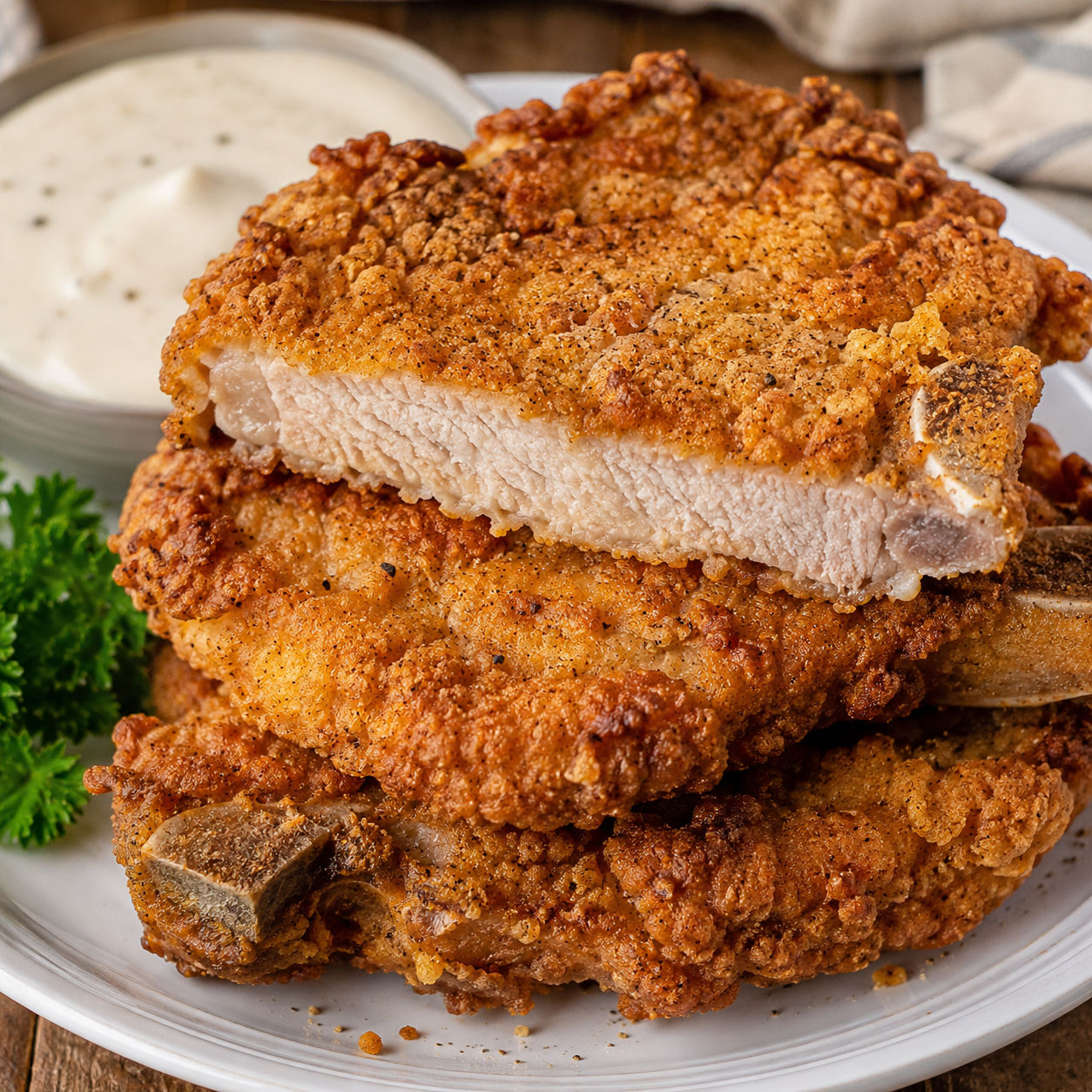
 Pin it
This is the dinner that turns a plain Tuesday into something worth sitting down for. A well-made country fried pork chop delivers a crust that shatters under your fork and meat that stays juicy inside. I grew up with these cooked in a cast-iron skillet, and the method has not changed because it does not need to.
The recipe is built on pantry staples and a few non-negotiable habits. Dry the meat, season every layer, and let the breading rest before it hits the oil. Do those three things and the rest is hard to mess up.
What builds the crust
Quality matters here. Bone-in chops stay juicier than boneless, and a simple blend of seasoned flour with garlic and onion powder does more work than fancy breadcrumbs ever could.
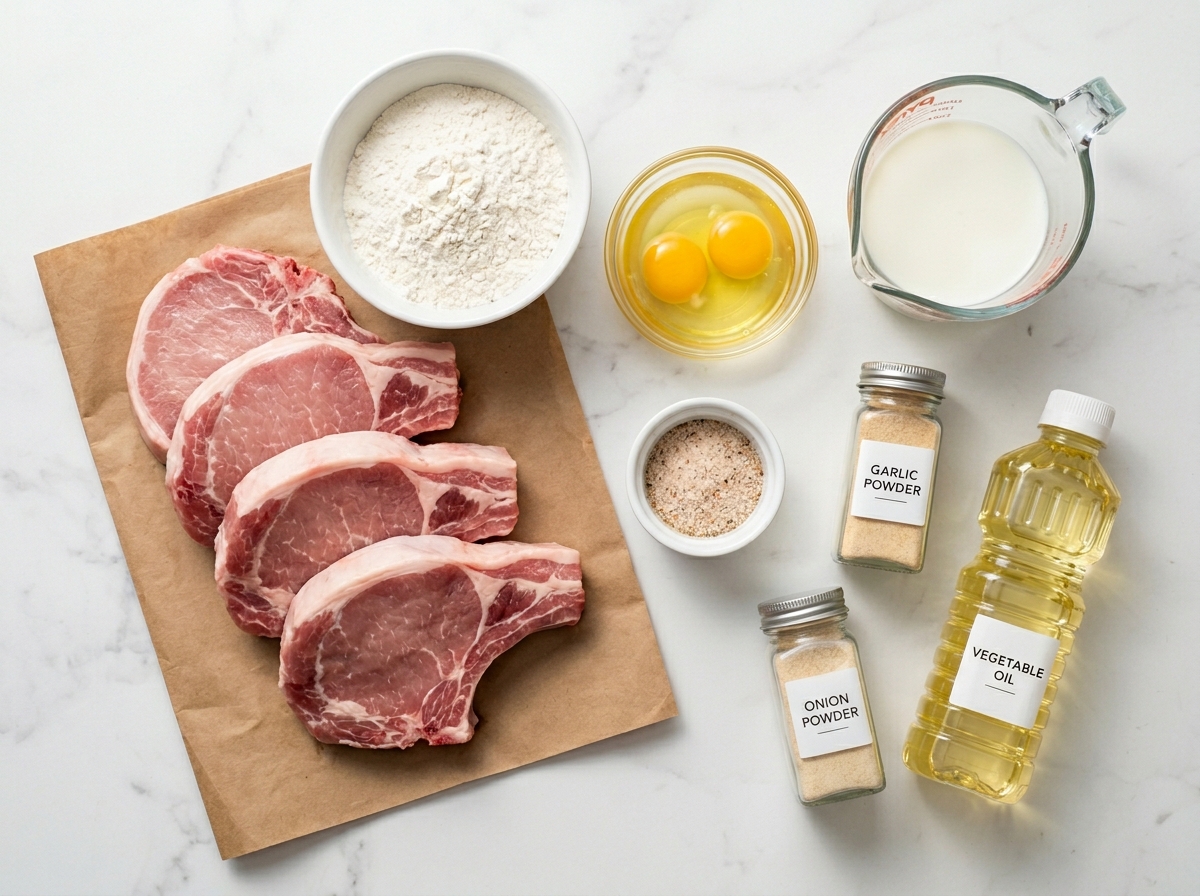
- Bone-in pork chops. About three-quarters of an inch thick. The bone insulates the meat and keeps it from drying out in the hot oil.
- All-purpose flour. The base of the dredge. It fries up craggy and golden when pressed firmly onto the meat.
- Seasoned salt. Seasons both the pork and the flour so flavor runs through every bite, not just the surface.
- Garlic and onion powder. Background savory notes that make the crust taste like more than just fried flour.
- Smoked paprika. Adds color and a faint whisper of smoke without heat.
- Egg and milk. Binds the flour to the chop. A splash of hot sauce in the wash is optional but welcome.
- Vegetable oil or shortening. Neutral, high smoke point, and what most Southern kitchens reach for first.
How to fry them right
- Dry and season the chops. Blot each pork chop with paper towels, then season both sides with seasoned salt, pepper, and smoked paprika. Moisture is the enemy of a clingy crust.
- Set up the dredging station. Whisk eggs, milk, and hot sauce in one shallow bowl. In another, mix flour with garlic powder, onion powder, more seasoned salt, and pepper.
- Coat thoroughly. Dredge each chop in the flour, shake off the excess, dip into the egg wash, then press back into the flour mixture. Pack it on firmly.
- Let the breading set. Rest the coated chops on a wire rack or baking sheet for 10 to 15 minutes. This helps the crust survive the oil without sliding off.
- Heat the oil. Pour enough oil into a large cast-iron skillet to come a quarter inch up the sides. Heat to 350°F over medium heat. The oil should shimmer but not smoke.
- Fry in batches. Cook the chops for 4 to 5 minutes per side, turning once, until the crust is deep golden and the internal temperature reaches 145°F. Do not crowd the pan.
- Rest on a rack. Transfer the finished chops to a wire rack. This keeps air moving underneath so the bottom stays crisp instead of turning soggy.
Why the crust sticks or slides
The most common failure is breading that falls off in the pan. It usually comes down to three causes. Wet meat, a rush job, or oil that is too cool. Pat the chops bone-dry with paper towels before you even touch them with salt. Then after the final dredge, give the flour time to hydrate and glue itself to the meat. Ten minutes of rest is the minimum. If you are after extra crunch, dip the floured chop back into the egg wash and into the flour one more time. That double layer fries up thicker and crunchier.
The oil temperature sweet spot
Too hot and the crust burns before the center cooks. Too cool and the chop soaks up grease like a sponge. Three hundred and fifty degrees Fahrenheit is the target. If you do not own a thermometer, drop a pinch of flour into the oil. It should sizzle immediately and turn golden in about 10 seconds. Fry in batches. Crowding drops the temperature fast, and a cold pan makes breading mushy. I use a cast-iron skillet because it holds heat steady, but any heavy-bottomed pan will do.
Swaps that keep the spirit
Boneless chops work if that is what you have, though they cook faster and can dry out if you blink. Pound them to an even half-inch thickness so they cook at the same rate as the crust browns. For the dredge, self-rising flour adds a little puff, and crushed saltine crackers mixed into the flour give a saltine cracker crunch that some families swear by. If you want a gravy version, see our chicken fried steak method. The same pan drippings technique applies.
What to pile on the plate
These chops demand classic sides. I like them with mashed potatoes, Country Ranch Green Beans and Potatoes, or a slice of fried cornbread to drag through any pan drippings. For something sweet to close the meal, Southern Fried Peaches are hard to beat. A simple vinegar slaw on the side cuts the richness and refreshes the palate between bites.
Storing and reheating
Leftovers keep in an airtight container in the refrigerator for up to three days. Reheat them in a 350°F oven on a wire rack set over a baking sheet for 10 to 15 minutes. The oven revives the crust far better than a microwave, which steams it soft. You can also use an air fryer at 375°F for about 5 minutes. If you need to freeze them, wrap each chop individually in plastic wrap and then foil. Thaw overnight in the fridge before reheating.
FAQs
- Can I use boneless pork chops instead of bone-in?
Yes. Pound them to an even half-inch thickness and reduce the cooking time to about 3 minutes per side. They dry out faster, so pull them as soon as the crust is golden and the internal temperature hits 145°F.
- What is the best oil for frying country fried pork chops?
Vegetable oil, canola oil, or shortening all work well because they are neutral and have high smoke points. Shortening is the traditional choice in many Southern kitchens and gives a slightly firmer crust.
- How do I keep the breading from falling off?
Pat the meat completely dry before seasoning. Let the coated chops rest for at least 10 minutes before frying. And do not flip them repeatedly in the pan. One gentle turn is enough.
- Can I make these in an air fryer?
You can, though the texture differs. Spray the coated chops lightly with oil and cook at 400°F for 10 to 12 minutes, flipping halfway. They will be crisp but not quite as shattering as the skillet version.
- How do I store and reheat leftovers?
Refrigerate in an airtight container for up to 3 days. Reheat in a 350°F oven or an air fryer to restore the crust. Avoid the microwave if you want to keep the coating crisp.
- What sides go best with country fried pork chops?
Mashed potatoes, green beans, cornbread, coleslaw, and fried apples are all classic pairings. Anything that can soak up a little juice works beautifully.
- Why are my pork chops tough?
Overcooking is the usual culprit. Pork chops are lean and turn chewy fast. Use a meat thermometer and pull them at 145°F, then let them rest for a few minutes before cutting. The USDA safe cooking guidelines recommend 145°F with a 3-minute rest.
