 Pin it
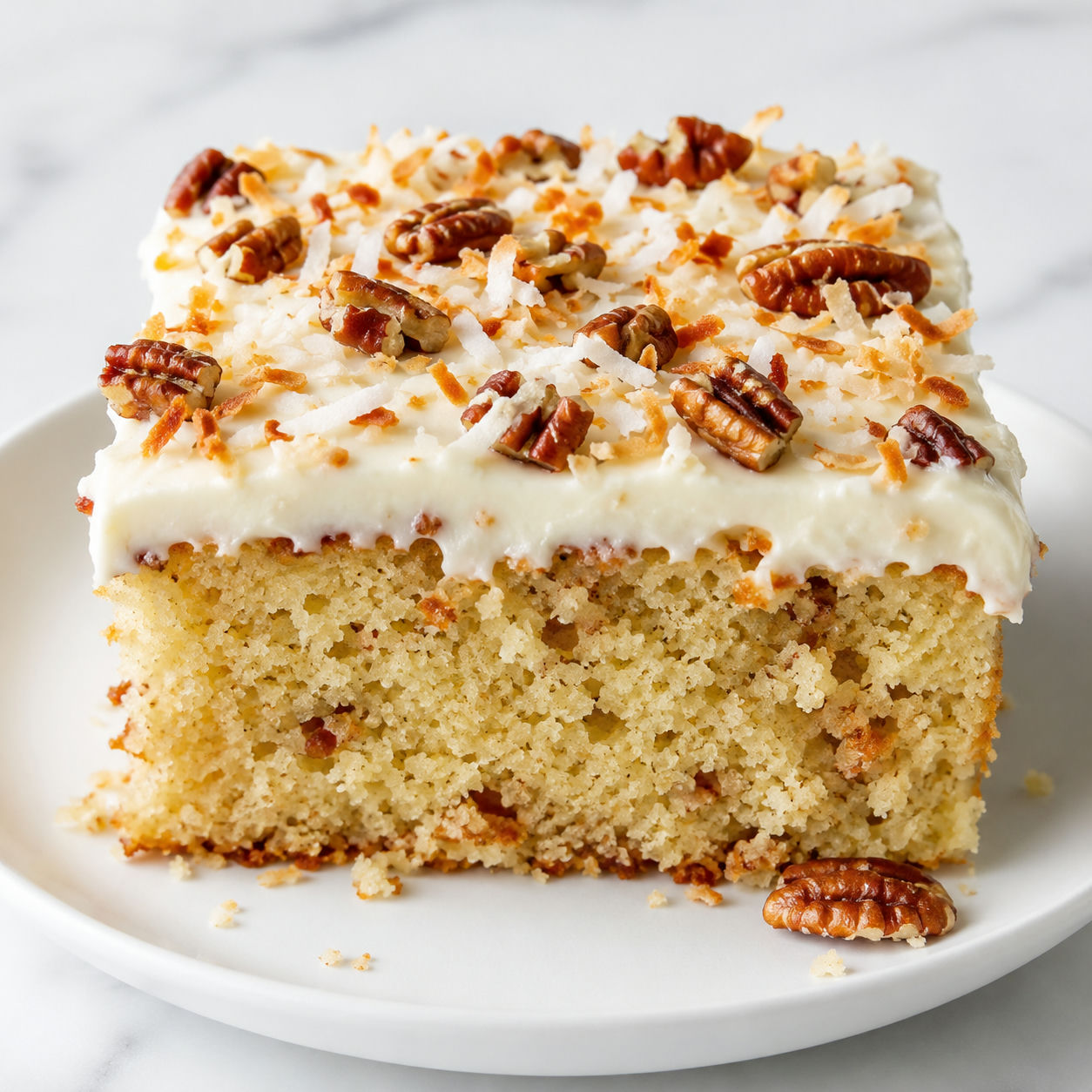
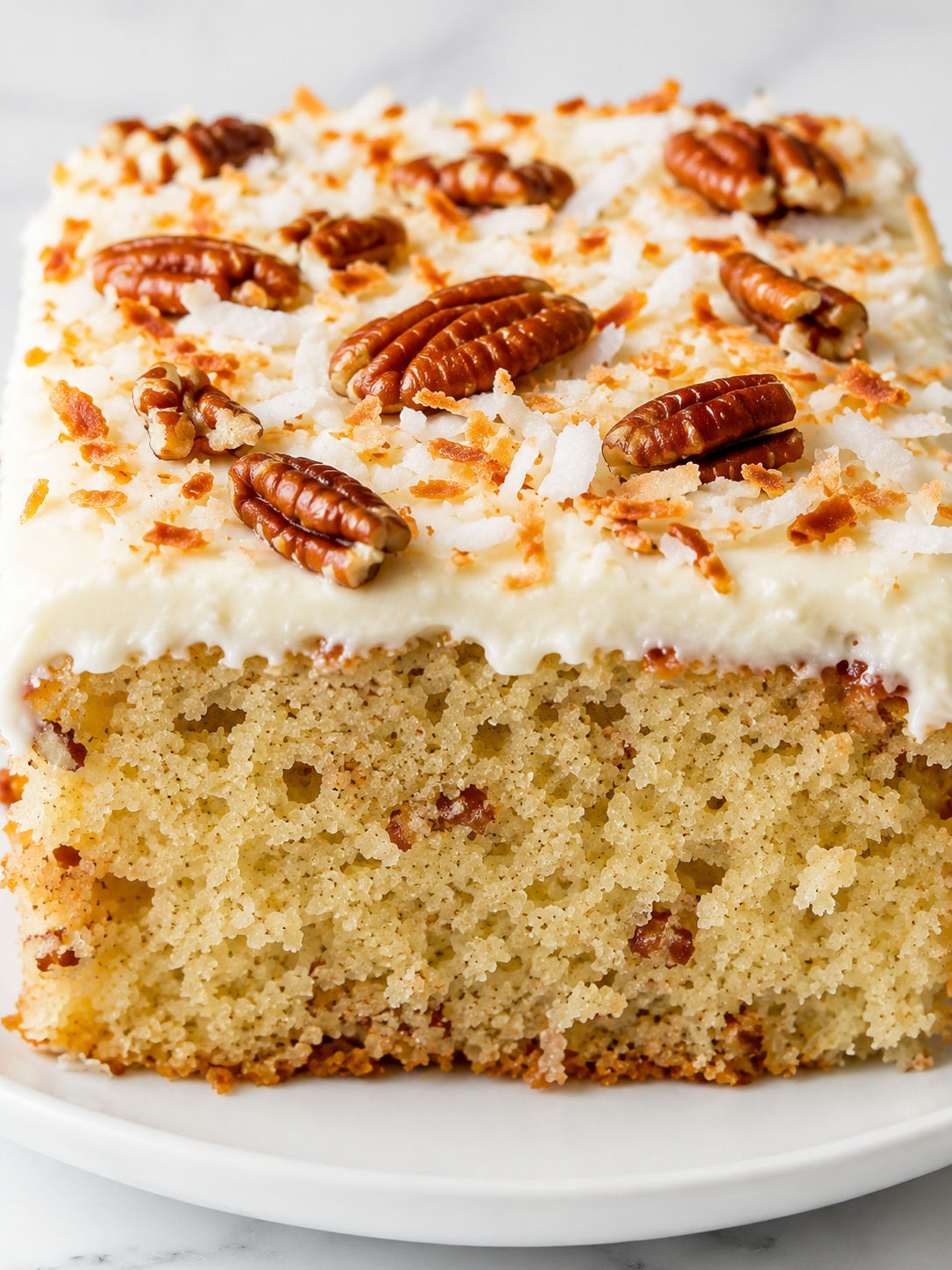
Coconut Pecan Buttermilk Cake sits right in that sweet spot between a church supper sheet cake and a homemade birthday cake. The crumb is soft from buttermilk, the edges bake up lightly golden, and every bite has toasted pecans tucked into the batter.
I like this as a 9x13 cake because it is easy to serve and does not ask for fussy layer stacking. The cream cheese frosting is thick enough to hold a blanket of coconut and pecans, but not so sweet that it covers up the buttery cake underneath.
Coconut Pecan Cake Staples
The ingredient list is simple, so small choices matter. Use fresh buttermilk, room-temperature dairy, and pecans that smell sweet and nutty rather than dusty.
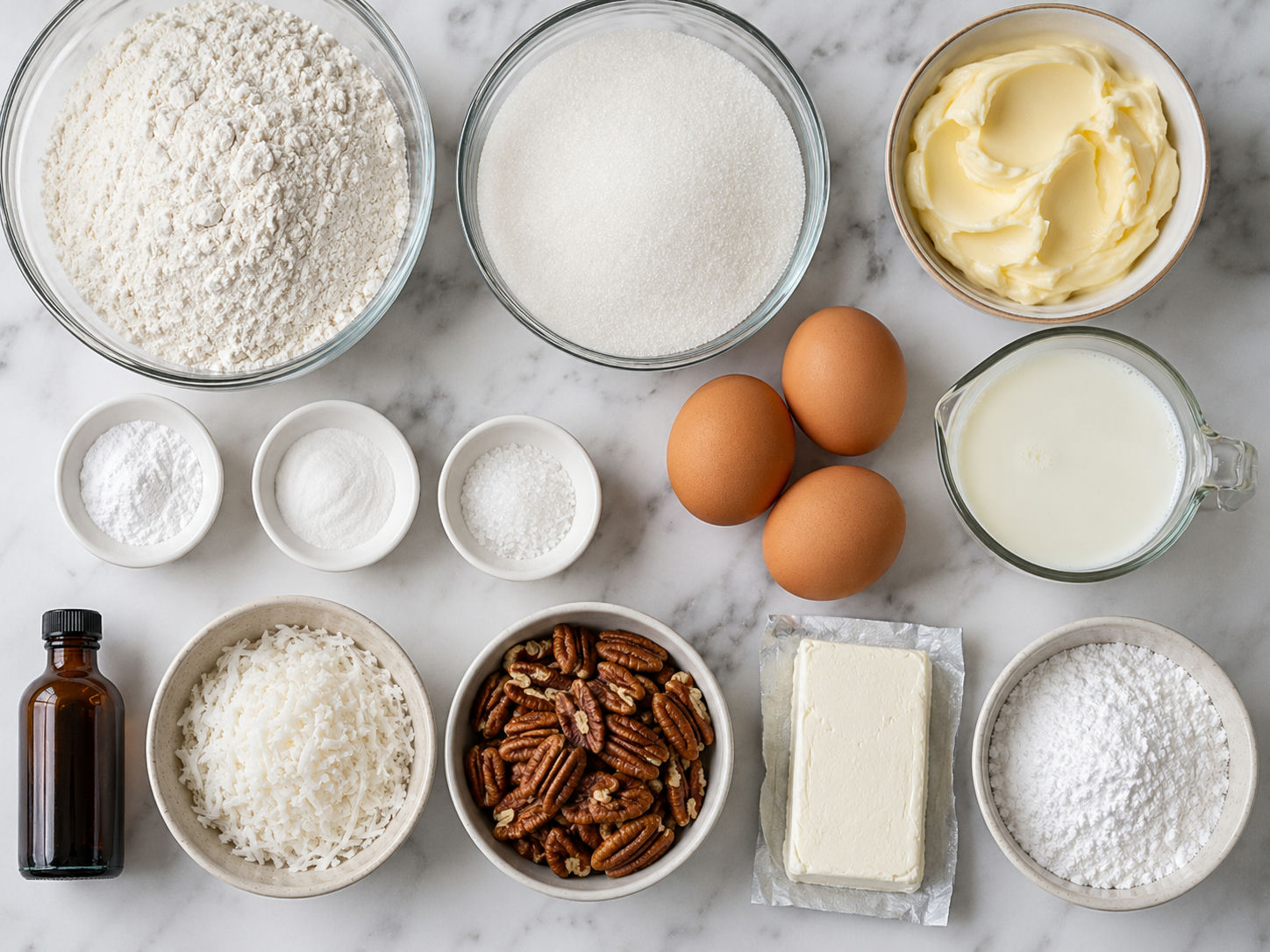
- Buttermilk. Adds tang and helps make the cake crumb tender instead of heavy.
- Unsalted butter. Gives the cake and frosting a clean, rich flavor while keeping salt under control.
- Granulated sugar. Sweetens the batter and helps the top bake up lightly golden.
- Eggs. Give the cake structure so it slices neatly after cooling.
- All-purpose flour. Keeps this sheet cake sturdy enough for a thick frosting layer.
- Sweetened shredded coconut. Adds chew and a mellow coconut flavor through the cake.
- Pecans. Toasted pecans bring crunch and a warm, buttery note.
- Cream cheese. Makes a tangy frosting that balances the sweet coconut.
Bake It Soft and Even
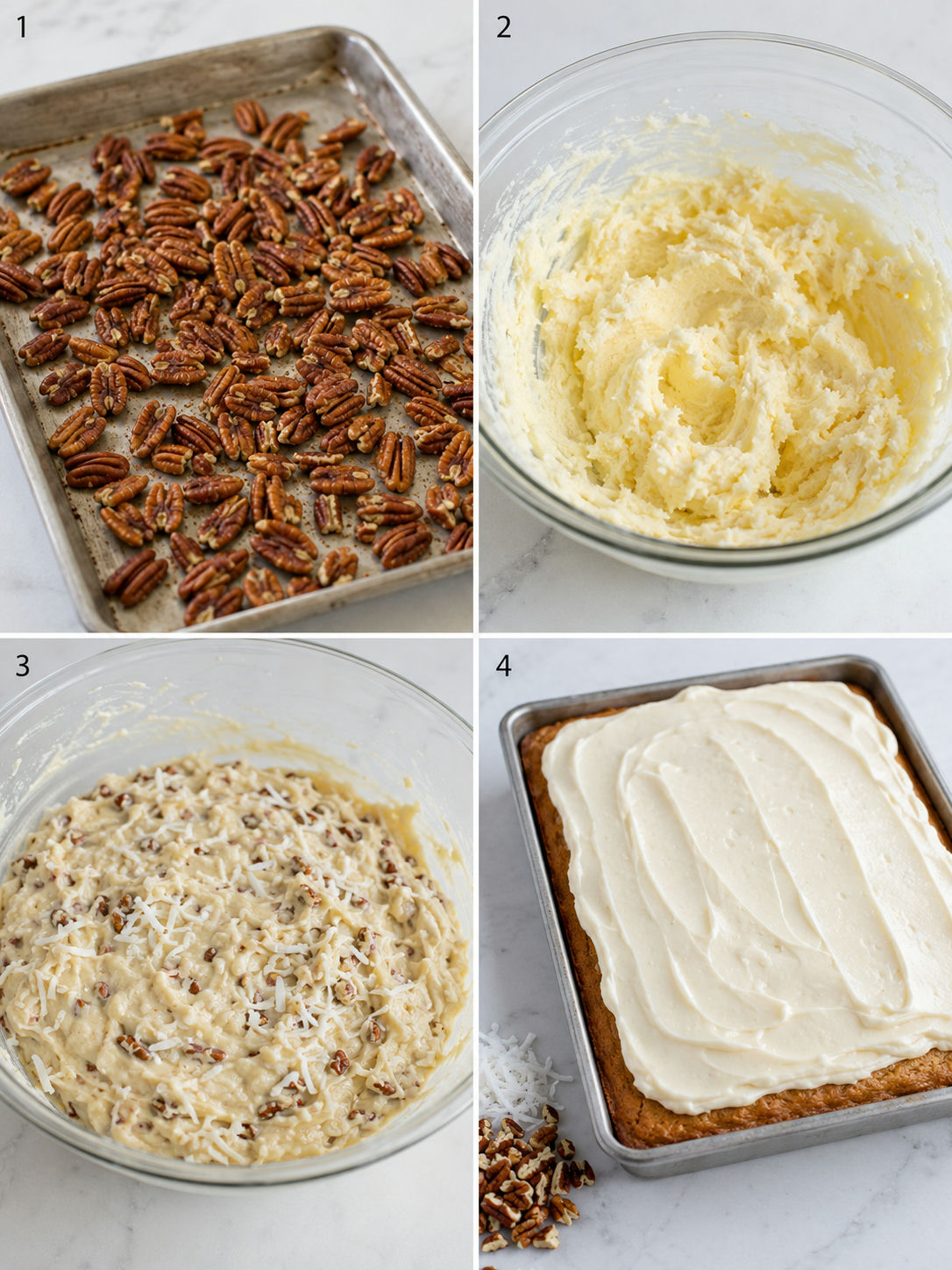
- Toast the pecans. Spread them on a sheet pan and toast until fragrant. Cool before chopping so they stay crisp.
- Mix the dry bowl. Whisk the flour, baking powder, baking soda, and salt. This keeps the leavening even in the finished cake.
- Cream the butter and sugar. Beat until pale and fluffy, then add the eggs one at a time. Stop and scrape the bowl so no butter hides at the bottom.
- Add buttermilk and flour. Mix in the dry ingredients in three additions, alternating with buttermilk. Keep the mixer low once flour goes in.
- Fold in coconut and pecans. Use a spatula and fold just until the bits are evenly scattered.
- Bake and cool. Bake until the center springs back and a tester comes out clean. Cool completely before frosting.
- Frost and finish. Beat the cream cheese frosting until smooth, spread it over the cake, and top with extra coconut and pecans.
Why Buttermilk Works Here
Buttermilk is the quiet reason this Coconut Pecan Buttermilk Cake stays soft for days. Its acidity reacts with baking soda, which gives the crumb a gentle lift without making it dry or bready. It also brings a faint tang that keeps the frosting from making the whole cake taste flat. If you are out of buttermilk, the milk and lemon juice swap works in a pinch, and King Arthur Baking has a useful guide to the ratio. For another soft buttermilk bake, the peach buttermilk bundt cake uses the same tenderizing idea in a fruitier direction.
Toast Pecans Before Mixing
Do not skip the toasting step. Pecans have plenty of natural oil, and a short toast wakes up that flavor before the nuts disappear into the batter. Spread them in a single layer and pull them when the kitchen smells nutty, usually 6-8 minutes at 350°F. Let them cool before chopping. Warm nuts can melt little streaks into the batter and soften too quickly. If you love that praline edge, serve this cake with coffee after a meal and save buttery pecan praline poke cake for the next time you want something gooier.
Frosting Without a Slide
Cream cheese frosting behaves best when the cake is completely cool. Not almost cool. Completely cool. A warm cake melts the butter in the frosting, then the topping thins and drifts toward the corners. Beat the cream cheese and butter first until smooth, then add powdered sugar gradually. If the frosting feels loose, chill it for 10 minutes before spreading. I keep the top rustic with swoops instead of trying for bakery-smooth edges. The coconut and pecans hide tiny spatula marks anyway. For another coconut-forward dessert with a creamy finish, try the coconut cream lush.
Coconut Pecan Buttermilk Cake Tips
The batter should look thick, fluffy, and speckled before it goes into the pan. If it looks curdled after the eggs, do not panic. It usually smooths out once flour is added. The bigger risk is overmixing after the flour goes in, which can make the cake tough. Mix on low and stop when you no longer see dry streaks. Check doneness in the center of the pan, not near the edge. The edges bake first, while the middle needs a few more minutes to set. A few moist crumbs on the tester are fine. Wet batter is not.
Storing the Frosted Cake
Because this cake has cream cheese frosting, store it covered in the refrigerator. The USDA has helpful general guidance on chilling leftovers safely in its leftovers food-safety guide. For the best texture, let slices stand at room temperature for 20-30 minutes before serving. The butter in the cake softens again and the frosting tastes creamier. If you want a freezer option, freeze unfrosted cake squares tightly wrapped for up to 2 months. Thaw overnight in the fridge, then frost. For a smaller pecan bake, the butter pecan cake loaf is easier to tuck into the freezer.
Summary
This cake is best the day after baking, once the frosting settles into the tender crumb and the toasted pecans keep their snap.
FAQs
- Can I make Coconut Pecan Buttermilk Cake ahead?
Yes. Bake the cake one day ahead, cool it fully, cover it tightly, and frost it the next day. You can also frost the whole cake ahead and refrigerate it overnight.
- Can I use unsweetened coconut instead?
You can, but the cake will taste less sweet and a little drier. If you use unsweetened coconut, add 2 extra tablespoons of sugar to the batter or use sweetened coconut for the topping.
- What can I use instead of buttermilk?
Use 1 cup whole milk mixed with 1 tablespoon lemon juice or white vinegar. Let it sit for 5 minutes before adding it to the batter. The flavor will be close, though real buttermilk gives the softest crumb.
- Do I have to toast the pecans?
Toasting is strongly worth it. Raw pecans can taste flat once baked into a sweet cake, while toasted pecans bring a deeper nutty flavor and better crunch.
- How should I store this cake?
Because of the cream cheese frosting, store the cake covered in the refrigerator for up to 4 days. Let slices sit at room temperature for 20-30 minutes before serving so the crumb softens again.
- Can I bake this as a layer cake?
Yes. Divide the batter between two greased 9-inch round pans and start checking around 25 minutes. Cool the layers completely before frosting so the cream cheese frosting does not slide.
