 Pin it
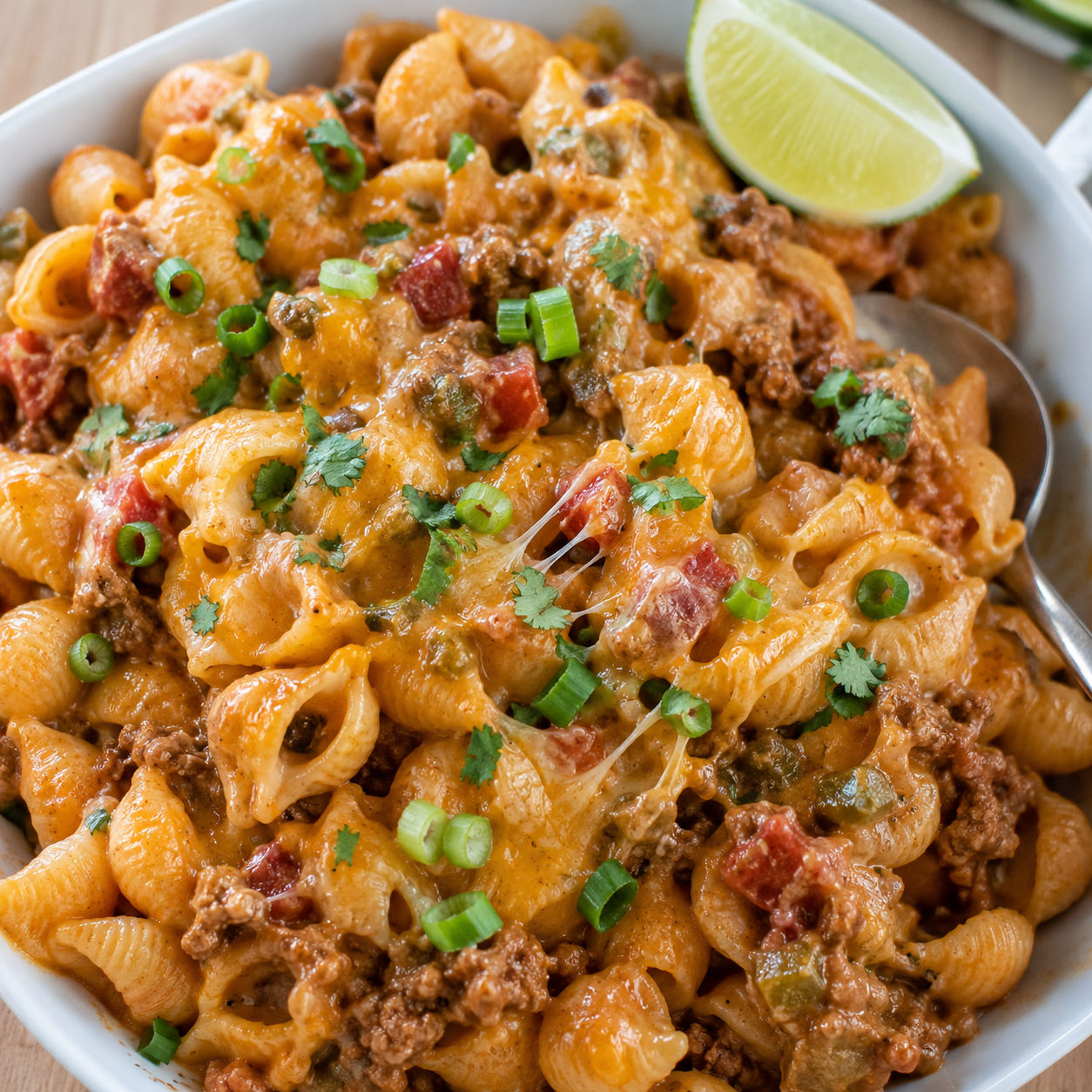
Cheesy Beef Taco Pasta is what I make when taco night sounds good but I do not want to warm tortillas, chop a dozen toppings, and wash three pans. It has the seasoned beef and tomato-chile flavor you expect, but the pasta cooks right in the sauce so every bite tastes full and savory.
The trick is not much of a trick. Let the spices hit the hot beef first, keep the simmer gentle, and add the cheese after the pan comes off the heat. That keeps the sauce creamy instead of oily.
It is rich enough for a comfort-food dinner, but still practical for a weeknight. Add lettuce, avocado, or crushed tortilla chips at the table if you want the full taco feeling.
The Taco Pasta Lineup
Use a pasta shape with curves or ridges so the sauce has somewhere to cling. I like small shells because they scoop up bits of beef, but rotini and elbows are just as dependable.
For the cheese, shred it yourself if you can. Bagged cheese works in a pinch, but freshly shredded cheddar and Monterey Jack melt smoother.
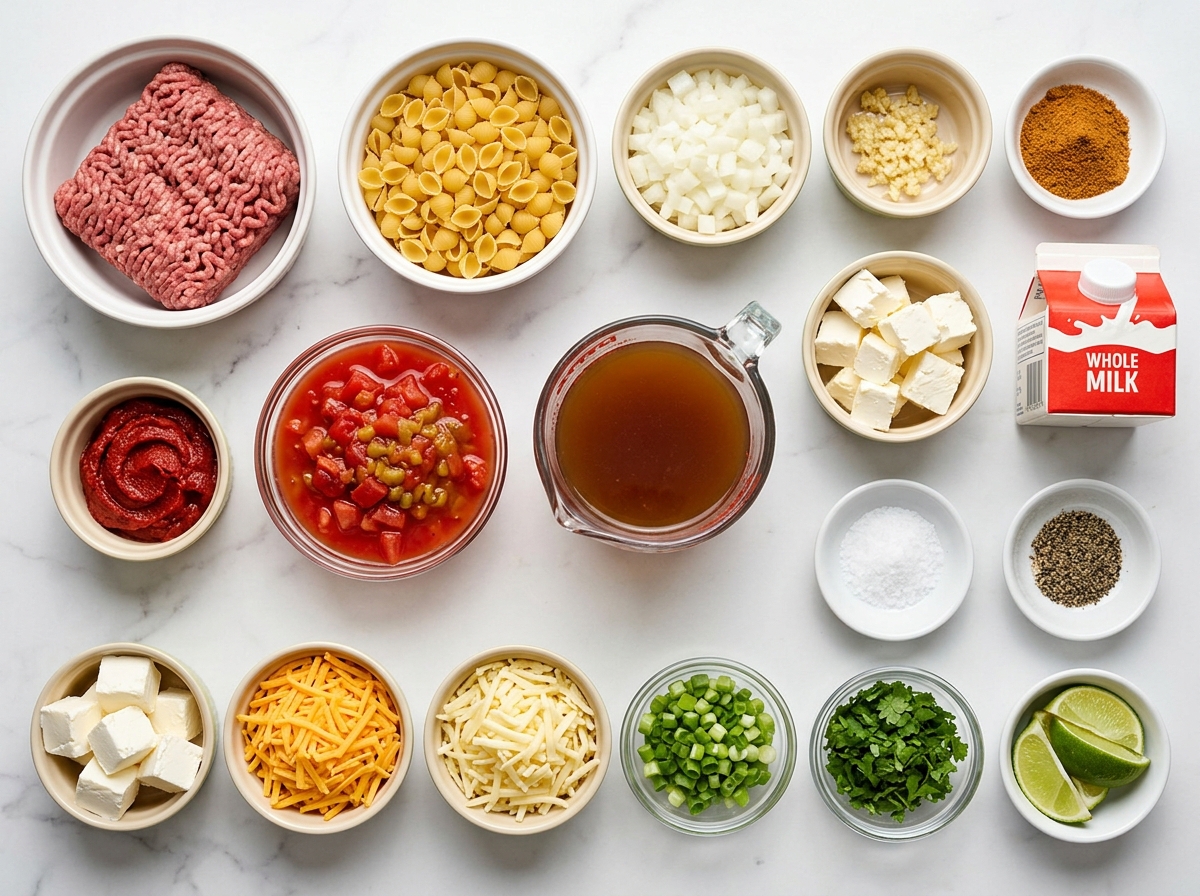
- Ground beef. Gives the pasta its hearty taco-night base and browns into savory little crumbles.
- Onion and garlic. Build flavor before the seasoning goes in, so the sauce tastes cooked rather than flat.
- Taco seasoning. Brings chili powder, cumin, paprika, and oregano in one easy scoop.
- Tomato paste. Deepens the sauce and gives the beef a richer, lightly roasted taste.
- Diced tomatoes with green chiles. Add acidity, mild heat, and enough liquid to help cook the pasta.
- Beef broth and milk. Simmer the pasta and turn starchy as they reduce into a creamy sauce.
- Small pasta shells. Cook right in the skillet and hold pockets of beef and cheese.
- Cheddar and Monterey Jack. Melt into a smooth, tangy finish with good stretch.
- Cream cheese. Adds body and helps the sauce stay silky.
- Green onions and cilantro. Freshen up the rich skillet right before serving.
Build It In One Skillet
- Brown the beef. Cook the beef and onion in a deep skillet until the meat is no longer pink and the onion softens. Drain extra grease if the pan looks oily.
- Toast the flavor. Stir in garlic, taco seasoning, and tomato paste. Cook for about a minute until the paste darkens slightly and the spices smell warm.
- Simmer the pasta. Add tomatoes with green chiles, broth, milk, and dry pasta. Stir well, bring to a boil, then reduce to a gentle simmer so the pasta cooks without sticking.
- Check the sauce. Stir every few minutes and cook until the shells are tender, usually 12-14 minutes. Add a splash of broth if the skillet gets too thick before the pasta is done.
- Melt the cheese. Turn off the heat. Stir in cream cheese, cheddar, and Monterey Jack until smooth and glossy.
- Finish the bowls. Let the pasta rest for 3 minutes, then top with green onions, cilantro, and any taco toppings you like.
Why One-Pot Works
Cooking the pasta in the skillet does more than save a pot. The shells release starch as they simmer, and that starch helps the broth, milk, tomatoes, and cheese pull together into a sauce that coats instead of puddles.
Keep the heat at a steady simmer, not a hard boil. A rolling boil can reduce the liquid too fast and make the pasta cook unevenly. Stir from the bottom of the pan every few minutes, especially once the sauce starts to thicken.
If you like this saucy skillet style, try the Taco Pasta one-pot version or the cozy One Pot Cheesy Beef Shells next. Both use the same weeknight logic with a different flavor direction.
Cheese Goes In Last
The biggest mistake with cheesy pasta is adding shredded cheese while the sauce is still boiling. High heat can make the fat separate and the sauce turn grainy. Pull the pan off the burner first, then add the cream cheese in small pieces so it melts quickly.
After that, fold in the shredded cheese by handfuls. Cheddar brings sharp flavor, while Monterey Jack melts softly and stretches through the shells. If the sauce feels too thick, loosen it with warm milk or broth. If it looks loose, let the pasta sit uncovered for a few minutes. It thickens as it rests.
For extra taco flavor at the table, a spoonful of Loaded Taco Creamy Cheese Sauce makes this even richer. Use a small drizzle so the pasta stays balanced.
Safe, Juicy Beef
Use 85 percent lean ground beef if you want a good balance of flavor and not too much grease. Break it into small crumbles as it cooks, then let it sit against the hot pan for a few seconds at a time. That contact gives you browned edges instead of gray steamed meat.
Drain only if you need to. A little fat carries taco seasoning beautifully, but a puddle of grease will dull the sauce. The USDA recommends cooking ground beef to 160°F, and you can read more in the USDA ground beef safety guide.
If you want a lighter dinner with the same taco profile, the Ground Beef Taco Cabbage Skillet keeps the beef and seasoning but skips the pasta.
Smart Swaps For Your Pantry
No tomatoes with green chiles? Use plain diced tomatoes and add a spoonful of salsa or a small can of chopped green chiles. No beef broth? Chicken broth works, and water works if you add a pinch more salt and seasoning.
You can stir in black beans, corn, or diced bell pepper after the pasta is almost tender. If you add beans, rinse and drain them first so they do not muddy the sauce. For a nacho-style finish, scatter crushed tortilla chips over the bowls right before serving.
For another cheesy beef dinner that leans casserole instead of skillet, keep Cheesy Beef Macaroni Bake on your list. It is a good choice when you want something you can scoop from a baking dish.
Leftovers That Stay Creamy
This pasta reheats well, but it needs a little extra liquid because the shells keep absorbing sauce as they sit. Cool leftovers before packing them, then refrigerate in a covered container for up to 4 days.
For the best texture, reheat on the stove over medium-low heat with a splash of milk or broth. Stir gently until the sauce relaxes. The microwave is fine for a single bowl, but pause halfway through to stir so the edges do not dry out.
Freezing is possible, though the dairy sauce may look slightly less smooth after thawing. If you do freeze it, thaw overnight in the fridge and reheat slowly with extra milk. Fresh toppings like cilantro, scallions, sour cream, and avocado should always go on after reheating.
Summary
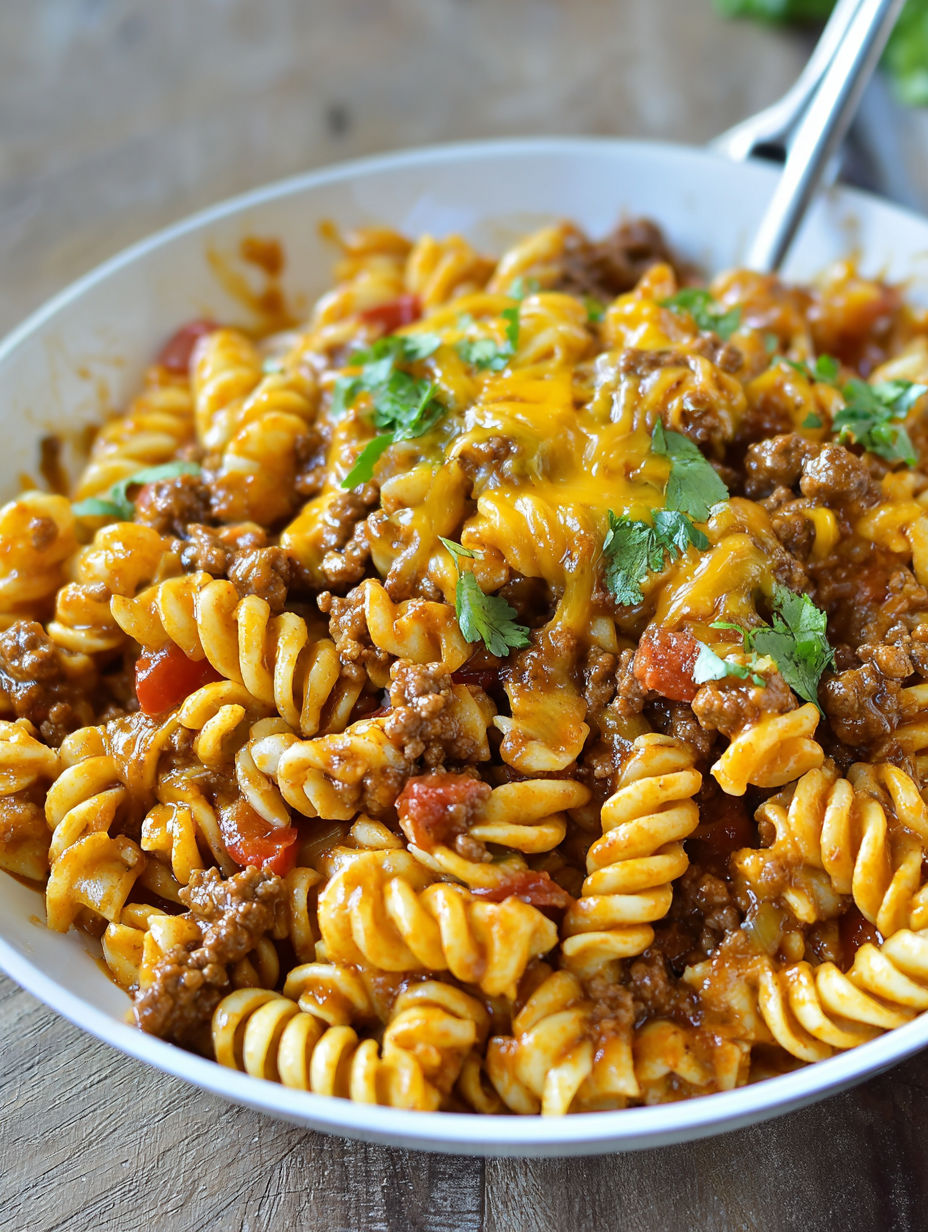
This skillet pasta keeps the method simple. Browned ground beef, taco seasoning, tomatoes with green chiles, broth, milk, and short pasta simmer together before cheddar and Monterey Jack turn it creamy.
FAQs
- Can I make Cheesy Beef Taco Pasta with a different pasta shape?
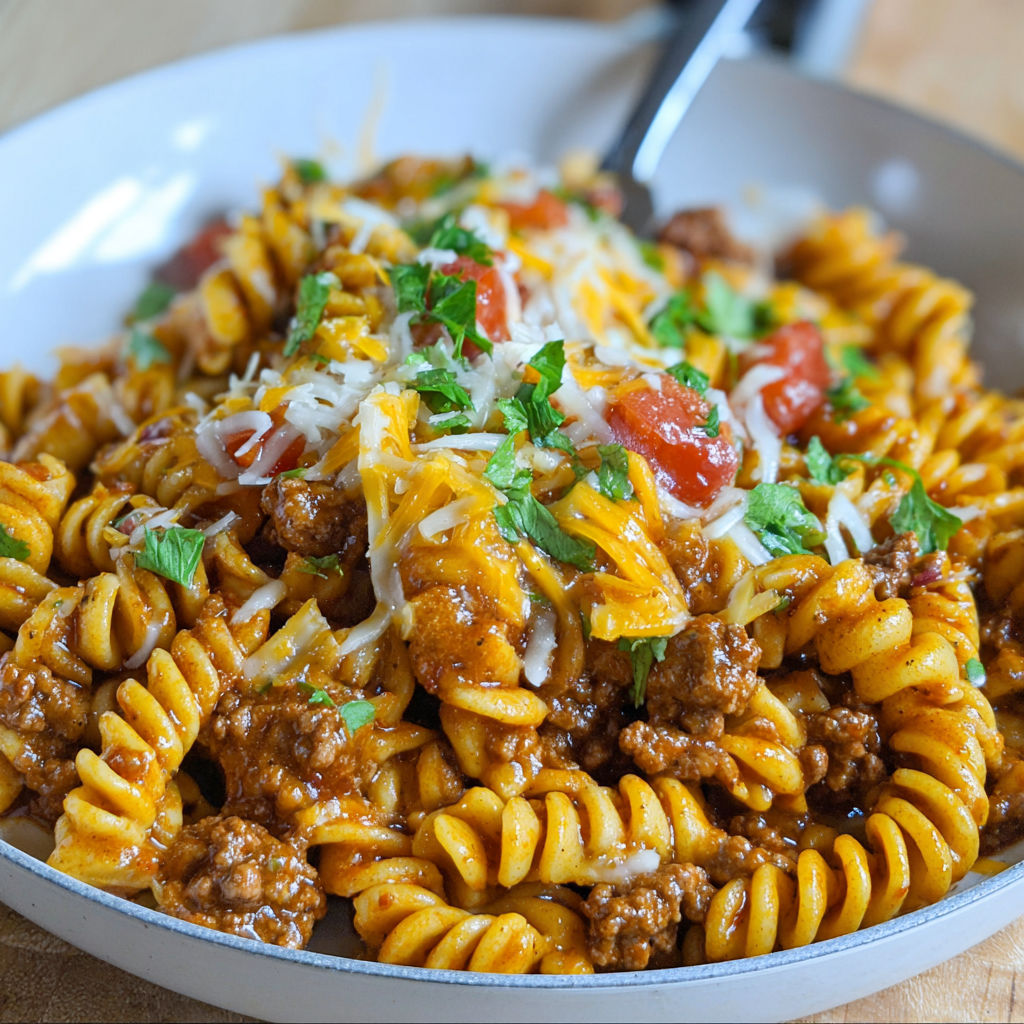
Yes. Small shells, rotini, fusilli, elbows, and penne all work well because they catch the beef and cheese sauce. Start checking early if the shape is smaller than shells, since it may cook faster.
- Can I use ground turkey instead of beef?
Ground turkey works. Add an extra teaspoon of oil when browning it because turkey is leaner and can dry out. You may also want a splash more broth and a pinch more taco seasoning for a rounder flavor.
- Why did my cheese sauce turn grainy?
The pan was probably too hot when the cheese went in. Turn off the heat first, then stir in the cheese slowly. If it still looks tight, add warm milk a tablespoon at a time until it smooths out.
- How do I store and reheat leftovers?
Store cooled pasta in an airtight container in the fridge for up to 4 days. Reheat it gently in a skillet or microwave with a splash of milk or broth. Stir often so the sauce loosens instead of drying onto the pasta.
- Can I make this taco pasta spicier?
Use hot tomatoes with green chiles, add diced jalapeno with the onion, or stir in a little cayenne with the taco seasoning. For a milder pan, use plain diced tomatoes and mild taco seasoning.
- What should I serve with taco pasta?
A crisp green salad, sliced avocado, lime wedges, or corn all work well. For a fun topping setup, put out sour cream, scallions, crushed tortilla chips, and hot sauce so everyone can finish their own bowl.
