 Pin it
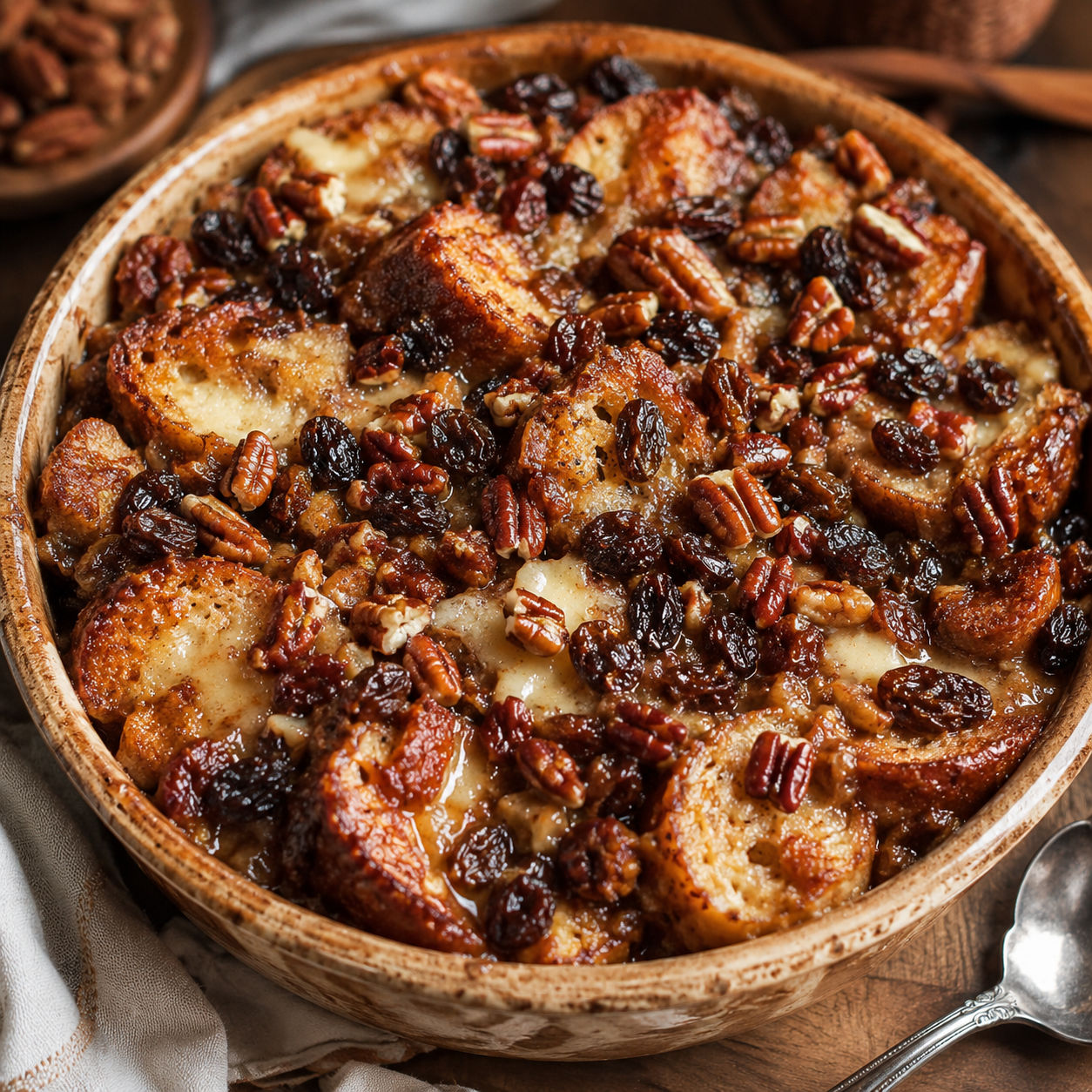
Capirotada is the kind of dessert that looks rustic in the pan but tastes carefully built. The bread soaks up cinnamon piloncillo syrup, the raisins turn plump and jammy, and the pecans keep a little crunch around the edges.
This version leans into the raisin and pecan topping because that is the part everyone digs for first. It is sweet, a little salty from the cheese, and best served warm when the syrup is still fragrant.
The Sweet Layer Lineup
Use stale bolillos if you can find them. A day-old baguette also works because the dry crumb drinks in syrup without falling apart.
Piloncillo gives the syrup a deep caramel flavor. The extra raisins and pecans make this version chewy, nutty, and generous.
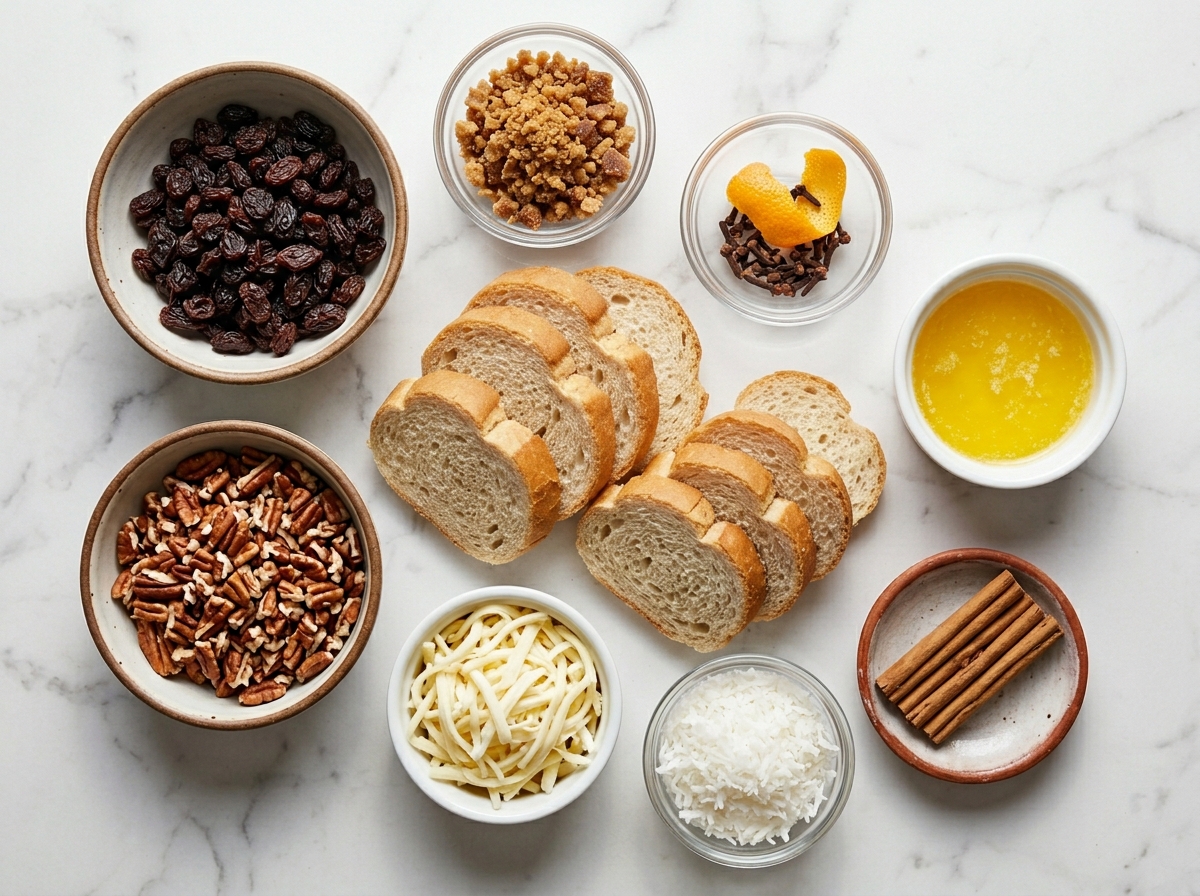
- Bolillo bread. Toasted slices form the base and soak up the spiced syrup while keeping some structure.
- Piloncillo. This Mexican unrefined cane sugar gives the syrup its dark caramel taste.
- Cinnamon and cloves. These warm spices make the syrup smell like a holiday kitchen.
- Raisins. Extra raisins plump in the syrup and give each scoop a soft, fruity bite.
- Pecans. They toast on top and add crunch against the tender bread.
- Oaxaca or Monterey Jack cheese. The mild cheese melts into salty pockets that balance the sweetness.
- Butter. Brushed on the bread and dotted on top, it helps the edges brown.
- Orange peel. A small strip brightens the syrup without making the pudding taste citrusy.
Building The Capirotada Layers
- Make the syrup. Simmer piloncillo, water, cinnamon, cloves, and orange peel until the sugar dissolves and the liquid smells warm and spiced.
- Toast the bread. Brush the slices with butter and bake until dry and golden. This step matters because soft bread turns heavy fast.
- Layer the pan. Dip or spoon syrup over the bread, then scatter cheese, raisins, and pecans between the layers.
- Finish the top. Add the remaining syrup slowly so it reaches the lower layer. Dot with butter and more pecans.
- Bake until bubbling. Cover first so the bread softens, then uncover so the top gets glossy and browned.
- Rest before serving. Give it 10 minutes so the syrup settles and the squares scoop cleanly.
Toast The Bread Well
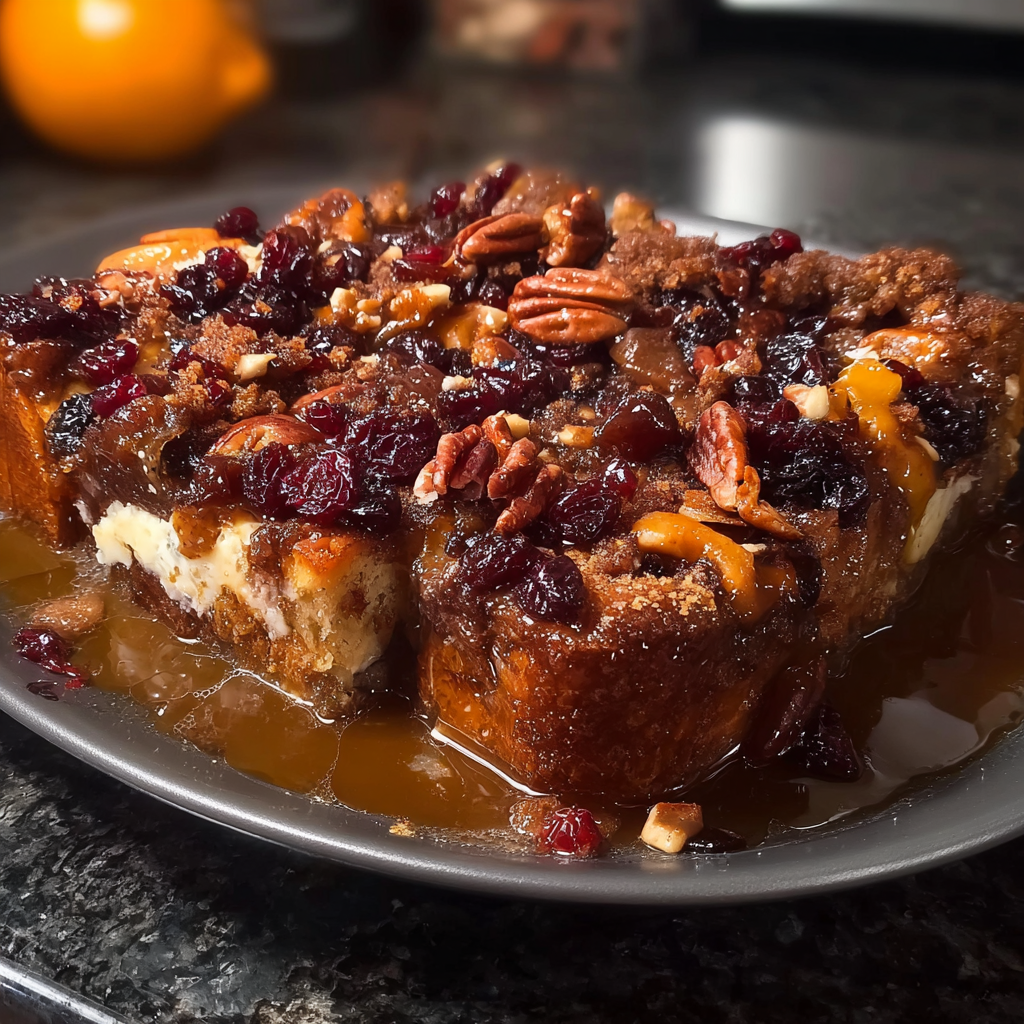
The most common capirotada problem is soggy bread. Toasting fixes that. You want the slices dry at the surface and golden at the edges before they touch the syrup. If the bread is fresh, slice it early and leave it on a rack for a few hours.
Do not rush the syrup either. Piloncillo can hide firm bits in the pot, so stir until it fully dissolves. The syrup should taste strong on its own because the bread will soften and mellow it in the oven. For a slightly different take on this dessert, the site's capirotada with raisins and pecans bread is worth keeping nearby.
Why Cheese Belongs Here
Cheese in dessert can surprise people, but it makes sense in capirotada. Mild melting cheese keeps the dish from tasting like straight sugar. Oaxaca cheese gives stretchy pockets. Monterey Jack melts smoothly and is easy to find. Cotija is saltier and drier, so use less if you choose it.
The sweet-salty balance is also why pecans work so well here. They taste buttery once baked and make the raisins feel less heavy. If pecans are your favorite part, try the crunchy pecan pie bark for another dessert that leans into toasted nuts.
Raisins That Stay Juicy
Extra raisins are only a good thing when they stay plump. If yours feel dry, soak them in warm water for 10 minutes, then drain well. You can also soak them in a little warm orange juice for more flavor.
Scatter raisins between layers instead of dumping them all on top. A few on the surface will caramelize, but too many exposed raisins can dry out. The inside raisins stay soft and almost jammy. For food-safety timing on leftovers, the USDA leftovers guide is a helpful reference.
Swaps Families Actually Use
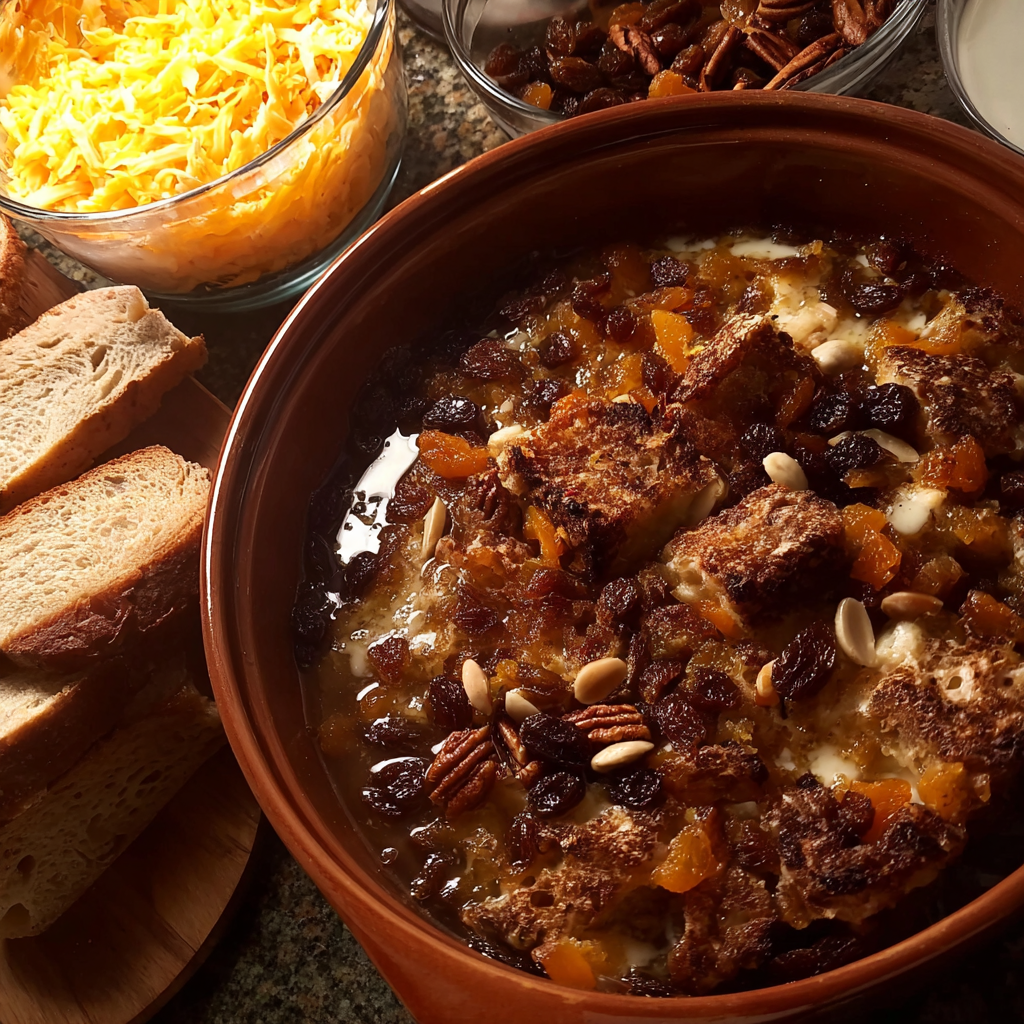
Capirotada changes from kitchen to kitchen. Use walnuts, peanuts, or almonds if that is what you have. Add shredded coconut for a sweeter finish. Banana slices can go between layers, but they soften quickly, so this is best for same-day serving.
For the bread, bolillos are traditional and sturdy. French bread, Italian bread, or a plain country loaf work too. Avoid soft sandwich bread unless it is very stale. For more Mexican cooking context and traditional variations, Mexico in My Kitchen has a detailed capirotada guide.
Serving And Saving It
Let the pan rest before scooping. Hot syrup can make the layers seem loose at first, but 10 minutes on the counter helps everything settle. Serve it warm with coffee, cold milk, or a small scoop of vanilla ice cream.
Leftovers taste sweeter the next day because the syrup keeps moving through the bread. Refrigerate covered for up to 3 days. Reheat gently, or eat it cold if you like a firmer bread pudding texture. For another cozy pecan dish at the table, pair a holiday meal with roasted butternut squash with cranberries and pecans.
Summary
Serve this capirotada warm, room temperature, or chilled. The first day gives you the best contrast between crisp edges and syrupy bread.
FAQs
- What is capirotada?
Capirotada is a Mexican bread pudding often served during Lent and Holy Week. It is usually made with toasted bread, a spiced piloncillo syrup, cheese, raisins, and nuts.
- Can I use brown sugar instead of piloncillo?
Yes. Use dark brown sugar if you cannot find piloncillo. The flavor will be a little less earthy, but cinnamon, cloves, and orange peel help bring back some depth.
- Why does capirotada have cheese in it?
The cheese gives capirotada its salty edge and creamy pockets. Oaxaca, Monterey Jack, Chihuahua, or mild mozzarella melt well without overpowering the syrup.
- Can I make capirotada ahead of time?
You can toast the bread, chop the pecans, and make the syrup a day ahead. Assemble and bake closer to serving if you want the bread to hold its shape.
- How do I store leftovers?
Cover leftovers and refrigerate for up to 3 days. Reheat small portions in a low oven or microwave until warm, adding a spoonful of water if the bread seems dry.
- Can I add bananas or coconut?
Yes. Sliced banana, shredded coconut, walnuts, peanuts, or dried cranberries are all common family-style additions. Add soft fruit between the layers and keep the extra raisins and pecans on top for texture.
