 Pin it
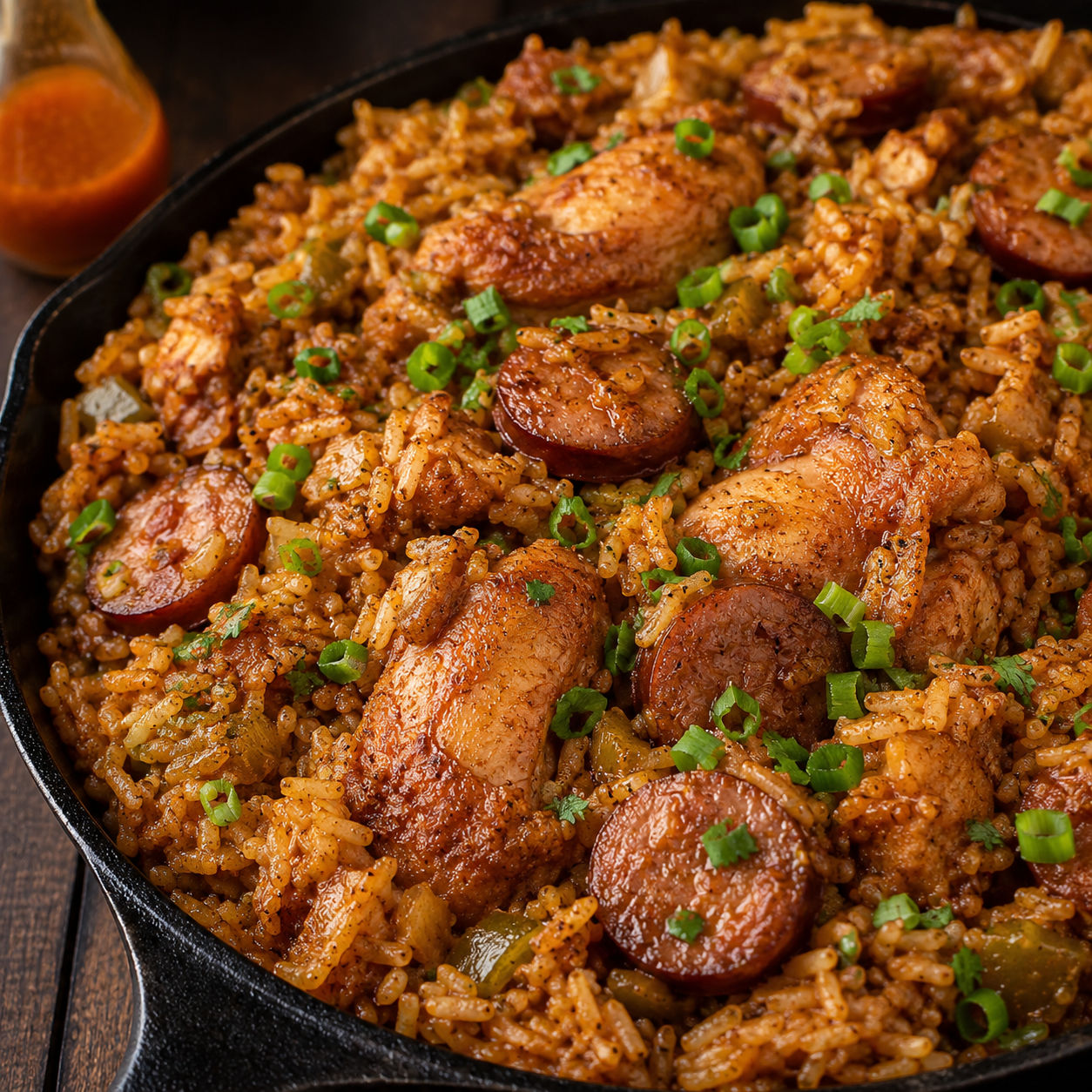
Authentic Cajun Chicken and Sausage Jambalaya is the kind of one-pot supper that asks you to slow down for the browning, then rewards you for it. The color comes from browned meat, caramelized vegetables, and smoky sausage, not tomatoes.
I like boneless chicken thighs here because they stay juicy while the rice cooks. Andouille gives the pot that deep smoke, but any good Cajun smoked sausage will still make a strong batch.
The Cajun Pot Lineup
Use ingredients that can stand up to a long simmer and still taste like themselves. Long-grain rice matters here because it stays separate and fluffy when the lid stays shut.
- Chicken thighs. Dark meat stays juicy and gives the pot richer flavor than lean breast meat.
- Andouille sausage. Smoky sausage seasons the oil and leaves browned bits that color the rice.
- Onion, bell pepper, and celery. This Cajun trinity softens into the base of the dish.
- Garlic. A short cook in the fat makes the whole pot smell savory without turning bitter.
- Long-grain white rice. The grains absorb the stock while staying loose instead of sticky.
- Chicken stock. Stock gives the rice more body than water and helps carry the spice.
- Cajun seasoning. It brings salt, pepper, paprika, garlic, and heat in one scoop. Taste your blend before adding extra salt.
- Green onions and parsley. Fresh herbs brighten the smoky rice right at the end.
How Cajun Jambalaya Cooks
- Season the chicken. Toss the thigh pieces with Cajun seasoning, black pepper, and a little salt if your seasoning blend is mild.
- Brown the meats. Sear the chicken in hot oil until browned, then brown the sausage in the same pot. Take your time because this is where the rice gets its color.
- Cook the trinity. Add onion, bell pepper, celery, and garlic. Scrape the bottom as the vegetables release moisture and soften.
- Simmer the base. Return the chicken and sausage with stock, bay leaves, and cayenne. Let the pot bubble gently so the meat seasons the broth.
- Add the rice. Stir in rinsed long-grain rice once, cover tightly, and lower the heat. Do not keep stirring after this point.
- Rest and finish. Let the covered pot sit off the heat, then fluff with green onions and parsley before serving.
Brown Flavor Comes First
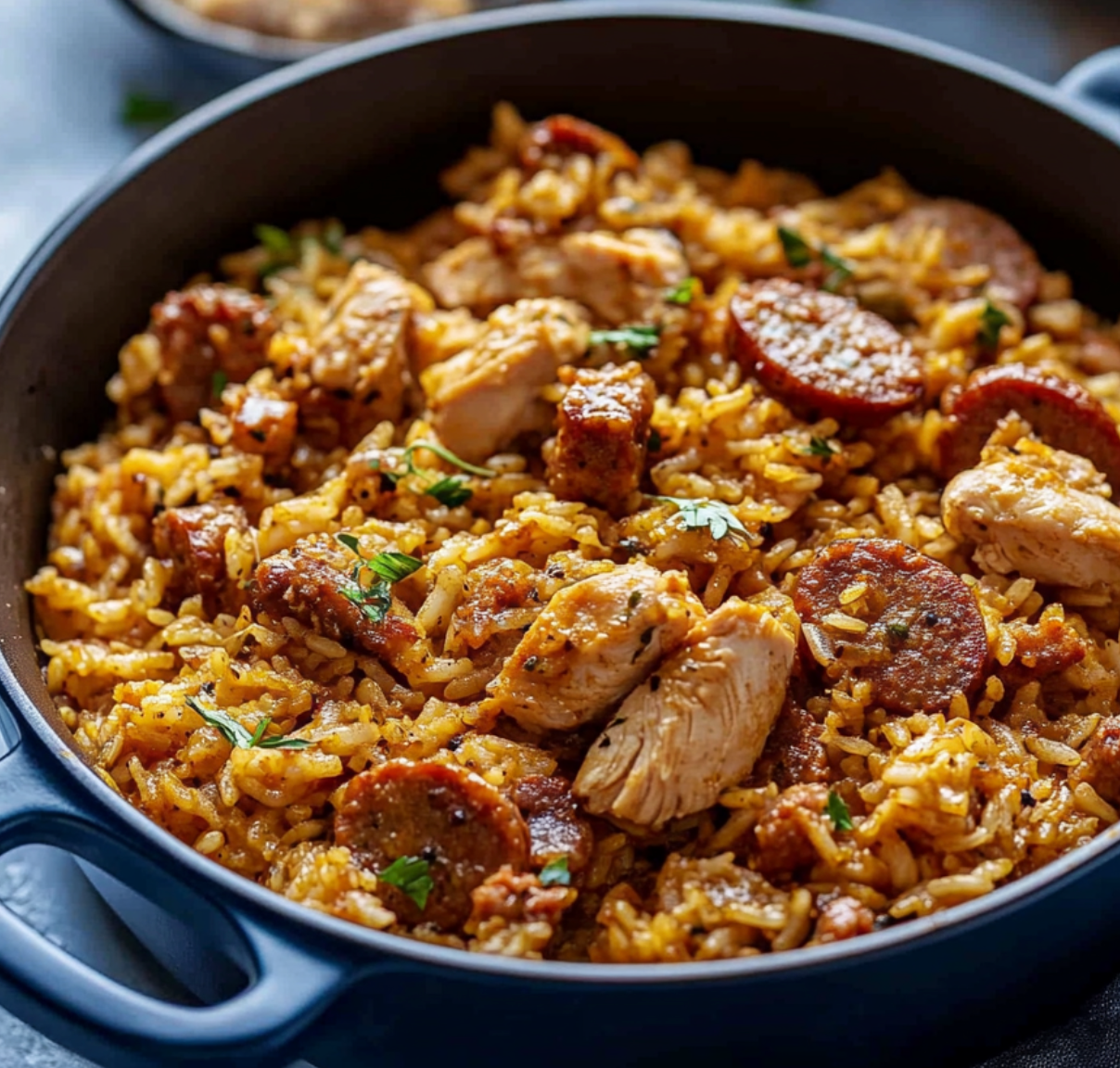
The difference between flat jambalaya and good jambalaya is the first fifteen minutes. You want real browning on the chicken and sausage, not pale meat sitting in steam. Use a wide Dutch oven, give the pieces room, and let the bottom of the pot turn deep brown in spots. Those browned bits dissolve when the vegetables go in and they tint the stock before the rice ever touches it.
This is why a traditional brown jambalaya tastes different from tomato-based versions. RealCajunRecipes has a useful older family-style reference for chicken and sausage jambalaya that follows the same low-and-slow idea. If you want a quicker pressure-cooker path another night, try the site's Instant Pot Chicken and Sausage Jambalaya.
Rice Needs Quiet Heat
Once the rice is stirred in and the lid goes on, the job changes. Keep the burner low and leave the pot closed. Lifting the lid lets steam escape. Stirring breaks the grains and makes the texture heavy. If your stove runs hot, use the smallest burner or a heat diffuser.
The rice should be tender but not wet when the timer ends. If it tastes firm and the pot looks dry, sprinkle in a few tablespoons of hot stock, cover again, and cook five more minutes. If it is tender but a little loose, rest it uncovered for a few minutes before fluffing.
Smart Swaps For Real Life
Boneless thighs make this weeknight-friendly, but bone-in chicken works if you have more time. Brown it well, simmer until tender, then pull the meat from the bones before adding rice. Turkey smoked sausage works too, though the pot will taste lighter. Add a pinch of smoked paprika if your sausage is mild.
For more vegetables, fold in chopped okra after the rice has rested. For heat, pass hot sauce at the table instead of loading the pot with cayenne. That keeps the rice balanced for everyone. If the Cajun flavors are what you are craving, Cajun Cabbage Jambalaya is a good lighter riff.
Serving The Pot Hot
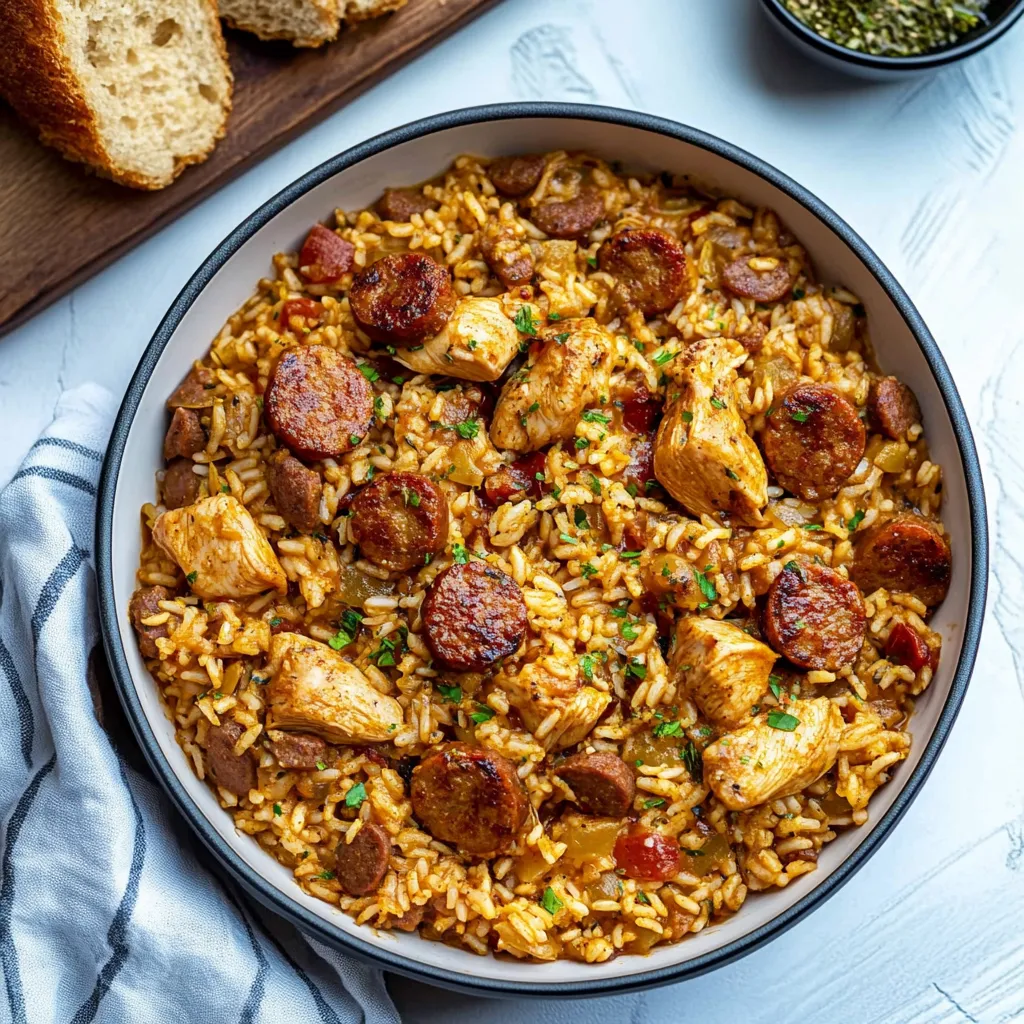
Jambalaya is a full meal, but a simple green salad, buttered French bread, or vinegar-dressed slaw makes it feel complete. I like sliced green onions on top and a few dashes of hot sauce on my own bowl. The rice is smoky and savory, so something crisp on the side helps.
For safe cooking, chicken should reach 165°F according to the FoodSafety.gov temperature chart. The chicken pieces are small enough to finish during the simmer, but it is worth checking if you cut them large.
Leftovers Stay Useful
Cool leftovers quickly and refrigerate them in shallow containers for up to four days. Reheat in a covered skillet with a splash of stock or water, stirring gently once the rice starts to loosen. The microwave works for lunch, but cover the bowl so the rice steams back to life.
Jambalaya also freezes better than many rice dishes because the grains are well seasoned. Pack single servings flat in freezer bags, thaw overnight, and reheat gently. For another smoky rice dinner with a simpler ingredient list, see Smoked Sausage and Rice Dinner. If you want the same Cajun mood in pasta form, Cajun Shrimp Chicken Pasta scratches that itch fast.
Summary
Serve this jambalaya hot from the pot with green onions, parsley, and a little hot sauce at the table.
FAQs
- What makes this Cajun jambalaya authentic?
This version is a brown Cajun-style jambalaya, so the flavor starts with browned chicken, smoky sausage, and the trinity of onion, bell pepper, and celery. It skips tomatoes, which are more common in many Creole-style red jambalayas.
- Can I use chicken breast instead of thighs?
You can, but thighs are better for jambalaya because they stay tender during the simmer. If you use breast meat, cut it a little larger and avoid over-browning it before the rice goes in.
- What kind of sausage should I use?
Andouille is the best choice because it is smoky, garlicky, and sturdy enough to hold its shape. If you cannot find it, use a good smoked Cajun sausage or kielbasa and add a little extra Cajun seasoning.
- How do I keep jambalaya rice from getting mushy?
Use long-grain white rice and keep the heat low once the lid goes on. Stir once when the rice is added, then leave it alone so the grains steam instead of breaking down.
- Can I make jambalaya ahead of time?
Yes. Jambalaya reheats well and the smoky flavor deepens overnight. Cool it quickly, refrigerate it in a covered container, and reheat gently with a splash of stock or water.
- Is this recipe gluten-free?
The recipe has no wheat ingredients, but sausage and Cajun seasoning can vary by brand. Check both labels if you need the dish to be strictly gluten-free.
