 Pin it
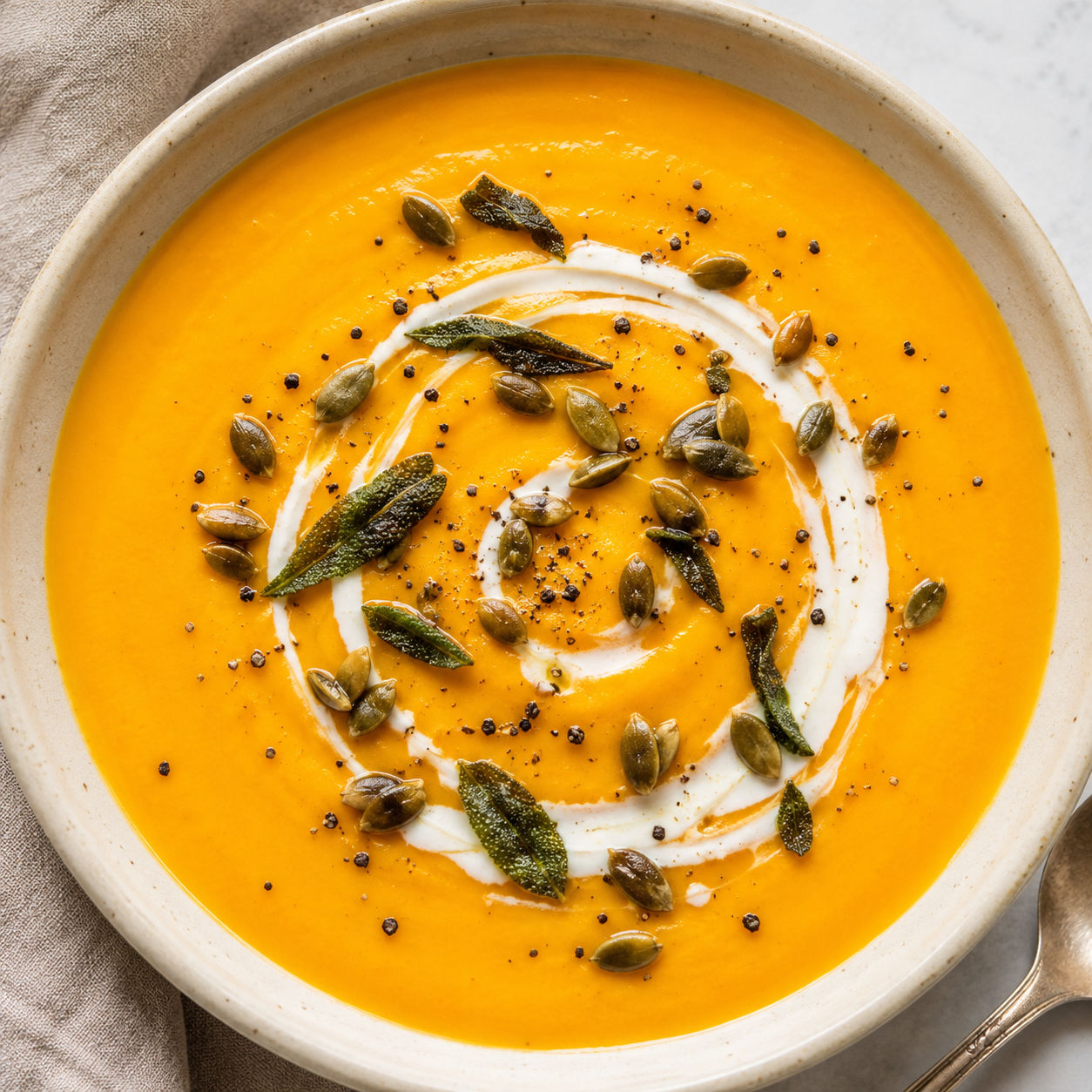
Butternut Squash Soup is one of those bowls that tastes like you worked harder than you did. Roasting the squash gives it a deeper, sweeter flavor, and the blender turns everything silky in a few minutes.
I like this version with a little carrot for body, garlic for balance, and sage because it makes the kitchen smell like dinner is already figured out. It is cozy, simple, and good with a grilled cheese or a hunk of crusty bread.
The Squash Soup Lineup
Choose a butternut squash that feels heavy for its size and has firm, matte skin. Pre-cut squash works too, but check that the cubes look dry and bright orange, not slick or pale.
- Butternut squash. The base of the soup, roasted until tender so the natural sweetness deepens.
- Yellow onion. Adds a savory backbone and keeps the soup from tasting like plain squash puree.
- Carrot. Gives the soup body and a soft sweetness that blends smoothly.
- Garlic. Adds warmth without taking over the bowl.
- Fresh sage. Brings an earthy fall flavor that works especially well with roasted squash.
- Vegetable stock. Loosens the puree and keeps the recipe vegetarian.
- Heavy cream. Rounds the edges and gives the soup a soft, silky finish.
- Pepitas. Add crunch so the bowl does not feel flat.
Roast, Simmer, Blend
- Roast the squash. Toss peeled squash cubes with olive oil, salt, and pepper, then roast at 425°F until fork-tender and lightly browned at the edges.
- Soften the aromatics. Cook onion and carrot in butter until the onion turns glossy and sweet, then stir in garlic and sage for the last minute.
- Simmer the soup. Add the roasted squash and stock, then simmer until the carrot is fully tender and the flavors settle together.
- Blend until smooth. Use an immersion blender in the pot or blend in batches. If using a standard blender, vent the lid and cover it with a towel.
- Finish the bowl. Stir in cream, season again, and serve with pepitas, black pepper, and a small swirl of cream if you like.
Why Roasting Matters
Raw squash can make a fine soup, but roasted squash makes a memorable one. The heat dries the surface a little and browns the edges, which gives the final bowl a nutty sweetness that stock alone cannot build. Spread the cubes out on the pan so they roast instead of steam. If the pieces are crowded, use two pans. The squash is ready when a fork slides in easily and some corners look dark gold. For another cozy roasted vegetable bowl, try this roasted mixed vegetable soup when you want something a little chunkier.
Getting It Truly Silky
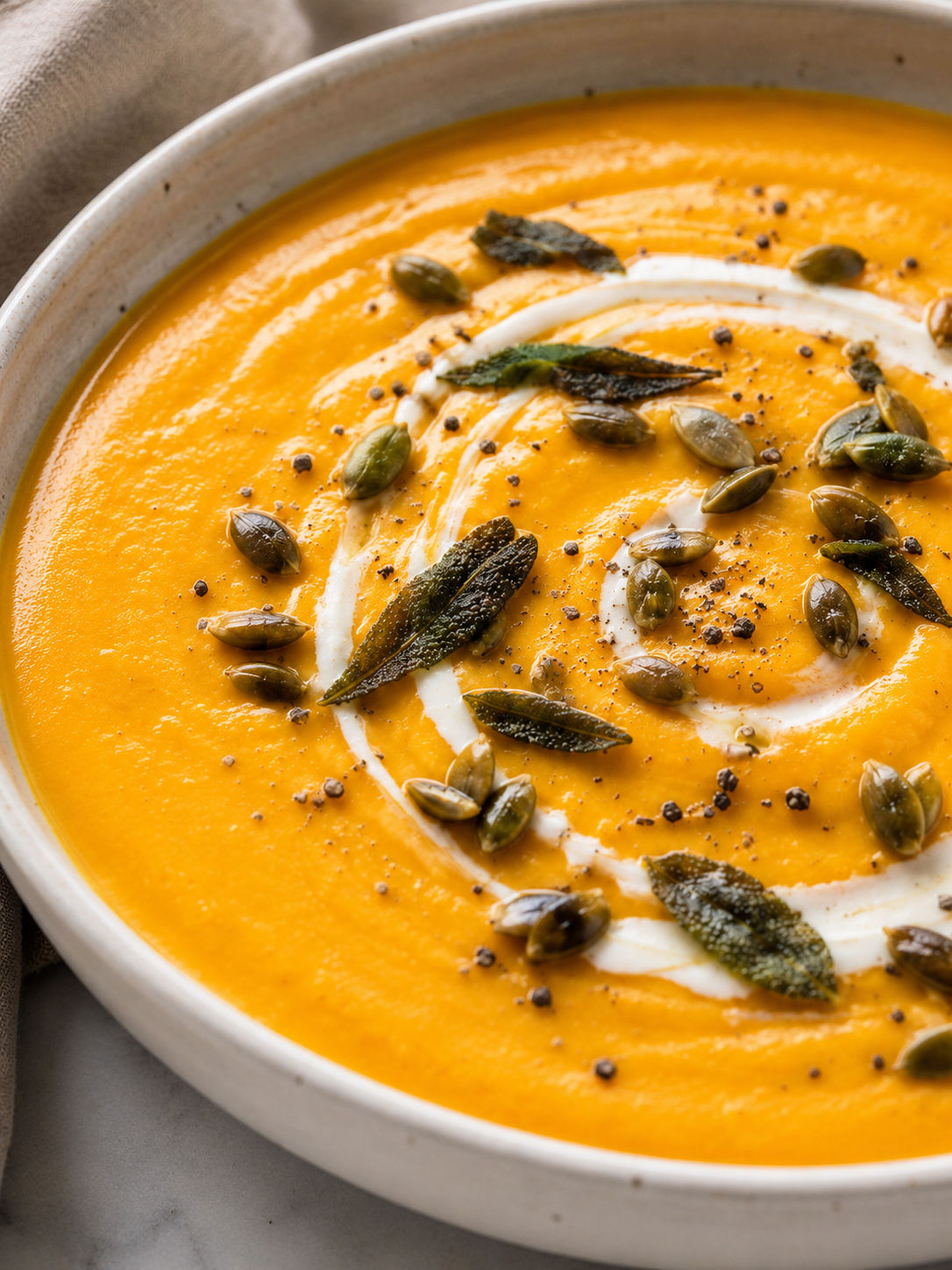
A high-speed blender gives the smoothest texture, but an immersion blender works if you give it enough time. Blend longer than you think you need, then check the spoon. The soup should look glossy, not grainy. If it feels too thick, add warm stock in small splashes. If it tastes dull after blending, do not add more cream first. Add salt, then taste again. A tiny squeeze of lemon can wake it up without making it taste lemony.
Smart Swaps For Your Pantry
This Butternut Squash Soup can bend without falling apart. Use coconut milk instead of cream for a dairy-free version with a gentle sweetness. Add a peeled apple with the onion if you like a fruitier soup, or stir in a pinch of curry powder for warmth. If you are already in a squash mood, the flavors pair well with honey glazed acorn squash or a simple salad. For a heartier dinner, serve smaller bowls next to creamy orzo with butternut squash.
Toppings That Help
Soup this smooth needs a little contrast. Toasted pepitas are my first choice because they stay crisp and echo the squash flavor. Fried sage is excellent if you have five extra minutes. A spoonful of sour cream, Greek yogurt, or creme fraiche adds tang and makes the bowl look finished. Keep the toppings small so every spoonful still tastes like squash. If you want a spicier fall soup on another night, coconut curry pumpkin soup follows the same cozy idea with more heat.
Storing The Leftovers
Let the soup cool, then refrigerate it in a sealed container for up to 4 days. The USDA recommends chilling leftovers promptly, and their leftovers food-safety guide is a helpful reference for timing. Reheat gently on the stove and loosen with stock or water as needed. This soup freezes well for about 3 months. For the best texture, freeze it before adding the cream and stir the cream in after reheating.
Summary
This roasted butternut squash soup is smooth, lightly sweet, and savory enough for dinner. Roast the squash until tender and browned at the edges, then blend it with vegetables, stock, cream, and a warm sage finish.

FAQs
- Do I have to roast the butternut squash first?
You can simmer raw squash, but roasting gives the soup better flavor. The edges caramelize and the finished bowl tastes sweeter, rounder, and less watery.
- Can I use frozen butternut squash?
Yes. Roast it from frozen on a hot sheet pan with oil, salt, and pepper until the moisture cooks off and the pieces start to brown. It may take 5-10 minutes longer than fresh cubes.
- How do I make this soup dairy-free?
Use olive oil instead of butter and replace the cream with full-fat coconut milk or extra vegetable broth. Coconut milk gives the richest texture, while broth keeps the flavor cleaner and lighter.
- Why is my butternut squash soup bland?
It usually needs more salt or more roasting time. Squash is naturally sweet, so a little acid also helps. Try a small squeeze of lemon or a teaspoon of apple cider vinegar at the end.
- How long does butternut squash soup last?
Store it in an airtight container in the fridge for up to 4 days. Reheat it gently on the stove and add a splash of stock or water if it thickens.
- Can I freeze butternut squash soup?
Yes. Freeze it without the cream if you can, then stir in cream after reheating. If it is already creamy, thaw it overnight and whisk well as it warms.
