 Pin it
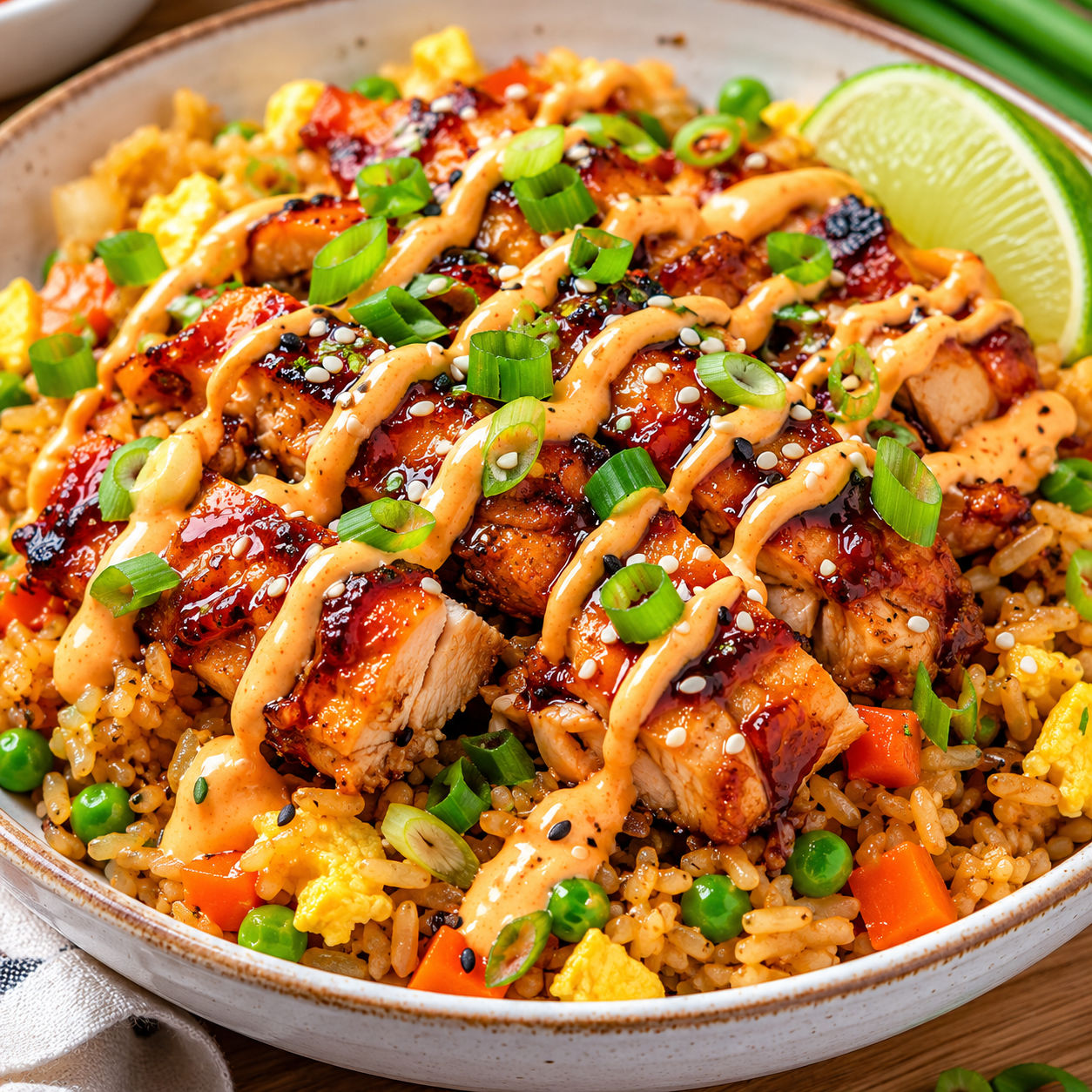
BBQ Chicken with Tangy Fried Rice and Japanese Sauce is what I make when I want fried rice to feel like a full dinner, not a fridge clean-out. The chicken gets sticky and browned around the edges, then the rice picks up the drippings in the pan.
The tang comes from rice vinegar and a little lime, which keeps the sweet barbecue glaze from tasting heavy. A quick creamy sauce on top gives it that Japanese steakhouse feel without needing a flat-top grill.
The Big Flavor Lineup
Use cooked rice that has had time to dry out, boneless chicken thighs for juiciness, and a Japanese-style barbecue sauce that is glossy and soy-forward. The creamy sauce is simple, but chilling it while the rice cooks helps the garlic and vinegar settle in.
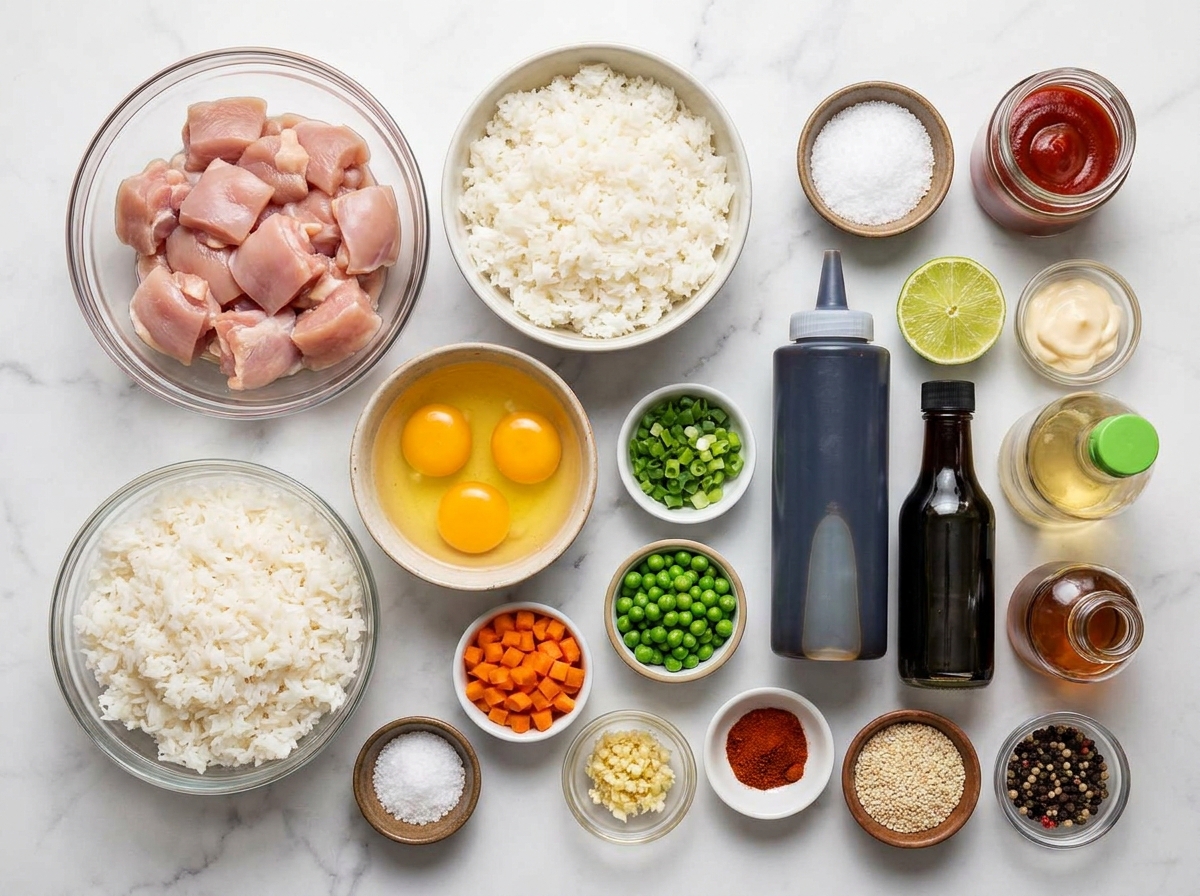
- Boneless chicken thighs. They stay tender while the sauce bubbles into a sticky glaze.
- Japanese BBQ sauce. Adds soy, sweetness, garlic, ginger, and shine in one bottle.
- Cold cooked rice. Fries into separate grains instead of clumping into a soft mound.
- Eggs. Bring richness and those soft golden pieces you expect in fried rice.
- Carrots and peas. Add color, sweetness, and quick-cooking texture.
- Green onions. Give the rice a fresh bite at the end.
- Rice vinegar and lime. Cut through the sweet BBQ glaze and make the rice taste bright.
- Mayonnaise sauce. A creamy, tangy drizzle that ties the chicken and rice together.
Cook It Hot And Fast
- Mix the sauce. Stir mayonnaise, ketchup, rice vinegar, sugar, paprika, garlic powder, and water until smooth. Chill it while you cook.
- Brown the chicken. Sear seasoned chicken pieces in a hot skillet until golden and cooked through. Add Japanese BBQ sauce and let it bubble until glossy.
- Scramble the eggs. Push the chicken to a plate, add a little oil, and softly scramble the eggs in the same pan.
- Fry the vegetables. Cook carrots, peas, garlic, and the white parts of the green onions until the garlic smells nutty.
- Add the rice. Break up the cold rice in the pan and let it sit briefly so some grains toast before stirring.
- Finish the skillet. Return the chicken, add soy sauce, rice vinegar, lime juice, sesame oil, and green onion tops. Drizzle with the creamy Japanese sauce before serving.
Why The Rice Stays Tangy
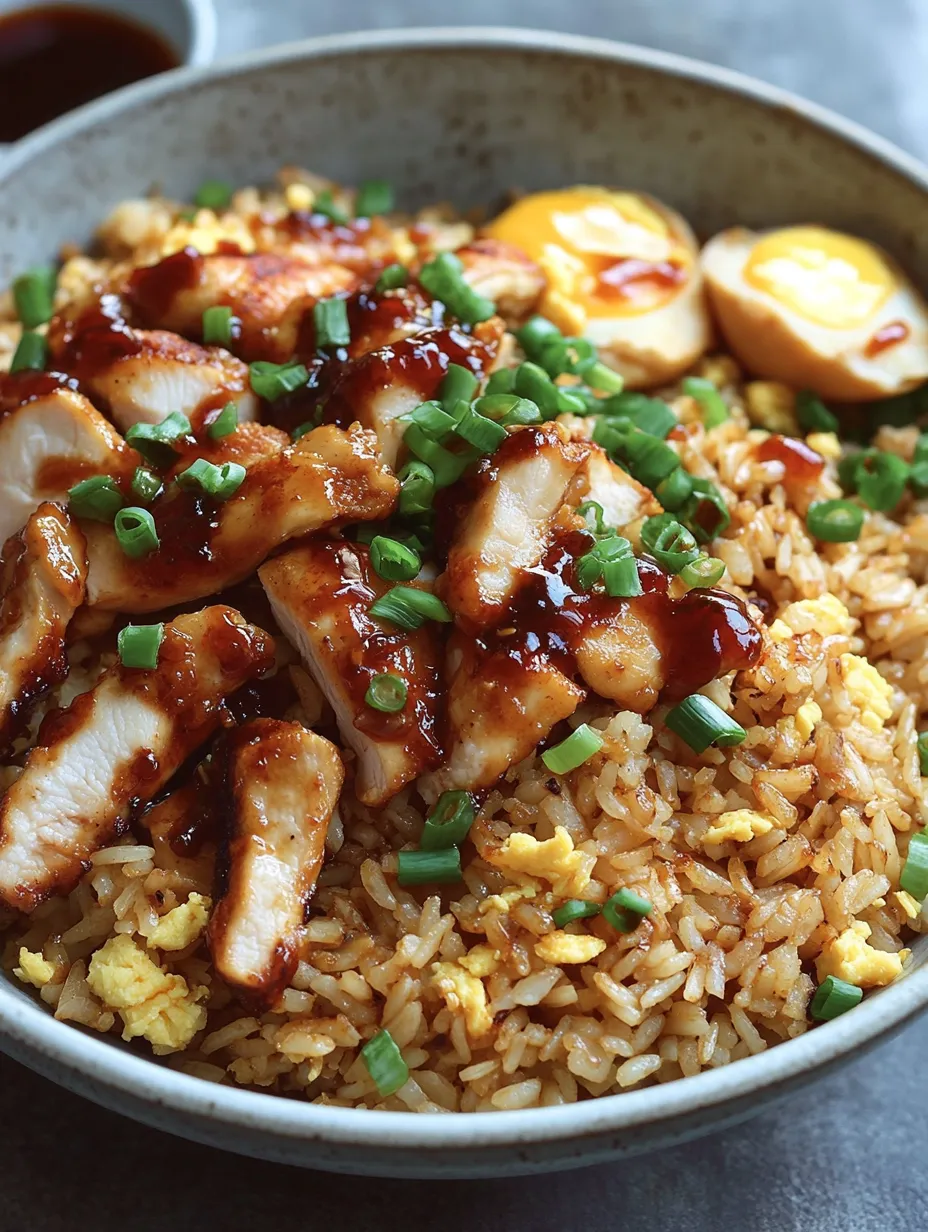
The tang is not there to make the rice sour. It keeps the BBQ glaze lively. Add rice vinegar near the end so it does not cook away into the background. Lime juice goes in last for a fresher edge. If you already like the sauce-forward rice in BBQ Chicken Fried Rice, this version leans a little brighter and a little more steakhouse-style.
Chicken That Glazes Cleanly
Cut the chicken into even 1-inch pieces so it cooks before the sauce gets too dark. Brown the meat first, then add the Japanese BBQ sauce for the last minute or two. If the sauce goes in too early, its sugars can scorch before the chicken is done. FoodSafety.gov lists 165°F as the safe minimum temperature for chicken, which is useful if your pieces are uneven. You can check their safe temperature chart for the exact guidance.
Better Fried Rice Texture
Cold rice is the biggest texture win. I like to loosen it with my fingers before it hits the pan so I am not smashing clumps with a spatula. Let the rice sit against the hot surface for 30 seconds at a time before tossing. That gives you light browning and a faint toasted smell. For a more classic Japanese fried rice approach, Just One Cookbook's chahan guide is a solid reference for how simple seasonings and hot-pan technique work together.
Easy Swaps That Fit
Chicken breast works if you cut it small and stop cooking as soon as it reaches 165°F. Shrimp is good too, but cook it separately and fold it in at the end so it stays snappy. For heat, add chili crisp or shichimi togarashi at the table. For a familiar hibachi-style plate, serve this beside Classic Hibachi Chicken With Fried Rice or use the creamy drizzle the same way you would with Bang Bang Chicken with Fried Rice.
Storing And Reheating
Pack leftovers into shallow containers and refrigerate within 2 hours. The rice keeps well for up to 3 days. Reheat it in a skillet over medium heat with a small splash of water, then cover for a minute to soften the grains. Uncover and stir until hot. The sauce should go on after reheating, not before. If you want a lighter rice side for another night, Quick and Healthy Fried Rice is a good match for grilled chicken or tofu.
Summary
This skillet dinner balances sweet Japanese BBQ chicken with bright fried rice and a creamy tangy sauce. Keep the rice cold, the pan hot, and the sauce for the final drizzle.
FAQs
- What is Japanese sauce in this recipe?
Here it means a creamy Japanese steakhouse-style sauce made with mayonnaise, ketchup, rice vinegar, garlic powder, paprika, and a little sugar. It is often called yum yum sauce in the United States. It is not a traditional Japanese mother sauce, but it tastes right with hibachi-style chicken and fried rice.
- Can I use regular BBQ sauce instead of Japanese BBQ sauce?
Yes, but use a thinner, less smoky sauce if you can. Japanese BBQ sauce is usually soy-based and sweet-savory, so a thick hickory-style sauce can dominate the rice. If using American BBQ sauce, mix it with a spoonful of soy sauce and a splash of rice vinegar.
- Why does day-old rice work better?
Cold cooked rice is drier, so the grains fry instead of turning soft and sticky. If you only have fresh rice, spread it on a sheet pan for 15-20 minutes to let steam escape. That small pause makes a big difference in the skillet.
- How do I know the chicken is cooked?
The pieces should be browned outside and opaque all the way through. For the safest check, use an instant-read thermometer and cook chicken to 165°F. Bite-size thigh pieces usually take 6-8 minutes in a hot skillet.
- Can I make this gluten-free?
Yes, if you use gluten-free Japanese BBQ sauce and tamari instead of regular soy sauce. Check the labels on mayonnaise and ketchup too, especially if cooking for someone with celiac disease. The rest of the base recipe is naturally wheat-free.
- How should I store leftovers?
Cool leftovers quickly, then refrigerate in an airtight container for up to 3 days. Reheat in a skillet with a teaspoon or two of water so the rice softens without getting greasy. Keep the creamy sauce separate if you can.
