 Pin it
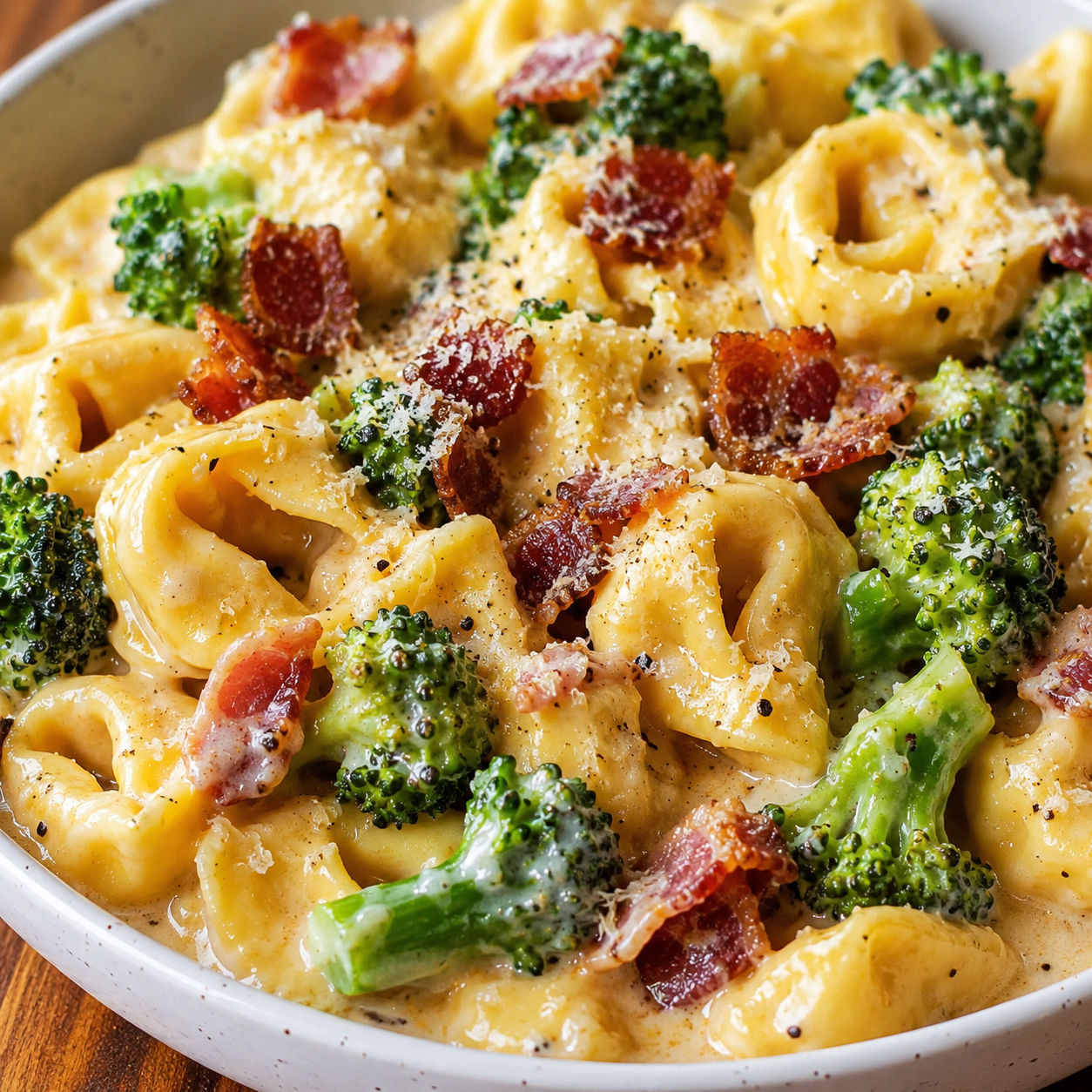
Bacon Tortellini with Broccoli and Cheese is the kind of skillet dinner that feels generous without asking much from you. The tortellini cooks fast, the broccoli goes in the same pot, and the bacon gives the sauce a smoky edge.
I like this version on the stovetop because the sauce stays loose and creamy. You still get all the comfort of a baked pasta, just without waiting for the oven.
The creamy skillet lineup
Use refrigerated cheese tortellini if you want the fastest path. Fresh broccoli should be firm and dark green, and the cheese should be grated right before it goes into the sauce.
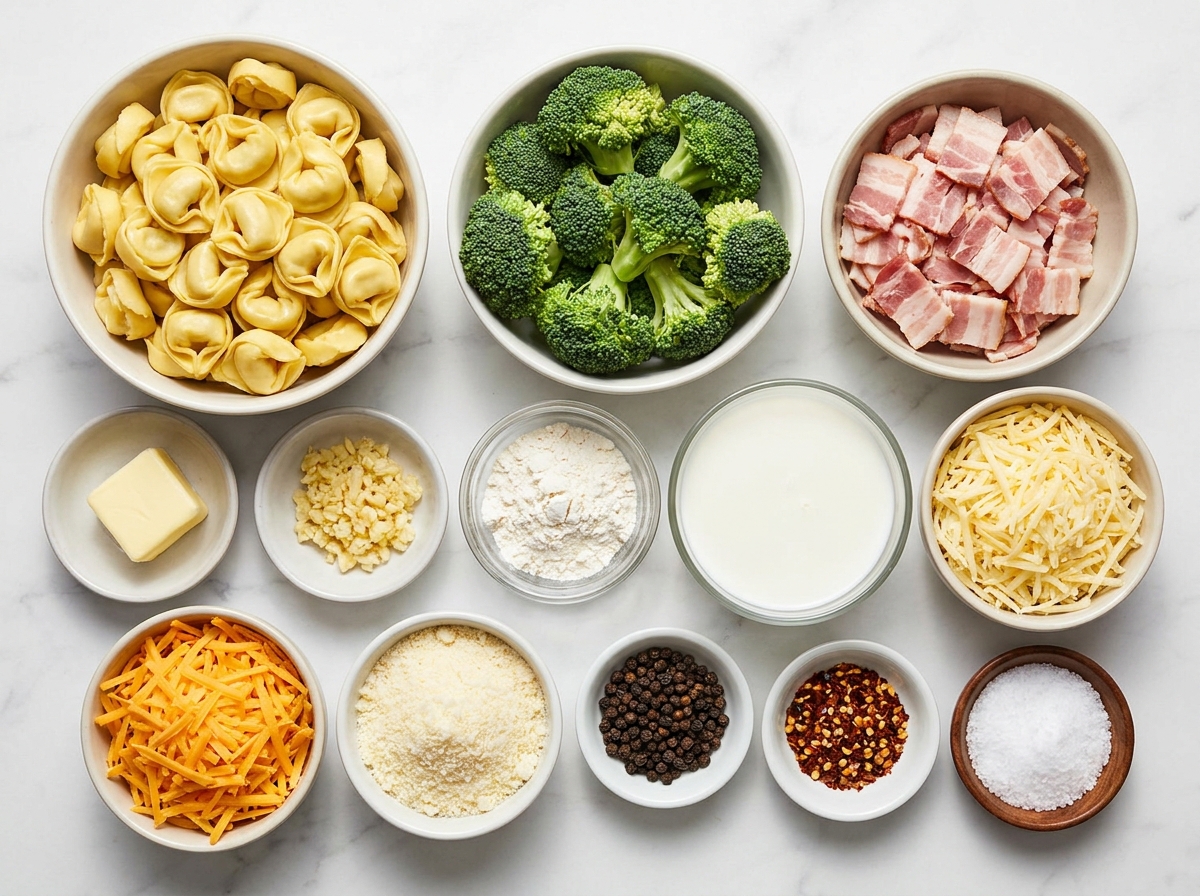
- Cheese tortellini. Gives the dish tender pasta pockets and a creamy filling in every bite.
- Bacon. Adds crisp texture, smoky flavor, and a little rendered fat for the sauce base.
- Broccoli florets. Bring color and a fresh bite that keeps the skillet from feeling too heavy.
- Garlic. Warms up the sauce without taking over.
- Butter and flour. Make a quick roux so the sauce coats the tortellini instead of sliding off.
- Milk. Turns the roux into a creamy sauce without making the dish too rich.
- Cheddar cheese. Melts into the sauce and gives it that familiar broccoli-cheese flavor.
- Parmesan cheese. Adds salt, depth, and a little savory bite.
- Black pepper and red pepper flakes. Cut through the richness with gentle heat.
Quick skillet path
- Crisp the bacon. Cook chopped bacon in a wide skillet until browned and crisp, then move it to a paper towel lined plate. Keep about 1 tablespoon of the drippings in the pan.
- Cook pasta and broccoli. Boil the tortellini in salted water. Add the broccoli during the last 2 minutes, then drain both well.
- Start the sauce. Melt butter in the bacon drippings, stir in garlic, then whisk in flour until it looks smooth and smells lightly toasted.
- Add milk slowly. Pour in the milk a little at a time while whisking. Simmer until the sauce thickens enough to coat a spoon.
- Melt the cheese. Take the skillet off the heat and stir in cheddar and Parmesan by the handful.
- Fold and finish. Add tortellini, broccoli, and most of the bacon. Toss gently until coated, then top with the remaining bacon and extra Parmesan.
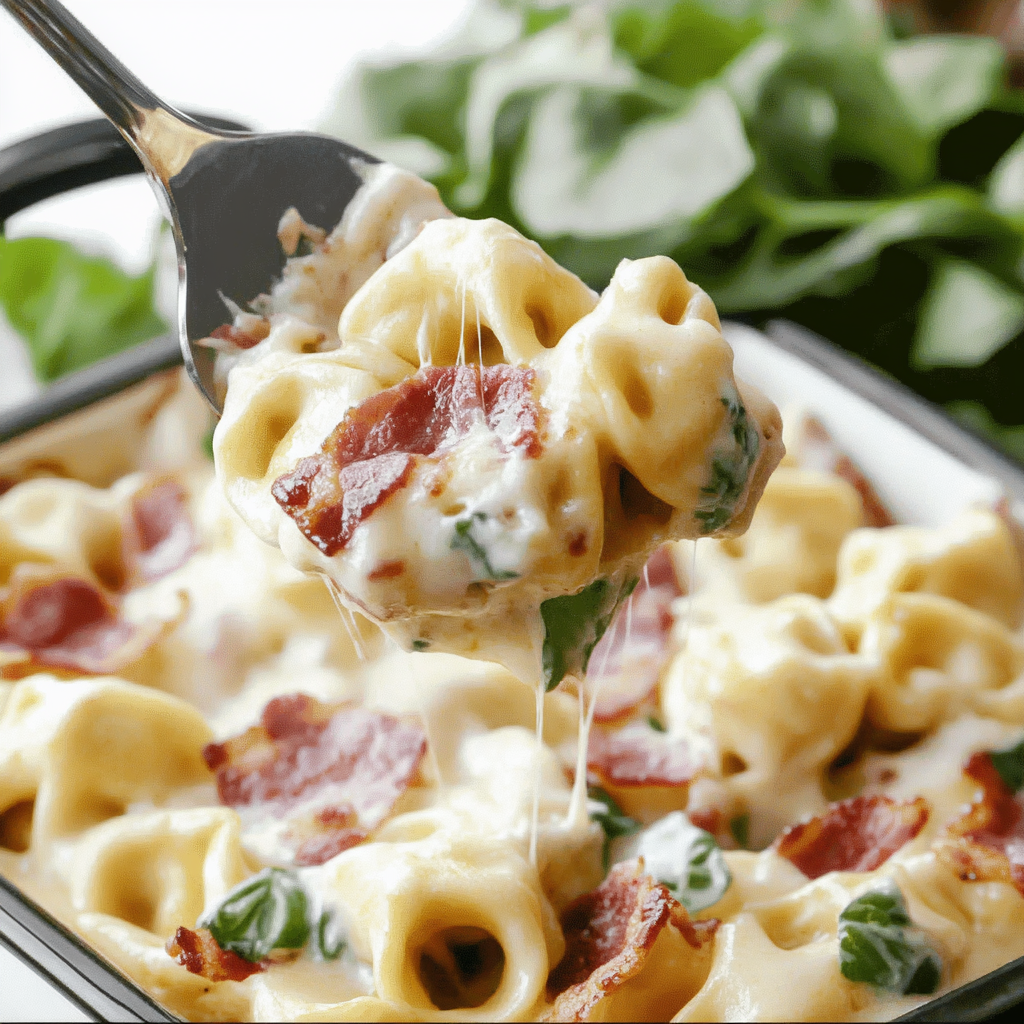
Bacon Tortellini with Broccoli and Cheese
The balance matters here. Bacon is salty, tortellini is soft, and the cheese sauce is rich, so broccoli has a real job. It should taste fresh and still have a little snap. That is why I add it to the pasta water only at the end instead of boiling it from the start.
If you like a thicker, oven-style dinner, the site already has a cozy bacon tortellini bake with broccoli. This skillet version stays creamier and looser, which makes it better for a quick weeknight plate.
Why the sauce stays smooth
A small roux is the difference between melted cheese and a real sauce. Let the flour cook in the butter and bacon drippings for about 1 minute. It should smell nutty, not raw. Then add the milk slowly while whisking so lumps do not get a chance to form.
Once the sauce thickens, move the pan off the burner before adding cheese. Cheddar can split if it boils. Parmesan can clump if it is dumped in all at once. Stir in small handfuls and let the heat already in the sauce do the work. The same slow cheese melt helps in rich pasta recipes like Tini Mac and Cheese.
Keep broccoli bright
Broccoli turns dull when it cooks too long. Two minutes in boiling pasta water is usually enough for small florets. You want the stem pieces tender but still green. If your florets are large, cut them down before they hit the pot.
Do not cover the skillet after the broccoli goes into the sauce. Covered heat keeps steaming it, and that can turn the pieces soft. For more broccoli-cheese comfort, try crispy baked broccoli cheese balls as a snack or side.
Swaps for busy nights
No bacon in the fridge? Use diced ham or pancetta and add a teaspoon of olive oil if the pan looks dry. Turkey bacon works too, but it will not render much fat, so use butter for the sauce base. For a meatless version, skip the bacon and season the sauce with smoked paprika.
You can swap cheddar for Monterey Jack, mozzarella, or a mild white cheddar. Keep Parmesan in the mix if you can because it sharpens the sauce. If you want another tortellini dinner with vegetables, this cheese tortellini with summer vegetables is a lighter place to go next.
Leftovers without dry pasta
Store leftovers in a covered container in the fridge for up to 3 days. FoodSafety.gov has a helpful cold food storage chart if you want a quick reference for cooked foods.
Reheat this gently. Add a splash of milk to a skillet, warm it over low heat, then stir in the pasta until the sauce loosens. The microwave works for a single portion, but use half power and stir halfway through. High heat makes the tortellini tough and the cheese sauce oily.
FAQs
- Can I use frozen tortellini?
Yes. Cook frozen tortellini according to the package directions, then drain it well before adding it to the sauce. If the pasta releases extra water, let the skillet simmer for a minute before adding the cheese.
- Can I use frozen broccoli?
Frozen broccoli works, but thaw it first and pat it dry. Add it near the end so it heats through without breaking apart. Fresh broccoli gives the best color and bite.
- What cheese melts best in this recipe?
Sharp cheddar gives the sauce a clear cheese flavor, while Parmesan adds salt and nuttiness. Grate both from a block if you can. Pre-shredded cheese can make the sauce thicker and less smooth.
- How do I keep the cheese sauce from turning grainy?
Take the pan off the heat before stirring in the cheese. Add it in handfuls and stir until each handful melts before adding more. Boiling cheese sauce is the usual reason it turns rough.
- Can I make this ahead?
You can cook the bacon and chop the broccoli a day ahead. The finished pasta is best right after cooking, but leftovers reheat well with a splash of milk. Keep the heat low so the sauce loosens gently.
- What should I serve with bacon tortellini?
A crisp green salad works well because the pasta is rich. Garlic bread is good if you want a bigger dinner. For a lighter side, serve sliced cucumbers or roasted vegetables.
