 Pin it
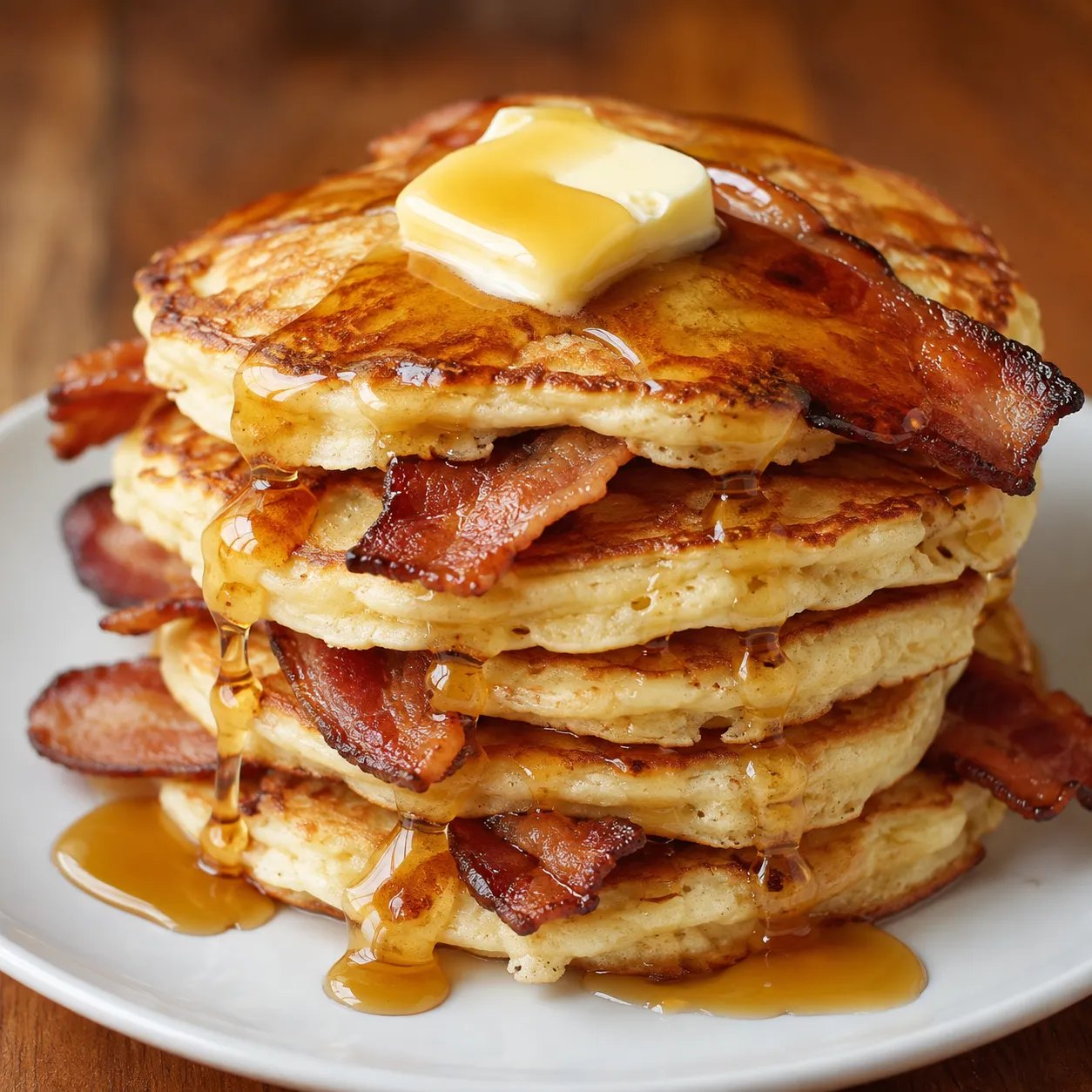
Bacon Pancakes are what happens when the best part of the breakfast plate gets tucked right into the stack. The pancake stays tender and fluffy, while the bacon gives each bite a smoky, salty edge that tastes made for maple syrup.
I like this method because the bacon is cooked first, then the batter goes right over the strips in the skillet. That keeps the bacon crisp enough to notice and gives the pancake a lightly browned edge without making the batter greasy.
What Makes the Batter Work
The batter is simple, so each ingredient needs to do its job. Use real buttermilk if you can, because its tang helps the pancakes rise and keeps the crumb tender.
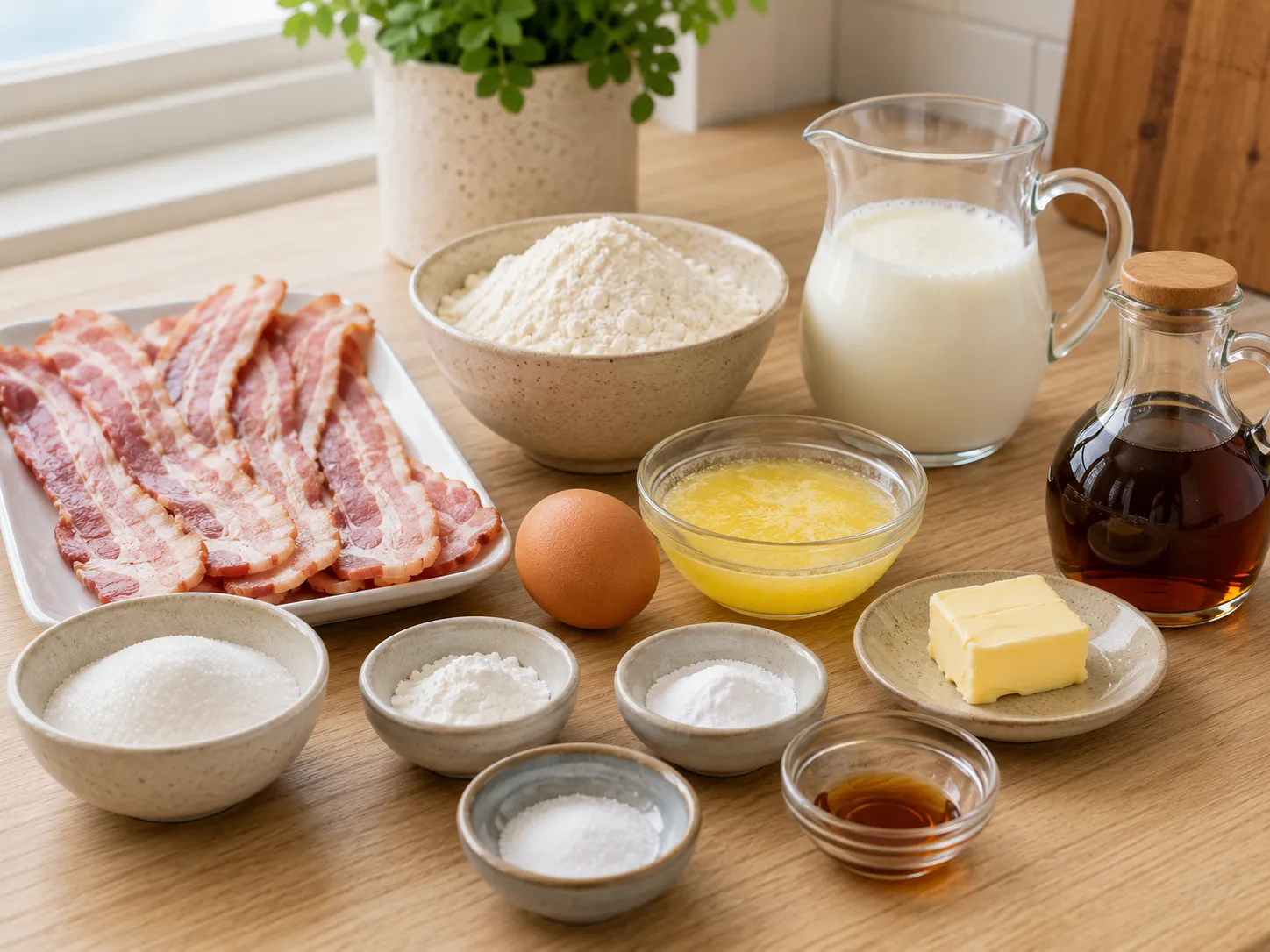
- Bacon. Cooked until crisp first, it brings smoke, salt, and a little crunch to the center of each pancake.
- All-purpose flour. Gives the pancakes structure without making them heavy.
- Buttermilk. Adds tang and reacts with baking soda for a lighter texture.
- Egg. Holds the batter together and helps the pancakes brown.
- Melted butter. Adds richness and keeps the pancakes soft.
- Baking powder and baking soda. Give the batter lift, especially with the buttermilk.
- Maple syrup. Finishes the pancakes with the sweet note that makes the bacon pop.
Cook Bacon Pancakes This Way
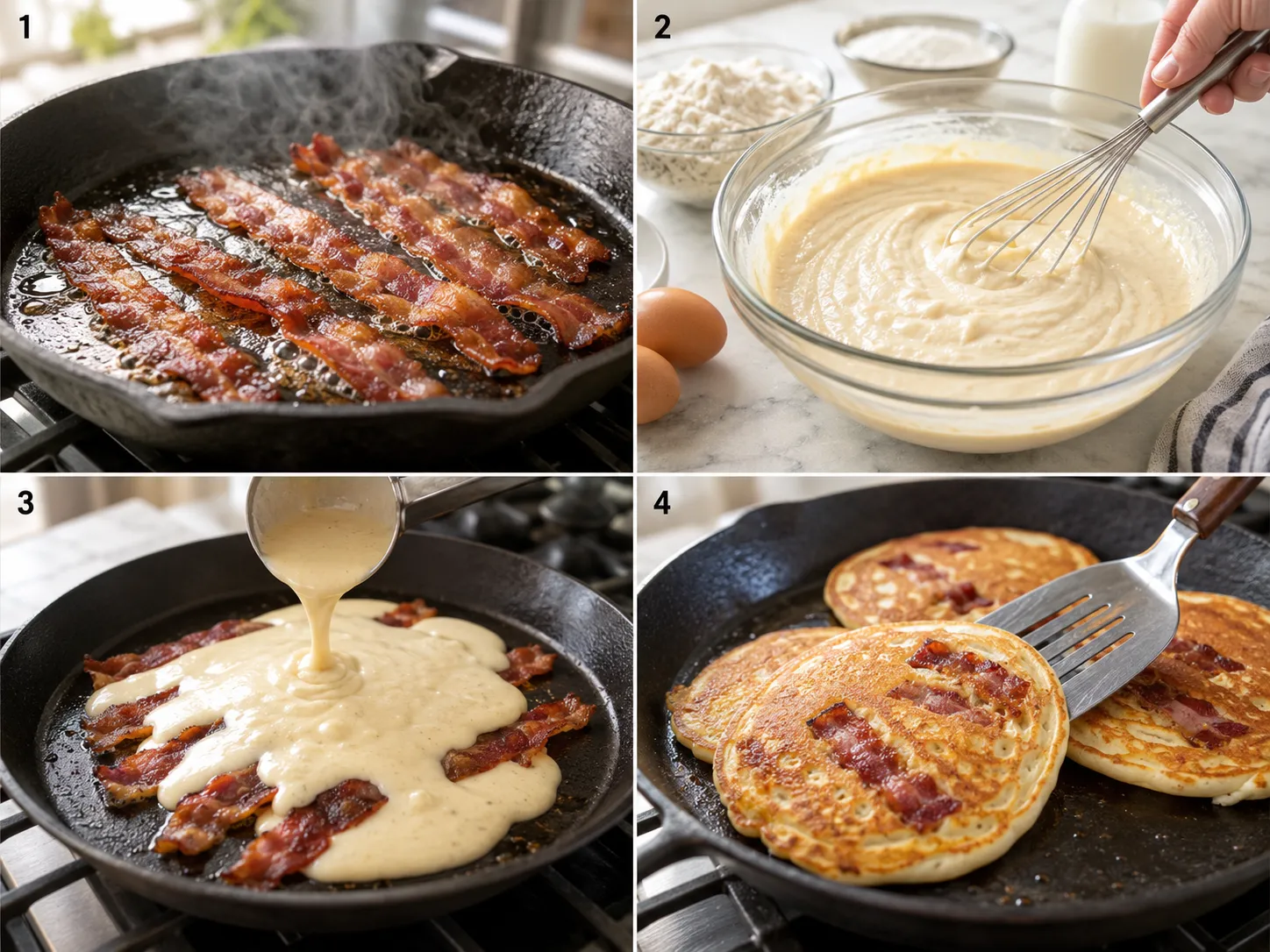
- Cook the bacon. Brown the bacon in a skillet until crisp but not brittle. Drain it well and save a teaspoon of the drippings for the pan if you like a stronger bacon flavor.
- Mix the dry bowl. Whisk flour, sugar, baking powder, baking soda, and salt so the leavening is evenly spread.
- Mix the wet bowl. Whisk buttermilk, egg, melted butter, and vanilla until smooth.
- Make the batter. Stir wet into dry just until no dry streaks remain. A few lumps are good. Smooth batter usually means tough pancakes.
- Add bacon to the pan. Lay one cooked bacon strip in the skillet, then spoon about 1/4 cup batter over it so the bacon sits in the center.
- Flip and finish. Cook until bubbles open on top and the edges look set, about 2 minutes. Flip gently and cook 1-2 minutes more.
Why Bacon Pancakes Stay Fluffy
The main trick is not overmixing. Pancake batter should look a little uneven when it hits the skillet. Once flour gets wet, stirring builds gluten, and too much gluten makes pancakes chewy instead of soft.
Buttermilk also helps. It brings acidity to the batter, which works with baking soda for lift. If your buttermilk is very thick, the batter may sit in a mound. Add a tablespoon or two of milk so it spreads slowly over the bacon.
Getting Crisp Bacon Inside
Do not put raw bacon under pancake batter. It will steam, stay chewy, and leave greasy pockets in the pancake. Cook it first until the fat renders and the edges look crisp.
The USDA bacon safety guide notes that bacon should be cooked completely before removing it from the heat. For this recipe, crisp cooked bacon gives the safest and best texture.
Heat Matters More Than Speed
Medium heat is the sweet spot. Too low, and the batter spreads before it rises. Too high, and the outside browns before the middle cooks around the bacon.
If the first pancake is dark before bubbles appear, wipe the pan and lower the heat. A thin sheen of bacon fat is enough. Puddles of fat fry the edges hard and can make the pancake taste heavy.
Swaps Worth Making
For a sweeter brunch plate, add 1 tablespoon maple syrup to the batter and cut the sugar by half. For a smoky diner-style pancake, brush the skillet with a little strained bacon fat between batches.
You can also make smaller pancakes with half strips of bacon. They are easier for kids to pick up and cook a little faster. Gluten-free measure-for-measure flour can work, but let the batter rest 10 minutes so it hydrates before cooking.
Store, Freeze, Reheat
Cool leftover pancakes before storing so steam does not make them damp. Refrigerate in an airtight container for up to 3 days, or freeze with parchment between pancakes for up to 2 months.
Reheat from chilled in a toaster oven or dry skillet until hot in the center. For general kitchen habits, the FoodSafety.gov food safety steps are a good reminder to chill leftovers promptly and keep cooked food handled cleanly.
Summary
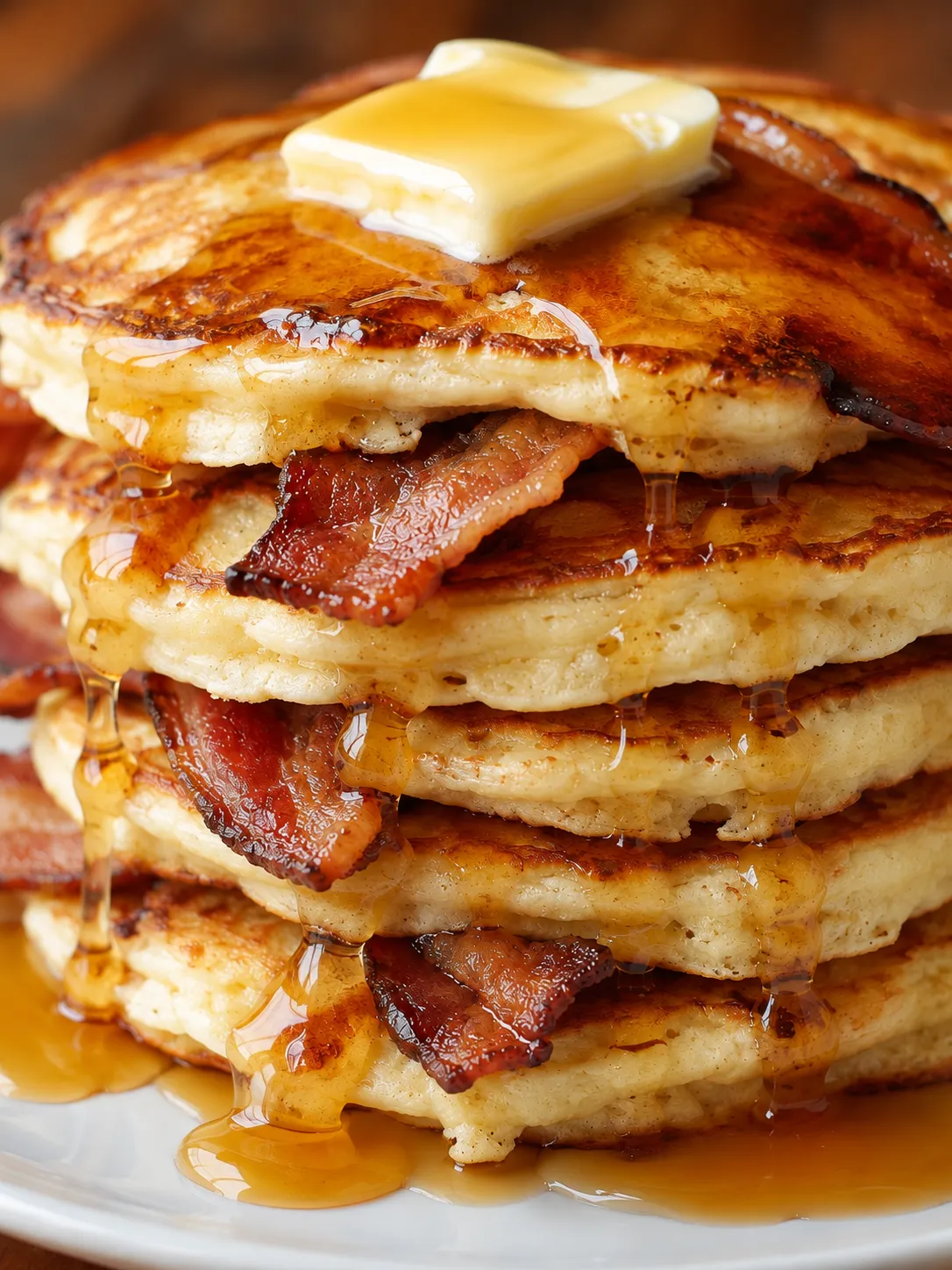
Serve these bacon pancakes hot from the skillet with warm maple syrup and a little butter. They are simple enough for Saturday morning and sturdy enough to freeze for another breakfast.
FAQs
- Can I use pancake mix for bacon pancakes?
Yes. Cook the bacon first, then make the mix according to the package. Pour about 1/4 cup batter over each cooked bacon strip and cook as directed here.
- Can I use turkey bacon?
Turkey bacon works, but it does not render as much fat as pork bacon. Cook it until crisp, then use a little butter or neutral oil in the skillet before adding the batter.
- How do I keep the bacon from getting soggy?
Cook the bacon until crisp before it touches the batter. Let it drain on paper towels, then use medium heat so the pancake cooks through without steaming the bacon too much.
- Can I make bacon pancakes ahead?
You can cook the bacon and measure the dry ingredients a day ahead. Finished pancakes keep in the fridge for about 3 days and freeze well with parchment between layers.
- What should I serve with bacon pancakes?
Warm maple syrup is the classic choice. Fresh berries, fried eggs, or a simple fruit salad balance the salty bacon and make the plate feel complete.
- Why are my pancakes browning too fast?
The skillet is probably too hot or has too much bacon fat in it. Wipe out extra fat, lower the heat to medium, and give the pan a minute to settle before the next batch.
