 Pin it
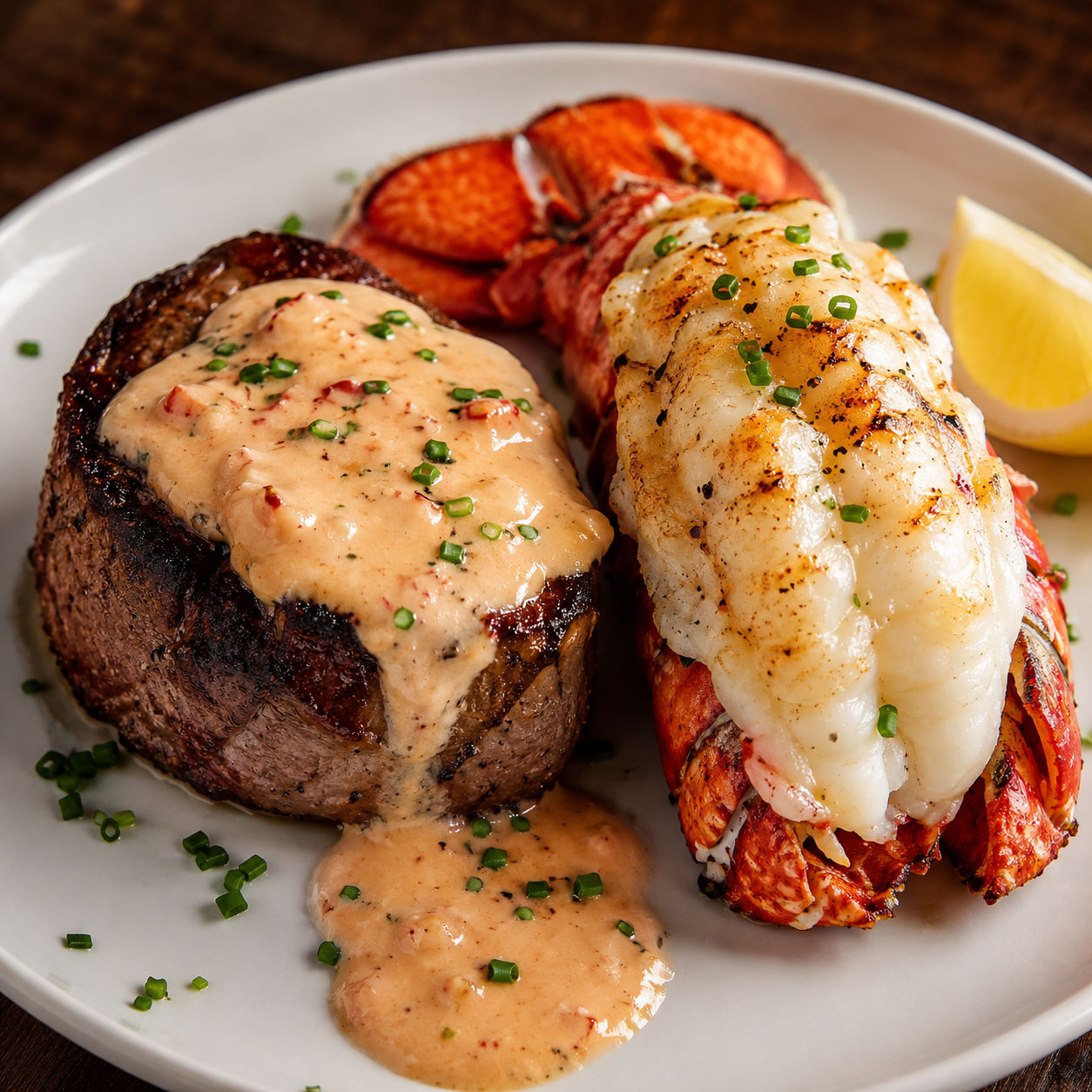
Surf and turf paired with lobster sauce for a luxurious meal sounds like a restaurant order, but it is very doable at home. The trick is not rushing the timing. Make the sauce first, then cook the lobster and steak while it stays warm.
I like filet mignon here because it cooks quickly and stays tender. The lobster sauce brings the butter, cream, seafood stock, lemon, and herbs into one glossy spoonful that ties the plate together.
Steakhouse Ingredients That Matter
Choose thick filet mignon steaks and lobster tails that smell clean and sweet, not fishy. If you can find lobster stock, use it for the sauce. Seafood stock works too, especially once cream, lemon, and herbs go in.
- Filet mignon. Gives the plate a tender steakhouse center that cooks quickly in a hot skillet.
- Lobster tails. Bring the sweet seafood side of the surf and turf and make the plate feel special.
- Lobster stock. Builds the sauce with real shellfish flavor instead of plain cream.
- Heavy cream. Rounds the sauce and gives it enough body to coat the steak.
- White wine. Adds acidity and helps the sauce taste balanced rather than heavy.
- Shallot and garlic. Give the sauce a soft savory base without overpowering the lobster.
- Butter and thyme. Baste the steak and bring a warm, herby aroma to the pan.
- Lemon and chives. Freshen the final spoonful so the cream sauce does not feel flat.
Timing the Steak and Lobster
- Season the steak. Pat the filets dry, salt them generously, and let them sit while you start the sauce. A dry surface browns faster.
- Start the sauce. Cook shallot and garlic in butter, add wine, then simmer with lobster stock until slightly reduced. Whisk in cream and keep it warm.
- Broil the lobster. Butterfly the tails, brush with butter, and broil until the meat turns opaque and firm. Keep them loose under foil while the steak cooks.
- Sear the filets. Use a hot skillet and leave the steaks alone long enough to form a crust. Flip, add butter, thyme, and garlic, then baste until done to your liking.
- Finish the sauce. Stir chopped cooked lobster meat, lemon juice, and chives into the warm sauce. Taste before adding more salt.
- Plate right away. Rest the steak for a few minutes, then serve each filet with a lobster tail and a generous spoonful of lobster sauce.
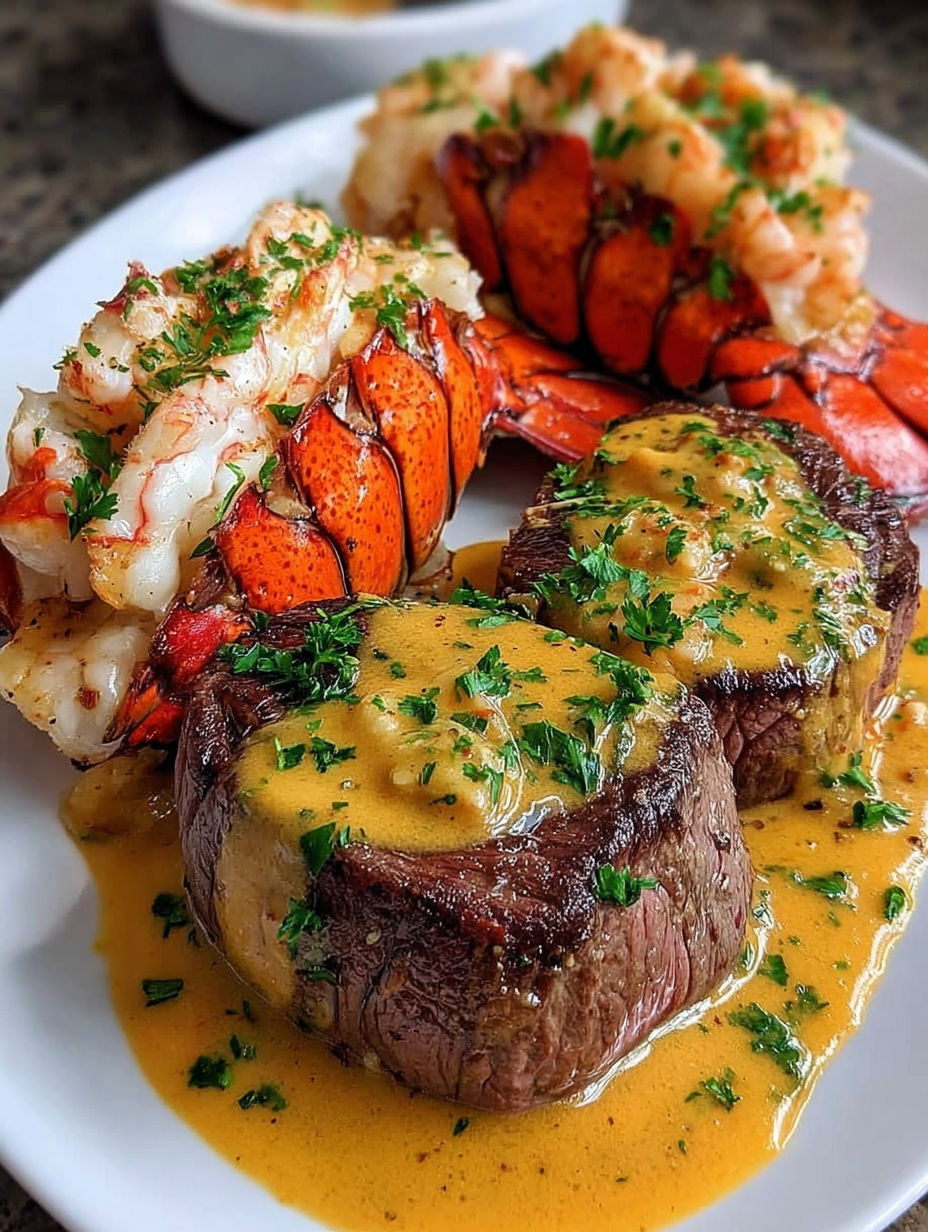
Surf and Turf Paired with Lobster Sauce
The sauce is what makes this version feel pulled together. Plain melted butter is good with lobster, but a lobster cream sauce gives you something that works on both sides of the plate. It should be silky, lightly briny, and bright enough from lemon that it does not bury the steak.
Do not boil the cream hard once it goes in. A gentle simmer keeps the texture smooth. If the sauce thickens too much before serving, loosen it with a tablespoon of warm stock. For a similar steakhouse direction with shrimp, see filet mignon with shrimp and lobster cream sauce.
Getting the Steak Right
Filet mignon has very little fat, so it needs a hard sear and a short baste. Let the skillet get properly hot before the steak touches it. If the pan is only warm, the steak will turn gray before it browns. A cast iron skillet is ideal because it holds heat when the meat goes in.
For medium-rare, many cooks pull filet mignon around 125-130°F and rest it so the center rises a few degrees. For food-safety guidance across meats and seafood, check the FoodSafety.gov temperature chart. Rest the steaks on a rack or plate for 5 minutes before slicing or saucing.
Lobster Without Guesswork
Butterflying the tails helps them cook evenly and gives you that open steakhouse look on the plate. Cut the top shell lengthwise with kitchen shears, lift the meat gently, and set it over the shell. Brush with butter and broil close enough to color the top without scorching it.
The lobster is done when the meat is opaque and firm, not translucent in the thickest part. The FDA has a useful guide for buying and serving seafood safely at its seafood safety page. If lobster tails are your favorite part of the plate, you may also like broiled lobster tails with garlic butter sauce.
Easy Swaps That Work
Ribeye makes a richer plate than filet mignon, and New York strip gives you a beefier chew. Use the same sauce and adjust only the steak timing. For seafood, large shrimp or scallops can stand in for lobster tails if needed. Sear them quickly and add them after the sauce is finished.
If you want a grilled version, cook the steak and lobster outside, then spoon the warm sauce over everything indoors. This keeps smoke out of the cream sauce and gives the meat a good char. For more lobster dinner ideas, grilled lobster tails with cowboy butter sauce is a strong match for summer.
Serving and Leftovers
Serve this with something green and something simple. Roasted asparagus, crisp green beans, or a lemony salad balance the cream sauce. Mashed potatoes are excellent if you want a classic steakhouse plate, but keep the portion small so the lobster remains the focus.
Leftovers keep for up to 2 days in the refrigerator. Store the sauce separately if you can. Warm it gently with a splash of cream or stock, then reheat the steak in a skillet over low heat. Lobster is best warmed just until heated through. If you want another seafood sauce dinner for later in the week, try lobster ravioli with lemon butter sauce.
Summary
This recipe gives you a steakhouse-style surf and turf dinner with a make-ahead lobster cream sauce, broiled lobster tails, and pan-seared filet mignon.
FAQs
- What cut of steak is best for surf and turf?
Filet mignon is the easiest choice because it is tender, thick, and quick to sear. Ribeye or New York strip also work, but they need a little more trimming and attention to doneness.
- Can I use frozen lobster tails?
Yes. Thaw them overnight in the refrigerator, then pat the shells and meat dry before cooking. Avoid thawing them in hot water because the texture can turn tough around the edges.
- Can I make the lobster sauce ahead?
You can make the sauce up to one day ahead without the chopped lobster meat. Reheat it over low heat, whisk in a splash of stock or cream, then add the lobster meat and lemon right before serving.
- How do I know when the lobster is done?
The shell should be bright red and the meat should be white, firm, and opaque. A thermometer is the clearest check. FoodSafety.gov lists 145°F as the safe minimum internal temperature for seafood.
- What can I use instead of white wine?
Use extra lobster stock or seafood stock with a small squeeze of lemon. You still get a rounded sauce, just without the light acidity that wine brings.
- What should I serve with this meal?
Keep the sides simple because the steak, lobster, and sauce are rich. Asparagus, roasted green beans, mashed potatoes, or a crisp salad all work well.
