 Pin it
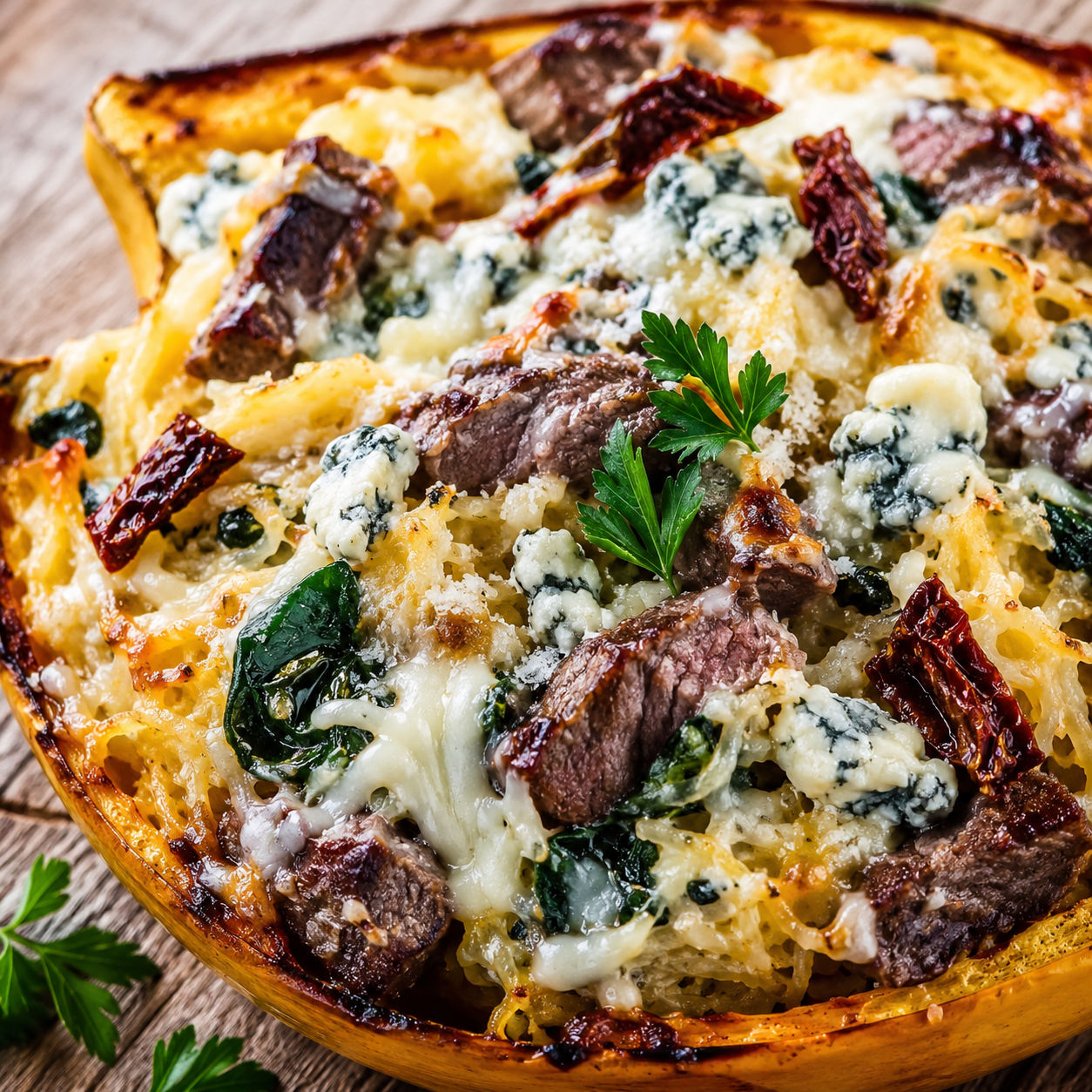
Creamy Steak Gorgonzola Over Spaghetti Squash gives you the big steakhouse pasta feeling without a bowl of noodles. The squash stays lightly sweet and firm, which works well against the salty blue cheese sauce and juicy steak.
I like this as a weekend dinner that still feels manageable. Roast the squash first, make the sauce while it cools, and keep the steak just shy of your final doneness because it warms again with the filling.
The Rich Squash Lineup
Use a firm spaghetti squash that feels heavy for its size. For the steak, sirloin or strip steak gives you enough tenderness without needing a long marinade.
- Spaghetti squash. Roasts into tender strands that hold the cream sauce without turning heavy.
- Sirloin steak. Brings savory bite and enough chew to stand up to the cheese.
- Gorgonzola. Melts into the sauce and gives it a salty, tangy edge.
- Parmesan. Thickens the cream sauce and rounds out the sharper blue cheese.
- Heavy cream. Makes the sauce silky and keeps it from breaking when baked.
- Spinach. Adds color and a mild green note that cuts through the richness.
- Sun-dried tomatoes. Bring sweet-tart intensity in small bites.
- Mozzarella. Melts over the top so each squash boat gets a golden, bubbly finish.
- Garlic and nutmeg. Give the cream sauce warmth without taking over.
Creamy Steak Gorgonzola Over Squash
- Roast the squash. Cut the squash lengthwise, scoop out the seeds, oil the cut sides, and roast cut side down until a fork slides through the flesh.
- Sear the steak. Pat the steak dry, season well, and cook in a hot skillet until browned outside and slightly under your target doneness.
- Make the cream sauce. Melt butter with garlic, add cream, then stir in Parmesan and Gorgonzola off gentle heat until smooth.
- Shred the strands. Drag a fork through the squash flesh to loosen the strands, leaving the shells intact if you want squash boats.
- Fill and bake. Fold squash strands with steak, spinach, sun-dried tomatoes, and sauce, then top with mozzarella and bake until bubbling.
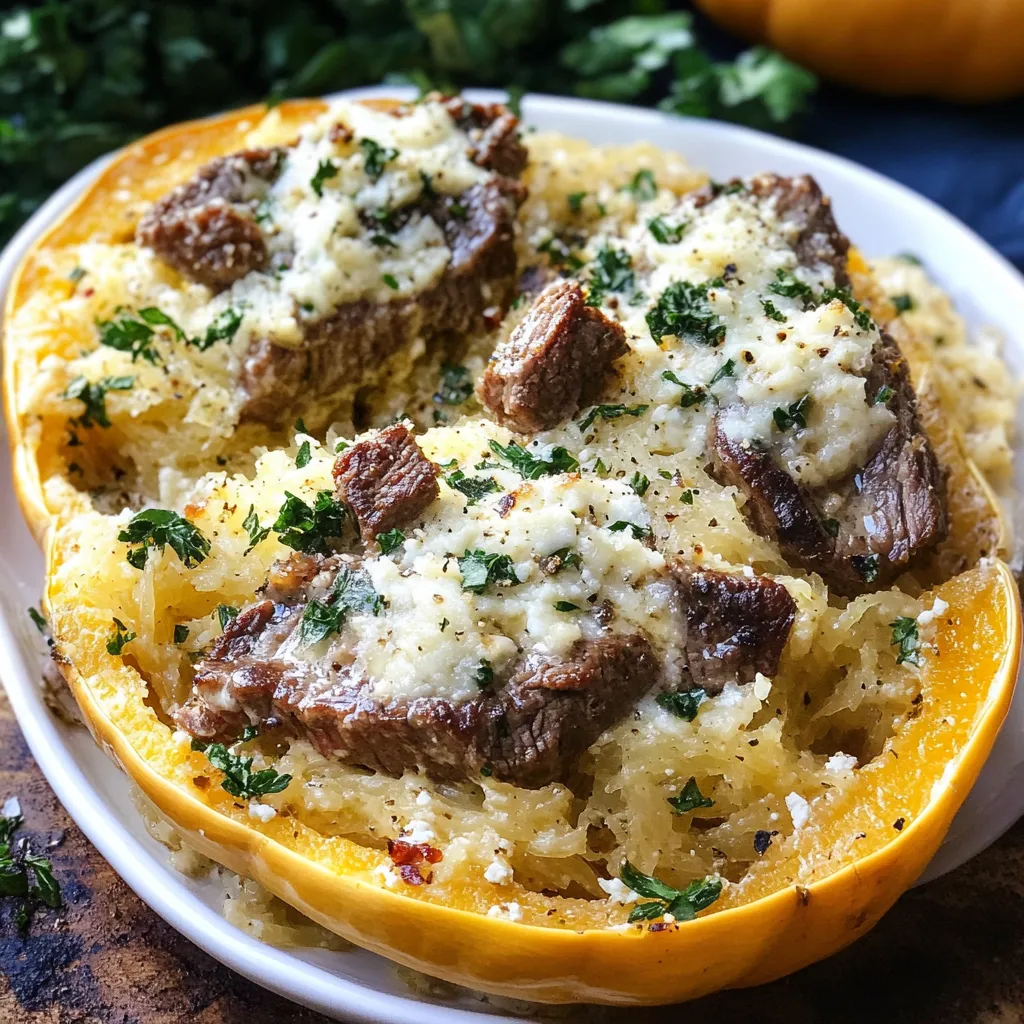
Why Squash Works Here
Spaghetti squash is not pasta, and that is fine. Its strands are lighter, a little sweet, and slightly crisp at the edges after roasting. That texture keeps this rich sauce from feeling flat. If you like squash used as a real dinner base, Turkey Marinara Spaghetti Squash is another good one to keep close.
The main thing is to avoid over-roasting. You want strands that pull apart easily but still have some body. If the squash collapses into mush, the filling will taste good but lose that fork-twirled texture.
Getting The Steak Right
Dry steak browns better. Press it with paper towels, season with salt and pepper, then leave it alone in the hot pan long enough to form a crust. Sirloin usually needs about 3-4 minutes per side, depending on thickness. For food safety guidance, check the safe minimum internal temperature chart.
Slice across the grain so each bite stays tender. If steak is the reason you came here, you may also like Creamy Garlic Parmesan Steak or the richer Steak Gorgonzola Alfredo.
Keep The Sauce Smooth
Gorgonzola can turn grainy if the heat is too aggressive. Bring the cream to a gentle simmer, lower the heat, then stir in the cheeses slowly. The sauce should coat a spoon before it goes into the squash.
Sun-dried tomatoes are strong, so chop them small. You want little pockets of flavor, not big chewy pieces fighting the steak. If the sauce gets too thick, loosen it with a splash of cream rather than water.
Smart Swaps And Add-Ins
Fresh spinach wilts quickly into the hot sauce. Frozen spinach also works, but squeeze it very dry first. Mushrooms are a good add-in if you brown them before the sauce. They add depth without making the filling watery.
If you want less blue cheese bite, use half Gorgonzola and half cream cheese. For more vegetable comfort, the cheesy squash filling in Cheesy Garlic Parmesan Spinach Spaghetti Squash goes in a gentler direction.
Storing Without Losing Texture
Leftovers keep for up to 3 days in an airtight container. Store extra sauce separately if you can. Reheat gently in a covered skillet or a 325 degrees F oven until warm. The microwave works, but use short bursts so the steak does not toughen.
I do not freeze this one. Cream sauces can split after thawing, and spaghetti squash releases water. If you need to prep ahead, roast the squash and slice the steak in advance, then make the sauce fresh.
Summary
This stuffed spaghetti squash dinner is rich, savory, and filling, with steak, spinach, sun-dried tomatoes, and a creamy Gorgonzola Parmesan sauce.

FAQs
- Can I use leftover steak for this recipe?
Yes. Slice leftover steak thinly and add it when you mix the squash filling so it warms without cooking much more. If it is already medium or well done, skip the skillet sear and keep the oven finish brief.
- What can I use instead of Gorgonzola?
Use a milder blue cheese if you want the same salty bite with less sharpness. For a no-blue-cheese version, use extra Parmesan and a little cream cheese, but the flavor will be softer.
- How do I keep spaghetti squash from getting watery?
Roast it cut side down until just tender, then let it rest cut side up for a few minutes before shredding. If the strands look very wet, blot them lightly with a clean towel before adding the sauce.
- Can I make Creamy Steak Gorgonzola Over Spaghetti Squash ahead?
You can roast the squash and cook the steak a day ahead. Make the cream sauce fresh if you can, because it stays smoother, then assemble and bake the squash boats right before serving.
- Is this recipe gluten-free?
Yes, the recipe is gluten-free as written because spaghetti squash replaces pasta and the sauce uses cream and cheese instead of flour. Always check packaged cheese and sun-dried tomatoes if you are cooking for someone with celiac disease.
- What should I serve with it?
A crisp salad or roasted green vegetable balances the richness. If you want a bigger spread, garlic bread is great for guests who are not keeping the meal low carb.
- How do I know when the steak is done?
Use an instant-read thermometer and pull the steak a little early because it rests and then warms again in the squash. FoodSafety.gov lists 145 degrees F with a rest for whole cuts of beef, which is a useful baseline for home cooking.
