 Pin it
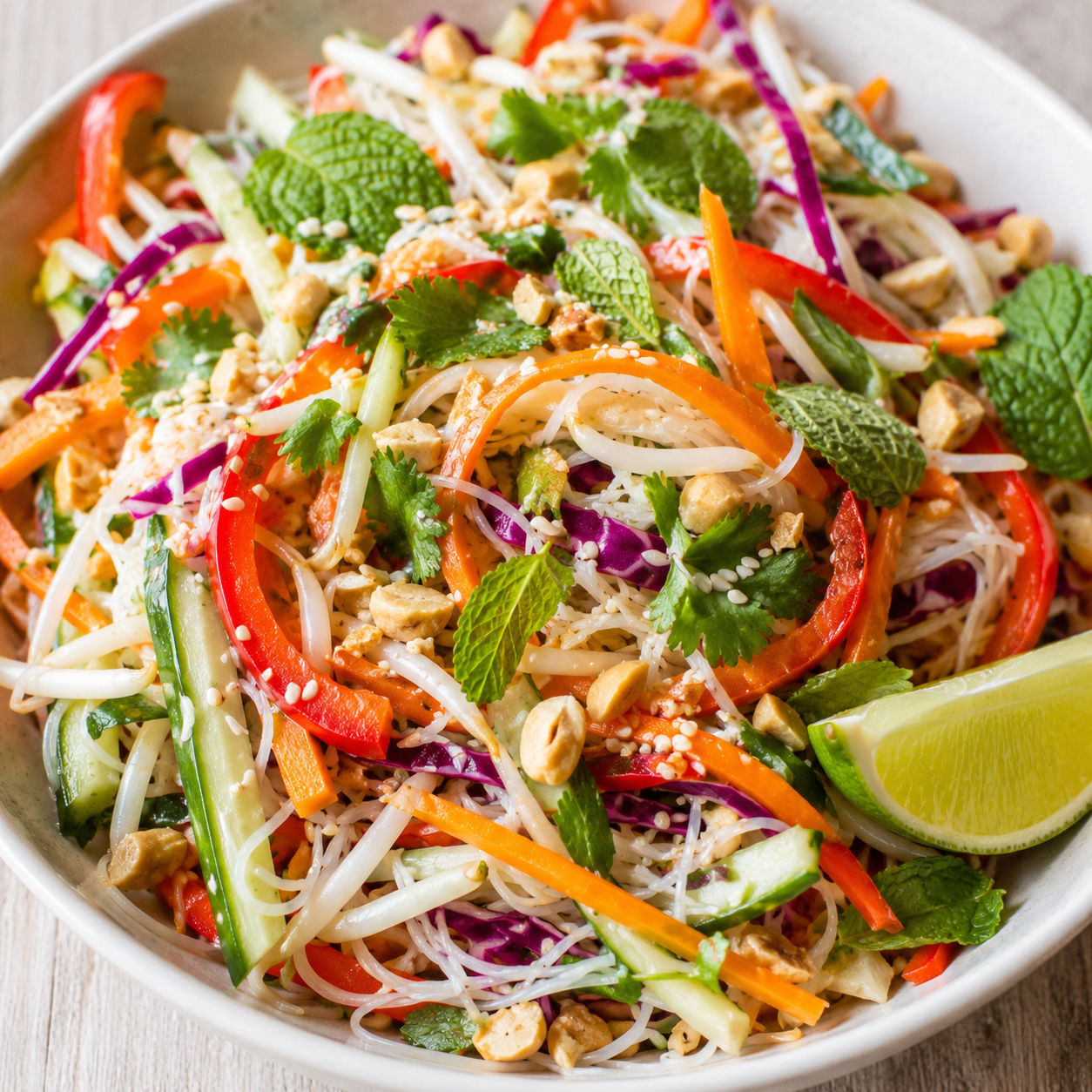
This is what I make when I want the taste of fresh spring rolls but not the careful soaking, stacking, and rolling. You still get the chewy rice noodles, crunchy vegetables, fresh herbs, and that sharp ginger kick.
The spicy ginger dressing is the part that pulls it together. It is tangy, salty, a little sweet, and warm from red pepper flakes, so the salad tastes lively instead of like a plain bowl of vegetables.
Crisp Roll-Inspired Lineup
Choose vegetables that are crisp, colorful, and easy to slice thin. The salad works best when the noodles are soft, the cabbage still snaps, and the herbs smell fresh the moment you chop them.
- Rice vermicelli noodles. They bring the soft, chewy bite you expect from fresh spring rolls.
- Purple cabbage. Adds crunch, color, and enough body to keep the salad from feeling flimsy.
- English cucumber. Keeps every forkful cool and juicy.
- Carrots. Add sweetness and a firm crisp texture.
- Red bell pepper. Brings a mild peppery sweetness and bright color.
- Bean sprouts. Give the salad that classic fresh roll crunch.
- Mint and cilantro. Make the bowl taste fresh and aromatic.
- Roasted peanuts. Add salty crunch and a little richness.
- Fresh ginger. Gives the dressing its heat, fragrance, and clean bite.
- Tamari, rice vinegar, sesame oil, and lime. Build the salty, tangy, nutty base of the dressing.
Cold Noodles, Bright Dressing
- Shake the dressing. Combine tamari, rice vinegar, lime juice, sesame oil, neutral oil, ginger, garlic, maple syrup, and red pepper flakes in a jar. Shake until glossy.
- Cook the noodles. Boil or soak the rice noodles according to the package. Rinse under cold water until fully chilled, then drain very well.
- Prep the crunch. Slice the cabbage, cucumber, carrots, and bell pepper into thin strips so every bite feels balanced.
- Build the bowl. Add noodles, vegetables, bean sprouts, mint, and cilantro to a large bowl. Toss gently with half the dressing first.
- Finish and serve. Add more dressing to taste, then top with peanuts, sesame seeds, and extra herbs.
Spring Roll Salad With Spicy Ginger Dressing
The dressing should taste a little too bold when you try it from the jar. That is intentional. Rice noodles and raw vegetables need a dressing with enough salt, acid, and heat to wake them up. Fresh ginger gives warmth without making the salad heavy. Rice vinegar and lime keep it sharp, while sesame oil adds a toasted smell that makes the whole bowl feel more complete.
If you like this style of crisp salad, the site's Spring Roll Salad is a close cousin. For a fruitier dressing direction, Sweet and Spicy Mango Salad Dressing would also work over the same vegetables.
Keep The Noodles Loose
Rice noodles go from tender to clumpy if they sit warm. Cook them only until flexible, then rinse them with cold water until they no longer feel hot in the center. Drain them longer than you think you need to. Water hiding in the noodles thins the dressing and makes the salad taste flat.
If the noodles sit while you cut vegetables, toss them with one teaspoon of the dressing. Not enough to soak them, just enough to keep the strands from grabbing each other. Kitchen shears are useful here too. A few quick snips make the noodles easier to toss and easier to eat.
Smart Add-Ins And Swaps
This salad is flexible as long as you keep the fresh roll idea in mind. Add avocado for creaminess, edamame for protein, or chilled shrimp if you want it to feel more like a meal. Baked tofu is my favorite vegan add-in because it soaks up the ginger dressing without falling apart.
No bean sprouts? Use thinly sliced snap peas or extra cucumber. Basil can stand in for some of the mint, and cashews can replace peanuts if that is what you have. For another crisp, cool bowl with a similar feel, try Asian Cucumber Salad.
Meal Prep Without Soggy Salad
For meal prep, store the noodles, vegetables, herbs, peanuts, and dressing in separate containers. The vegetables stay crisp for about 2 days, but the herbs are best added the day you serve. Peanuts should always go on last so they keep their crunch.
Because this is a raw vegetable-heavy recipe, wash produce well and dry it before slicing. The FDA produce-safety guide has good plain advice on rinsing and storing fresh fruits and vegetables.
What To Serve With It
This salad can be lunch on its own, especially with tofu, shrimp, or chicken added. For dinner, I like it beside grilled chicken, salmon, or a small bowl of soup. It also works as a cooling side for spicy noodles, including Spicy Peanut Chili Oil Noodles.
Serve it in a wide shallow bowl rather than a deep one. The vegetables stay prettier, the peanuts do not sink straight to the bottom, and everyone gets some herbs and dressing in each scoop.
Summary
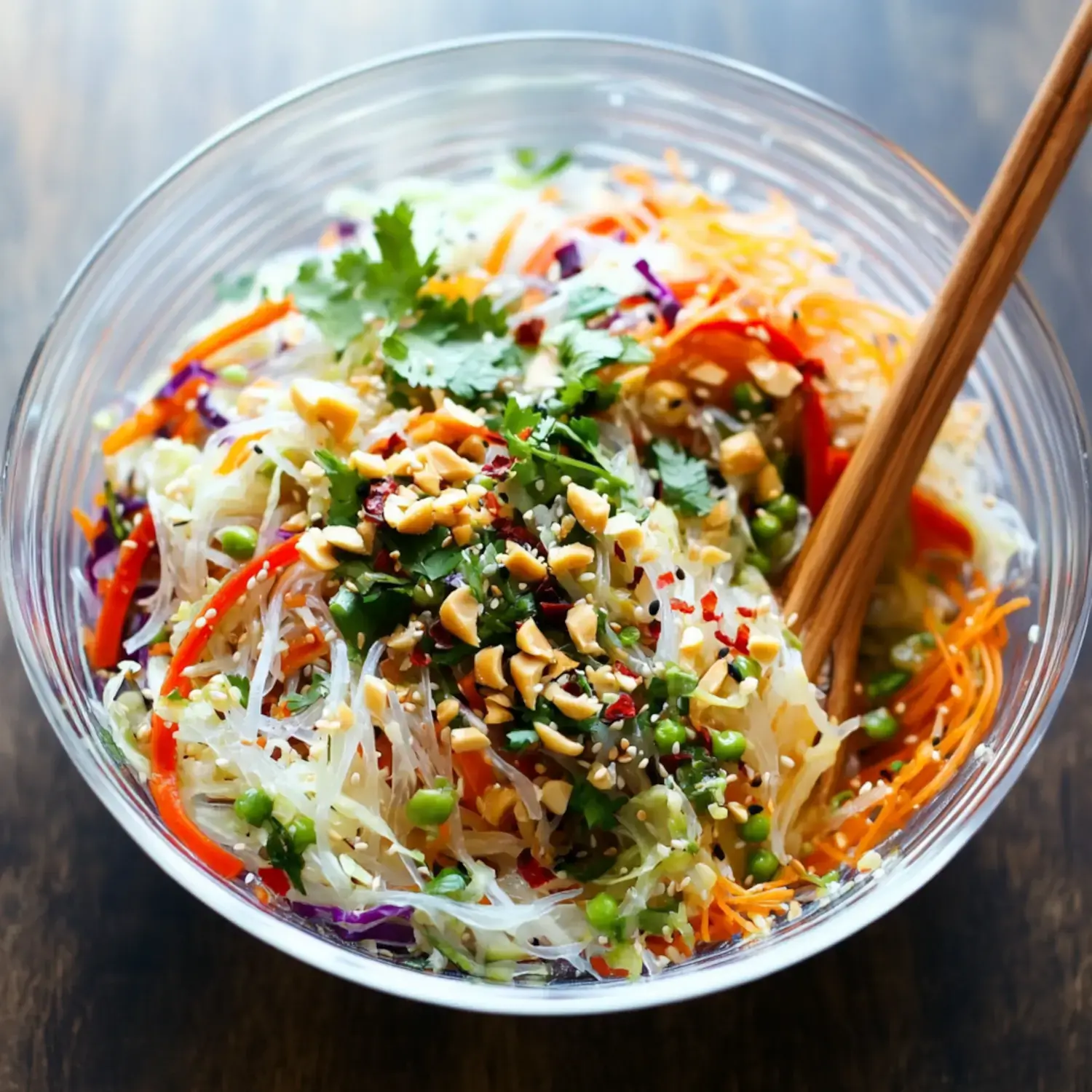
Serve this salad cold or just barely room temperature, with extra herbs and peanuts scattered over the top.

FAQs
- Can I make Fresh Spring Roll Salad with Spicy Ginger Dressing ahead?
Yes, but keep the dressing, peanuts, and herbs separate until serving. The noodles and vegetables can be prepped up to a day ahead, then tossed right before you eat.
- What can I use instead of rice noodles?
Thin vermicelli rice noodles feel closest to fresh rolls, but glass noodles or cooked soba can work. If you use soba, check the package because many brands contain wheat.
- Is this spring roll salad gluten-free?
It is gluten-free if you use tamari instead of regular soy sauce and choose certified gluten-free rice noodles. Always check labels on sauces because wheat can hide there.
- How spicy is the ginger dressing?
With 1/2 teaspoon red pepper flakes, it has a warm bite rather than heavy heat. Start there, then add more flakes or a little chili garlic sauce if you want it sharper.
- Can I add protein?
Absolutely. Chilled shrimp, shredded chicken, baked tofu, or edamame all fit the salad. Keep the protein simply seasoned so the ginger dressing stays in charge.
- Why did my rice noodles get sticky?
They were probably overcooked or left sitting warm. Rinse them well under cold water after cooking, drain thoroughly, and toss with a spoonful of dressing if they need to wait.
